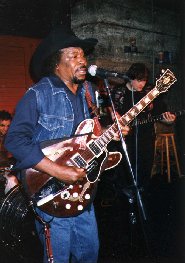
You can not love Johnnie Taylor and not absolutely require a copy of this one! ...I'm just sayin'.
One
of the most awesomely gifted vocalists of the 20th century, Johnnie
Harrison Taylor (1934-2000) brought both grit and grace to a variety of
African-American musical styles, including gospel, blues and soul. But
as the 65 selections contained in this three-disc career retrospective
attest, the listener can always tell it's J.T. Every one of the
singer's greatest hits, including the chart-toppers "Who's Making Love,"
"Jody's Got Your Girl And Gone," "I Believe In You (You Believe In
Me)," and "Disco Lady," is contained herein, along with many lesser
known gems and 13 previously unissued performances.
Monday, November 17, 2014
Sunday, November 16, 2014
Goodbye Babylon
"By any standard, this six-CD box set of old-time gospel music is a stupendous release, both in terms of musical significance, and elaborate packaging. The discs include no less than 135 songs, virtually all of them from the mid-1920s to the mid-1950s, save a couple that fall outside of that time frame in either direction. That's not even counting the bonus disc of 25 sermons, taken from actual African-American sermons released on record between 1926 and 1941, mostly from the earlier years of that stretch. It amounts to the largest, and certainly the most diverse, compilation of American gospel music from the early days of the phonograph record, encompassing both the White and African-American strands of the form. And it's not exclusively of interest to gospel specialists, as much of the music is squarely in the early American country, blues, and/or folk tradition, and heavily impacted the growth of those forms.
Such is the breadth of the anthology that it defies summarization in one review, but there are a few especially important features worth emphasizing. The sheer breadth of performers represented is amazing, and not just those recognizable to collectors, the lineup including such American musical giants as Hank Williams, the Carter Family, Rev. Gary Davis, Blind Lemon Jefferson, the Louvin Brothers, Skip James, Mahalia Jackson, the Stanley Brothers, Uncle Dave Macon, Thomas A. Dorsey, the Maddox Brothers & Rose, Josh White, and Bill Monroe (as part of the Monroe Brothers). There's just as much if not more attention given, however, to less celebrated names, down to performers about whom little or nothing is known, leaving behind just one or two incredibly rare 78s. Even some of the selections by major artists might be unknown to fans of the singers, as some are taken from rare sources like radio transcriptions (as the Louvin Brothers' "I'll Never Go Back" and Williams' "I'll Have a New Body" are). There are almost as many styles covered as there are songs, including not just the group singing and solo-with-keyboard accompaniment that some might think of as standard gospel. There's also close harmony early country music, tough country guitar blues, jug bands, string bands, group and solo a cappella singing, prisoner woodchoppers, and unclassifiable weird items in which the backup's supplied by unclassifiable novelty instruments, amplified steel guitar, slide banjo, or a solitary harmonica. There's even some early jazz, calypso (by Roaring Lion), and, in Sister Rosetta Tharpe's 1944 hit "Strange Things Happening Every Day," even some primordial full-band R&B.
More than an impressive effort of scholarship, however, this is something than can be enjoyed even by non-converts either to gospel music, or to the religious beliefs that serve as its lyrical foundation. For the blues, country, Appalachian folk, and other indigenous American musical forms are ground so deeply into gospel's fabric, that sometimes you might forget you're listening to music that's been classified as gospel. The performances have an unselfconscious swing and grit, and if some of the songs don't particularly grab you, such is the eclecticism that it won't be long before something does. Some of the highlights, indeed, are not by celebrated performers, but off-the-wall entries, like Blind Willie Johnson's amazingly guttural vocals on "Take Your Burden to the Lord and Leave It There.
" If you're so inclined, you can find ancestors to rock and soul here and there, as in Johnson's "Lord I Just Can't Keep From Crying," eventually adapted by the Blues Project; Eddie Head and His Family's "Down on Me," sung by Janis Joplin when it was covered by Big Brother & the Holding Company; James' "Jesus Is a Mighty Good Leader," covered more than 60 years later by Beck; the Gospel Keys' shake-'em-on-down 1946 version of "You've Got to Move," which precedes the more famous versions by both Mississippi Fred McDowell and the Rolling Stones; and even, in a sermon by Rev. Isaiah Shelton, a snatch of a song that resurfaced in Ray Charles' hit "Leave My Woman Alone." The sixth disc of sermons, incidentally, isn't necessarily dispensable if you think you don't have the patience for that kind of thing; the fervent deliveries and call-and-response vocals can be surprisingly musical, to the point where much of it sounds like actual singing.
The packaging of this set is also exceptionally noteworthy, encased in a cedar box with a slide-off top, and padded with actual fragrant cotton. Also inside is a 200-page book -- it's too large to be called a booklet, really -- with expert commentaries on each track, original personnel and recording dates, lyrical transcriptions, relevant Biblical quotes, and plenty of cool illustrations, old photos, and record label reproductions. The remastering from old rare discs is also fine. With such attentive layers of detail, in fact, it's puzzling that the liner notes don't include the original label of release for the recordings, a small but important detail which is of undoubted interest to many people willing to invest in such an anthology. It's a very small quibble, though, for a production that could absorb your interest for days or months if you want to dive into the bottom and catch all of its nuances and interconnections." Richie Unterberger
Thursday, November 13, 2014
Wednesday, November 12, 2014
True Soul: Deep Sounds From The Left Of Stax
I am gifting you something REALLY special here. The music on both of these CDs is nothing short of incredible and needs to be heard by everybody who frequents Chitlins.
True Soul was a small indy label based in Arkansas, founded by Lee Anthony. The label captured the essence of the Little Rock funk and soul scene during the height of the music's power.
Both of these come with full colour booklet's which explain the story of both the label and the people behind it... highly suggest you buy it!!! Enjoy!!!
My favorite tune, hands down...
The Arkansas label Now-Again Records release True Soul: Deeps Sounds From The Left of Stax Volumes 1 & 2 contain 60s and 70s Soul, Funk, Disco, Party-Rap and Boogie music. This anthology has been 12 years in the making. Label owner Lee Anthony founded Soul Brothers in 1966, the first black-owned record shop in Arkansas. In the collection's liner notes Lee explains his modus operandi regarding recording artists: "Anyone that had a good song, we recorded them. No one paid for tape; no one paid for a recording session. And no one was turned away."
The label's official release explains the roots of this inimitable release: "True Soul's story intertwines with the renowned Sam Phillips--an early mentor and patron--and Memphis's Al Bell and Willie Mitchell--with whom Anthony collaborated as he cultivated Little Rock's funk and soul scene under the shadows of Stax and Hi Records. The Gap Band's genesis is but one sub-plot, as Anthony's recordings of a stranded funk ensemble made their way to Leon Russell and lead to the foundation of one of the decades' best known showbands."
Volume 1 and 2 are sold separately with beautiful individual packaging. Volume 1 begins with Thomas East's smooth "Slippin' Around" that contains a great piano lick. Albert Smith plays a memorable instrumental version of the Beatles tune "Come Together". York Wilborn's Psychedelic Six emerges as one of the most notable artists on this collection. The group's instrumental "Wheezin'" demonstrates a high order of versatility.
Ren Smith's funk number "Smog" features traces of Funkadelic at their strongest. The Psychedelic Six's "Funky Football" is truly hallucinatory with the frenetic horns, organ and guitar. Their rendition of "Psychedelic Hot Pants" is beyond words. The group Classic Funk's "Hard Times" should be played on the radio now. An instrumental by The Leaders titled "Rat Race" incorporates ska and jazz into one potent blend of music.
Volume 2 commences with Albert's Smith brilliant instrumental version of B.B. King's "The Thrill Is Gone". Again, York Wilborn's "Psychedelic Six" deliver a groovy horn-laced instrumental on "Thank You". The Right Track's instrumental "Maybe Yes, Maybe No" calls to mind The Meters. John Craig's "I Believe" counts as a jewel that amazes it never made it to the mainstream. Le' Chance's "Get Down" almost sounds like an outtake from an Isaac Hayes album. Soul, Mind & Body's rendition of "I Took Your Love To Be True" closes Volume 2 with a swinging soul. - James Calemine / Swampland.com
True Soul was a small indy label based in Arkansas, founded by Lee Anthony. The label captured the essence of the Little Rock funk and soul scene during the height of the music's power.
Both of these come with full colour booklet's which explain the story of both the label and the people behind it... highly suggest you buy it!!! Enjoy!!!
My favorite tune, hands down...
The Arkansas label Now-Again Records release True Soul: Deeps Sounds From The Left of Stax Volumes 1 & 2 contain 60s and 70s Soul, Funk, Disco, Party-Rap and Boogie music. This anthology has been 12 years in the making. Label owner Lee Anthony founded Soul Brothers in 1966, the first black-owned record shop in Arkansas. In the collection's liner notes Lee explains his modus operandi regarding recording artists: "Anyone that had a good song, we recorded them. No one paid for tape; no one paid for a recording session. And no one was turned away."
The label's official release explains the roots of this inimitable release: "True Soul's story intertwines with the renowned Sam Phillips--an early mentor and patron--and Memphis's Al Bell and Willie Mitchell--with whom Anthony collaborated as he cultivated Little Rock's funk and soul scene under the shadows of Stax and Hi Records. The Gap Band's genesis is but one sub-plot, as Anthony's recordings of a stranded funk ensemble made their way to Leon Russell and lead to the foundation of one of the decades' best known showbands."
Volume 1 and 2 are sold separately with beautiful individual packaging. Volume 1 begins with Thomas East's smooth "Slippin' Around" that contains a great piano lick. Albert Smith plays a memorable instrumental version of the Beatles tune "Come Together". York Wilborn's Psychedelic Six emerges as one of the most notable artists on this collection. The group's instrumental "Wheezin'" demonstrates a high order of versatility.Ren Smith's funk number "Smog" features traces of Funkadelic at their strongest. The Psychedelic Six's "Funky Football" is truly hallucinatory with the frenetic horns, organ and guitar. Their rendition of "Psychedelic Hot Pants" is beyond words. The group Classic Funk's "Hard Times" should be played on the radio now. An instrumental by The Leaders titled "Rat Race" incorporates ska and jazz into one potent blend of music.
Volume 2 commences with Albert's Smith brilliant instrumental version of B.B. King's "The Thrill Is Gone". Again, York Wilborn's "Psychedelic Six" deliver a groovy horn-laced instrumental on "Thank You". The Right Track's instrumental "Maybe Yes, Maybe No" calls to mind The Meters. John Craig's "I Believe" counts as a jewel that amazes it never made it to the mainstream. Le' Chance's "Get Down" almost sounds like an outtake from an Isaac Hayes album. Soul, Mind & Body's rendition of "I Took Your Love To Be True" closes Volume 2 with a swinging soul. - James Calemine / Swampland.com
Monday, November 10, 2014
Sun Southern Soul (?)
To be honest, this is a compilation I NEVER saw coming! In everything I've read and heard, there just isn't any Southern Soul-Blues chapter at Sun Studios!! What the Hell?
Well at least some of this stuff (like Johnny Adams and Danny White for sure!) must have been licensed or sold to them post the original release, because I've compared them to the originals that I have and while they are superior modern remasters here (quite welcome), they are still the same versions of the songs.
That said there is plenty of good stuff here and while I remain confused as to the history behind how this music ends up being issued by Sun, that does't mean it isn't a fascinatin' listen.
Well at least some of this stuff (like Johnny Adams and Danny White for sure!) must have been licensed or sold to them post the original release, because I've compared them to the originals that I have and while they are superior modern remasters here (quite welcome), they are still the same versions of the songs.
That said there is plenty of good stuff here and while I remain confused as to the history behind how this music ends up being issued by Sun, that does't mean it isn't a fascinatin' listen.
Rev. Gary Davis
Reverend Gary Davis, also Blind Gary Davis, (April 30, 1896 – May 5, 1972) was an American blues and gospel singer and guitarist, who was also proficient on the banjo guitar and harmonica. His finger-picking guitar style influenced many other artists and his students include Stefan Grossman, David Bromberg, Roy Book Binder, Larry Johnson, Nick Katzman, Dave Van Ronk, Rory Block, Ernie Hawkins, Woody Mann, and Tom Winslow.
He has influenced Bob Dylan, The Grateful Dead, Wizz Jones, Jorma Kaukonen, Keb' Mo', Ollabelle, Resurrection Band, and John Sebastian of The Lovin' Spoonful.
Gary Davis was born in the Piedmont region of the country, in Laurens, South Carolina, and was the only one of eight children his mother bore who survived to adulthood. He became blind as an infant. Davis reported that his father was killed in Birmingham, Alabama, when Davis was ten, and Davis later said that he had been told that his father had been shot by the Birmingham High Sheriff. He recalled being poorly treated by his mother and that before his death his father had given him into the care of his paternal grandmother.
He took to the guitar and assumed a unique multi-voice style produced solely with his thumb and index finger, playing not only gospel, ragtime and blues tunes, but also traditional and original tunes in four-part harmony.
In the mid-1920s, Davis migrated to Durham, North Carolina, a major center for black culture at the time. There he taught Blind Boy Fuller and collaborated with a number of other artists in the Piedmont blues scene including Bull City Red. In 1935, J. B. Long, a store manager with a reputation for supporting local artists, introduced Davis, Fuller and Red to the American Record Company. The subsequent recording sessions marked the real beginning of Davis' career and are available in his Complete Early Recordings. During his time in Durham, Davis converted to Christianity; in 1937, he would be ordained as a Baptist minister. Following his conversion and especially his ordination, Davis began to express a preference for inspirational gospel music.
In the 1940s, the blues scene in Durham began to decline and Davis migrated to New York. In 1951, several years before his "rediscovery", Davis's oral history was recorded by Elizabeth Lyttleton Harold (the wife of Alan Lomax) who transcribed their conversations into a 300+-page typescript.
The folk revival of the 1960s re-invigorated Davis' career and included a performance at the Newport Folk Festival and having Peter, Paul and Mary record his version of "Samson and Delilah", also known as "If I Had My Way" which is originally a Blind Willie Johnson song that Davis had popularized. "Samson and Delilah" was also covered and credited to Davis on the Grateful Dead's "Terrapin Station" album. Eric Von Schmidt credits Rev. Davis with three quarters of Schmidt's Baby, Let Me Follow You Down which Bob Dylan covered on his debut album for Columbia. Blues Hall of Fame singer and harmonica player Darrell Mansfield has also recorded several of Rev. Davis' songs.
Davis died in May 1972, from a heart attack in Hammonton, New Jersey. He is buried in plot 68 of Rockville Cemetery in Lynbrook, Long Island, New York.
He has influenced Bob Dylan, The Grateful Dead, Wizz Jones, Jorma Kaukonen, Keb' Mo', Ollabelle, Resurrection Band, and John Sebastian of The Lovin' Spoonful.
Gary Davis was born in the Piedmont region of the country, in Laurens, South Carolina, and was the only one of eight children his mother bore who survived to adulthood. He became blind as an infant. Davis reported that his father was killed in Birmingham, Alabama, when Davis was ten, and Davis later said that he had been told that his father had been shot by the Birmingham High Sheriff. He recalled being poorly treated by his mother and that before his death his father had given him into the care of his paternal grandmother.
He took to the guitar and assumed a unique multi-voice style produced solely with his thumb and index finger, playing not only gospel, ragtime and blues tunes, but also traditional and original tunes in four-part harmony.In the mid-1920s, Davis migrated to Durham, North Carolina, a major center for black culture at the time. There he taught Blind Boy Fuller and collaborated with a number of other artists in the Piedmont blues scene including Bull City Red. In 1935, J. B. Long, a store manager with a reputation for supporting local artists, introduced Davis, Fuller and Red to the American Record Company. The subsequent recording sessions marked the real beginning of Davis' career and are available in his Complete Early Recordings. During his time in Durham, Davis converted to Christianity; in 1937, he would be ordained as a Baptist minister. Following his conversion and especially his ordination, Davis began to express a preference for inspirational gospel music.
In the 1940s, the blues scene in Durham began to decline and Davis migrated to New York. In 1951, several years before his "rediscovery", Davis's oral history was recorded by Elizabeth Lyttleton Harold (the wife of Alan Lomax) who transcribed their conversations into a 300+-page typescript.
The folk revival of the 1960s re-invigorated Davis' career and included a performance at the Newport Folk Festival and having Peter, Paul and Mary record his version of "Samson and Delilah", also known as "If I Had My Way" which is originally a Blind Willie Johnson song that Davis had popularized. "Samson and Delilah" was also covered and credited to Davis on the Grateful Dead's "Terrapin Station" album. Eric Von Schmidt credits Rev. Davis with three quarters of Schmidt's Baby, Let Me Follow You Down which Bob Dylan covered on his debut album for Columbia. Blues Hall of Fame singer and harmonica player Darrell Mansfield has also recorded several of Rev. Davis' songs.Davis died in May 1972, from a heart attack in Hammonton, New Jersey. He is buried in plot 68 of Rockville Cemetery in Lynbrook, Long Island, New York.
The Best of Austin City Limits: Big Blues Extravaganza!
Pretty self-explanatory, great line up of artists performing live on the set of Austin City Limits. Ripped from my CD with EAC to FLAC. Scans includes a fold out poster... enjoy!!!
1. Albert Collins - Travelin' South 4:39
2. Lightnin' Hopkins - Rock Me Baby 3:48
3. Stevie Ray Vaughan - Love Struck Baby 3:02
4. Jimmie Vaughan and the Tilt-A-Whirl Band - Six Strings Down 4:16
5. Miss Lavelle White - I've Never Found a Man to Love 3:35
6. Keb' Mo' - Tell Everybody I Know 3:31
7. Clarence "Gatemouth" Brown - Born in Louisiana 4:20
8. Dr. John - Since I Fell for You 4:36
9. Buddy Guy - Mary Had a Little Lamb 5:30
10. Taj Mahal - Queen Bee 5:48
11. The Neville Brothers - Yellow Moon 6:14
12. Rory Block - Big Road Blues 2:15
13. W. C. Clark - Ain't It Funny How Time Slips Away 5:31
14. B. B. King - Night Life 6:17
15. Delbert McClinton - Leap of Faith 4:02
1. Albert Collins - Travelin' South 4:39
2. Lightnin' Hopkins - Rock Me Baby 3:48
3. Stevie Ray Vaughan - Love Struck Baby 3:02
4. Jimmie Vaughan and the Tilt-A-Whirl Band - Six Strings Down 4:16
5. Miss Lavelle White - I've Never Found a Man to Love 3:35
6. Keb' Mo' - Tell Everybody I Know 3:31
7. Clarence "Gatemouth" Brown - Born in Louisiana 4:20
8. Dr. John - Since I Fell for You 4:36
9. Buddy Guy - Mary Had a Little Lamb 5:30
10. Taj Mahal - Queen Bee 5:48
11. The Neville Brothers - Yellow Moon 6:14
12. Rory Block - Big Road Blues 2:15
13. W. C. Clark - Ain't It Funny How Time Slips Away 5:31
14. B. B. King - Night Life 6:17
15. Delbert McClinton - Leap of Faith 4:02
Saturday, November 8, 2014
Peppermint Harris - Lonesome As I Can Be
Harrison D. Nelson Jr. (July 17, 1925 – March 19, 1999) known as Peppermint Harris, was an American rhythm and blues and jump blues singer and guitarist.
Artist Biography by Bill Dahl
"The contemporary blues boom resuscitated the career of many a veteran blues artist who had been silent for ages. Take guitarist Peppermint Harris, who in 1951 topped the R&B charts with his classic booze ode "I Got Loaded." Nobody expected a new Peppermint Harris CD in 1995, but Home Cooking producer Roy C. Ames coaxed one out of old Pep for Collectables nonetheless. Texas on My Mind may not be as enthralling as Harris' early-'50s output, but it was nice to have him back in circulation. By the time he was in his early twenties, Harrison Nelson, Jr. was lucky enough to have found a mentor and friend on the Houston blues front: Lightnin' Hopkins took an interest in the young man's musical development. When Harris was deemed ready, Lightnin' accompanied him to Houston's Gold Star Records. Nothing came of that jaunt, but Harris eventually recorded his debut 78 for the company in 1948 (as Peppermint Nelson).
Bob Shad's Sittin' in With label was the vehicle that supplied Harris' early work to the masses -- especially his first major hit, "Raining in My Heart," in 1950. These weren't exactly formal sessions; one legend has it one took place in a Houston bordello. Nor was Shad too cognizant of Pep's surname; when he couldn't recall it, he simply renamed our man Harris.
Harris moved over to Eddie Mesner's Aladdin Records in 1951, cutting far tighter sides for the firm in Los Angeles (often with the ubiquitous Maxwell Davis serving as bandleader and saxist). After "I Got Loaded" lit up the charts in 1951, Harris indulged in one booze ode after another: "Have Another Drink and Talk to Me," "Right Back on It," "Three Sheets in the Wind." But try as they might, the bottle let Harris down as a lyrical launching pad after that.
He drifted from Money and Cash to RCA's short-lived subsidiary "X" and Don Robey's Duke logo (where he allegedly penned "As the Years Go Passing By" for Fenton Robinson) after that, but it wasn't until a long-lasting association with Stan Lewis' Shreveport, Louisiana-based Jewel Records commenced in 1965 that Harris landed for longer than a solitary single. Later, Harris worked various day jobs around Houston, including one at a record pressing plant, before moving to Sacramento, California, and then to New Jersey to be with his daughter.
Artist Biography by Bill Dahl
"The contemporary blues boom resuscitated the career of many a veteran blues artist who had been silent for ages. Take guitarist Peppermint Harris, who in 1951 topped the R&B charts with his classic booze ode "I Got Loaded." Nobody expected a new Peppermint Harris CD in 1995, but Home Cooking producer Roy C. Ames coaxed one out of old Pep for Collectables nonetheless. Texas on My Mind may not be as enthralling as Harris' early-'50s output, but it was nice to have him back in circulation. By the time he was in his early twenties, Harrison Nelson, Jr. was lucky enough to have found a mentor and friend on the Houston blues front: Lightnin' Hopkins took an interest in the young man's musical development. When Harris was deemed ready, Lightnin' accompanied him to Houston's Gold Star Records. Nothing came of that jaunt, but Harris eventually recorded his debut 78 for the company in 1948 (as Peppermint Nelson).
Bob Shad's Sittin' in With label was the vehicle that supplied Harris' early work to the masses -- especially his first major hit, "Raining in My Heart," in 1950. These weren't exactly formal sessions; one legend has it one took place in a Houston bordello. Nor was Shad too cognizant of Pep's surname; when he couldn't recall it, he simply renamed our man Harris.
Harris moved over to Eddie Mesner's Aladdin Records in 1951, cutting far tighter sides for the firm in Los Angeles (often with the ubiquitous Maxwell Davis serving as bandleader and saxist). After "I Got Loaded" lit up the charts in 1951, Harris indulged in one booze ode after another: "Have Another Drink and Talk to Me," "Right Back on It," "Three Sheets in the Wind." But try as they might, the bottle let Harris down as a lyrical launching pad after that.
He drifted from Money and Cash to RCA's short-lived subsidiary "X" and Don Robey's Duke logo (where he allegedly penned "As the Years Go Passing By" for Fenton Robinson) after that, but it wasn't until a long-lasting association with Stan Lewis' Shreveport, Louisiana-based Jewel Records commenced in 1965 that Harris landed for longer than a solitary single. Later, Harris worked various day jobs around Houston, including one at a record pressing plant, before moving to Sacramento, California, and then to New Jersey to be with his daughter.
Thursday, November 6, 2014
Monday, November 3, 2014
J. Blackfoot - City Slicker
J. Blackfoot (born John Colbert, November 20, 1946 – November 30, 2011), was an American soul singer, who was a member of The Soul Children in the late 1960s and 1970s, and subsequently had a moderately successful solo career. His biggest hit was "Taxi", which reached the charts in both the US and UK in 1984.
John Colbert was born in Greenville, Mississippi, moving to Memphis, Tennessee with his family as a child. Generally known as "J." or "Jay", he acquired the nickname "Blackfoot" as a child, for his habit of walking barefoot on the tarred sidewalks. In 1965, while spending some time in Tennessee State Penitentiary in Nashville for car theft, he met Johnny Bragg, the founder of the Prisonaires vocal group. After leaving prison he recorded a single under his own name for the small Sur-Speed label, before returning to Memphis, where he was heard singing in a street corner group by David Porter of Stax Records. After the plane crash that claimed the lives of Otis Redding and four members of The Bar-Kays, he joined the reconstituted group as lead singer, and performed with them for several months but did not record.
In 1968, after Sam & Dave had moved from Stax to Atlantic Records, Porter and his songwriting and production partner Isaac Hayes decided to put together a new vocal group of two men and two women. They recruited Blackfoot, together with Norman West, Anita Louis, and Shelbra Bennett, to form The Soul Children. Between 1968 and 1978, The Soul Children had 15 hits on the R&B chart, including three that crossed over to the Billboard Hot 100, and recorded seven albums.
The Soul Children disbanded in 1979. Blackfoot worked with bands in the Memphis area, and recorded solo for the local Prime Cut label. In 1983, he began working again with writer and producer Homer Banks, with whom he had recorded with The Soul Children, and recorded "Taxi", a song originally written for Johnnie Taylor but not recorded by him. Blackfoot's record rose to no. 4 on the R&B chart and no. 90 on the pop chart, also reaching no. 48 in the UK. He recorded several albums, and had several more R&B hits on Banks' Sound Town label before moving to the Edge label formed by Al Bell in 1986. In 1987, he had another significant hit, "Tear Jerker", a duet with Ann Hines, reaching no. 28 on the R&B chart. He later moved to the Basix label, continuing to release albums into the new millennium.
In 2007, Blackfoot and West reformed the Soul Children, with Hines and fourth member Cassandra Graham. In 2010, Blackfoot appeared as part of David Porter's music revue.
On November 30, 2011, Blackfoot died after having been diagnosed with cancer.
John Colbert was born in Greenville, Mississippi, moving to Memphis, Tennessee with his family as a child. Generally known as "J." or "Jay", he acquired the nickname "Blackfoot" as a child, for his habit of walking barefoot on the tarred sidewalks. In 1965, while spending some time in Tennessee State Penitentiary in Nashville for car theft, he met Johnny Bragg, the founder of the Prisonaires vocal group. After leaving prison he recorded a single under his own name for the small Sur-Speed label, before returning to Memphis, where he was heard singing in a street corner group by David Porter of Stax Records. After the plane crash that claimed the lives of Otis Redding and four members of The Bar-Kays, he joined the reconstituted group as lead singer, and performed with them for several months but did not record.
In 1968, after Sam & Dave had moved from Stax to Atlantic Records, Porter and his songwriting and production partner Isaac Hayes decided to put together a new vocal group of two men and two women. They recruited Blackfoot, together with Norman West, Anita Louis, and Shelbra Bennett, to form The Soul Children. Between 1968 and 1978, The Soul Children had 15 hits on the R&B chart, including three that crossed over to the Billboard Hot 100, and recorded seven albums.
The Soul Children disbanded in 1979. Blackfoot worked with bands in the Memphis area, and recorded solo for the local Prime Cut label. In 1983, he began working again with writer and producer Homer Banks, with whom he had recorded with The Soul Children, and recorded "Taxi", a song originally written for Johnnie Taylor but not recorded by him. Blackfoot's record rose to no. 4 on the R&B chart and no. 90 on the pop chart, also reaching no. 48 in the UK. He recorded several albums, and had several more R&B hits on Banks' Sound Town label before moving to the Edge label formed by Al Bell in 1986. In 1987, he had another significant hit, "Tear Jerker", a duet with Ann Hines, reaching no. 28 on the R&B chart. He later moved to the Basix label, continuing to release albums into the new millennium.
In 2007, Blackfoot and West reformed the Soul Children, with Hines and fourth member Cassandra Graham. In 2010, Blackfoot appeared as part of David Porter's music revue.
On November 30, 2011, Blackfoot died after having been diagnosed with cancer.
Sunday, November 2, 2014
The Relatives - Don't Let Me Fall
"...Formed in Dallas in 1970 by Gean West and his brother Tommy, The
Relatives cut three genre-bending singles during their decade-long run
that were too freaky for the church and too righteous for R&B radio.
Though pioneers of an utterly singular sound, the Relatives never made a
splash outside of Dallas and have remained virtually unknown even among
serious record collectors.
The Relatives first single, “Walking On,” was released on Shreveport’s Lewis records in 1971. Propelled by a relentless bass line and a fuzzy effects-laden guitar, the track sounds like the Mighty Clouds of Joy on acid. Talk about a higher calling.
The poignant flipside, “Speak to Me,” finds the group in the well-worn shoes of a black Vietnam War veteran, asking God to explain the racial injustices of America. “Back in that time it was tough for a young black,” West says. “We knew friends that had went into the service and gotten out and couldn’t get a job, couldn’t borrow much over a hundred dollars. They went and fought, got cut up, got broke up. That’s why we asked if a black man would go fight for his country what good would that do him when he came back home.”
If “Speak to Me” asks the man upstairs for answers, “Don’t Let Me Fall,” the Relatives’ second single from 1971 on Hosanna records, desperately pleads for his help. The crushing ballad is sprinkled with the weeping notes of guitarist Charles Ray Mitchell as West begs, “Here I am Lord, don’t let me fall.” An emotional hurricane, the song evokes faith as the only source of light during life’s darkest depths. The slow build crescendos with a lyrical gut-punch: “Life is a cancer as big as the world…don’t let me fall!”
“Don’t let me fall, I’ve been as far as I can go,” West explains of the song. “Man’s extreme is God’s opportunity. I can’t go no further. I’m at a crossroads. I don’t know whether to go right, left, backwards or forwards. All I can do is put my trust in you. I got enough faith in you to know that whatever you do, that’s gonna be the thing to do. So here I am. Don’t let me fall.”
The B-side mixes holy and secular sounds like few songs ever have. “Let’s Rap” kick-starts with a strutting James Brown-styled jungle groove before marching straight to church, then sneaking out the back door again on the way to the juke joint. If there were a funkier song about Jesus, angels would be doing the boogaloo in heaven...."
The Relatives first single, “Walking On,” was released on Shreveport’s Lewis records in 1971. Propelled by a relentless bass line and a fuzzy effects-laden guitar, the track sounds like the Mighty Clouds of Joy on acid. Talk about a higher calling.
The poignant flipside, “Speak to Me,” finds the group in the well-worn shoes of a black Vietnam War veteran, asking God to explain the racial injustices of America. “Back in that time it was tough for a young black,” West says. “We knew friends that had went into the service and gotten out and couldn’t get a job, couldn’t borrow much over a hundred dollars. They went and fought, got cut up, got broke up. That’s why we asked if a black man would go fight for his country what good would that do him when he came back home.”
If “Speak to Me” asks the man upstairs for answers, “Don’t Let Me Fall,” the Relatives’ second single from 1971 on Hosanna records, desperately pleads for his help. The crushing ballad is sprinkled with the weeping notes of guitarist Charles Ray Mitchell as West begs, “Here I am Lord, don’t let me fall.” An emotional hurricane, the song evokes faith as the only source of light during life’s darkest depths. The slow build crescendos with a lyrical gut-punch: “Life is a cancer as big as the world…don’t let me fall!”
“Don’t let me fall, I’ve been as far as I can go,” West explains of the song. “Man’s extreme is God’s opportunity. I can’t go no further. I’m at a crossroads. I don’t know whether to go right, left, backwards or forwards. All I can do is put my trust in you. I got enough faith in you to know that whatever you do, that’s gonna be the thing to do. So here I am. Don’t let me fall.”
The B-side mixes holy and secular sounds like few songs ever have. “Let’s Rap” kick-starts with a strutting James Brown-styled jungle groove before marching straight to church, then sneaking out the back door again on the way to the juke joint. If there were a funkier song about Jesus, angels would be doing the boogaloo in heaven...."
Friday, October 31, 2014
Screamin' Jay Hawkins - Voodoo Jive
Jalacy Hawkins (July 18, 1929 – February 12, 2000), Born and raised in Cleveland, Ohio, Hawkins studied classical piano as a child and learned guitar in his twenties. His initial goal was to become an opera singer (Hawkins has cited Paul Robeson as his musical idol in interviews), but when his initial ambitions failed he began his career as a conventional blues singer and pianist.
Hawkins was an avid and formidable boxer. In 1949, he was the middleweight boxing champion of Alaska. In 1951, Hawkins joined guitarist Tiny Grimes's band, and was subsequently featured on some of Grimes's recordings. When Hawkins became a solo performer, he often performed in a stylish wardrobe of leopard skins, red leather and wild hats.
His most successful recording, "I Put a Spell on You" (1956), was selected as one of The Rock and Roll Hall of Fame's 500 Songs that Shaped Rock and Roll. According to the AllMusic Guide to the Blues, "Hawkins originally envisioned the tune as a refined ballad." The entire band was intoxicated during a recording session where "Hawkins screamed, grunted, and gurgled his way through the tune with utter drunken abandon." The resulting performance was no ballad but instead a "raw, guttural track" that became his greatest commercial success and reportedly surpassed a million copies in sales, although it failed to make the Billboard pop or R&B charts.
The performance was mesmerizing, although Hawkins himself blacked out and was unable to remember the session. Afterward he had to relearn the song from the recorded version. Meanwhile the record label released a second version of the single, removing most of the grunts that had embellished the original performance; this was in response to complaints about the recording's overt sexuality. Nonetheless it was banned from radio in some areas.Soon after the release of "I Put a Spell on You", radio disc jockey Alan Freed offered Hawkins $300 to emerge from a coffin onstage. Hawkins accepted and soon created an outlandish stage persona in which performances began with the coffin and included "gold and leopard skin costumes and notable voodoo stage props, such as his smoking skull on a stick – named Henry – and rubber snakes." These props were suggestive of voodoo, but also presented with comic overtones that invited comparison to "a black Vincent Price."
Hawkins' later releases included "Constipation Blues" (which included a spoken introduction by Hawkins in which he states he wrote the song because no one had written a blues song before about "real pain"), "Orange Colored Sky", and "Feast of the Mau Mau". Nothing he released, however, had the monumental success of "I Put a Spell on You". In fact, "Constipation Blues" has been described as "gross".In Paris in 1999 and at the Taste of Chicago festival, he actually performed the song with a toilet onstage.
He continued to tour and record through the 1960s and 1970s, particularly in Europe, where he was very popular. He appeared in performance (as himself) in the Alan Freed bio-pic American Hot Wax in 1978. Subsequently, filmmaker Jim Jarmusch featured "I Put a Spell on You" on the soundtrack – and deep in the plot – of his film Stranger Than Paradise (1983) and then Hawkins himself as a hotel night clerk in his Mystery Train and in roles in Álex de la Iglesia's Perdita Durango and Bill Duke's adaptation of Chester Himes' A Rage in Harlem.In 1983, Hawkins relocated to the New York area. In 1984 and 1985, Hawkins collaborated with garage rockers The Fuzztones, resulting in "Screamin' Jay Hawkins and The Fuzztones Live" album recorded at Irving Plaza in December 1984. They perform in the 1986 movie Joey.
In July 1991, Hawkins released his album Black Music for White People. The record features covers of two Tom Waits compositions: "Heart Attack and Vine" (which, later that year, was used in a European Levi's advertisement without Waits' permission, resulting in a lawsuit), and "Ice Cream Man" (which, contrary to popular belief, is a Waits original, and not a cover of the John Brim classic). Hawkins also covered the Waits song, "Whistlin' Past the Graveyard", for his album Somethin' Funny Goin' On. In 1993, his version of "Heart Attack and Vine" became his only UK hit, reaching #42 on the UK singles chart. Hawkins died on February 12, 2000 after surgery to treat an aneurysm. He left behind many children by many women; an estimated 55 at the time of his death, and upon investigation, that number "soon became perhaps 75 offspring"
Monday, October 27, 2014
Todd Rhodes
Todd Rhodes (August 31, 1900 – June 4, 1965) was an American pianist and arranger and was an early influence in jazz and later on in R&B.He was born Todd Washington Rhodes, in Hopkinsville, Kentucky. Rhodes attended both the Springfield School of Music and the Erie Conservatory, studying as pianist and songwriter.
In the early 1920s he played with Benny Carter, Coleman Hawkins, Fats Waller, Rex Stewart, Doc Cheatham, and Don Redman in McKinney's Cotton Pickers, a jazz group. Rhodes lived and played in Detroit in the 1930s. In the late 1940s he started his own group, Todd Rhodes and His Toddlers, and started doing more R&B arrangements. With his Toddlers, he recorded "Your Daddy's Doggin' Around" and "Your Mouth Got a Hole In It." Rhodes also worked with Hank Ballard, The Chocolate Dandies and Wynonie Harris. He featured African American female lead singers, such as Connie Allen, who recorded "Rocket 69" in 1951. After she left the band in early 1952, her position was taken by LaVern Baker.
His instrumental "Blues For The Red Boy" became a top 5 R&B hit late in 1948, and was later famously used by Alan Freed as the theme song for his "Moondog" radio show. Freed apparently insisted on referring to the song as "Blues For The Moondog" instead of its actual title.
Rhodes died in June 1965 in Detroit, at the age of 64.
Eddie King & Mae Bee Mae - The Blues Has Got Me
Eddie King was a solid West Side Chicago blues singer and guitarist who left us in 2012. He worked as a sideman for many prominent artists, most notably as Koko Taylor's lead guitarist for a number of years. Following a few scattered 45s in the 60s and 70s, Eddie King only released two albums under his own leadership, this one (The Blues Has Got Me) in 1987 and Another Cow's Dead in 1997,
Both of Eddie King's albums are highly worthwhile, and Another Cow's Dead has probably received the most attention of the two. But is is this album, The Blues Has Got Me, that has a very special place in my heart and listening rotation. What puts this album over the top for me are the vocal contributions of Eddie King's sister, Mae Bee Mae.
I have no idea why Mae Bee Mae has not recorded very much. If fact, I don't know any other recorded document of her. I also do not know if she is still alive or active. There is a lot of information about Eddie King and Mae Bee Mae up until this album was recorded in the superb detailed liner notes for this album by Robert Pruter that Black Magic has generously supplied in full online. Check it out: Liner Notes.
Mae Bee Mae's vocals on certain tracks like (especially) He'll Drain On You and Able Mae Bee have stuck in my head and soul since the first time I heard them. I still play them often. Maybe you will too.
I have no idea why Mae Bee Mae has not recorded very much. If fact, I don't know any other recorded document of her. I also do not know if she is still alive or active. There is a lot of information about Eddie King and Mae Bee Mae up until this album was recorded in the superb detailed liner notes for this album by Robert Pruter that Black Magic has generously supplied in full online. Check it out: Liner Notes.
Mae Bee Mae's vocals on certain tracks like (especially) He'll Drain On You and Able Mae Bee have stuck in my head and soul since the first time I heard them. I still play them often. Maybe you will too.
Sunday, October 26, 2014
Mahalia Jackson - Bless This House
I am really excited to be sharing this classic Mahalia album this morning. This is one of her earlier releases and is closer in result to her Apollo sides. Of course, we all know what that means!!
Miss Jackson is belting it out on blues and jazz inflected tunes. Like all of her best Columbia albums, she is backed by the Falls - Jones Ensemble who give her that real church vibe. This record is not to be missed... not just by fans but by anybody with a stake in soulful music.
This vinyl wasn't in the greatest shape but it cleaned up nicely. There's no mistaking that you're listening to a record. That said, the fidelity really trumps any analog noise and that big, soaring voice shadows all. Ripped at 24/44.1 wav and dithered to 16/44.1 FLAC... enjoy!!!
Bless This House was released in 1956 and features Mahalia Jackson and the Falls-Jones Ensemble. This LP is a favorite of the gospel purists who feel alienated by Jackson's collaborations with pop artists like Percy Faith and Harpo Marx. The songs on Bless This House feature great supporting performances by pianist Mildred Falls and organist Ralph Jones. Highlights include a jazzy, swinging "Let the Church Roll On," a dark, bluesy "Trouble With the Word," and energetic versions of "Down By the Riverside" and "It Don't Cost Very Much." Bless This House includes some of Jackson's most serious offerings and reflects the influence of blues singers Bessie Smith and Ma Rainey on her vocal style. A great introduction to Jackson's joyous, religious music and a good beginning for new listeners. - J.T. Griffith / AMG
Columbia Records, 1956
CL 899
Mahalia Jackson - vocals; Mildred Falls - piano; Ralph Jones - organ
A1 Let The Church Roll On
A2 God Knows The Reason Why
A3 Standing Here Wondering Which Way To Go
A4 By His Word
A5 Trouble With The World
A6 Bless This House
B1 It Don't Cost Very Much
B2 Summertime And Sometimes I Feel Like A Motherless Child
B3 Just A Little While To Stay Here
B4 Precious Lord
B5 Down By The Riverside
B6 The Lord's Prayer
Miss Jackson is belting it out on blues and jazz inflected tunes. Like all of her best Columbia albums, she is backed by the Falls - Jones Ensemble who give her that real church vibe. This record is not to be missed... not just by fans but by anybody with a stake in soulful music.
This vinyl wasn't in the greatest shape but it cleaned up nicely. There's no mistaking that you're listening to a record. That said, the fidelity really trumps any analog noise and that big, soaring voice shadows all. Ripped at 24/44.1 wav and dithered to 16/44.1 FLAC... enjoy!!!
Bless This House was released in 1956 and features Mahalia Jackson and the Falls-Jones Ensemble. This LP is a favorite of the gospel purists who feel alienated by Jackson's collaborations with pop artists like Percy Faith and Harpo Marx. The songs on Bless This House feature great supporting performances by pianist Mildred Falls and organist Ralph Jones. Highlights include a jazzy, swinging "Let the Church Roll On," a dark, bluesy "Trouble With the Word," and energetic versions of "Down By the Riverside" and "It Don't Cost Very Much." Bless This House includes some of Jackson's most serious offerings and reflects the influence of blues singers Bessie Smith and Ma Rainey on her vocal style. A great introduction to Jackson's joyous, religious music and a good beginning for new listeners. - J.T. Griffith / AMG
Columbia Records, 1956
CL 899
Mahalia Jackson - vocals; Mildred Falls - piano; Ralph Jones - organ
A1 Let The Church Roll On
A2 God Knows The Reason Why
A3 Standing Here Wondering Which Way To Go
A4 By His Word
A5 Trouble With The World
A6 Bless This House
B1 It Don't Cost Very Much
B2 Summertime And Sometimes I Feel Like A Motherless Child
B3 Just A Little While To Stay Here
B4 Precious Lord
B5 Down By The Riverside
B6 The Lord's Prayer
Saturday, October 25, 2014
John Lee Hooker ~ Vee-Jay Sides
John Lee Hooker On Campus
Vee Jay's 1964 album John Lee Hooker on Campus is titled to sound like a live recording but it isn't. As part of the Collectables Vee Jay reissue campaign, these 12 tracks originally tried to capitalize on Hooker's emergence on the coffeehouse/college tours he was involved in at the time. This is an electric album that contains excellent material from Hooker, even though the occasional background singers get in the way, attempting to modernize his gritty blues with a smoother soul sound. All of the Vee Jay reissues of John Lee Hooker material are worth having and are budget priced as a bonus. - Al Campbell / AMG
Vee Jay Records 1964
VJLP 1066
John Lee Hooker - vocals, guitar
A1 I'm Leavin'
A2 Love Is A Burning Thing
A3 Birmingham Blues
A4 I Want To Shout
A5 Don't Look Back
A6 I Want To Hug You
B1 Poor Me
B2 I Want To Ramble
B3 Half A Stranger
B4 My Grinding Mill
B5 Bottle Up And Go
B6 One Way Ticket
A2 Love Is A Burning Thing
A3 Birmingham Blues
A4 I Want To Shout
A5 Don't Look Back
A6 I Want To Hug You
B1 Poor Me
B2 I Want To Ramble
B3 Half A Stranger
B4 My Grinding Mill
B5 Bottle Up And Go
B6 One Way Ticket
The Big Soul of John Lee Hooker
There may not be much running time to this LP -- not even 30 minutes -- but John Lee Hooker gives us value for every second there is, and in a totally unexpected setting. Jumping into the R&B and soul explosions of the early '60s -- or at least dipping his toe into them -- he's backed here by the Vandellas, no less, on all but one of the 11 songs here. And coupled with an uncredited band that includes organ accompaniment, among other attributes that one doesn't usually associate with Hooker, he pulls it off. Indeed, he manages to straddle blues and soul far better than, say, Muddy Waters did during this same period; he's still a little too intense for the more pop side of the field, but he's also stretching the appeal of the blues with every nuance on this record, and there are a few cuts here, such as "Send Me Your Pillow" that would have fit on any of Hooker's far more traditional-sounding blues releases; and others, such as "She Shot Me Down" (a rewrite of "Boom Boom"), that are so close to his well-known standard repertory that they slip right into his output without explanation. And the whole album is short enough so that even if he would have gone wrong -- which he didn't -- there was only so far he could have gone wrong. As it is, this is near-essential listening as some of Hooker's most interesting work of the '60s. - Bruce Eder / AMG
Vee Jay Records 1963
VJLP 1058
John Lee Hooker - vocals, guitar
A1 Frisco
A2 Take A Look At Yourself
A3 Send Me Your Pillow
A4 She Shot Me Down
A5 I Love Her
A6 Old Time Shimmy
B1 You Know I Love You
B2 Big Soul
B3 Good Rocking Mama
B4 Onions
B5 No One Told Me
Tuesday, October 21, 2014
Soulin' - Volumes 1-4
An excellent 4 volume collection that I managed to scrape out of the comments at Twilight Zone a few months back - oddly enough, I can't seem to find much mention of these 4 discs anywhere!All 4 volumes are well selected and constructed to make a fine listening experience. The collection was issued by a company called Moonshine and the only evidence of them that I've found seems to indicate that they are all out of print and selling for ridiculous prices when they show up at all. Thanks to Gyros at Twilight Zone for making them available.

Friday, October 17, 2014
Luther Kent - Luther
When you live down here you kind of end up taking Luther Kent for granted - he's been around forever, always been really good, always has a terrific band and somehow we just take him as a local fixture. The facts of the matter are that Big Luther is a treasure and ALWAYS delivers in spades when you see him live. He has always had a large band which may well be part of the reason that the outside world is largely unaware of him - it is just way too expensive to take that show on the road. All that taken; this is one Singin' mo-fo who has long deserved wider recognition.
Over the years Luther's gigantic vocal growl (Luther is at least 6'6" and 250 lbs) has taken on more and more of the honey from his deep love of Bobby Bland and Johnny Adams...in other words he keeps getting better! Often the band has half of the badasses in town for any given performance - this record is no exception, the band is super tight and obviously New Orleans.
So my friends - welcome to New Orleans, here is local treasure you have likely missed.
(btw a few of these tracks represent the last sessions arranged by the great Wardell Quezergue, sadly which tunes is unclear.)
Over the years Luther's gigantic vocal growl (Luther is at least 6'6" and 250 lbs) has taken on more and more of the honey from his deep love of Bobby Bland and Johnny Adams...in other words he keeps getting better! Often the band has half of the badasses in town for any given performance - this record is no exception, the band is super tight and obviously New Orleans.
So my friends - welcome to New Orleans, here is local treasure you have likely missed.
(btw a few of these tracks represent the last sessions arranged by the great Wardell Quezergue, sadly which tunes is unclear.)
Monday, October 13, 2014
The Duke of Soul: Volumes 1-7
I have been out of action lately at this blog due to a combination of internet connection problems and constant traveling. So I wanted to come back with a bang, with a motherload, with something that really needs to be at this blog but is not here yet. I have to admit that I do not own these CDs. I never saw one of them in my many years of CD hunting, and would have grabbed any of them in a minute if they had ever crossed my path. I was astonished to stumble upon them at a blog last year. Since that blog no longer exists, I guess that putting them up here is OK.
We usually hear of two main centers for classic Southern Soul of the 1960s: Memphis and Muscle Shoals. But Houston was a third notable center that revolved around Don Robey's various labels: Duke, Backbeat, Peacock, Shure Shot. The proof is here. Classic Memphis and Muscle Shoals Soul has been the subject of vault research and comprehensive, handsome reissue packages, often with generous helpings of previously unreleased gems, Not so for Don Robey's labels. Many of the great 45s never even made it to LPs, let alone legit CDs. What we have here is a labor of love of music lovers, a bootleg series made mostly from needle drops on vintage 45s. It is something of a holy grail of Southern Soul.
Don Robey had quality releases all over the map in African American music: blues, gospel, vintage R&B, even jazz, as well as Southern Soul. This generous compilation gives us 9 hours of the latter, with a special focus on the undeservedly obscure and forgotten. The big names available elsewhere (Bobby Bland, O.V. Wright, Junior Parker) are represented with only a few tracks each. Prepare to be moved deeply by the likes of the Lamp Sisters, Jimmy Outler (the only secular track of his that I own), Clarence Green, John Roberts, Carl Carleton, Jeanette Williams, the Soul Twins, Lee Lamont, Paulette Parker, etc. Joe Hinton, Ernie K-Doe, Buddy Ace, and Al "TNT" Braggs are also represented generously here. The first singles of Kim Tolliver and (Little) Frankie Lee are here.
This series adds up a major and consistently satisfying statement of classic Soul Music. Don Robey may have been, by most accounts, a very mean and dishonest person, but it is hard to question his phenomenal ear for music or entrepreneurial spirit. I hope that this music brings you some of the same thrills that it gives me every time that I enjoy it..
It appears that there may also be a Volume 8. If anyone here has it, a share would be much appreciated. Is there a Volume 9? Volume 10?
Sunday, October 12, 2014
Candi Staton - Life Happens
Lord knows we have all listened to classic soul and said "They don't make records like that anymore." By now most of us also know that these 'rebirth' projects have varying degrees of success, but you need not worry about this one at all == all killer, no filler! YES VIRGINIA They DO still make records like this!!
Candi went back to Rick Hall's Fame studios where she recaptured the lightening in a bottle first minted some 40+ years ago. Sure the years show on her voice, but if anything it makes her even more emotionally powerful. Every song is a jewel, get out your handkerchief because Candi will touch your soul and you WILL shed a tear before the end.
"Candi Staton has always had a knack for finding a place for herself in the music scene. She’s been singing, touring, performing, since her high school days back in the 60’s. She’s sung country, gospel, R&B, disco, and lots of other stuff. But most importantly, she’s one of the defining voices in soul music and has done as much or more than anyone else to sell the world on the magic of soul. Four decades into her career, her voice rings just as true and authentic as it ever has. And she says that every song on Life Happens is a story about her life, with all of its ups and downs, sorrows and joys. It’s all in there and it will make you glad you’ve got soul."
Candi went back to Rick Hall's Fame studios where she recaptured the lightening in a bottle first minted some 40+ years ago. Sure the years show on her voice, but if anything it makes her even more emotionally powerful. Every song is a jewel, get out your handkerchief because Candi will touch your soul and you WILL shed a tear before the end.
"Candi Staton has always had a knack for finding a place for herself in the music scene. She’s been singing, touring, performing, since her high school days back in the 60’s. She’s sung country, gospel, R&B, disco, and lots of other stuff. But most importantly, she’s one of the defining voices in soul music and has done as much or more than anyone else to sell the world on the magic of soul. Four decades into her career, her voice rings just as true and authentic as it ever has. And she says that every song on Life Happens is a story about her life, with all of its ups and downs, sorrows and joys. It’s all in there and it will make you glad you’ve got soul."
Saturday, October 11, 2014
Bill Yates - Blues Like Midnight
"Bill Yates belonged to the final wave of Sun recording artists, the acts that comprised the very last singles released by Sam Phillips' legendary label in the early '60s. Memphis-based Yates was a piano player and a soulful singer, so it's not surprising that his closest antecedent was Charlie Rich, who left Sun not long before Yates signed. None of Yates singles were hits but he did wind up with some of the better singles Sun released during this closing act.
Yates was born on December 21, 1936 in Columbus, Georgia, the son of an evangelist. Bill sang in church as he grew up and, as a teen, he and his brother Vance started to seriously pursue music, planning to earn a living as traveling musicians. They began by touring in Georgia and Alabama and, at some point in 1958, it appears Bill Yates wound up making his recording debut playing piano on the Phantom's rockabilly cult classic "Love Me." Around this time, Bill relocated to Memphis, where he became friends with drummer and bandleader Billy Adams, who became a close associate of Yates' for a number of years. Memphis led him to a loose association with Elvis Presley and he headed out to Hollywood in 1961 as part of the King's entourage, working as a bodyguard. This was irregular work and Yates often came back to Memphis to gig, often working with Adams, usually at the south Memphis club Hernando's Hide-A-Way. This Yates-Adams band also featured a number of players who became fixtures around Memphis, playing regular gigs and sessions for a variety of labels. Soon, Yates and Adams were both cutting sessions at Hi Studios that wound up being released either on the upstart Home of the Blues or its sister imprint 1st Records in 1961. "All I Need Is You"/"Mojo" was Yates first release, which didn't do much, then the label folded so the next Yates singles culled from Home of the Blues sessions -- "Fool Around with Love" and "Blues Like Midnight" -- were licensed to King Records in 1962...see more
Magic Slim & the Teardrops - Bad Boy
Ripped from my CD in FLAC with full scans... enjoy!!!
Magic Slim turned 75 in 2012, but his growling vocals have the fire and brimstone of a Young Lion and his guitar playing is still as razor-sharp as it was when he turned pro in the '50s. Slim doesn't bring many modern touches to his music; he plays in the classic Chicago style that laid the foundation for today's rock and blues and that's just fine. With his backing Teardrops -- Jon McDonald on guitar, Andre Howard on bass, and B.J. Jones on drums -- he continues making first-class albums that sound like they were cut in 1955 and that's a good thing. Denise LaSalle's "Someone Else Is Steppin' In" gets a humorous reading with Howard singing a high lead vocal to complement Slim's growl, which often slips into a Howlin' Wolf-like growl. "Champagne and Reefer," a Muddy Waters tune, is taken at a smoky laid-back pace, as befits the subject matter, with Slim's vocal inflections suggesting Muddy in his prime. "Older Woman," first cut by Lil' Ed & the Blues Imperials, is taken at a leisurely pace that suggests the slow, smoldering tempo of mature love, although Slim sets off plenty of sizzling sparks with his bristling solos. Slim's originals are just as solid as the covers. "Sunrise Blues" is an old-fashioned slow shuffle with smooth Albert King-meets-Chuck Berry guitar work. "Gambling Blues" and the mostly instrumental "Country Joyride" give Slim a chance to show off his considerable chops, showcasing solos full of thick comped chords, distorted bass runs, and clear chiming lead lines. - J. Poet / AMG
Thursday, October 9, 2014
The Soul Children
The Soul Children was an American vocal group who recorded soul music for Stax Records in the late 1960s and early 1970s. They had three top ten hits on the U.S. Billboard R&B chart – "The Sweeter He Is" (1969), "Hearsay" (1972), and "I'll Be The Other Woman" (1973) – all of which crossed over to the Hot 100.The group was formed in 1968 by Isaac Hayes and David Porter of Stax Records in Memphis, Tennessee, after one of the label's top acts, Sam & Dave, left Stax to join the Atlantic label. As leading songwriters and producers for the label, Hayes and Porter put together a vocal group with two male and two female singers, all of whom sang lead on some of the group's recordings. The original members were Norman West, John Colbert (aka J. Blackfoot), Anita Louis, and Shelbra Bennett. Colbert – who had been known from childhood as Blackfoot for his habit of walking barefoot on the tarred sidewalks of Memphis during the hot summers – had recorded solo singles before joining The Bar-Kays as lead singer, after four original band members were killed with Otis Redding in a plane crash. Anita Louis was a backing singer on some of the records produced by Hayes and Porter. Shelbra Bennett had recently joined the label as a singer. Norman West, Jr., the last to join the group, grew up in Louisiana, and sang in church with his brothers Joe, James, and Robert. He replaced William Bell as a member of The Del-Rios in 1962, later recorded several unsuccessful solo singles in Memphis, and sang with a rock band, Colors Incorporated, which had been formed by members of Jerry Lee Lewis' band.
The group's first record, "Give 'Em Love", produced by Hayes and Porter and released in late 1968, was a Bilboard R&B chart hit, as were two follow-ups. Their fourth single, "The Sweeter He Is", became one of their biggest hits, reaching no. 7 on the R&B chart in late 1969 and no. 52 on the Hot 100. The group also released their first album, Soul Children, in 1969. Musicians used on the recordings included Booker T. Jones, Steve Cropper, Donald "Duck" Dunn and Al Jackson, Jr., of Booker T. & the M.G.'s, as well as Hayes. However, after the group had a minor hit with a slowed-down version of "Hold On, I'm Coming" in early 1970, Hayes left the project to develop his solo career. The group recorded a second album, Best of Two Worlds, at Muscle Shoals Sound Studios, but their next few singles failed to make the charts.
In 1972, they recorded another album, Genesis, arranged by Dale Warren and produced by Jim Stewart and Al Jackson, which produced another hit single, "Hearsay". Written by West and Colbert, it reached no. 5 on the R&B chart and no. 44 on the US pop chart. They appeared at the Wattstax concert in August 1972, and followed up with several smaller hit singles. In 1973, they recorded the ballad "I'll Be the Other Woman", written and produced by Homer Banks and Carl Hampton, and with lead vocals by Shelbra Bennett, which became their biggest hit, reaching no. 3 on the R&B chart and no. 36 on the pop chart. They also recorded a final album for Stax with Banks and Hampton, Friction.
The Soul Children left Stax in 1975, and Bennett left for a solo career. The trio of West, Colbert and Louis signed to Epic Records in 1976, releasing an album, Finders Keepers and several moderately successful singles. Their second album for Epic, Where Is Your Woman Tonight (1977), reunited the group with producer David Porter. Porter then signed the group to a reactivated Stax label established by Fantasy Records, and co-produced another album for the group, Open Door Policy (1978). However, it was less successful than their earlier recordings, and the group decided to split up in 1979.Sunday, October 5, 2014
What WE Call Southern Soul, parts 1 & 2
The terms Southern Soul and Northern Soul can be quite confusing, in
large part because the two terms seem to mean very different things here in the
U.S. than they do in the U.K.
To me Northern Soul is the slick, urban, pop crossover soul from Mowtown, Philly and New York. Southern Soul is the grittier Gospel/Blues tinged stuff out of Stax, Fame/Muscle Shoals, Hi, Malaco and the like. When I decided to make a mix of what we in the South call Southern Soul, I quickly had 44 songs totaling well over 2 hours. For listening sake I've split it into 2 parts of 22 that clock in at just a bit over an hour each.
Saturday, October 4, 2014
Charles Wilson - If Heartaches Were Nickles
If the blues are to remain a vital presence on the world stage and continue to develop as an art form in this new century, it will not be because of the legions of generic guitar slingers who endlessly repeat the great riffs of the original masters and imitate one another endlessly in order to display the most clichéd stage show. Indeed it will because there are singers like native Chicagoan cum Mississippi Delta bluesman Charles Wilson. He has long been a fixture on the chitlin circuit and is familiar to African-American audiences across the States. Indeed, this is his 11th release on his fourth label. As good as some of those recordings were, none of them holds a candle to If Heartaches Were Nickels. Indeed it is on this side where new directions for the blues can be found; the interesting thing is that those new vistas are found in its most classic and earthy approaches. Wilson's album is a step away from the slickness of modern production and sterile overwrought performances trying to substitute acumen for soul. The 15 cuts here drip with soul. Wilson's delivery is straight from the belly and sees the heavens. If one can hear the traces of singers like Bobby "Blue" Bland, Z.Z. Hill, and Sam Cooke in his voice, one can also hear Sam Moore and Wilson Pickett. Wilson understands that soul music and the blues are two sides of the same coin, and his band, led by the great guitarist Carl Weathersby on guitar, knows that arrangement and passion, not spit and polish, are what set a record apart. The sheer immediacy of this band, with its raw, gritty, souled-out blues backing a singer whose naturally effortless croon and growl evokes joy, sorrow, and assent in listeners is a combination that translates as well in a studio as it does on a stage. Check "Cut You a-Loose," Magic Sam's "You Belong to Me," "Losin' Boy," and the sheer deep blue-black title cut for reference. Add a horn section in the right places ("Doctor Doctor," "I Talk to Myself," and "Losin' Boy") and the presence of Wilson's uncle, blues legend Little Milton, on a pair of cuts ("Hattie Mae's" and "Lonely Man"), and you have a modern-day blues record that sounds like a classic blues album and just might be regarded that way some day. Wilson is at the top of his game here on Delmark, a label that was made for records like this. He is a singular talent that holds the key to the future evolution of the soul-blues in the grain of his voice. Thom Jurek