
Sam & Dave are members of the Rock and Roll Hall of Fame, the Grammy Hall of Fame, the Vocal Group Hall of Fame, and are Grammy Award and multiple gold record award winning artists. According to the Rock & Roll Hall of Fame, Sam & Dave were the most successful soul duo, and brought the sounds of the black gospel church to pop music with their call-and-response records. Recorded primarily at Stax Records in Memphis, Tennessee, from 1965 through 1968, these included "Soul Man", "Hold On, I'm Comin", "I Thank You", "When Something is Wrong with My Baby", "Wrap It Up", and many other Southern Soul classics. Other than Aretha Franklin, no soul act during Sam & Dave's Stax years (1965–1968) had more consistent R&B chart success, including 10 consecutive top 20 singles and 3 consecutive top 10 LPs. Their crossover charts appeal (13 straight appearances and 2 top 10 singles) helped to pave the way for the acceptance of soul music by white pop audiences, and their song "Soul Man" was one of the first songs by a black group to top the pop charts using the word "soul", helping define the genre. "Soul Man" was a number one Pop Hit (Cashbox: November 11, 1967) and has been recognized as one of the most influential songs of the past 50 years by the Grammy Hall of Fame, the Rock & Roll Hall of Fame, Rolling Stone magazine, and RIAA Songs of the Century. "Soul Man" was featured as the soundtrack and title for a 1986 film and also a 1997–1998 television series, and Soul Men was a 2008 feature film.

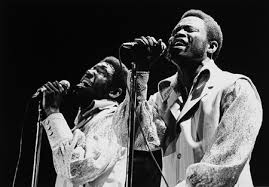
Nicknamed "Double Dynamite", "The Sultans of Sweat", and "The Dynamic Duo" for their gritty, gospel-infused performances, Sam & Dave were one of the greatest live acts of the 1960s. They were an influence on many future musicians, including Bruce Springsteen, Al Green, Tom Petty, Phil Collins, Michael Jackson, Elvis Costello, The Jam, Teddy Pendergrass, Billy Joel and Steve Winwood. The Blues Brothers, who helped create a resurgence of popularity for soul, R&B, and blues in the 1980s, were influenced by Sam & Dave - their biggest hit was a cover of "Soul Man", and their act and stage show had many similarities to the duo.
When Sam & Dave arrived at Stax, they worked with producer & engineer Jim Stewart and songwriters including the MGs' guitarist Steve Cropper, who wrote or co-wrote four of their first eight recordings. The duo then moved to relative newcomer writers and producers Isaac Hayes and David Porter. Hayes and Porter wrote and produced the duo's biggest hits (although they did not receive production credits until the Soul Men LP and singles). According to Moore and Prater, they also greatly influenced the duo's singing style, and had them shift their recording style from the style of their Roulette records to a more live, more energetic gospel, call-and-response feel and beat driven soul style the group is known for today.
Sam & Dave's Stax records also benefited from the musicians and engineering at Stax. The Stax house band, Booker T. & the M.G.'s, and the Stax horn section, the Mar-Keys, had world-class musicians who co-wrote (often without credit) and contributed to recordings—the same musicians who recorded with Otis Redding, Wilson Pickett, Carla Thomas and other soul artists. Sam & Dave's Stax recordings through 1967 were engineered by Stax founder Jim Stewart, who created the Memphis Sound by recording live in a single take. Stewart is credited for instrumental mixes that allowed for instrumental separation and the distinct contribution of each instrument to the overall feel of the song. Hayes and Porter are in the Songwriters Hall of Fame, The Mar-Keys are in the Musicians Hall of Fame, and Booker T. & the MG's, Jim Stewart, Isaac Hayes and Sam & Dave are all in the Rock & Roll Hall of Fame.
While the first two Stax singles failed to chart, the third, the Hayes/Porter composition (with similarities, including the title, to a gospel standard) "You Don't Know Like I Know" hit #7 R&B in 1966. This was the first of 10 consecutive Top Twenty R&B chart hits over three years, and 14 R&B chart appearances during their career. The year 1969 started well, with the Atlantic release of The Best of Sam & Dave LP in January. It contained all their Stax A sides except "A Place Nobody Can Find" and several B-sides, and peaked at #24 on the R&B LP charts and #89 on the Billboard LP charts. Their first single of the year, "Soul Sister, Brown Sugar", returned Sam and Dave to the R&B top 20, and was a #15 hit in the UK. The follow-up "Born Again", reached the lower levels of the charts, and was the last single Sam and Dave recorded at Stax.
_______________________________________________________________


During the early '80s, Atlantic released newer compilations from some of the most popular R&B artists from the '60s, including Aretha Franklin and Wilson Pickett. The Best of Sam & Dave perhaps works even better. Although the duo's 1969 greatest hits remains definitive from a pop culture and song choice perspective, this boasts superior sound and zero filler. Like all of their compilations of merit, The Best of Sam & Dave proves the precision of the backing from Booker T. and the MG's and the duo's most illustrious songwriting team, Isaac Hayes and David Porter. The writing team's masterwork, the amazing and kinetic "Soul Man" was in line with the burgeoning black pride of the time. While other well-known tracks like "When Something Is Wrong With My Baby" and "Hold on, I'm Comin'" are here, The Best of Sam & Dave also culls other songs that are just as potent. The humorous "Said I Wasn't Gonna Tell Nobody" and the hard-driving yet quirky "Wrap It Up" all display the singular one-two punch of Moore's narrow and irascible tone pitted against Prater's woebegone baritone. Arguably the best track, the phenomenal "I Thank You" closes the compilation on a high note. Although the duo did switch officially to Atlantic by the early '70s, this compilation stops at the prime Stax material. The Best of Sam & Dave had a brief shelf life and was supplanted by more extensive overviews. As a compilation spotlighting the hits, this does the job. - Jason Elias / AMG
