Showing posts with label Illinois. Show all posts

Monday, March 3, 2014

Darrow Fletcher - The Pain Gets A Little Deeper

"A child prodigy, Darrow Fletcher started singing when he was six years old. Everybody predicted stardom for the young crooner, who didn't have a shy bone in his body. He recorded his first record while still a student at Hirsch High School; he later attended South Shore. Ironically, the song turned out to be his most popular recording. "The Pain Gets a Little Deeper" was a rough song for a 14-year-old to get into, or so one would think, but Fletcher belted it out as if he had just gone through a knockdown, drag-out divorce. Travels took him to the celebrated chitlin' circuit, where he shared billings with other hot acts. He appeared on many television shows, not big ones like Dick Clark, but smaller soul shows like Ken Hawkins' World of Soul in Cleveland, OH, and Soul Train when it was Chicago-based.

At least three more singles on Groovy Records didn't come close to equaling the minimal success of his debut; he switched labels again and again, but sales never amounted to much. He recorded some singles, though; "Sitting There That Night" was a monster in Chicago, but never got much further than the city limits, due to Jacklyn Records' small budget. He cut "What Good Am I Without You" (1968) for the same label with the same results. Chicago's big city lifestyle, combined with his local success, got him flossy gigs at the Regal Theater with stars such as Stevie Wonder, Jimmy Ruffin, B.B. King, the Radiants, and others. His "The Way of a Man" made CKLW's (Detroit/Windsor) heavy rotation, notching well into the station's Top 20 survey. Pushed and managed by his father, Fletcher tried but never signed to a label with deep pockets. He had two releases on Revue Records that went totally unnoticed everywhere but at the Fletcher abode. In 1970, "Dolly Baby" b/w "What Is This" dropped on Uni Records, but made no noise. "Now Is the Time for Love" came out on Genna Records, another midget.

After a while, Fletcher gave up the dream." AMG

Tuesday, May 14, 2013

Mavis Staples - The Volt Albums

These two albums were dropped in the Shares by our new friend patsoul, thanks to him! I thought they deserved a run up front as these are the only two Stax/Volt records of Mavis as a solo artist. I'm a little concerned as to how long his Mediafire links will last with their new recognition system so I have provided an embedupload link as well.

Here is the first part of her Wiki bio:
"Mavis Staples (born July 10, 1939 in Chicago, Illinois) is an American rhythm and blues and gospel singer, actress and civil rights activist who recorded with The Staple Singers, her family's band.

Mavis Staples began her career with her family group in 1950. Initially singing locally at churches and appearing on a weekly radio show, the Staples scored a hit in 1956 with "Uncloudy Day" for the Vee-Jay label. When Mavis graduated from what is now Paul Robeson High School in 1957, The Staple Singers took their music on the road. Led by family patriarch Roebuck "Pops" Staples on guitar and including the voices of Mavis and her siblings Cleotha, Yvonne, and Purvis, the Staples were called "God's Greatest Hitmakers."

With Mavis' voice and Pops' songs, singing, and guitar playing, the Staples evolved from enormously popular gospel singers (with recordings on United and Riverside as well as Vee-Jay) to become the most spectacular and influential spirituality-based group in America. By the mid-1960s The Staple Singers, inspired by Pops' close friendship with Martin Luther King, Jr., became the spiritual and musical voices of the civil rights movement. They covered contemporary pop hits with positive messages, including Bob Dylan's "A Hard Rain's a-Gonna Fall" and a version of Stephen Stills' "For What It's Worth."

During a December 20, 2008 appearance on National Public Radio's news show "Wait Wait...Don't Tell Me," when Staples was asked about her past personal relationship with Dylan, she admitted they "were good friends, yes indeed" and that he had asked her father for her hand in marriage.

The Staples sang "message" songs like "Long Walk to D.C." and "When Will We Be Paid?," bringing their moving and articulate music to a huge number of young people. The group signed to Stax Records in 1968, joining their gospel harmonies and deep faith with musical accompaniment from members of Booker T. and the MGs. The Staple Singers hit the Top 40 eight times between 1971 and 1975, including two No. 1 singles, "I'll Take You There" and "Let's Do It Again," and a No. 2 single "Who Took the Merry Out of Christmas?"

Staples made her first solo foray while at Epic Records with The Staple Singers releasing a lone single "Crying in the Chapel" to little fanfare in the late 1960s. The single was finally re-released on the 1994 Sony Music collection Lost Soul. Her first solo album would not come until a 1969 self-titled release for the Stax label...(and) another Stax release, Only for the Lonely, in 1970."

Wednesday, April 24, 2013

LaVern Baker - Soul On Fire

One last one for this round of gals.

 "LaVern Baker (November 11, 1929 – March 10, 1997) was an American rhythm and blues singer, who had several hit records on the pop chart in the 1950s and early 1960s. Her most successful records were "Tweedlee Dee" (1955), "Jim Dandy" (1956), and "I Cried a Tear" (1958). She was born Delores LaVern Baker in Chicago, Illinois. She is occasionally referred to as Delores Williams because of an early marriage to Eugene Williams; in the late 1940s he was identified in RCA Victor record company files as "D. L. McMurley." She was the niece of blues singer Merline Johnson and was also related to Memphis Minnie.

She began singing in Chicago clubs such as the Club DeLisa around 1946, often billed as Little Miss Sharecropper, and first recorded under that name in 1949. She changed her name briefly to Bea Baker when recording for Okeh Records in 1951, and then became LaVern Baker when singing with Todd Rhodes and his band in 1952.

In 1953 she signed for Atlantic Records as a solo artist, her first release being "Soul on Fire". Her first hit came in early 1955, with the Latin-tempo "Tweedlee Dee" reaching #4 on the R&B chart and #14 on the national US pop charts. Georgia Gibbs scored the bigger hit with her version of "Tweedle Dee", for which Baker unsuccessfully attempted to sue her.

Baker had a succession of hits on the R&B charts over the next couple of years with her backing group The Gliders, including "Bop-Ting-A-Ling" (#3 R&B), "Play It Fair" (#2 R&B), and "Still" (#4 R&B). At the end of 1956 she had another smash hit with "Jim Dandy" (#1 R&B, #17 pop). It sold over one million copies, and was awarded a gold disc.[2] Further hits followed for Atlantic, including the follow-up "Jim Dandy Got Married" (#7 R&B), "I Cried a Tear" (#2 R&B, #6 pop in 1959), "I Waited Too Long" (#5 R&B, #3 pop, written by Neil Sedaka), "Saved" (#17 R&B, written by Leiber and Stoller), and "See See Rider" (#9 R&B in 1963).

In addition to singing, Baker also did some work with Ed Sullivan and Alan Freed on TV and in films, including Rock, Rock, Rock and Mr. Rock & Roll. In 1964, she recorded a Bessie Smith tribute album, before leaving Atlantic and joining Brunswick Records, where she recorded the album "Let Me Belong to You".

In 1966, Baker recorded a duet single with Jackie Wilson. The controversial song, "Think Twice", featured raunchy lyrics that were not considered appropriate for airplay at that time or even today. Three versions were recorded, one of which is the X-rated version with the raunchy lyrics.

In the late 1960s, she became seriously ill after a trip to Vietnam to entertain American soldiers. While recovering at the US Subic Bay Naval Base in the Philippines, her husband, Slappy White filed for a divorce. A friend recommended that she stay on as the entertainment director at the Marine Corps Staff NCO club there, and she remained there for 22 years.

In 1988 she returned to perform at Madison Square Garden for Atlantic Records' 40th anniversary. She then worked on the soundtracks to films such as Shag, (1989), Dick Tracy, (1990) and A Rage in Harlem (1991), which were all issued on CD.

In 1990, she made her Broadway debut replacing Ruth Brown as star of the hit musical Black and Blue. In 1991, Rhino Records released a new album Live in Hollywood recorded at the Hollywood Roosevelt Cinegrill, as well as a compilation of her greatest Atlantic hits entitled Soul on Fire. In 1992, she recorded a well-received studio album, Woke Up This Morning, for DRG Records. She continued performing after having both legs amputated from diabetes complications in 1994 and made her last recording, "Jump Into the Fire," for the 1995 Harry Nilsson tribute CD, For the Love of Harry on the Music Masters label.

She received the 1990 Pioneer Award from the Rhythm and Blues Foundation. In 1991, Baker became the second female solo artist inducted into the Rock and Roll Hall of Fame, following Aretha Franklin in 1987. Her song "Jim Dandy" was named one of The Rock and Roll Hall of Fame's 500 Songs that Shaped Rock and Roll and was ranked #343 on the Rolling Stone's 500 Greatest Songs of All Time." wikipedia

Monday, January 7, 2013

The Chess Story 1947 - 1975: Part 3 1965 - 1975 (Discs 11 - 13)

Well... this concludes The Chess Story.  I find the latter years to be the weakest in terms of quality.  Clearly compromises were made in pursuit of making money.  Combined with changes in ownership, we are left with really dated and unimportant music.  Still, there are some worthy tunes and overall it's a decent listen.  I guess the point is that, even the worst Chess offerings were better than alot of the music being released during that time.

I have gone through the previous posts and reloaded all of the links.  I hope this will benefit anybody who missed any.  There's a 14th disc featuring interviews with Phil and Marshall Chess, if there's interest I can post it as well... enjoy!!!


The Chess Story 1947 - 1975: Part 2 1957 - 1964 (Discs 8 - 10)

More from the heyday of Chess and the last installment of Part 2...  enjoy!!!


The Chess Story 1947 - 1975: Part 2 1957 - 1964 (Discs 6 & 7)

Hey Gang!!  Sorry about the large delay with this series.  I suppose I have lost some of you but I assure you, I will keep things movin on this one.

We have reached part 2 of the box, and discs 6 & 7 are really representative of the Chess heyday.  Now the label is firmly established and has found its way.  This means they are pumpin out the hits from their now famous roster.

As far as who's who, the list is much like the last couple of discs we heard.  These artists had much to say and the recordings flowed like wine.  I will give you guys some time to absorb these before unleashing the next batch... enjoy!!!


The Chess Story 1947 - 1975: Part 1 1947 - 1956 (Discs 3-5)

With all of the amazing music coming through Chitlins, it's hard to find the right time for a substantial post like this.  Translation:  The time is never right, so here it is!! 

I hope you all enjoyed the first two discs, the next three are even more intruiging as Leonard Chess expands his roster and aspirations.  Individual players from Muddy Waters' band begin succesful recording careers of their own.  New and creative artists like Bo Diddley and Chuck Berry arrive, and by disc 5, Chess is a varied and multi faceted label.

Something that you should know, Leonard Chess also began recording jazz around this time as well.  Gene Ammons, Sonny Stitt and even the great Benny Goodman were some of the first artists to record jazz on the Chess imprint.  I think it would have been a great idea to include the Chess label jazz sides, just as a measure of Leonard Chess' great taste.  Another area which is omitted, would be comedy LPs.  Pigmeat Markham and Moms Mabley were frequent releases during these early years at Chess.  Most of the sides were recorded live, but the comedy album held much esteem back in the day.

For my personal tastes, these 3 discs are the strongest in terms of all around impact.  Musically, creatively and what would eventually be, historically too.  The next few discs are also incredibly strong, so buckle up...  Enjoy!!!


The Chess Story 1947 - 1975: Part 1 1947 - 1956 (Disc 1 & 2)

Chess Records was an American record label based in Chicago, Illinois. It specialized in blues, R&B, soul, gospel music, early rock and roll, and occasional jazz releases.
Run by brothers Leonard and Phil Chess, the company produced and released many important singles and albums, which are now regarded as central to the rock music canon. Musician and critic Cub Koda described Chess Records as "America's greatest blues label."  The Chess Records catalogue is now owned by Universal Music Group and managed by Geffen Records.

Chess Records was based at several different locations on the south side of Chicago, Illinois, initially at two different locations on South Cottage Grove Ave.  The most famous location was 2120 S. Michigan Avenue from around 1956 to 1965, immortalized by British rock group The Rolling Stones in "2120 South Michigan Avenue", an instrumental recorded at that address during their first U.S. tour in 1964; the Stones would record at Chess Studios on two more occasions. The building is now home to Willie Dixon's Blues Heaven Foundation. In the mid-60s Chess re-located to a much larger building at 320 East 21st Street, the label's final Chicago home.

Leonard bought a stake in a record company called Aristocrat Records in 1947; in 1950, Leonard brought his brother, Phil into the operation and they became sole owners of the company, renaming it Chess Records. The first release on Chess was the 78 RPM single "My Foolish Heart" b/w "Bless You" by Gene Ammons, which was released as Chess 1425 in June 1950, and became the label's biggest hit of the year.

In 1951, the Chess brothers began an association with Sam Phillips' Memphis Recording Service. One of the most important recordings that Phillips gave to Chess was "Rocket 88" by Jackie Brenston and his Delta Cats which topped Billboard magazine's R&B Records chart and was inducted into the Grammy Hall of Fame in 1998 because of its influence as a rock and roll single. One of the most important artists that came out of Memphis was Howlin' Wolf, who stayed with the label until his death in 1976.

In 1952, the brothers also started Checker Records as an alternative label for radio play (radio stations would only play a limited number of records for any one imprint). In December 1955, they launched a jazz and pop label called Marterry (a name created from the first names of Leonard and Phil's sons Marshall and Terry). This was quickly renamed Argo Records, but the name was changed again in 1965 to Cadet Records to end confusion with an older British classical music label.

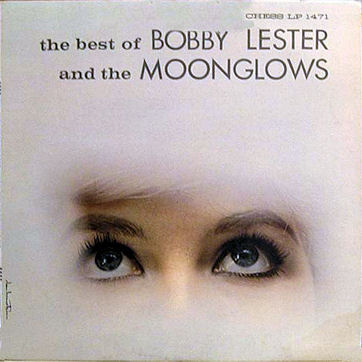
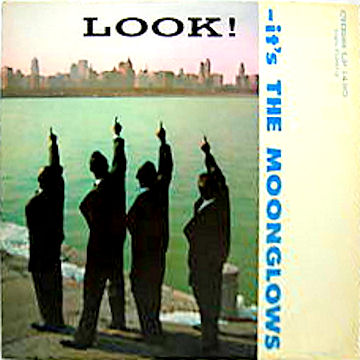
In 1953, Leonard Chess and Gene Goodman set up Arc Music BMI, a publishing company that would publish songs by many rhythm and blues artists. In the mid 1950s the Chess brothers received two doo-wop groups by Alan Freed, the Coronets and the Moonglows; the former group was not very popular but the latter achieved several crossover hits including "Sincerely", which was inducted into the Grammy Hall of Fame in 2002. Several of Chess's releases gave a writing credit to Alan Freed. During the 1950s, Leonard and Phil Chess handled most of the production. They brought in legendary producer, Ralph Bass in 1960 to handle the gospel output and some of the blues singers. Bassist and songwriter Willie Dixon was also heavily involved in organizing blues sessions for the label, and is now credited retroactively as a producer on some re-releases. During the 1960s, the company's A&R manager and chief producer for soul/R&B recordings was Roquel "Billy" Davis, who had previously worked with Motown founder Berry Gordy on songs for Jackie Wilson, Etta James, Marv Johnson and on early Motown releases.

Female fans at a Little Walter store appearance.
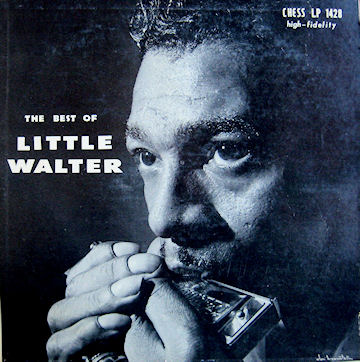
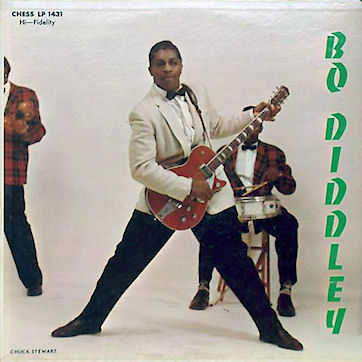
In 1958, Chess began producing their first LP records which included such albums as The Best of Muddy Waters, Best of Little Walter, and Bo Diddley. Chess Records was also known for its regular band of session musicians who played on most of the company's Chicago soul recordings, such as drummer Maurice White and bassist Louis Satterfield, both of whom would later shape the funk group Earth, Wind, & Fire; guitarists Pete Cosey, Gerald Sims and Phil Upchurch; pianist Leonard Caston, later a producer with Motown; and organist Sonny Thompson.

In 1969, Chess Records established a subsidiary label called Middle Earth Records in the U.K., which was distributed by Pye Records. The subsidiary specialized in Psychedelic rock and was a joint venture with the Middle Earth Club in London. The Middle Earth label released only 4 albums titles and about a dozen singles before it was closed in 1970. The company was briefly run by Marshall Chess, son of Leonard, in his position as vice-president between January and October 1969, and then as president, following its acquisition by GRT, before he went on to found Rolling Stones Records. In 1969, the Chess brothers sold the label to General Recorded Tape (GRT) for $6.5 million. In October 1969, Leonard Chess died and by 1972, the only part of Chess Records still operating in Chicago was the recording studio, Ter-Mar Studios.

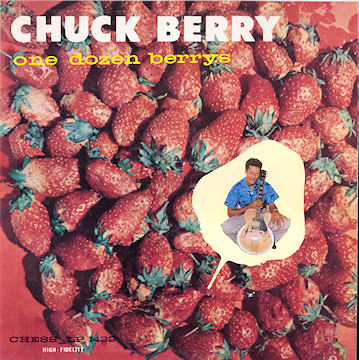
Although Chess had produced many R&B number ones and major pop hits over the years, it was in 1972 that the label finally reached the top of the Billboard Hot 100 with Chuck Berry's "My Ding-A-Ling", a live recording from a concert in Manchester, England. However, this became the company's 'swansong' release. GRT had moved the label to New York City, operating it as a division of Janus Records. Under GRT, Chess effectively vanished as an important force in the recording industry. In August 1975, GRT sold what remained of Chess Records to New Jersey-based All Platinum Records.

In the early 1980s, noticing that much of the Chess catalog was unavailable, Marshall Chess was able to convince Joe and Sylvia Robinson, who ran All Platinum, to re-issue the catalog themselves under his supervision (All Platinum had been licensing selected tracks out to other companies, which ultimately resulted in the disappearance of some original master tapes). The re-issued singles and LPs sold well, but by the mid-80s, All Platinum fell into financial difficulties and the Chess master recordings were acquired by MCA Records, which itself was later merged into Universal Music imprint, Geffen Records.

_______________________________________________

This post marks the beginning of a wonderful journey for all of us.  I'm really excited to share The Chess Story - a 3 part, 14 disc monster of a collection.  The incredible part of the "story" is also told in what it lacks, its jazz arm.  There are some jazz gems included but for the most part we are treated to everything else that Chess was involved in.

Unless you are willing to shell out some big bucks for a copy on the used market, this set has long been OOP.  For those who are fortunate enough to already own it, I encourage you to listen along with us and share your thoughts.

The set runs chronologically, in three parts.  We will kick it off from the formative years, the genesis of Chess.  Part 1 has some really wonderful music, much of which was performed by artists I have never heard of.  I will give you guys some time to listen and hopefully we can get a good chat goin. 

I worked quite hard at tagging this thing as each part has its own cover, title, etc.  I would suggest starting a folder for the entire set, and simply add the discs as you receive them.  Once they are all in your folder, the tagging will be complete and based on that.  Enjoy!!!


First the good news, which is really good: the sound on this 340-song set is about as good as one ever fantasized it could be, and that means it runs circles around any prior reissues; from the earliest Aristocrat sides by the Five Blazers and Jump Jackson & His Orchestra right up through Muddy Waters' "Going Down to Main Street," it doesn't get any better than this set. The clarity pays a lot of bonuses, beginning with the impression that it gives of various artists' instrumental prowess. In sharp contrast to the past efforts in this direction by MCA, however, the producers of this set have not emasculated the sound in the course of cleaning it up, as was the case with the Chuck Berry box, in particular. When the rock & roll era dawns at Chess as depicted on disc five, the sound is nice and dirty, just really sharp. The contents of the set are largely "limited" -- if that's the word for any 340-song collection -- to Chess' blues, R&B, rock & roll, and soul output, although Ramsey Lewis gets a nod, as does comedian Pigmeat Markham. What's more, the care lavished on the songs is virtually universal -- there was time spent getting all of it right. One wishes that the same could be said for one of the featured bonuses on this set, the CD-ROM that comprises the 15th disc (disc 14 is a pair of interviews with Phil Chess and Marshall Chess). First, there are the skimpy film clips, misspellings ("Arether Franklin") and incorrect dates. There also would have been enough room to put a complete Chess discography on the CD-ROM, rather than just the MCA reissues of Chess' material. The CDs themselves conveniently assembled in three fold-out volumes in a slipcase, but identifying individual tracks and artists means constantly referring back to the booklets glued into those volumes; additionally, it would've been nice to have had a sessionography on the songs, or at least the release dates, or even release years. This set is available only as a British import as of the spring of 2000; it is unbeatable for sound, and should be considered on that -- but only on that -- basis.  - Bruce Eder/AMG

Sunday, October 21, 2012

None But The Righteous: Chess Gospel Greats

I thought this would go nicely with our Chess Story. What you will find here is wildly varied in terms of style. It mirrors the secular counterpart in every way, aside from lyrical content. Stripped down, bluesy quartets through to high spirited, funky soul jams.

We also get to hear from some lesser known artists, which is also why I have chosen this album. Aside from greats like Aretha Franklin and The Soul Stirrers, we are treated to local Windy City talent.

We even get treated to Elder Utah Smith. If you missed KC's post, it's here and it's a wild one.
An excellent comp, all pre-approved by Jesus for your eternal enjoyment.

1 Don't You Want To Go - The Meditation Singers
2 None But The Righteous - The Norfleet Brothers
3 Anyway You Bless Me Lord - The Bells Of Joy
4 Never Grow Old - Aretha Franklin
5 Oh What A Meeting - The Soul Stirrers
6 I've Been Weeping For A Mighty Long Time - The Original Five Blind Boys Of Mississippi
7 When My Time Comes - Reverend Alex Bradford
8 Resting Easy - The Soul Stirrers
9 Two Wings - Reverend Utah Smith
10 Your Mother Loves Her Children - Reverend C.L. Franklin
11 Old Time Religion - The Violinaires
12 Life In Heaven Is Free - Cleo Jackson Randle
13 Walk In The Light - The Evangelist Singers Of Alabama
14 The Angels Keep Watching Over Me - Sammy Bryant
15 Floods Of Joy - The Windy City Four
16 I'm Gonna Tell God - Elder Beck
17 You've Got The Jordan River To Cross - Martha Bass
18 Don't Give Up - The Southern Stars

Thursday, September 20, 2012

The Story Of Vee Jay: America's Premier Black Music Label

I am really enjoying these label comps, and the Vee Jay story is a heavy one.  Great music throughout...  enjoy!!

"America's Premier Black Music Label" says the small print on the front sleeve, and while that's highly disputable, Vee-Jay was undoubtedly one of America's premier black music labels from the mid-'50s to the mid-'60s. This two-CD, 50-song set is a strong and varied selection of their wares, focusing mostly but not exclusively on their hit singles and better-known performers. Vee-Jay went into every area of black music, and though their jazz roster isn't represented here to keep the scope more manageable, every other genre is: R&B, doo wop, blues, gospel, rock & roll, and early soul. As with any select condensation of a huge vault, there's bound to be some argument among knowledgeable fans as to what tracks were selected; it seems odd that Billy Boy Arnold's "Rockin'itis" is here rather than his seminal blues "I Wish You Would," for example. But you can't argue with the bounty of hits that are present, from Jerry Butler, Betty Everett, Jimmy Reed, the El Dorados, Dee Clark, John Lee Hooker, the Spaniels, the Dells, Gladys Knight & the Pips, and Gene Chandler. Hits like "Duke of Earl," "The Shoop Shoop Song," "For Your Precious Love," "Every Beat of My Heart," "Raindrops," and "Boom Boom" (all here, of course) might be expected from any Vee-Jay compilation, but to its credit this also has a lot of smaller hits or non-hits that have escaped oldies rotation. There's Fred Hughes' fine midtempo soul-popper "Oo Wee Baby, I Love You," for instance, a number three R&B hit in 1965 that barely made the pop charts; Memphis Slim's mordant blues "Mother Earth"; Hank Ballard's first version of "The Twist," predating both his own hit version and Chubby Checker's cover, recorded in 1958 but not issued until 1985; Little Richard's mid-'60s single "I Don't Know What You Got But It's Got Me," with Jimi Hendrix on guitar; Betty Everett's "You're No Good," just a moderate hit in 1963 but a much bigger one for Linda Ronstadt in the '70s; Jay McShann and Priscilla Bowman's jump blues "Hands Off"; Rosco Gordon's oft-covered R&B classic "Just a Little Bit"; and Gene Allison's early soul ballad "You Can Make It if You Try," covered by the Rolling Stones on their first album. Perhaps it might have made more sense to make the stylistic tone more even and not include gospel cuts as well. But the gospel acts represented here are undeniably important, including the Original Blind Boys of Alabama, the Swan Silvertones, and (on the mid-'50s sides) the Staple Singers.  - by Richie Unterberger /AMG


Sunday, September 9, 2012

The Staple Singers - Freedom Highway

As promised, here is another classic Staples side to help prepare your soul for eternity.  Personally, I find this album comparable in every way to the last post of Circle. 

At several points the group find that incredible vibe which puts the listener into another head space.  Pops guitar is wildly unique in its simplicity and eerieness.

I hope you guys will follow along and grab these Staple albums if you don't have them.  Once I have you properly schooled in their roots, we'll dabble in their secular material.  I will predict that some of you won't even want to bother with it.  While its soulful in its own right, it doesn't even approach their gospel.


Originally released on Epic in 1965 as a live in-church session, Legacy's 1991 reissue of Freedom Highway includes two of the original LP tracks supplemented by some truly spirited late-'60s Epic recordings. Despite the glaring omissions, Freedom Highway never feels like a hastily thrown-together compilation. Instead, it follows an arc that deftly mirrors the religious, political, and social fervor of the '60s as filtered through the warm vibrato of Pops Staples' amplifier and the golden throats of his brood. Gospel standards like "Will the Circle Be Unbroken" and "Wade in the Water" benefit from the full band arrangements, giving them a swift kick of rock & roll that would eventually morph into the soul-funk sound of their popular '70s period. Pops, inspired by his meeting with Martin Luther King, Jr., contributes the wickedly infectious title cut -- one of the two live tracks from the original -- and the incendiary "Why Am I Treated So Bad," a bluesy lament inspired by the hardships of the "Little Rock 9." As always, the vocals and harmonies are nothing short of astounding, most notably on the Mavis Staples-led "Move Along Train" -- never has gospel sounded so sexy. Each song bristles with emotion and resonates deeper with every repeated listen, resulting in an experience that transcends scripture while remaining true to its alternately redemptive and fiery foundations. Freedom Highway captures a family approaching the cusp of catharsis, and its charms lie in the world-weary delivery of its message. Their devotion has been tested and their hands have been bloodied, but their faith has grown into an endless garden because of it, and by the time they reach the spookiest version of "This Train" ever put to tape, listeners will no doubt feel as empowered as the stoic passengers themselves.  - James Christopher Monger/AMG

Columbia 6033
1965

Sunday, September 2, 2012

The Staple Singers - Will The Circle Be Unbroken

Well I'm sure for most of you, your souls have been saved for today.  I had my gospel stuff ready to post, but after working all night, lacked the jam to post this morning.

In any event, here's the first of many from one of my personal faves, The Staple Singers.  This album actually enjoyed some commercial success outside of the gospel circuit.

That was the appeal the Staples brought to their music, it crossed so many boundaries and found fans in "unlikely" places.  Pops eerie and stripped down guitar sound caught the ear of many a rocker.  Singers from all genres flocked to hear Mavis belt out.


For me, their music had a real foreboding - an almost ominous vibe that was part solemn and part joy.  When one considers the times, it makes sense, and although their musical themes deal with the Lord, it's certain that the political landscape of the day would influence their style.

I'm sure many of you have this little gem already, but for any newbies - get ready!  The album includes live recordings which are fantastic.  As I mentioned I will be bringing you guys the best from their gospel days.  Enjoy!!!

Vee Jay LP 5008
1969