Showing posts with label Sound Stage 7. Show all posts

Wednesday, January 24, 2018

Lattimore Brown - Nobody Has to Tell Me

"A singer, songwriter and band leader active on the "chitlin' circuit" of the eastern and southern United States between the 1950s and 1970s, Brown shared a stage with the likes of Etta James, Jackie Wilson, Muddy Waters and Otis Redding.
His 17 singles on seven labels, made between 1960 and 1975, were minor hits. But wider recognition was not encouraged by the online All Music Guide's declaration that he had "retired from music in 1980 and passed away in Arkansas in the subsequent decade".
Certainly fortune did not smile on Brown. When Hurricane Katrina struck in 2005 he was badly injured and his home in Biloxi was destroyed; shortly afterwards his wife died of a heart attack, news of which took five months to reach him. Reduced to living in a trailer home, in 2007 he was stabbed, robbed of his Veterans' Association benefit and left for dead. But these were merely the latest in a series of disasters to which he was prone throughout his life.
He was born LV Brown at Mound Bayou, Mississippi, on August 20 1931, and brought up in cotton fields by his sharecropping grandfather, having never known his parents. While attending a local church he formed a vocal group, The Shady Grove Specials. But after one too many beatings from his aunt, he left aged 12, beginning an itinerant life. By 15 he had married and at 17 he enlisted (illegally) in the Army. The registration process obliged him to invent a full name, and he chose "Lattimore Vernon Brown".
After three years in Korea and Vietnam (before the latter war had officially started), he returned to Mississippi to find his wife pregnant with another man's child. In disgust, Brown again went on the road, in 1953 ending up in Memphis, where the music scene was beginning to boom.
He joined a traveling minstrel show touring the South, and in 1957 met Jimmy "Buzzard" Stewart, through whom he signed with Zil Records, which in 1960 released his first single, Somebody's Gonna Miss Me. After two more, unsuccessful, singles he moved to Dallas, where he set up a club called the Atmosphere Lounge and put together a band. Renowned for their rare ability to read music, they were frequently booked on chitlin' circuit tours.
Brown's extensive contacts helped to keep his club busy until disaster struck in 1963, when his "sleeping" business partner, Jack Ruby, shot President Kennedy's assassin, Lee Harvey Oswald, live on television. Eventually resettling in Nashville, Brown secured a deal with the label Sound Stage 7, and recorded with the producer Willie Mitchell in Memphis.
In 1966 he added "Sir" to his name and the next year signed to Otis Redding's touring agency RedWal, only for the star to die in a plane crash shortly afterwards. Brown's tribute Otis Is Gone (1968) was his most successful recording, but if he thought his fortune had changed, he was wrong.
In the early 1970s he moved to Knoxville, Tennessee, and remarried, setting up The Silver Slipper club with his new wife. It was a successful business, but once again bad luck intervened when she died after unsuccessful heart surgery. Brown drifted back to Little Rock, Arkansas, where he married again. But his new wife died of lung cancer, so he returned to touring the South.
In 1974 an up-and-coming pianist called Benny Latimore shortened his name to "Latimore", and when his fans mistakenly bought tickets to Brown's gigs, there were riots. Work began to dry up for Brown and he was forced to stop performing when he heard that the southern mafia (who owned most of the venues he played in) were furious about the costs of the concert mix-ups, and had put out a contract on his life.
Unsurprisingly, Brown thereafter kept a low profile. A compilation appeared of his work, This Is Lattimore's World (1977), but he never received any royalties.
In the early 1980s he opened Owl's Club in Little Rock, which became a popular after-hours hang-out for local musicians, including one Bill Clinton, who played sax there in his brother Roger's band. But by the end of the decade business had declined and Lattimore once again hit the road.
It was during his convalescence from the mugging in Biloxi in 2007 that a nurse put him in touch with the vintage soul enthusiast and blogger Red Kelly, leading to Brown's first recording in 33 years, Pain In My Heart. The next year he returned to performing, and in 2009 Nobody Has To Tell Me – a remastered collection of his recordings – was released, with liner notes by John Ridley and Red Kelly.
In 2010 Kelly helped to reunite Brown with his children, grandchildren and first wife – all of whom survive him. A deeply religious man, Brown reflected on his misfortunes: "God has blessed me. I've been through many trials and tribulations in life, but so many of us have. The greatest thing in life is to let your heart be kind and respect others as you would have them to do unto you."
Lattimore Brown died on March 25. He had found a new home at Pensacola, Florida, only to be struck by a car

Sam Baker - I Believe In You

Another smoking singer from the vaults of John Richbourg's Sound Stage Seven label. JR clearly had some superior taste in singers!

"He was born in Jackson, MS on 14 June 1941, and unlike many of his contemporaries in the music business went straight to professional secular singing rather than graduating from a gospel group. His influences were bluesmen as well as gospel singers, and he did early gigs with people like Jimmy Reed and Clyde McPhatter which must have been an education in itself.

Apart from Joe Simon, Baker had more 45s issued by John Richbourg on his SS7 label than any other artist – a tribute to both to his talent and Richbourg’s enduring good taste. His second 45, the outstanding Sometimes You Have To Cry, may just be his best ever release. Cut at Stax with the house band in superlative form, Baker is simply unstoppable on his first pure soul effort. The Nashville recorded beat ballad “You Can’t See The Blood” was a good follow-up, but the deep “Let Me Come On Home” and the excellent “Just A Glance Away” were superior. Even better still was the Memphis session that produced That’s All I Want From You and “I Believe In You” with the AGP band doing their usual high quality job in the background.

After a artistic dip, Baker returned to scratch with the lovely, well crafted slowie “I Love You” in 1969, and his best uptempo song for Richbourg “It’s All Over” later the same year. Throughout his stay with SS7 Baker reportedly had many personal problems and Richbourg and he parted company before the last 45 was issued." From Sir Shambling's Deep Soul Heaven

Monday, January 22, 2018

Roscoe Robinson - Why Must It End?

This is your HMOG moment for the day....Astute followers of this space will recall the name 'Roscoe Robinson' cropping up now and again, but mostly on Gospel posts. If you checked out the compilation The Sound Stage 7 Story, then you may recall him from there as well. He is a pretty-much unforgettable singer and here you get a big-ole dose (if not all), of his secular, screamin' southern soul! The songs are pretty decent, but when that voice gets a-hold of you, you won't be spending much time on the songs anyway. -- Just - "Holy Mother... listen to that man sing!!!"

" Roscoe Robinson (born May 22, 1928, Dumont, Arkansas) is an American gospel and soul singer.

Robinson recorded as a gospel solo artist in the 1950s with Trumpet Records, and sang in groups such as The Five Trumpets, Highway QCs, and The Fairfield Four. He began recording secular soul in the 1960s, and had two charting hits: "That's Enough" (U.S. #62, U.S. R&B #7) in 1966, and "Do It Right Now" (U.S. R&B #40) in 1967. Robinson began recording again as a gospel artist in the 1980s, releasing solo albums as well as performing with The Blind Boys of Mississippi, though he is not himself blind. He recorded into the 2000s, releasing the albums So Called Friends in 2003 and Gospel Stroll in 2005." AMG

Saturday, March 18, 2017

Sound Stage 7 Soul Story

A re-post by request - I had forgotten all about this 2 disc compilation (the earlier SS7 collection was only one disc). More proof that John Richbourg had some great taste.


Tuesday, June 16, 2015

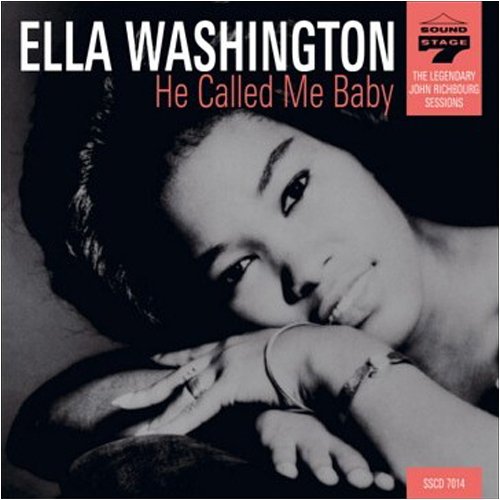
Ella Washington - He Called Me Baby

A repost by request: This originally came from PresLives and all thanks go to him.

The famous Nashville DJ John Richbourg (John R) had an exceptional ear for blues and R&B.  When he created his own Sound Stage 7 label, he brought a number of first rate singers to Muscle Shoals for the production of some classic Southern Soul.   With the exception of Joe Simon, none of these singers had much commercial success, which would appear to be due to the lack of promotion that Sound Stage 7 received outside of the local market.   An earlier post here was devoted to the unique Geater Davis.  We have here a CD collection from Soulscape Records that gathers together virtually all of the Sound Stage 7 recordings of the great soul diva, Ella Washington.  Ella was probably John R's single favorite artist at Sound Stage 7.  She sang at the latter's funeral in 1986.

Ella Washington was born and raised in Miami, Florida.  Her talents first came to the attention of local R&B artists Paul Kelly and Clarence Reid, who helped launch her recording career in the mid-1960s and secured her a few local hits.   She came to the attention of John R in 1967, who recorded her for Sound Stage 7 from 1967-1971.  "He Called Me Baby" brought her the greatest commercial success, making #38 on the National R&B chart and #77 on Billboard.   As you can hear from this collection, however, there are plenty of tracks here that could have been big hits if they had received the proper promotion.

In 1973, Ella Washington retired from secular music and became a gospel singer.   Since that time, she has released only one album, the quite good and obscure "If You Can Take It, You Can Make It."

Ella Washington has just about everything that you could want in a soul diva: a full and powerful voice, impeccable pitch, an ability to move from soft sexy croon to sanctified roar, and the taste to subordinate all of that to the
effective delivery of a song.   She also has a lisp that, in my opinion, actually adds a endearing personal quality to her singing.   Thank God that John R had the sense to take her to the Southern Soul heaven of Muscle Shoals to make this timeless music.  


Thursday, July 10, 2014

Joe Simon - Lookin' Back

Hmmm....did somebody ask about a set of Joe Simon's Sound Stage 7 / Monument tracks? I believe you can also find some links to a couple of the actual albums in the Shares and Requests, but here is a compilation of Simon's work with John Richbourg. (btw Sound Stage 7 was a subsidiary label of Monument.)

It looks like a little bit of Spring material is included in the 1970 material the rest is SS7.

Wednesday, July 3, 2013

Joe Simon - Better Than Ever & Simon Sings

I've been kind of waiting to start Joe Simon with more of his Vee Jay and Sound Stage Seven stuff but neither Cliff nor I have them. Instead we will start the last Sound Stage Seven album from 1969 and the Monument album of the same year. There are 3 other SS7 albums and a Buddha release of the Vee Jay material....anyone?

"Simon was born September 2, 1943 in Simmesport, Louisiana. Similar to many other African-American artists from the era, Simon began singing in his father's Baptist church. He pursued his vocal abilities full-time once the family moved to Richmond (near Oakland, California) in the late 1950s. There Simon joined the Golden West Gospel Singers and became influenced by Sam Cooke and Arthur Prysock. With this, the group decided to turn secular and recorded "Little Island Girl" as the Golden Tones in 1959.

Hush Records label owners Gary and Carla Thompson urged Simon to record on his own, and in 1964 Simon scored considerable success on the Vee-Jay label with "My Adorable One". Simon scored again in 1965 on the Chicago based label with "Let's Do It Over", which landed a #13 spot on the US Billboard R&B chart. However, the Vee-Jay label folded soon after the latter song's release and Simon found himself traveling across the country singing.

Simon caught the eye of Nashville, Tennessee, R&B disc jockey John Richbourg during this time, and Richbourg not only became Simon's manager/record producer but also brought the singer to Monument Records' subsidiary label Sound Stage 7 in 1966. That year Simon released "Teenager's Prayer", which peaked at #11 on Billboard's R&B chart. Within the next two years, Simon released a string of hits: "(You Keep Me) Hanging On", "The Chokin' Kind" (Billboard Hot 100 #13), "Farther On Down The Road", and "Yours Love". "The Chokin' Kind" was written by Harlan Howard, spent 12 weeks in the charts, and had sold one million copies by 16 June 1969. In addition, Simon was given a Grammy Award in 1970 for Best Male R&B Vocal Performance.

Under the encouragement of Richbourg, Simon moved to the Polydor distributed Spring Records label in 1970, which paired Simon with Kenny Gamble and Leon Huff. The team scored a #3 R&B hit in 1971 with "Drowning In The Sea of Love" and a #1 R&B hit in the summer of 1972 with "Power Of Love". Both songs reached #11 on the Hot 100. "Drowning In The Sea of Love" sold over 1.5 million copies and the R.I.A.A. on 6 January 1972 gave a gold disc. "Power of Love", written by Gamble, Huff and Simon was Simon's third million seller, and the R.I.A.A. awarded gold disc status on 29 August 1972.

Simon continued to release R&B hits with "Pool Of Bad Luck", "Trouble In My Home", "Step By Step", "I Need You, You Need Me", "Music In My Bones", "Carry Me", and 1975's "Get Down, Get Down (Get On The Floor)", which gave Simon his third #1 R&B hit, and also a #8 Hot 100 hit. Simon's success escalated with his writing/producing the theme tune for the film, Cleopatra Jones in 1973.

In the late 1970s/early 1980s, Simon decided to remove his tenor/bass-baritone voice from the secular music world and devote it and his life to Christianity. Simon began evangelist preaching in Flossmoor, Illinois. In 1983, he produced the album Lay My Burden Down for former Davis Sisters second lead Jackie Verdell. Simon released a gospel album titled This Story Must Be Told in the late 1990s.

Friday, June 21, 2013

Ann Sexton - The Beginning

In the course of presenting this blog and the reading/research necessary in doing that, I have often been confused by references placing what are to me clearly southern soul artists in something called 'Northern Soul' (note capitals). I have finally come to understand that those references are to a U.K. musical/dance movement that doesn't actually include what I would call northern soul (i.e. Motown, Philly, etc.). How confusing! Anyway that explains the reference in the wiki article below.

"Ann Sexton (born Mary Ann Sexton, February 5, 1950) She was born in Greenville, South Carolina, and is the cousin of singer and songwriter Chuck Jackson. Influenced by gospel music, she sang in her church choir and won local talent shows before singing back-up on a recording by Elijah and the Ebonies. She married the group's saxophonist, Melvin Burton, and the pair formed their own band, Ann Sexton and the Masters of Soul, in the late 1960s.

She was seen performing with the group by songwriter David Lee, the owner of the small local Impel record label, who recorded and released her first solo single, "You're Letting Me Down", in 1971. She then signed to John Richbourg's Seventy 7 Records, part of the Sound Stage 7 group, for whom she recorded a series of singles in Nashville and Memphis, Tennessee. In 1973, "You're Gonna Miss Me" reached no.47 on the Billboard R&B chart, and she released the album Loving You, Loving Me. Many of her recordings were co-written by herself and her husband, and several later became popular on the Northern soul scene in the UK. She recorded ballads as well as dance tracks, and the Sound Stage 7 label released her album The Beginning in 1977. It featured the single "I'm His Wife (You're Just a Friend)" which reached no.79 on the R&B chart.

She later worked at a New York school as a paraprofessional, using her married name Mary Burton. After her 1973 recording of "You're Losing Me" was featured in the 2003 film, 21 Grams, Sonny Hudson, who worked in the same school, answered some internet inquiries about her. Hudson, acting on her behalf and that of the German DJ and promoter Dan Dombrowe, began negotiations and after a lengthy period, Sexton agreed to go on stage again after a 30 year absence. In March 2007, she made her first performance since the 1970s at the Baltic Soul Weekender in Germany. She performed again at the Baltic Soul Weekender in April 2008, and has continued to make occasional appearances at festivals in the US and Europe since then." wiki

Saturday, February 16, 2013

The Sound Stage Seven Story

Not all compilations are created equal. I've experienced compilations that seemed quite exciting on the face turn out to be a yawner, but here is the opposite, a compilation full of obscure names that is a fabulous listening experience. Even those of you who are skeptical about compilations need to give this one a spin. You won't be sorry!

 " Sound Stage 7 was an American, Nashville, Tennessee based record label of the 1960s and 1970s, noted mainly for its soul music releases. The label's biggest star was Joe Simon, who placed numerous singles on the U.S. R&B and pop charts during his 1965-1970 tenure. The label was founded in 1963 by Fred Foster, who had already achieved a measure of success as the founder of Monument Records. Monument was known primarily as a country and pop label. Sound Stage 7 was founded specifically to house artists who were more oriented towards R&B, although in its very early years the label was also home to several pop acts."

You may remember Monument from the Tony Joe White post. The early material which is controlled by Foster has yet to be reissued so I am skipping forward to the chapter covered by the material on THIS disc.

John Richbourg
In mid-1965, Foster struck a deal with John Richbourg who became the label's head of A&R. From this point on, Sound Stage 7 was strictly a soul and R&B label, and almost all of the label's output was produced by Richbourg under the aegis of his JR Enterprises company. Also working for JR Enterprises was the songwriter, co-producer and occasional recording artist, Allen Orange, who was Richbourg's right-hand man until the late 1960s.

Joe Simon
Richbourg's biggest commercial success was bringing Joe Simon to the label in 1966. Simon had already scored two hits on Vee-Jay Records in 1964 and 1965, but was left without a recording contract when that label folded. Richbourg produced fifteen singles for Simon on the label between 1966 and 1970. All of them would make the U.S. pop and/or R&B charts. Simon's biggest success on the label was his 1969 hit "The Chokin' Kind", which hit #1 on the R&B charts, and #13 pop, and sold over a million copies.

The only other charting artists on the label between 1965 and 1970 were Ella Washington and Roscoe Shelton, both of whom had one charting R&B single apiece. Washington and Shelton were also the only artists (other than Simon) to release an album on Sound Stage 7 between 1965 and 1970. Although Sound Stage 7 released over a hundred singles during this era, the label only released eight albums, six of which were by Simon.

Other notable artists on the label during this era, who had chart success either before, or after, their stay at Sound Stage 7 included Roscoe Robinson, Arthur Alexander and Ivory Joe Hunter.

Ella Washington
Roscoe Shelton
Richbourg's production deal with Sound Stage 7 ended in 1970, and Simon left the label the same year. Orange, who had contributed to the label as a songwriter and co-producer also left the company in the late 1960s to form his own label, House of Orange Records. Sound Stage 7 was dormant until late 1971, when Richbourg resumed producing material for the label, albeit at a reduced rate. From 1971 through 1976, Sound Stage 7 only issued twenty one singles. Post-1970, Richbourg devoted much of his production activity to artists at his own labels (Seventy Seven and Sound Plus), as well as producing material for Joe Simon at Simon's new label, Spring.

Joining JR Enterprises as Richbourg's right hand man was Jackey Beavers. Beavers performed much the same function as Orange had in the 1960s, being a frequent songwriter and co-producer of Sound Stage 7 recordings, as well an occasional recording artist in his own right.

Geater Davis
Notable artists on the label's roster during the 1970s included Betty Everett and Ann Sexton. However, the label's only charting artist from 1971 to 1976 was Joe Simon, who hit with the single "Misty Blue" in 1972. The previously unreleased track had been recorded several years earlier, while Simon was still under contract to Sound Stage 7.

In 1977, Ann Sexton charted on the R&B chart with "I'm His Wife (You're Just A Friend)". This would be the label's final hit. Sound Stage 7's final release was the Betty Everett single "Prophecy", released in late 1977.

As part of the deal he made with Foster, Richbourg retained the rights to all the recordings he produced for the label. Various compilation albums have been issued over the years of Sound Stage 7 material, almost all of it drawing on the recordings controlled by JR Enterprises. Much of the Foster-controlled material has yet to see reissue."