The Pitch / Gusman Story
Waymon "Gusman" Jones loved gospel
music. Especially, he loved the rich stirring sounds of the quartets he
heard as a farm boy in rural Georgia, then in his adopted hometown of
Savannah, Georgia, where he set up his Gusman Record Shop. From his
passion came an indispensible legacy of gospel song.
Between 1961
and 1978, Waymon Jones recorded and issued a stream of essential
recordings by the Golden Stars of Greenwood, SC, the White Family
Singers of Savannah, GA, the Six Voices of Zion of Columbia, SC, the
Flying Clouds of Augusta, GA, and many others.
This three- CD set
captures on 71 rare recordings the sounds Jones wanted everyone to
hear, giving 21st century listeners a unique opportunity to roll back
the years and hear the vital and vibrant sounds of a southern
community's gospel music world in a simpler age. The enclosed booklet
features historic group and label photographs and extensive notes by
gospel music researcher and writer Alan Young.
new link
Showing posts with label Georgia. Show all posts
Sunday, May 20, 2018
The Pitch-Gusman Records Story, Vol 1
...for li'l ole lady
1. Golden Stars of Greenwood, SC - Jesus' Blood (2:54)
2. Golden Stars of Greenwood, SC - Jesus Never Left Me (4:00)
3. Abraham Brothers, The - Spirit of the Lord (2:55)
4. Abraham Brothers, The - Pray While You Have a Chance (3:13)
5. Southern Six of Springfield, SC - Lord I Want You To Move (2:53)
6. Southern Six of Springfield, SC - Leave Your Burdens There (2:49)
7. Golden Tones of Savannah, Ga - I Will Answer When the Roll is Called (2:40)
8. Golden Tones of Savannah, Ga - The Minister Was Preaching (3:32)
9. Six Voices of Zion of Columbia, SC - I'm Going Through (3:34)
10. Six Voices of Zion of Columbia, SC - Peace In the Valley (3:06)
11. Travelingaires - Jesus Said He Loves Me (3:05)
12. Travelingaires - Lord's Prayer (3:53)
13. Lighty Singers of Estill, SC - In the Morning When the Trumpet Sound (3:46)
14. Lighty Singers of Estill, SC - Serve the Lord (4:29)
15. Loretta Myles - Jesus Will Never Say No (2:33)
16. Loretta Myles - God is Not Dead (5:00)
17. White Family of Savannah, Ga, The - Help Me Jesus (3:19)
18. White Family of Savannah, Ga, The - I've Been In the Storm So Long (2:47)
19. True-Tone Singers, The - Fight On (2:09)
20. True-Tone Singers, The - Don't Let It Be Said Too Late (2:37)
21. Five Stars of Harmony of Jacksonville, Ga - Precious Lord (4:23)
22. Five Stars of Harmony of Jacksonville, Ga - If I Could Just Hold Out Until Tomorrow (4:49)
23. Piney Grove Spiritual Singers of Milledgeville, Ga - Get Back Satan (3:42)
Waymon "Gusman" Jones loved gospel music. Especially, he loved the rich stirring sounds of the quartets he heard as a farm boy in rural Georgia, then in his adopted hometown of Savannah, Georgia, where he set up his Gusman Record Shop. From his passion came an indispensible legacy of gospel song.
Between 1961 and 1978, Waymon Jones recorded and issued a stream of essential recordings by the Golden Stars of Greenwood, SC, the White Family Singers of Savannah, GA, the Six Voices of Zion of Columbia, SC, the Flying Clouds of Augusta, GA, and many others.
This three- CD set captures on 71 rare recordings the sounds Jones wanted
everyone to hear, giving 21st century listeners a unique opportunity to roll back the years and hear the vital and vibrant sounds of a southern community's gospel music world in a simpler age. The enclosed booklet features historic group and label photographs and extensive notes by gospel music researcher and writer Alan Young
new link
1. Golden Stars of Greenwood, SC - Jesus' Blood (2:54)
2. Golden Stars of Greenwood, SC - Jesus Never Left Me (4:00)
3. Abraham Brothers, The - Spirit of the Lord (2:55)
4. Abraham Brothers, The - Pray While You Have a Chance (3:13)
5. Southern Six of Springfield, SC - Lord I Want You To Move (2:53)
6. Southern Six of Springfield, SC - Leave Your Burdens There (2:49)
7. Golden Tones of Savannah, Ga - I Will Answer When the Roll is Called (2:40)
8. Golden Tones of Savannah, Ga - The Minister Was Preaching (3:32)
9. Six Voices of Zion of Columbia, SC - I'm Going Through (3:34)
10. Six Voices of Zion of Columbia, SC - Peace In the Valley (3:06)
11. Travelingaires - Jesus Said He Loves Me (3:05)
12. Travelingaires - Lord's Prayer (3:53)
13. Lighty Singers of Estill, SC - In the Morning When the Trumpet Sound (3:46)
14. Lighty Singers of Estill, SC - Serve the Lord (4:29)
15. Loretta Myles - Jesus Will Never Say No (2:33)
16. Loretta Myles - God is Not Dead (5:00)
17. White Family of Savannah, Ga, The - Help Me Jesus (3:19)
18. White Family of Savannah, Ga, The - I've Been In the Storm So Long (2:47)
19. True-Tone Singers, The - Fight On (2:09)
20. True-Tone Singers, The - Don't Let It Be Said Too Late (2:37)
21. Five Stars of Harmony of Jacksonville, Ga - Precious Lord (4:23)
22. Five Stars of Harmony of Jacksonville, Ga - If I Could Just Hold Out Until Tomorrow (4:49)
23. Piney Grove Spiritual Singers of Milledgeville, Ga - Get Back Satan (3:42)
Waymon "Gusman" Jones loved gospel music. Especially, he loved the rich stirring sounds of the quartets he heard as a farm boy in rural Georgia, then in his adopted hometown of Savannah, Georgia, where he set up his Gusman Record Shop. From his passion came an indispensible legacy of gospel song.
Between 1961 and 1978, Waymon Jones recorded and issued a stream of essential recordings by the Golden Stars of Greenwood, SC, the White Family Singers of Savannah, GA, the Six Voices of Zion of Columbia, SC, the Flying Clouds of Augusta, GA, and many others.
This three- CD set captures on 71 rare recordings the sounds Jones wanted
everyone to hear, giving 21st century listeners a unique opportunity to roll back the years and hear the vital and vibrant sounds of a southern community's gospel music world in a simpler age. The enclosed booklet features historic group and label photographs and extensive notes by gospel music researcher and writer Alan Young
new link
Monday, January 22, 2018
Willie Hobbs - A Penny For Your Thoughts +
Repost by request:
There certainly isn't much in the way of info about this guy out there. Even Sir Shambling couldn't produce much more than date and place of birth and some disco-graphical info (born: Doerun, Georgia on 1 Sept 1944).
Hobbs had a 20+ year career, appears to have moved around a fair amount, but the largest portion of his work was issued on John Richbourg's family of Sound Stage 7 labels. There IS one compilation out there that focus' on the SS7 material, but neither Cliff nor I have it - If you do, please drop me a note and a link if possible.
I went on a search the other evening after listening to the song on the Sun anthology and cobbled together 18 tracks spanning the first decade or so of his recordings. This is really kind of a fishing expedition to see if any of you have any more.
Okay, since I wrote all that Preslives has blessed me with the Sound Stage 7 disc! This flushes us out to some 28 tracks which I've combined to one file for this repost.
There certainly isn't much in the way of info about this guy out there. Even Sir Shambling couldn't produce much more than date and place of birth and some disco-graphical info (born: Doerun, Georgia on 1 Sept 1944).
Hobbs had a 20+ year career, appears to have moved around a fair amount, but the largest portion of his work was issued on John Richbourg's family of Sound Stage 7 labels. There IS one compilation out there that focus' on the SS7 material, but neither Cliff nor I have it - If you do, please drop me a note and a link if possible.
I went on a search the other evening after listening to the song on the Sun anthology and cobbled together 18 tracks spanning the first decade or so of his recordings. This is really kind of a fishing expedition to see if any of you have any more.
Okay, since I wrote all that Preslives has blessed me with the Sound Stage 7 disc! This flushes us out to some 28 tracks which I've combined to one file for this repost.
Monday, May 22, 2017
Howard Tate - Get It While You Can (The Legendary Sessions)

Howard Tate (August 13, 1939 – December 2, 2011) was an American soul singer and songwriter.
He moved with his family to Philadelphia in the early 1940s. In his teens, he joined a gospel music group that included Garnet Mimms and, as the Gainors, recorded rhythm and blues sides for Mercury Records and Cameo Records in the early 1960s. Tate performed with organist Bill Doggett and returned to Philadelphia.
Mimms, leading a group called the Enchanters, introduced Tate to record-producer Jerry Ragovoy, who began recording Tate for Verve Records. Utilizing New York session musicians such as Paul Griffin, Richard Tee, Eric Gale, Chuck Rainey, and Herb Lovell, Tate and Ragovoy produced, from 1966 to 1968, a series of soul blues recordings that are regarded as some of the most sophisticated of the era. "Ain't Nobody Home" (1966), "Look at Granny Run Run" (1966), "Baby I Love You" (1967), and "Stop" (1968) all written or co-written by Ragovoy, were well received by record buyers. "Ain't Nobody Home", "Look At Granny" and "Stop" charted in the Top 20 in the US Billboard R&B chart.
Janis Joplin performed another of Tate's Ragavoy songs, "Get It While You Can", (on Pearl) during this time. Tate's reputation among critics was high. As Robert Christgau wrote in his review of Tate's Verve material, "Tate is a blues-drenched Macon native who had the desire to head north and sounds it every time he gooses a lament with one of the trademark keens that signify the escape he never achieved. He brought out the best in soul pro Jerry Ragovoy, who made Tate's records jump instead of arranging them into submission, and gave him lyrics with some wit to them besides."

Tate, working apart from Ragovoy, made an album called Howard Tate's Reaction that was released in 1970 on Turntable Records. Produced by Lloyd Price and Johnny Nash, it was distributed in small quantities. Christgau wrote, "Tate's voice is potent enough to activate more inert material." The record was reissued, as Reaction, in 2003. Ragovoy and Tate reunited for the 1972 Atlantic Records Howard Tate, which included more songs by Ragovoy, along with Tate's cover versions of Bob Dylan's "Girl from the North Country" and Robbie Robertson's and Levon Helm's "Jemima Surrender."

After recording a single for Epic Records and a few songs for his own label, Tate retired from the music industry in the late 1970s. He sold securities in the New Jersey and Philadelphia area, and in the 1980s developed a dependence on drugs, ending up living in a homeless shelter. In the mid-1990s, Tate began counselling drug abusers and the mentally ill, and worked as a preacher.
A disc jockey from Camden, New Jersey, Phil Casden, discovered Tate's whereabouts early in 2001, and in spring 2001 Tate played his first date in many years, in New Orleans. He then began working with Ragovoy on an album that was released, as Rediscovered, in 2003. It included covers of songs by Elvis Costello and Prince, as well as a new version of "Get It While You Can."
At the Roskilde Festival in 2004, he sang "Love Will Keep You Warm" with Swan Lee. The song can be found on Swan Lee - The Complete Collection (2007).
In 2006, Shout! Factory released Howard Tate Live, recorded in Denmark in 2004. Working with producer, arranger and songwriter, Steve Weisberg, Tate recorded A Portrait of Howard, which was released in 2006 on the independent Solid Ground label. It included compositions by Randy
Tate was also a judge for the 6th annual Independent Music Awards to support independent artists' careers.
2010 saw a release of a limited vinyl only, direct-to-disc live recording from Blue Heaven Studios, with Tate and his touring quartet performing songs from his catalog.
On December 2, 2011, Tate died from complications of multiple myloma and leukemia, aged 72
Friday, May 5, 2017
J.P. Robinson - What Can I Tell Her?
Repost by request - FROM ME!
Some things just need to be out there now and again. Most of the old guard here have had this for years now, but join me in the joy of imagining the jaw dropping moment of new folk discovering this dude.
OH, OH, MY, MY, My Prepare thy selves to receive a miracle!
How is it that there are still these guys who stop you dead in your tracks from the first moment you hear them; guys who are singing great songs with fine arrangements, one after another, and yet even rabid soul fans have heard at best only a stray track or two. Hell, even Howard Tate was better known than John Pooderou Robinson!
It is kind of fitting to drop this bomb in the midst of our O.V. fest, once you have heard J.P. you will see why. Robinson had the same kind of magical timing and control to wring every last bit of passion from every lyric, but he also has that unhinged quality that reminds me of Tate or Little Willie John. If you can listen to What Can I Tell Her or the jaw dropping George Jackson (which easily joins the ranks of 10 best Dylan covers ever) and not at least get a lump in your throat, then we may need to check your pulse.
This was a rare talent whose voice leaps out through the speaker. The songs paint him the ultimate heartbreaking bad boy whose passion always brings them back no matter how badly he has strayed.
He was allegedly an unbelievably intense performer who regularly left women weeping and shrieking in the aisles. Producer Willie Clark recalled
"J.P. seemed to go berserk at the microphone. He was so caught up in the feel of his songs, at times we thought we would have to hit him with a bat to calm him down. He was electric! When he was going to do a recording session, people would try to get in on it just to watch him work. His sessions were like watching a show."
There is a fine essay from John Ridley (Sirshambling of Deep Soul Heaven) in the notes to provide your biographical information on this one. This is a new release and this mp3 sample is provided to hip you to it and get you to go buy one! It is only by our patronage that these amazing discoveries will continue to find light of day. Besides which, how much fun will it be to spring this one on your musically savvy friends?
Full credit to Unkie Cliff on this discovery and the disc.
Some things just need to be out there now and again. Most of the old guard here have had this for years now, but join me in the joy of imagining the jaw dropping moment of new folk discovering this dude.
OH, OH, MY, MY, My Prepare thy selves to receive a miracle!
How is it that there are still these guys who stop you dead in your tracks from the first moment you hear them; guys who are singing great songs with fine arrangements, one after another, and yet even rabid soul fans have heard at best only a stray track or two. Hell, even Howard Tate was better known than John Pooderou Robinson!
It is kind of fitting to drop this bomb in the midst of our O.V. fest, once you have heard J.P. you will see why. Robinson had the same kind of magical timing and control to wring every last bit of passion from every lyric, but he also has that unhinged quality that reminds me of Tate or Little Willie John. If you can listen to What Can I Tell Her or the jaw dropping George Jackson (which easily joins the ranks of 10 best Dylan covers ever) and not at least get a lump in your throat, then we may need to check your pulse.
This was a rare talent whose voice leaps out through the speaker. The songs paint him the ultimate heartbreaking bad boy whose passion always brings them back no matter how badly he has strayed.
He was allegedly an unbelievably intense performer who regularly left women weeping and shrieking in the aisles. Producer Willie Clark recalled
"J.P. seemed to go berserk at the microphone. He was so caught up in the feel of his songs, at times we thought we would have to hit him with a bat to calm him down. He was electric! When he was going to do a recording session, people would try to get in on it just to watch him work. His sessions were like watching a show."
There is a fine essay from John Ridley (Sirshambling of Deep Soul Heaven) in the notes to provide your biographical information on this one. This is a new release and this mp3 sample is provided to hip you to it and get you to go buy one! It is only by our patronage that these amazing discoveries will continue to find light of day. Besides which, how much fun will it be to spring this one on your musically savvy friends?
Full credit to Unkie Cliff on this discovery and the disc.
Tuesday, September 6, 2016
The Best of James and Bobby Purify
"The vocal duo of James Lee Purify (born May 12, 1944, Pensacola, Florida) and his cousin Robert Lee Dickey (September 2, 1939, Tallahassee, Florida – December 29, 2011, Tallahassee) formed in 1965. Dickey had previously worked as a guitarist with the Dothan Sextet. The duo were signed by Don Schroeder to Bell Records in 1966, with Dickey taking his cousin's surname as a stage name. They had immediate success with "I'm Your Puppet", written by Spooner Oldham and Dan Penn and produced by Penn at the FAME Studios in Muscle Shoals, Alabama. The record, released in September 1966, spent 14 weeks on the US chart and sold an estimated one million copies.
Although "I'm Your Puppet" was their biggest hit, they had several further successes on both the Hot 100 and R&B chart in the US in the late 1960s, including a revival of "Shake a Tail Feather", originally by The Five Du-Tones, and "Let Love Come Between Us". Oliver's cover of the twosome's 1968 hit "I Can Remember" reached the top 25 of the Billboard Easy Listening Chart in the mid summer of 1970. The duo continued to record and tour together until 1971, when Dickey retired from the music business for health reasons and returned to Tallahassee, where he worked as a city maintenance supervisor as well as singing and playing guitar with his church and as a member of the Bethlehem Male Singers.
James Purify then worked as a solo singer until 1974, when Penn introduced him to Ben Moore (James B. Moore, born 1941, Atlanta, Georgia). Moore had previously worked with Otis Redding, James Brown and as a member of Jimmy Tig and the Rounders, before forming half of the duo Ben and Spence, who recorded for Atlantic Records in the 1960s. Moore adopted the stage name "Bobby Purify", and the duo toured together until the 1980s. They re-recorded "I'm Your Puppet", which became a #12 hit in the UK in 1976, and an album, Purify Bros...Moore began recording as a solo singer for Mercury Records in 1977, and (as "Bobby Purify") released an album, Purified in 1979. He also continued to tour as half of the duo with James Purify. He was nominated for a Grammy Award in 1983, in the category of Best Soul Gospel Performance - Traditional, for the song "He Believes In Me". In 1998, Moore went blind from severe glaucoma and completely dropped out of the music industry. With the encouragement of Ray Charles, however, he returned to performing and recording. Following a new Bobby Purify album, the Dan Penn-produced Better To Have It in 2005, he joined the gospel band Blind Boys of Alabama."
Saturday, May 14, 2016
Billy Ward and his Dominos
Billy Ward (born Robert L. Williams, 19 September 1921, Savannah, Georgia, died 16 February 2002, Inglewood, California grew up in Philadelphia, the second of three sons of Charles Williams and Cora Bates Williams, and was a child musical prodigy, winning an award for a piano composition at the age of 14. Following military service with the Coast Guard Artillery Choir he studied music in Chicago, and at the Juilliard School of Music in New York. While working as a vocal coach and part-time arranger on Broadway, he met talent agent Rose Marks, who became his business and songwriting partner.
The pair set out to form a vocal group from the ranks of his students, hoping to cash in on the new trend of vocal quintets in R&B. The group was at first called the Ques, composed of Clyde McPhatter (lead tenor), whom Ward recruited after McPhatter won "Amateur Night" at the Apollo Theater, Charlie White (tenor), Joe Lamont (baritone), and Bill Brown (bass). Ward acted as their pianist and arranger. After the group made successful appearances on talent shows in the Apollo Theater and on the Arthur Godfrey show in 1950, Rene Hall recommended them to Ralph Bass of Federal Records, a subsidiary of King, where they were signed to a recording contract and renamed themselves The Dominoes. Their first single release, "Do Something For Me", with McPhatter’s lead vocal, reached the R&B charts in early 1951, climbing to #6.
After a less successful follow-up, the group released "Sixty Minute Man", on which Brown sang lead, and boasted of being able to satisfy his girls with fifteen minutes each of "kissin'" "teasin'" and "squeezin'", before "blowin'" his "top". It reached #1 on the R&B chart in May 1951 and stayed there for 14 weeks, and crossed over to the pop charts, reaching #17 and voted "Song of the Year" for 1951. It was an important record in several respects—it crossed the boundaries between gospel singing and blues, its lyrics pushed the limits of what was deemed acceptable, and it appealed to many white as well as black listeners. In later years, it became a contender for the title of "the first rock and roll record".
The group toured widely, building up a reputation as one of the top R&B acts of the era, edging out the Five Keys and the Clovers (two of the top R&B groups of the early 1950s) and commanding an audience which crossed racial divides. However, Ward's strict disciplinarian approach, and failure to recompense the singers, caused internal problems. "Billy Ward was not an easy man to work for. He played piano and organ, could arrange, and he was a fine director and coach. He knew what he wanted, and you had to give it to him. And he was a strict disciplinarian. You better believe it! You paid a fine if you stepped out of line," according to Jackie Wilson. Ward most likely got the idea of levying fines against group members from his tenure in the military. Article 15 of the Uniform Code of Military Justice gives a unit commander authority to mete a certain amount of punishment to troops under his or her command without going through a court-martial, which includes fines (partial forfeiture of pay).
The name "The Dominoes" was owned by Ward and Marks, who had the power to hire and fire, and to pay the singers a salary. Clyde McPhatter was being paid barely enough to live on, even though most of the Dominoes' success was due to McPhatter's soaring vocal abilities. "Whenever I'd get back on the block where everybody'd heard my records - half the time I couldn't afford a Coca-Cola," according to McPhatter. Allegedly, Ward paid his singers $100 a week, minus deductions for taxes, food and hotel bills. McPhatter often found himself billed as "Clyde Ward" to fool fans into thinking he was Billy Ward's little brother. Others assumed Ward was doing the lead singing.
White and Brown both left in 1951 to form the Checkers, and were replaced by James Van Loan (1922–1976) and David McNeil (1932–2005, previously of the Larks). In March 1952, the Dominoes were chosen to be the only vocal group at Alan Freed's "Moondog Coronation Ball". The hits continued, with "Have Mercy Baby" topping the R&B charts for 10 weeks in 1952. Later records were credited to "Billy Ward and His Dominoes".
In early 1953, McPhatter decided to leave, and soon formed his own group, the Drifters. His replacement in the Dominoes was Jackie Wilson, who had been coached by McPhatter while also singing with the group on tour. Lamont and McNeil also left and were replaced by Milton Merle and Cliff Givens (Givens had been in The Southern Sons Gospel Quartet, and joined the Ink Spots in 1944 upon the death of original bass Orville "Hoppy" Jones). With Wilson singing lead, singles such as "You Can't Keep A Good Man Down" continued to be successful, although the Dominoes didn't enjoy quite the same success as they had with McPhatter as lead tenor.
In 1954, Ward moved the group to the Jubilee label and then to Decca, where they enjoyed a #27 pop hit with "St. Therese of the Roses", featuring Wilson on tenor, giving the Dominoes a brief moment in the spotlight again. However, the group was unable to follow that success in the charts, and there were a succession of personnel changes. They increasingly moved away from their R&B roots with appearances in Las Vegas and elsewhere. Elvis Presley went to hear Jackie Wilson and the Dominoes in Las Vegas in 1956 and was so impressed with Wilson's singing that he went back to Sun Studios and cut the Million Dollar Quartet's version
of Don't Be Cruel. Elvis introduces the song by saying how Wilson sang it much better than him and then proceeds to do an impersonation of the much slower Dominoes version, backed by Johnny Cash, Carl Perkins and Jerry Lee Lewis.
In late 1957, Wilson left for a solo career and was replaced by Gene Mumford of the Larks. Then, the group got a new contract with Liberty Records. They had a #13 pop hit with "Stardust". Stardust was one of the earliest multitrack recordings in the rock & roll era. The session was on March 7, 1957. The tapes have been mixed into true stereo. This is one of the very first songs (1957) by a rock & roll/RnB artist in real stereo. The track also reached #13 in the UK Singles Chart in October 1957. It was to be their only million seller. This proved to be their last major success, although various line-ups of the group continued recording and performing into the 1960s.
They were inducted into the Vocal Group Hall of Fame in 2006.
The pair set out to form a vocal group from the ranks of his students, hoping to cash in on the new trend of vocal quintets in R&B. The group was at first called the Ques, composed of Clyde McPhatter (lead tenor), whom Ward recruited after McPhatter won "Amateur Night" at the Apollo Theater, Charlie White (tenor), Joe Lamont (baritone), and Bill Brown (bass). Ward acted as their pianist and arranger. After the group made successful appearances on talent shows in the Apollo Theater and on the Arthur Godfrey show in 1950, Rene Hall recommended them to Ralph Bass of Federal Records, a subsidiary of King, where they were signed to a recording contract and renamed themselves The Dominoes. Their first single release, "Do Something For Me", with McPhatter’s lead vocal, reached the R&B charts in early 1951, climbing to #6.
After a less successful follow-up, the group released "Sixty Minute Man", on which Brown sang lead, and boasted of being able to satisfy his girls with fifteen minutes each of "kissin'" "teasin'" and "squeezin'", before "blowin'" his "top". It reached #1 on the R&B chart in May 1951 and stayed there for 14 weeks, and crossed over to the pop charts, reaching #17 and voted "Song of the Year" for 1951. It was an important record in several respects—it crossed the boundaries between gospel singing and blues, its lyrics pushed the limits of what was deemed acceptable, and it appealed to many white as well as black listeners. In later years, it became a contender for the title of "the first rock and roll record".The group toured widely, building up a reputation as one of the top R&B acts of the era, edging out the Five Keys and the Clovers (two of the top R&B groups of the early 1950s) and commanding an audience which crossed racial divides. However, Ward's strict disciplinarian approach, and failure to recompense the singers, caused internal problems. "Billy Ward was not an easy man to work for. He played piano and organ, could arrange, and he was a fine director and coach. He knew what he wanted, and you had to give it to him. And he was a strict disciplinarian. You better believe it! You paid a fine if you stepped out of line," according to Jackie Wilson. Ward most likely got the idea of levying fines against group members from his tenure in the military. Article 15 of the Uniform Code of Military Justice gives a unit commander authority to mete a certain amount of punishment to troops under his or her command without going through a court-martial, which includes fines (partial forfeiture of pay).
The name "The Dominoes" was owned by Ward and Marks, who had the power to hire and fire, and to pay the singers a salary. Clyde McPhatter was being paid barely enough to live on, even though most of the Dominoes' success was due to McPhatter's soaring vocal abilities. "Whenever I'd get back on the block where everybody'd heard my records - half the time I couldn't afford a Coca-Cola," according to McPhatter. Allegedly, Ward paid his singers $100 a week, minus deductions for taxes, food and hotel bills. McPhatter often found himself billed as "Clyde Ward" to fool fans into thinking he was Billy Ward's little brother. Others assumed Ward was doing the lead singing.
White and Brown both left in 1951 to form the Checkers, and were replaced by James Van Loan (1922–1976) and David McNeil (1932–2005, previously of the Larks). In March 1952, the Dominoes were chosen to be the only vocal group at Alan Freed's "Moondog Coronation Ball". The hits continued, with "Have Mercy Baby" topping the R&B charts for 10 weeks in 1952. Later records were credited to "Billy Ward and His Dominoes".
In early 1953, McPhatter decided to leave, and soon formed his own group, the Drifters. His replacement in the Dominoes was Jackie Wilson, who had been coached by McPhatter while also singing with the group on tour. Lamont and McNeil also left and were replaced by Milton Merle and Cliff Givens (Givens had been in The Southern Sons Gospel Quartet, and joined the Ink Spots in 1944 upon the death of original bass Orville "Hoppy" Jones). With Wilson singing lead, singles such as "You Can't Keep A Good Man Down" continued to be successful, although the Dominoes didn't enjoy quite the same success as they had with McPhatter as lead tenor.
In 1954, Ward moved the group to the Jubilee label and then to Decca, where they enjoyed a #27 pop hit with "St. Therese of the Roses", featuring Wilson on tenor, giving the Dominoes a brief moment in the spotlight again. However, the group was unable to follow that success in the charts, and there were a succession of personnel changes. They increasingly moved away from their R&B roots with appearances in Las Vegas and elsewhere. Elvis Presley went to hear Jackie Wilson and the Dominoes in Las Vegas in 1956 and was so impressed with Wilson's singing that he went back to Sun Studios and cut the Million Dollar Quartet's version of Don't Be Cruel. Elvis introduces the song by saying how Wilson sang it much better than him and then proceeds to do an impersonation of the much slower Dominoes version, backed by Johnny Cash, Carl Perkins and Jerry Lee Lewis.
In late 1957, Wilson left for a solo career and was replaced by Gene Mumford of the Larks. Then, the group got a new contract with Liberty Records. They had a #13 pop hit with "Stardust". Stardust was one of the earliest multitrack recordings in the rock & roll era. The session was on March 7, 1957. The tapes have been mixed into true stereo. This is one of the very first songs (1957) by a rock & roll/RnB artist in real stereo. The track also reached #13 in the UK Singles Chart in October 1957. It was to be their only million seller. This proved to be their last major success, although various line-ups of the group continued recording and performing into the 1960s.
They were inducted into the Vocal Group Hall of Fame in 2006.
Saturday, January 31, 2015
Millie Jackson - Live and Uncensored
Mildred "Millie" Jackson (born July 15, 1944) is an American singer-songwriter and comedienne. Three of her albums have been certified gold by the RIAA for over 500,000 copies.
Her vocal performances are often distinguished by long, humorous, and explicit spoken sections in her music, which she started doing on stage to get the attention of the audience. She has also recorded songs in a disco or dance music style and even some country styled songs. She is the mother of Keisha Jackson.
Born in Thomson, Georgia, Jackson is the daughter of a sharecropper. Her mother died when she was a child and subsequently, she and her father moved to Newark, New Jersey. By the time Jackson was in her mid-teens, she had moved to Brooklyn to live with an aunt. She occasionally worked as a model for magazines like JIVE and Sepia.
Jackson's singing career reportedly began on a dare to enter a 1964 Harlem nightclub talent contest, which she won. Although she first recorded for MGM Records in 1970, she soon left and began a long association with New York-based Spring Records. Working with the label's in-house producer, Raeford Gerald, her first single to chart was 1971's deceptively titled "A Child of God (It's Hard to Believe)," which reached number 22 on the R&B charts. In 1972, Jackson had her first R&B Top Ten single with the follow-up, "Ask Me What You Want", which also reached the pop Top 30, then "My Man, A Sweet Man" reached #7 R&B; all three hits were co-written by Jackson. "My Man, A Sweet Man" retains its popularity today for northern soul enthusiasts and is played on the radio in the UK and quoted as an example from this musical genre as is her 1976 recording, "A House for Sale". The following year brought her biggest single success and her third Top Ten hit, "It Hurts So Good," which made #3 on the R&B charts and #24 on the Billboard Hot 100 pop chart. The single was featured on the album of the same name and in the blaxploitation film Cleopatra Jones, also appearing on that film's soundtrack along with the song "Love Doctor".
In 1974, she released the album Caught Up, which introduced her innovative style of raunchy rap. The featured release was her version of Luther Ingram's million-seller, "(If Loving You Is Wrong) I Don't Want to Be Right", for which she received two Grammy nominations. By now, she had switched producers to work only with Brad Shapiro, recording at Muscle Shoals Studio in Alabama with the renowned Muscle Shoals Rhythm Section. She continued to record most of her material for Spring there, including the follow-up album, Still Caught Up.
Over the next ten years, Jackson had a string of successful albums and numerous R&B chart entries, the biggest being her 1977 version of Merle Haggard's country hit "If You're Not Back In Love By Monday". That hit single was followed by many more, including her version of the Boney M. song, the disco single, "Never Change Lovers In The Middle of The Night." This single peaked at #33 on the Black Singles chart in 1979.
Jackson recorded an album in 1979 with Isaac Hayes called "Royal Rappin's" and the same year saw her release a double album, "Live And Uncensored", recorded in concert at Los Angeles venue, The Roxy. Jackson also formed and produced the group Facts of Life. They had a major hit in 1976 with "Sometimes" (#3 R&B, #31 Pop). wiki
Her vocal performances are often distinguished by long, humorous, and explicit spoken sections in her music, which she started doing on stage to get the attention of the audience. She has also recorded songs in a disco or dance music style and even some country styled songs. She is the mother of Keisha Jackson.
Born in Thomson, Georgia, Jackson is the daughter of a sharecropper. Her mother died when she was a child and subsequently, she and her father moved to Newark, New Jersey. By the time Jackson was in her mid-teens, she had moved to Brooklyn to live with an aunt. She occasionally worked as a model for magazines like JIVE and Sepia.
Jackson's singing career reportedly began on a dare to enter a 1964 Harlem nightclub talent contest, which she won. Although she first recorded for MGM Records in 1970, she soon left and began a long association with New York-based Spring Records. Working with the label's in-house producer, Raeford Gerald, her first single to chart was 1971's deceptively titled "A Child of God (It's Hard to Believe)," which reached number 22 on the R&B charts. In 1972, Jackson had her first R&B Top Ten single with the follow-up, "Ask Me What You Want", which also reached the pop Top 30, then "My Man, A Sweet Man" reached #7 R&B; all three hits were co-written by Jackson. "My Man, A Sweet Man" retains its popularity today for northern soul enthusiasts and is played on the radio in the UK and quoted as an example from this musical genre as is her 1976 recording, "A House for Sale". The following year brought her biggest single success and her third Top Ten hit, "It Hurts So Good," which made #3 on the R&B charts and #24 on the Billboard Hot 100 pop chart. The single was featured on the album of the same name and in the blaxploitation film Cleopatra Jones, also appearing on that film's soundtrack along with the song "Love Doctor".
In 1974, she released the album Caught Up, which introduced her innovative style of raunchy rap. The featured release was her version of Luther Ingram's million-seller, "(If Loving You Is Wrong) I Don't Want to Be Right", for which she received two Grammy nominations. By now, she had switched producers to work only with Brad Shapiro, recording at Muscle Shoals Studio in Alabama with the renowned Muscle Shoals Rhythm Section. She continued to record most of her material for Spring there, including the follow-up album, Still Caught Up.
Over the next ten years, Jackson had a string of successful albums and numerous R&B chart entries, the biggest being her 1977 version of Merle Haggard's country hit "If You're Not Back In Love By Monday". That hit single was followed by many more, including her version of the Boney M. song, the disco single, "Never Change Lovers In The Middle of The Night." This single peaked at #33 on the Black Singles chart in 1979.
Jackson recorded an album in 1979 with Isaac Hayes called "Royal Rappin's" and the same year saw her release a double album, "Live And Uncensored", recorded in concert at Los Angeles venue, The Roxy. Jackson also formed and produced the group Facts of Life. They had a major hit in 1976 with "Sometimes" (#3 R&B, #31 Pop). wiki
Thursday, January 22, 2015
Millie Jackson - On The Country Side
I am taking some degree of malicious glee in using THIS album as my first Millie Jackson post. Of course if this is your first exposure, then YOU are one of those having the friendly joke played on you. In others words, this album is nothing like your average release from this Chitlin Circuit Queen.
"The Bitch Is Back
Rock and roll from the ‘50s was credited with mixing white musical styles, such as country and pop, with black music, such as R&B and gospel. However, by the early ‘70s, the genres had separated. Classic soul and country rock were being created with little ethnic intermixing, which reflected what was going on in the larger society. But the truth is country and soul came out of the same Southern places before rock even existed, and the influence the two had on each other has always been clear to discerning listeners.
Consider Millie Jackson. Her deep soul albums of the ‘70s, such as It Hurts So Good, Still Caught Up and Feelin’ Bitchy, contained a country leavening in the way Jackson accentuated the language and phrased her way across a melody, not to mention the fact that she frequently covered country songs on these albums. There was also something about her attitude. You couldn’t call her a redneck, but then again she retitled “Redneck Crazy” as “Black Bitch Crazy” on the one new song on this collection. They are pretty much the same things.
Anyway, it should not seem a surprise that Jackson released a straight country record back in 1980 called Just a Li’l Bit Country. She covered such deliciously emotive material as Don Gibson’s “I Can’t Stop Lovin’ You”, Tammy Wynette’s “Till I Get it Right” and Howard Harlan’s “Pick Me Up on Your Way Down”. She also, for some reason, included a few non-country items, such as Neil Diamond’s “Love on the Rocks”. The album flopped, which Jackson attributes to personnel changes at the record company. That may be true, but the original album was spotty and not all the songs top notch.
Which is probably why there are only five of 10 Just a Li’l Bit Country tracks included on the recent anthology of Jackson’s country music, mostly recorded between 1977 and 1981, featured on The Soul Country Collection. The 17-cut collection contains some real gems, including her 1977 top 10 soul cover of Merle Haggard’s “If You’re Not Back in Love By Monday” and the 1978 top 40 soul hit version of Kenny Rogers’ “Sweet Music Man”. These work because Jackson takes these songs straight on. There is nothing gimmicky about them.
Less successful are the more disco-fied and less sacrosanct covers, like Barbara Mandrell’s “Angel in Your Arms”. She camps it up too much, and the instruments blare over her voice in a lackluster arrangement. Mitchell’s too good to have to be trendy to succeed. Sure, it may be fun to change Kris Kristofferson’s bawdy “Anybody That Don’t Like Hank Williams” into the irreverent “Anybody That Don’t Like Millie Jackson”, but the joke wears thin before the song is over.
Jackson’s a major talent who doesn’t always get her due because she often performs blue. That was and is her trademark, but there is little of that here. Instead, this disc offers a chance for listeners to hear a neglected side of an overlooked artist. Soul lovers may revel in the already available classic albums from the past, but there is much to offer music fans here." By Steve Horowitz 6 November 2014
"The Bitch Is Back
Rock and roll from the ‘50s was credited with mixing white musical styles, such as country and pop, with black music, such as R&B and gospel. However, by the early ‘70s, the genres had separated. Classic soul and country rock were being created with little ethnic intermixing, which reflected what was going on in the larger society. But the truth is country and soul came out of the same Southern places before rock even existed, and the influence the two had on each other has always been clear to discerning listeners.
Consider Millie Jackson. Her deep soul albums of the ‘70s, such as It Hurts So Good, Still Caught Up and Feelin’ Bitchy, contained a country leavening in the way Jackson accentuated the language and phrased her way across a melody, not to mention the fact that she frequently covered country songs on these albums. There was also something about her attitude. You couldn’t call her a redneck, but then again she retitled “Redneck Crazy” as “Black Bitch Crazy” on the one new song on this collection. They are pretty much the same things.
Anyway, it should not seem a surprise that Jackson released a straight country record back in 1980 called Just a Li’l Bit Country. She covered such deliciously emotive material as Don Gibson’s “I Can’t Stop Lovin’ You”, Tammy Wynette’s “Till I Get it Right” and Howard Harlan’s “Pick Me Up on Your Way Down”. She also, for some reason, included a few non-country items, such as Neil Diamond’s “Love on the Rocks”. The album flopped, which Jackson attributes to personnel changes at the record company. That may be true, but the original album was spotty and not all the songs top notch.
Which is probably why there are only five of 10 Just a Li’l Bit Country tracks included on the recent anthology of Jackson’s country music, mostly recorded between 1977 and 1981, featured on The Soul Country Collection. The 17-cut collection contains some real gems, including her 1977 top 10 soul cover of Merle Haggard’s “If You’re Not Back in Love By Monday” and the 1978 top 40 soul hit version of Kenny Rogers’ “Sweet Music Man”. These work because Jackson takes these songs straight on. There is nothing gimmicky about them.
Less successful are the more disco-fied and less sacrosanct covers, like Barbara Mandrell’s “Angel in Your Arms”. She camps it up too much, and the instruments blare over her voice in a lackluster arrangement. Mitchell’s too good to have to be trendy to succeed. Sure, it may be fun to change Kris Kristofferson’s bawdy “Anybody That Don’t Like Hank Williams” into the irreverent “Anybody That Don’t Like Millie Jackson”, but the joke wears thin before the song is over.
Jackson’s a major talent who doesn’t always get her due because she often performs blue. That was and is her trademark, but there is little of that here. Instead, this disc offers a chance for listeners to hear a neglected side of an overlooked artist. Soul lovers may revel in the already available classic albums from the past, but there is much to offer music fans here." By Steve Horowitz 6 November 2014
Saturday, October 11, 2014
Bill Yates - Blues Like Midnight
"Bill Yates belonged to the final wave of Sun recording artists, the acts that comprised the very last singles released by Sam Phillips' legendary label in the early '60s. Memphis-based Yates was a piano player and a soulful singer, so it's not surprising that his closest antecedent was Charlie Rich, who left Sun not long before Yates signed. None of Yates singles were hits but he did wind up with some of the better singles Sun released during this closing act.
Yates was born on December 21, 1936 in Columbus, Georgia, the son of an evangelist. Bill sang in church as he grew up and, as a teen, he and his brother Vance started to seriously pursue music, planning to earn a living as traveling musicians. They began by touring in Georgia and Alabama and, at some point in 1958, it appears Bill Yates wound up making his recording debut playing piano on the Phantom's rockabilly cult classic "Love Me." Around this time, Bill relocated to Memphis, where he became friends with drummer and bandleader Billy Adams, who became a close associate of Yates' for a number of years. Memphis led him to a loose association with Elvis Presley and he headed out to Hollywood in 1961 as part of the King's entourage, working as a bodyguard. This was irregular work and Yates often came back to Memphis to gig, often working with Adams, usually at the south Memphis club Hernando's Hide-A-Way. This Yates-Adams band also featured a number of players who became fixtures around Memphis, playing regular gigs and sessions for a variety of labels. Soon, Yates and Adams were both cutting sessions at Hi Studios that wound up being released either on the upstart Home of the Blues or its sister imprint 1st Records in 1961. "All I Need Is You"/"Mojo" was Yates first release, which didn't do much, then the label folded so the next Yates singles culled from Home of the Blues sessions -- "Fool Around with Love" and "Blues Like Midnight" -- were licensed to King Records in 1962...see more
Wednesday, August 20, 2014
Chick Willis - From The Heart And Soul
Cousin to the late blues ballad singer Chuck Willis, Robert "Chick" Willis is primarily beloved for his ribald, dozens-based rocker "Stoop Down Baby." The guitarist cut his original version in 1972 for tiny La Val Records of Kalamazoo, MI, selling a ton of 45s for the jukebox market only (the tune's lyrics were way too raunchy for airplay).
Willis left the military in 1954, hiring on as valet and chauffeur to cousin Chuck, then riding high with his many R&B hits for OKeh Records. At that point, Chick's primary role on the show was as a singer (he made his own vinyl debut in 1956 with a single, "You're Mine," for Lee Rupe's Ebb Records after winning a talent contest at Atlanta's Magnolia Ballroom), but he picked up the guitar while on the road with his cousin (Chick cites Guitar Slim as his main man in that department).
When Chuck died of stomach problems in 1958, Willis soldiered on, pausing in Chicago to work as a sideman with slide guitar great Elmore James. A few obscure 45s ("Twistin' in the Hospital Ward," cut for Alto in 1962, sounds promising) preceded the advent of "Stoop Down Baby," which Willis has freshened up for countless sequels ever since (he developed the song by teasing passersby with his ribald rhymes while working in a carnival variety show).
Risqué material remained a staple of Willis's output in recent years. He released a steady stream of albums on Ichiban Records in the 1980s and 1990s, and continued to record into the 2000s.
He died on December 7, 2013, aged 79.
Willis left the military in 1954, hiring on as valet and chauffeur to cousin Chuck, then riding high with his many R&B hits for OKeh Records. At that point, Chick's primary role on the show was as a singer (he made his own vinyl debut in 1956 with a single, "You're Mine," for Lee Rupe's Ebb Records after winning a talent contest at Atlanta's Magnolia Ballroom), but he picked up the guitar while on the road with his cousin (Chick cites Guitar Slim as his main man in that department).
When Chuck died of stomach problems in 1958, Willis soldiered on, pausing in Chicago to work as a sideman with slide guitar great Elmore James. A few obscure 45s ("Twistin' in the Hospital Ward," cut for Alto in 1962, sounds promising) preceded the advent of "Stoop Down Baby," which Willis has freshened up for countless sequels ever since (he developed the song by teasing passersby with his ribald rhymes while working in a carnival variety show).
Risqué material remained a staple of Willis's output in recent years. He released a steady stream of albums on Ichiban Records in the 1980s and 1990s, and continued to record into the 2000s.
He died on December 7, 2013, aged 79.
Clarence Reid - Dancin' With Nobody But You Babe 1969
Before there was Blowfly, there was Clarence Reid, a fine Southern Soul singer a little too late for his time. This is his first album.
"Singer/songwriter/producer Clarence Reid, like David Bowie and P-Funk's George Clinton, had multiple musical personalities. One was of an earnest Southern soul singer, born February 14, 1945, in Cochran, GA, and recorded for TK Records president Henry Stone's Alston imprint. His Billboard-charting singles were "Nobody but You Babe" (number seven R&B summer 1969, on the Atlantic LP), "Good Old Days" (early 1972), and "Funky Party" (summer 1974). He co-wrote hits for Betty Wright ("Girls Can't Do What the Guys Do"), the million-selling "Clean Up Woman," "Baby Sitter," and "Let Me Be Your Lovemaker." For Gwen McCrae, Reid co-wrote and co-produced "Rockin' Chair," which reached the pop Top Ten in 1975,
In his other persona, he performed X-rated material under the pseudonym Blowfly. Reid also helped Richard Finch get a job with TK Records and introduced Harry Wayne "K.C." Casey to junkanoo, the festive party music that would be the core sound of Casey and Finch's '70s supergroup KC and the Sunshine Band. Clarence Reid-related releases are When a Man Cries: The Deep Soul of Scepter/Wand, in addition to many Blowfly releases."
"Singer/songwriter/producer Clarence Reid, like David Bowie and P-Funk's George Clinton, had multiple musical personalities. One was of an earnest Southern soul singer, born February 14, 1945, in Cochran, GA, and recorded for TK Records president Henry Stone's Alston imprint. His Billboard-charting singles were "Nobody but You Babe" (number seven R&B summer 1969, on the Atlantic LP), "Good Old Days" (early 1972), and "Funky Party" (summer 1974). He co-wrote hits for Betty Wright ("Girls Can't Do What the Guys Do"), the million-selling "Clean Up Woman," "Baby Sitter," and "Let Me Be Your Lovemaker." For Gwen McCrae, Reid co-wrote and co-produced "Rockin' Chair," which reached the pop Top Ten in 1975,
In his other persona, he performed X-rated material under the pseudonym Blowfly. Reid also helped Richard Finch get a job with TK Records and introduced Harry Wayne "K.C." Casey to junkanoo, the festive party music that would be the core sound of Casey and Finch's '70s supergroup KC and the Sunshine Band. Clarence Reid-related releases are When a Man Cries: The Deep Soul of Scepter/Wand, in addition to many Blowfly releases."
Saturday, May 10, 2014
Tampa Red - The Guitar Wizard 1935-1953 [VINYL RIP]
Also known as "the Guitar Wizard," the blues musician Tampa Red was a master of the slide guitar..."Tampa Red" Whittaker, born in Smithville, Georgia, was raised in Tampa, Florida, and became one of the most prominent blues musicians in Chicago, Illinois, during the 1930s and 1940s. Whittaker made several successful recordings with "Georgia Tom" Dorsey, a blues pianist and fellow Georgia native. Though little known today, he was a popular and influential performer whose recording career extended from 1928 to 1960.
Born Hudson Woodbridge on January 8, 1904, in Smithville, Georgia, he was raised in Tampa, Florida, by his grandmother's family, the Whittakers, whose name he adopted. He was already known as Tampa Red when he arrived in Chicago in the mid-1920s, fresh from the southern theater circuit. He worked a day job but played guitar on street corners and in clubs, looking for a break. It came when he was hired to accompany Gertrude "Ma" Rainey, through whom he met pianist Georgia Tom Dorsey. In 1928 Tampa Red and Georgia Tom recorded "It's Tight Like That." A jaunty, ragtime-influenced number with whimsically bawdy lyrics, it was a national hit on the Vocalion label. Tampa Red and Dorsey recorded several successful follow-up songs as the Hokum Boys, and the "hokum" style became a depression-era fad.
Such early recordings demonstrate Tampa Red's already sophisticated slide guitar technique. Playing a metal-bodied National Tricone guitar and sliding a bottleneck along the strings, he created a clear and pure sound, marked by deft single-string solos. His session work appears on many recordings by other artists, including Sonny Boy Williamson and Memphis Minnie. His urbane musicianship stood in sharp contrast to earlier slide-guitar blues and would help set the direction for the postwar style.With the repeal of prohibition in 1933, venues for blues music proliferated in Chicago, and Tampa Red became one of the city's hottest live acts, often with the backing of his band, the Chicago Five. With his close friends Big Bill Broonzy and Lester Melrose, a producer for Bluebird Records, Tampa Red was a leader of the Chicago scene. His wife, Frances, acted as his business manager, and their home became an informal boarding house, booking agency, and rehearsal space, where many newcomers to the city found encouragement and support.
By 1940 Tampa Red had made the transition to electric guitar, and he reached the top ten on the rhythm-and-blues chart several times in the postwar period. His 1949 song "When Things Go Wrong with You (It Hurts Me Too)" became a signature tune for the artist Elmore James. Robert Nighthawk, Fats Domino, and B. B. King also scored hits with cover versions of his songs.His wife's death in 1953 was a blow from which Tampa Red never recovered. He had always been a heavy drinker, and his alcoholism became acute. Like many of his contemporaries, he was "rediscovered" by a new audience in the late 1950s. He went back into the studio in 1960, but his final recordings were undistinguished. He died destitute in Chicago on March 19, 1981, and was inducted into the Blues Foundation's Hall of Fame the same year. He is buried in Glenwood, Illinois.
Monday, March 24, 2014
Atlanta Blues 1933
The John Edwards Memorial Foundation released this lp of previously unreleased material from Bubby Moss, Blind Willie McTell, and Curley Weaver in 1979. Most of the recordings have at least two of the three principals on them. In general, the songs and recordings are quite good but I give fair warning that the last 2 tacks of side one have a good amount of distortion in the vocals.
Thursday, February 13, 2014
Sam & Dave - The Definitive Soul Collection
I've been reading an excellent history of Stax records which lead me to dig out this Rhino set. From the book I've learned that Sam and Dave were never really a Stax act, they were always signed to Atlantic and only 'on loan' to Stax. This became another of the deep wounds Stax suffered when they split from Atlantic subsequent to the sale of that label to Warner Brothers.
The distribution agreement between Stax and Atlantic had been a handshake deal between Jim Stewart and Jerry Wexler until 1965. During the period when Stax had just discovered their breakout star in Otis Redding and Wexler was bringing his new singer Wilson Pickett to Memphis, it was decided to finally formalize and put to print the deal which had been in place for years. Stewart viewed this as a move to protect Stax's interests against any upheavals at the larger label and his main goal was to include a 'key man' clause that let him escape the deal should Wexler's position change. Wexler brought the contract with him when he brought Pickett to Stax and after checking that the base terms were unchanged and the key man clause was included, Stewart and, allegedly, Wexler both signed the contract without actually reading the entire 13 page document. Are you hearing some ominous chords in the background?
The first Pickett session produced Midnight Hour amongst other hits and shortly thereafter, Wexler sent his newly signed duo Sam & Dave to Memphis, much to their dismay as both had assumed that they would be in the big New York studios. It took a few sessions to convince them they were in the right place after all.
The rest of 1965 through 1966 and most of 1967 things went well for both labels, despite the difficult blowup over Pickett's second visit to Stax when he behaved so badly that Stewart told Wexler to never bring him to Stax again. Wexler ended up taking Wilson to Muscle Shoals and, unfortunately for Stax, he took his next star Aretha there as well. Otis Redding and Sam & Dave were, however, enjoying great success so while there were some bad feelings in the pot, overall things were still cooking for both labels.
In December of 1967 Redding took a break from a period of furious writing and recording to do a small tour to fulfill some obligations, but was expected back at Stax the following week to continue the roll he was on. After a show in Cleveland, Ohio Otis and his new teenage band the Bar-kays were flying to Milwaukee in Redding's new plane. He had just bought a larger one so that the band could fly with him. The plane crashed into a small lake near Milwaukee, only one of the Bar-kays survived.
While all of Stax was still reeling from the loss of Otis and the group of talented teenagers who had nearly grown up in their studios, news came that Atlantic was being purchased by Warner Brothers. Stewart felt reasonably secure with his key man clause, so when Atlantic/Warner came up with a low-ball offer to acquire Stax as well, he refused and invoked the clause to gain Stax's freedom. It was near the end of those negotiations that Wexler dropped twin bombs that put Stax's future in doubt. First he informed them that Atlantic was taking Sam & Dave back (now they had lost their two biggest acts) and it was also revealed that Atlantic's lawyers had buried two clauses in the distribution agreement that gave Atlantic ownership of the masters to every record they had ever distributed for Stax, even retroactive to the deal; essentially the entire catalog of the label. Stax had done all the work, spent all their own money on the recordings and Wexler's shyster lawyers had stolen all of it.
To this day Wexler claims to have known nothing about the clauses and says that both he and Ahmet Ertegun attempted to intercede in Stax's behalf and implore Warner Brothers to return the masters, but to no avail. Somehow their behavior in making the low-ball offer to acquire Stax gives lie to that claim as it seems clear that they knew of the clauses during the negotiations and didn't reveal the truth until Stewart refused their offer. It is one of the worst stories of corporate greed that has ever been perpetrated in the record industry.
The distribution agreement between Stax and Atlantic had been a handshake deal between Jim Stewart and Jerry Wexler until 1965. During the period when Stax had just discovered their breakout star in Otis Redding and Wexler was bringing his new singer Wilson Pickett to Memphis, it was decided to finally formalize and put to print the deal which had been in place for years. Stewart viewed this as a move to protect Stax's interests against any upheavals at the larger label and his main goal was to include a 'key man' clause that let him escape the deal should Wexler's position change. Wexler brought the contract with him when he brought Pickett to Stax and after checking that the base terms were unchanged and the key man clause was included, Stewart and, allegedly, Wexler both signed the contract without actually reading the entire 13 page document. Are you hearing some ominous chords in the background?
The first Pickett session produced Midnight Hour amongst other hits and shortly thereafter, Wexler sent his newly signed duo Sam & Dave to Memphis, much to their dismay as both had assumed that they would be in the big New York studios. It took a few sessions to convince them they were in the right place after all.The rest of 1965 through 1966 and most of 1967 things went well for both labels, despite the difficult blowup over Pickett's second visit to Stax when he behaved so badly that Stewart told Wexler to never bring him to Stax again. Wexler ended up taking Wilson to Muscle Shoals and, unfortunately for Stax, he took his next star Aretha there as well. Otis Redding and Sam & Dave were, however, enjoying great success so while there were some bad feelings in the pot, overall things were still cooking for both labels.
In December of 1967 Redding took a break from a period of furious writing and recording to do a small tour to fulfill some obligations, but was expected back at Stax the following week to continue the roll he was on. After a show in Cleveland, Ohio Otis and his new teenage band the Bar-kays were flying to Milwaukee in Redding's new plane. He had just bought a larger one so that the band could fly with him. The plane crashed into a small lake near Milwaukee, only one of the Bar-kays survived.
While all of Stax was still reeling from the loss of Otis and the group of talented teenagers who had nearly grown up in their studios, news came that Atlantic was being purchased by Warner Brothers. Stewart felt reasonably secure with his key man clause, so when Atlantic/Warner came up with a low-ball offer to acquire Stax as well, he refused and invoked the clause to gain Stax's freedom. It was near the end of those negotiations that Wexler dropped twin bombs that put Stax's future in doubt. First he informed them that Atlantic was taking Sam & Dave back (now they had lost their two biggest acts) and it was also revealed that Atlantic's lawyers had buried two clauses in the distribution agreement that gave Atlantic ownership of the masters to every record they had ever distributed for Stax, even retroactive to the deal; essentially the entire catalog of the label. Stax had done all the work, spent all their own money on the recordings and Wexler's shyster lawyers had stolen all of it.
To this day Wexler claims to have known nothing about the clauses and says that both he and Ahmet Ertegun attempted to intercede in Stax's behalf and implore Warner Brothers to return the masters, but to no avail. Somehow their behavior in making the low-ball offer to acquire Stax gives lie to that claim as it seems clear that they knew of the clauses during the negotiations and didn't reveal the truth until Stewart refused their offer. It is one of the worst stories of corporate greed that has ever been perpetrated in the record industry.
Saturday, February 1, 2014
Otis Redding - The Complete Stax/Volt Singles
Is it really possible that this is the first Otis Redding post? Wow, hard to believe, but I guess I would assume he's one guy EVERYONE would have a lot of. This 2013 set collects all the Stax/Volt singles; most, if not all, are the original mono versions. No matter what you already have in your collection, you still probably need this...after all, it's OTIS!!
" Otis Ray Redding, Jr. (September 9, 1941 – December 10, 1967) was an American singer, songwriter, record producer, arranger and talent scout. He is considered one of the greatest singers in popular music and a major artist in soul and rhythm and blues. His singing style was powerfully influential among soul artists of 1960s and helped exemplify the Stax Sound.
After appearing at the 1967 Monterey Pop Festival Redding wrote and recorded the iconic "(Sittin' On) The Dock of the Bay" with Steve Cropper. The song became the first posthumous number-one record on both the Billboard Hot 100 and R&B charts after his death in a plane crash. The Dock of the Bay became the first posthumous album to reach number one on the UK Albums Chart.
Born and raised in Georgia, United States, Redding left school at 15 to support his family, working with Little Richard's backing band, the Upsetters, and performing at talent shows for prize money. In 1958, he joined Johnny Jenkins' band, the Pinetoppers, and toured the Southern United States as driver and musician. An unscheduled appearance on a Stax recording session led to a contract and his first single, "These Arms of Mine", in 1962. Stax released Redding's debut album, Pain in My Heart, two years later.
Initially popular mainly with African Americans, Redding later reached the broader American popular music audience. He and his group first played small gigs in the South, then debuted in the western United States at LA's popular Whisky a Go Go. They later performed in Paris, London and other European cities.
Redding's premature death devastated Stax. Already on the verge of bankruptcy, the label soon discovered that Atlantic Records owned the rights to his entire catalog.
Redding received many posthumous accolades, including the Grammy Lifetime Achievement Award and induction into the Rock and Roll Hall of Fame and the Songwriters Hall of Fame. He received the honorific "King of Soul". In addition to "(Sittin' On) The Dock of the Bay," "Respect" and "Try a Little Tenderness" are among his best known songs."
" Otis Ray Redding, Jr. (September 9, 1941 – December 10, 1967) was an American singer, songwriter, record producer, arranger and talent scout. He is considered one of the greatest singers in popular music and a major artist in soul and rhythm and blues. His singing style was powerfully influential among soul artists of 1960s and helped exemplify the Stax Sound.
After appearing at the 1967 Monterey Pop Festival Redding wrote and recorded the iconic "(Sittin' On) The Dock of the Bay" with Steve Cropper. The song became the first posthumous number-one record on both the Billboard Hot 100 and R&B charts after his death in a plane crash. The Dock of the Bay became the first posthumous album to reach number one on the UK Albums Chart.Born and raised in Georgia, United States, Redding left school at 15 to support his family, working with Little Richard's backing band, the Upsetters, and performing at talent shows for prize money. In 1958, he joined Johnny Jenkins' band, the Pinetoppers, and toured the Southern United States as driver and musician. An unscheduled appearance on a Stax recording session led to a contract and his first single, "These Arms of Mine", in 1962. Stax released Redding's debut album, Pain in My Heart, two years later.
Initially popular mainly with African Americans, Redding later reached the broader American popular music audience. He and his group first played small gigs in the South, then debuted in the western United States at LA's popular Whisky a Go Go. They later performed in Paris, London and other European cities.
Redding's premature death devastated Stax. Already on the verge of bankruptcy, the label soon discovered that Atlantic Records owned the rights to his entire catalog.
Redding received many posthumous accolades, including the Grammy Lifetime Achievement Award and induction into the Rock and Roll Hall of Fame and the Songwriters Hall of Fame. He received the honorific "King of Soul". In addition to "(Sittin' On) The Dock of the Bay," "Respect" and "Try a Little Tenderness" are among his best known songs."
Thursday, October 10, 2013
Ida Cox - Blues For Rampart Street
In my mind this album and the preceding Alberta Hunter post just belong together! Another absolute essential!
"Ida Cox sang in church choirs as a child in Georgia. She ran away from home in 1910 when she was a teenager and performed in minstriel and tent shows as a comedienne and singer. Sometime during this period she married a performer minstriel named Alder Cox.
Ida worked her way into vaudeville and eventually became a headliner. She toured the country throughout the Teens and 1920s sometimes singing with Jazz greats like Jelly Roll Morton and with King Oliver at the Plantation Cafe in Chicago. In 1923 she began her recording contract with the Paramount label, who billed her as the Uncrowned Queen of the Blues. She recorded extensively throughout the 1920s often using pseudonyms such as Kate Lewis, Velma Bradley, Julia Powers and Jane Smith. Cox wrote many of her own songs, and had several of her own touring companies such as Raisin' Cain and Darktown Scandals which criss-crossed the country during the late 1920s and early 1930s.
Unlike many of the Classic Blues singers of the 1920s Cox continued to perform and occasionally record during the Depression. She was married to Blues pianist Jesse Crump during the 1920s and 1930s. They recorded together often for Paramount. In 1934 Cox and Bessie Smith appeared together in the musical revue Fan Waves at the Apollo Theatre. She spent most of the rest of the decade on the road until 1939 when she performed regularly at the Cafe Society night club in New York City. She also appeared in John Hammond's Spirituals to Swing concert at Carnegie Hall in 1939. which briefly revitaled her recording career. She released records under the name of Ida Cox and her Allstar Band and Ida Cox and her Allstar Orchestra during this time period.
In the mid 1940's she had a stroke and passed out during a performance in New York. She left show business and moved to Knoxville, Tennessee where she lived with her daughter. Some time in the 1950s she began performing again sporadically. In 1961, Cox recorded for the last time on the Riverside label. The album was called "Blues for Rampart Street". She was accompanied by the Coleman Hawkins Quintet on this record. She died of cancer in 1967. " redhotjazz.com
"Ida Cox sang in church choirs as a child in Georgia. She ran away from home in 1910 when she was a teenager and performed in minstriel and tent shows as a comedienne and singer. Sometime during this period she married a performer minstriel named Alder Cox.
Ida worked her way into vaudeville and eventually became a headliner. She toured the country throughout the Teens and 1920s sometimes singing with Jazz greats like Jelly Roll Morton and with King Oliver at the Plantation Cafe in Chicago. In 1923 she began her recording contract with the Paramount label, who billed her as the Uncrowned Queen of the Blues. She recorded extensively throughout the 1920s often using pseudonyms such as Kate Lewis, Velma Bradley, Julia Powers and Jane Smith. Cox wrote many of her own songs, and had several of her own touring companies such as Raisin' Cain and Darktown Scandals which criss-crossed the country during the late 1920s and early 1930s.
Unlike many of the Classic Blues singers of the 1920s Cox continued to perform and occasionally record during the Depression. She was married to Blues pianist Jesse Crump during the 1920s and 1930s. They recorded together often for Paramount. In 1934 Cox and Bessie Smith appeared together in the musical revue Fan Waves at the Apollo Theatre. She spent most of the rest of the decade on the road until 1939 when she performed regularly at the Cafe Society night club in New York City. She also appeared in John Hammond's Spirituals to Swing concert at Carnegie Hall in 1939. which briefly revitaled her recording career. She released records under the name of Ida Cox and her Allstar Band and Ida Cox and her Allstar Orchestra during this time period. In the mid 1940's she had a stroke and passed out during a performance in New York. She left show business and moved to Knoxville, Tennessee where she lived with her daughter. Some time in the 1950s she began performing again sporadically. In 1961, Cox recorded for the last time on the Riverside label. The album was called "Blues for Rampart Street". She was accompanied by the Coleman Hawkins Quintet on this record. She died of cancer in 1967. " redhotjazz.com
Tuesday, October 8, 2013
Beverly 'Guitar' Watkins - Back In Business
From the current issue of Offbeat...
“When we were in our mothers’ wombs, God had decided what he wanted us to be,” says Beverly “Guitar” Watkins, “and he wanted me to be a musician.” Upon seeing the 74-year-old Watkins play fiery guitar solos—often with her guitar slung behind her head—over her hard-edged mix of blues and early rock and roll, it is hard to disagree with the Lord’s designation. Even after over 50 years in the music business, Watkins still sees music as a vocation rather than a job. “Blues is a feeling,” says Watkins, “and I’m grateful I’ve had a lot of opportunities to go out and share the blues.”
Watkins’ musical life began in ’40s rural Georgia, where she did not have much growing up. “We didn’t have electric lights in the country back in those days. We used kerosene lamps for light,” reflects Watkins. “The only thing we had to play was regular acoustic guitars and upright pianos, and we had to use a horse and wagon to get around.” Despite her underprivileged upbringing, Watkins’ aunt—also a musician—gave then eight-year-old Beverly a guitar to bring her into the family’s close relationship with music. “My granddaddy was a crop sharer, and there would be a big party called the bon dance whenever they finished getting the crops together,” says Watkins. “They’d have a banjo, washboards, and a fiddle. My granddaddy played banjo, and I’d go and sit beside him while he played.”
Watkins soon used music to begin establishing a career. “In my high-school days, I went on the road with Piano Red Perryman as a rhythm guitarist,” says Watkins. “His first band was Piano Red and the Meter Tones. We played around towns surrounding Atlanta.” Piano Red and his band soon found international fame behind the raucous hit “Dr. Feelgood,” its boisterous piano and driving rhythms an influence on Watkins’ music to this day. After the dissolution of the Meter Tones, Watkins continued to tour with various artists such as Eddie Tigner and opened for the likes of Ray Charles and James Brown.
Unfortunately, as Watkins entered the 1980s, she found herself
playing to a continually shrinking community of devoted fans. However,
Watkins experienced a renaissance in the late ’90s when she joined the
Music Maker Relief Foundation’s stable of artists. Music Maker
specializes in supporting struggling artists who perform roots music of
the American South and, through the foundation, Watkins has been
featured in several package tours, including the Winston’s Blues Revival
tour and the Women of the Blues “Hot Mamas” tour. Joining Music Maker
led to a dramatic career resurrection for Watkins, enabling her to tour
around the world and—at age 60—release her debut solo album, Back in Business,
in 1999. “With Music Maker, I’ve been to Paris, Italy, Australia,
Argentina, and London,” says Watkins. “It just goes on and on.”
Watkins made her greatest comeback of all in 2005: fighting and beating lung cancer. “I am going on eight years as a lung-cancer survivor,” beams Watkins. While her battle for health sidelined her for a few years, she is thankful for a second chance. “This is a gift from God,” says Watkins, “and I thank him today.” She even views the experience as helping deepen her spirituality. “I give it all to the Lord,” says Watkins. “This has brought me closer to him.”
Upon remission, Watkins began to use music to give back to her
community, playing in nursing homes and churches along with clubs and
festivals in the Atlanta area. The revitalized Watkins soon enlisted the
help of a new backing band, which she named the Meter Tones in honor of
her past group. The band features like-minded members such as bassist
Michael Petty, drummer Betsy Ann Dukes, a retired schoolteacher
keyboardist simply named “Mojo,” and trumpeter John Perkinson, who
played with Count Basie and also accompanies Watkins to teach music to
schoolchildren through the Jazz Foundation. Using music to enrich
others’ lives has also reconnected Watkins to her own roots. “My aunt
had a group called the Haze Sisters, and they would play gospel in
different churches in Georgia,” says Watkins. “I still play at Jonas
Chapel in Commerce, Georgia every first and third Sunday.” Through
beating the odds against cancer and a career revival, Watkins has
learned that music means more than packing clubs; it is about serving
something greater than oneself.
Since her comeback, Watkins has been the recipient of nine music awards, including a Grammy from Europe for her 2007 release, Don’t Mess With Miss Watkins. Despite being 74 with over 50 years of experience in the music industry, Watkins shows no signs of slowing down. “I’m going to play until the Lord says I’m through,” says Watkins. “Right now, I’m planning to get some stuff together and do another CD.” Even after decades in the business, Watkins is still excited about music and grateful for the opportunities it keeps presenting her. “I enjoy traveling and meeting different people,” says Watkins. “Playing keeps me going, keeps me motivated.”
01 October 2013 — by Rory Callais
“When we were in our mothers’ wombs, God had decided what he wanted us to be,” says Beverly “Guitar” Watkins, “and he wanted me to be a musician.” Upon seeing the 74-year-old Watkins play fiery guitar solos—often with her guitar slung behind her head—over her hard-edged mix of blues and early rock and roll, it is hard to disagree with the Lord’s designation. Even after over 50 years in the music business, Watkins still sees music as a vocation rather than a job. “Blues is a feeling,” says Watkins, “and I’m grateful I’ve had a lot of opportunities to go out and share the blues.”
Watkins’ musical life began in ’40s rural Georgia, where she did not have much growing up. “We didn’t have electric lights in the country back in those days. We used kerosene lamps for light,” reflects Watkins. “The only thing we had to play was regular acoustic guitars and upright pianos, and we had to use a horse and wagon to get around.” Despite her underprivileged upbringing, Watkins’ aunt—also a musician—gave then eight-year-old Beverly a guitar to bring her into the family’s close relationship with music. “My granddaddy was a crop sharer, and there would be a big party called the bon dance whenever they finished getting the crops together,” says Watkins. “They’d have a banjo, washboards, and a fiddle. My granddaddy played banjo, and I’d go and sit beside him while he played.”
Watkins soon used music to begin establishing a career. “In my high-school days, I went on the road with Piano Red Perryman as a rhythm guitarist,” says Watkins. “His first band was Piano Red and the Meter Tones. We played around towns surrounding Atlanta.” Piano Red and his band soon found international fame behind the raucous hit “Dr. Feelgood,” its boisterous piano and driving rhythms an influence on Watkins’ music to this day. After the dissolution of the Meter Tones, Watkins continued to tour with various artists such as Eddie Tigner and opened for the likes of Ray Charles and James Brown.
Watkins made her greatest comeback of all in 2005: fighting and beating lung cancer. “I am going on eight years as a lung-cancer survivor,” beams Watkins. While her battle for health sidelined her for a few years, she is thankful for a second chance. “This is a gift from God,” says Watkins, “and I thank him today.” She even views the experience as helping deepen her spirituality. “I give it all to the Lord,” says Watkins. “This has brought me closer to him.”
Upon remission, Watkins began to use music to give back to her
community, playing in nursing homes and churches along with clubs and
festivals in the Atlanta area. The revitalized Watkins soon enlisted the
help of a new backing band, which she named the Meter Tones in honor of
her past group. The band features like-minded members such as bassist
Michael Petty, drummer Betsy Ann Dukes, a retired schoolteacher
keyboardist simply named “Mojo,” and trumpeter John Perkinson, who
played with Count Basie and also accompanies Watkins to teach music to
schoolchildren through the Jazz Foundation. Using music to enrich
others’ lives has also reconnected Watkins to her own roots. “My aunt
had a group called the Haze Sisters, and they would play gospel in
different churches in Georgia,” says Watkins. “I still play at Jonas
Chapel in Commerce, Georgia every first and third Sunday.” Through
beating the odds against cancer and a career revival, Watkins has
learned that music means more than packing clubs; it is about serving
something greater than oneself.Since her comeback, Watkins has been the recipient of nine music awards, including a Grammy from Europe for her 2007 release, Don’t Mess With Miss Watkins. Despite being 74 with over 50 years of experience in the music industry, Watkins shows no signs of slowing down. “I’m going to play until the Lord says I’m through,” says Watkins. “Right now, I’m planning to get some stuff together and do another CD.” Even after decades in the business, Watkins is still excited about music and grateful for the opportunities it keeps presenting her. “I enjoy traveling and meeting different people,” says Watkins. “Playing keeps me going, keeps me motivated.”
01 October 2013 — by Rory Callais
Friday, September 13, 2013
Howard Tate - Blue Day (with Jon Tiven)
Now here is another of the Jon and Sally Tiven reclamation projects, as promised, I also have one with Little Milton coming up next. Jon Tiven seems to have a real talent at this stuff because Blue Day easily outstrips any of the other albums of Tate's final comeback. Strong songs, strong arrangements, strong performance by the star... There are some other projects with Garnet Mimms (Is Anybody Out There?), Betty Harris (Intuition), Don Covay (Adlib), Syl Johnson (Two Johnson's Are Better Than One), and of course the Arthur Alexander album that I've already posted. Should anyone wish to contribute one of those, please leave me a message and an email and I'll get it posted.
"On Blue Day, veteran soul and gospel singer Howard Tate lays down a set so utterly crackling with energy, vitality, and sheer grit one could be forgiven for forgetting that, at the turn of this century, he hadn't recorded in nearly 30 years and had been virtually forgotten and left for dead -- a victim of his own excesses. Tate was quite literally rediscovered by his former producer Jerry Ragovoy and brought back into the recording studio to work his vocal magic on tracks written for him by a stellar cast of songwriters in 2003. In 2006, he recorded A Portrait of Howard backed by the Carla Bley Band as well as a host of guests including Lou Reed, Leonard Cohen band vocalist Perla Batalla, and cellist Jane Scarpantoni. But Blue Day leaves that record in the dust, quite literally. At the age of 70, Tate is in absolutely top form as a singer and song interpreter. Produced by guitarist, songwriter, and multi-instrumentalist Jon Tiven, and recorded at his Nashville studio with wife Sally Tiven on bass and all-star drummer Chester Thompson, the album also features a few choice guests like Jonell Mosser, Mike Farris, Dan Penn, Steve Cropper, Felix Cavaliere, and Joe Bonamassa. Tate is literally unleashed on these tracks, allowed the full range of his voice and his fierce, fiery persona. He is a preacher these days, and his blues and soul singing has been given great depth and dimension by his returning to the roots of his raising in the church.
Tiven wrote or co-wrote all 15 of these cuts, but without Tate's singing, they'd be merely good songs. He makes them great ones. The sound on this set is fat and warm, but it's spare, too -- it feels live, close, and full of kinetics and heat. There is plenty of space for Tate to inhabit each line and literally soar above the backing band. The opener, "Miss Beehive," is an attention-getter because it's about Amy Winehouse, her gift, and her self-destructive tendencies. It can be interpreted as tongue in cheek, but it's actually an empathic response to the demons that haunt her -- ones Tate knows only too well. Tiven may have written the tune, but the compassion in its grain lies firmly with the singer, and the arrangement recalls everything from Stax to Motown (the backing chorus and horn chart arrangement evoking those on "Heatwave" is a nice touch). But it's on "40 Days" where the deep well of Tate's soul origins comes pouring from his voice. It's a hard-luck tale of lost love where you become ensnared inside the singer's world and can't extract yourself. On "If God Brought You to It," the raucous wail of Delta blues and the gospel of the Southern black church come roiling up from the body of this duet with Farris. Essra Mohawk provides a killer backing vocal and Billy Block provides the crushing four-on-the-floor drumbeat. The shuffling soul-blues of "First Class" features Cavaliere's keyboards, Cropper on guitar, and Mosser on backing vocals, and this track is a standout. The hunted minor-key blues of "Buried Treasure" may have been written for Tate, but you can hear traces of the voices of both Syl Johnson and Al Green in it as well. The bottom line is this set is all killer and no filler. Tate is at the absolute top of his game at 70; he's making up for lost time with a vengeance." Thom Jurek, AMG
Check out how utterly BAAAD ASS Sally Tiven is on bass!! She tears it up on Improvising!
"On Blue Day, veteran soul and gospel singer Howard Tate lays down a set so utterly crackling with energy, vitality, and sheer grit one could be forgiven for forgetting that, at the turn of this century, he hadn't recorded in nearly 30 years and had been virtually forgotten and left for dead -- a victim of his own excesses. Tate was quite literally rediscovered by his former producer Jerry Ragovoy and brought back into the recording studio to work his vocal magic on tracks written for him by a stellar cast of songwriters in 2003. In 2006, he recorded A Portrait of Howard backed by the Carla Bley Band as well as a host of guests including Lou Reed, Leonard Cohen band vocalist Perla Batalla, and cellist Jane Scarpantoni. But Blue Day leaves that record in the dust, quite literally. At the age of 70, Tate is in absolutely top form as a singer and song interpreter. Produced by guitarist, songwriter, and multi-instrumentalist Jon Tiven, and recorded at his Nashville studio with wife Sally Tiven on bass and all-star drummer Chester Thompson, the album also features a few choice guests like Jonell Mosser, Mike Farris, Dan Penn, Steve Cropper, Felix Cavaliere, and Joe Bonamassa. Tate is literally unleashed on these tracks, allowed the full range of his voice and his fierce, fiery persona. He is a preacher these days, and his blues and soul singing has been given great depth and dimension by his returning to the roots of his raising in the church.
Tiven wrote or co-wrote all 15 of these cuts, but without Tate's singing, they'd be merely good songs. He makes them great ones. The sound on this set is fat and warm, but it's spare, too -- it feels live, close, and full of kinetics and heat. There is plenty of space for Tate to inhabit each line and literally soar above the backing band. The opener, "Miss Beehive," is an attention-getter because it's about Amy Winehouse, her gift, and her self-destructive tendencies. It can be interpreted as tongue in cheek, but it's actually an empathic response to the demons that haunt her -- ones Tate knows only too well. Tiven may have written the tune, but the compassion in its grain lies firmly with the singer, and the arrangement recalls everything from Stax to Motown (the backing chorus and horn chart arrangement evoking those on "Heatwave" is a nice touch). But it's on "40 Days" where the deep well of Tate's soul origins comes pouring from his voice. It's a hard-luck tale of lost love where you become ensnared inside the singer's world and can't extract yourself. On "If God Brought You to It," the raucous wail of Delta blues and the gospel of the Southern black church come roiling up from the body of this duet with Farris. Essra Mohawk provides a killer backing vocal and Billy Block provides the crushing four-on-the-floor drumbeat. The shuffling soul-blues of "First Class" features Cavaliere's keyboards, Cropper on guitar, and Mosser on backing vocals, and this track is a standout. The hunted minor-key blues of "Buried Treasure" may have been written for Tate, but you can hear traces of the voices of both Syl Johnson and Al Green in it as well. The bottom line is this set is all killer and no filler. Tate is at the absolute top of his game at 70; he's making up for lost time with a vengeance." Thom Jurek, AMG
Check out how utterly BAAAD ASS Sally Tiven is on bass!! She tears it up on Improvising!
Tuesday, July 16, 2013
Robert Cray Band - Who's Been Talkin'
This is Guitar Gus' first post here as an author -- SHOW SOME LOVE.
Robert Cray (born August 1 1953 Columbus, Georgia, USA) is an American blues guitarist and singer. A five-time Grammy Award winner, he has led his own band, as well as an acclaimed solo career.
Cray started playing guitar in his early teens. He attended Denbigh High School in Newport News, Viginia and wanted to become an architect, but around the same time that he began to study architectural design he formed the band Steakface, which played covers by Jimi Hendrix, Quicksilver Messenger Service, Fleetwood Mac, and others.
By the age of twenty, Cray had seen his heroes Albert Collins, Freddie King and Muddy Waters in concert and decided to form his own band; they began playing college towns on the West Coast. In the late 1970s he lived in Eugene, Oregon, where he formed the Robert Cray Band and collaborated with Curtis Salgado in the Cray-Hawks. In the 1978 film National Lampoon's Animal House, Cray was the uncredited bassist in the house party band Otis Day and the Knights.
After several years of regional success, Cray was signed to Mercury Records in 1982. Two albums on HighTone Records in the mid-80's, Bad Influence and False Accusations, were moderately successful in the United States and in Europe, where he was building a reputation as a live artist. His fourth album release, Strong Persuader, produced by Dennis Walker, received a Grammy Award, while the crossover single 'Smokin' Gun' gave him wider appeal and name recognition. (Wikipedia)
I first heard Robert Cray back in 1986 with the release of his 'Bad Influence' album. It was playing in my local record shop (long extinct) and I immediately liked his distinctive voice/guitar mix along with some strong songwriting. Later that year I got to see him (and chat) on his UK mini-tour - And yes I bought the T-shirt too !
It turned out that 'Bad Influence' was not his first recording. He had cut the album, Who's Been Talkin', back in 1979 for the Tomato Records label. Unfortunately after its initial release in 1980, Tomato went out of business and the record got lost in obscurity.
Fortunately Charly Records in the UK managed to get to the masters and released a digital remaster in 1986. It contains more straight-ahead blues material than his later albums.
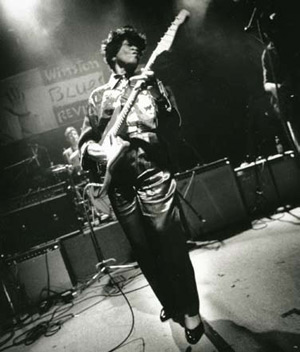
So here is my CD copy of his first released album (tracks 1 to 10). I have supplemented this with an extra 7 cuts (tracks 11 to 17) that I dubbed from rare 12" vinyl singles and are unavailable anywhere else - 4 live performances and 3 studio recordings - making this unique - Enjoy
Robert Cray (born August 1 1953 Columbus, Georgia, USA) is an American blues guitarist and singer. A five-time Grammy Award winner, he has led his own band, as well as an acclaimed solo career.
Cray started playing guitar in his early teens. He attended Denbigh High School in Newport News, Viginia and wanted to become an architect, but around the same time that he began to study architectural design he formed the band Steakface, which played covers by Jimi Hendrix, Quicksilver Messenger Service, Fleetwood Mac, and others.
By the age of twenty, Cray had seen his heroes Albert Collins, Freddie King and Muddy Waters in concert and decided to form his own band; they began playing college towns on the West Coast. In the late 1970s he lived in Eugene, Oregon, where he formed the Robert Cray Band and collaborated with Curtis Salgado in the Cray-Hawks. In the 1978 film National Lampoon's Animal House, Cray was the uncredited bassist in the house party band Otis Day and the Knights.
After several years of regional success, Cray was signed to Mercury Records in 1982. Two albums on HighTone Records in the mid-80's, Bad Influence and False Accusations, were moderately successful in the United States and in Europe, where he was building a reputation as a live artist. His fourth album release, Strong Persuader, produced by Dennis Walker, received a Grammy Award, while the crossover single 'Smokin' Gun' gave him wider appeal and name recognition. (Wikipedia)
I first heard Robert Cray back in 1986 with the release of his 'Bad Influence' album. It was playing in my local record shop (long extinct) and I immediately liked his distinctive voice/guitar mix along with some strong songwriting. Later that year I got to see him (and chat) on his UK mini-tour - And yes I bought the T-shirt too !
It turned out that 'Bad Influence' was not his first recording. He had cut the album, Who's Been Talkin', back in 1979 for the Tomato Records label. Unfortunately after its initial release in 1980, Tomato went out of business and the record got lost in obscurity.
Fortunately Charly Records in the UK managed to get to the masters and released a digital remaster in 1986. It contains more straight-ahead blues material than his later albums.
So here is my CD copy of his first released album (tracks 1 to 10). I have supplemented this with an extra 7 cuts (tracks 11 to 17) that I dubbed from rare 12" vinyl singles and are unavailable anywhere else - 4 live performances and 3 studio recordings - making this unique - Enjoy


