
Showing posts with label Jewel Records. Show all posts
Showing posts with label Jewel Records. Show all posts
Sunday, November 22, 2015
Holy Spirit - Spiritual Soul and Gospel Funk From Shreveport's Jewel Records

Sunday, September 27, 2015
Say Amen!: Gospel Funk from Jewel Records

 "One of the coolest collections of funky gospel we've ever heard – and a key look at the massive sounds of the legendary Jewel Records label! Jewel was home to some great funk, soul, and blues artists at the start of the 70s – and it's no surprise that the best sounds from those styles stepped over to inform the label's gospel output too – so much so that Jewel ended up with a huge legacy of some of the coolest gospel cuts ever – just the sort of tracks to cross over strongly to our more secular-tuned ears! Lots of this work feels like early 70s funky soul on labels like Atlantic and Chess – and the track selection may well be the best we've ever seen for a compilation on the Fuel label – much more in the spirit of a set on Numero or Ace. Titles include "Everything's Gonna Be Alright" by Keith Barrow, "Message To My Friends" by The Violinaires, "Trying Time" by Ernest Franklin, "Woke Up This Morning" by Chimes, "Mama Said Thank You" by Albertina Walker, "No More Ghettos In America" by Stanley Winston, "Can You Treat Him Like A Brother" by Armstrong Brothers, and "I'm Glad You're Mine" by The Brooklyn Allstars." © 1996-2015, Dusty Groove, Inc.
Friday, January 2, 2015
The Soul Clan: the Patterson Twins and the Wallace Brothers

 The first eight tracks gather together the first and best recordings of the Patterson Twins, some of which were released on King and Ronn records. The motivation for posting this compilation came from a request of Rivercityslim for a post on the Pattersons. The highly talented Estus and Lester Patterson were born in Magee, Mississippi and began their professional career as gospel singers, serving for a time as members of the highly regarded Southern Sons quartet. As the Soul Twins, they developed a following on the Circuit in the 60s before finally getting an opportunity to record in the early 70s. The quality of some of their early 70s songs, as presented here, is very high. I would venture to say that the 1973 45 Back in Love Again/Come to Me, released on King, is one of the truly great Southern Soul records. Both performances are true masterpieces. Come to Me, in particular, has continually buzzed in my ear ever since the first time that I heard it. There is something very deep and special about that record.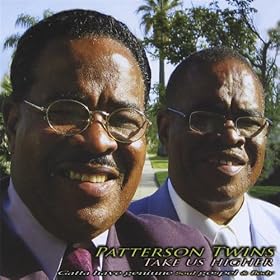
 There are also some great Wallace Brothers tracks on this compilation. There is no overlap here with the 22 earlier Sims tracks available on the Kent Lover's Prayer CD. When the Wallace Brothers signed to Jewel, they continued to record classic soul in Muscle Shoals. Highlights include I Need Someone, I Stayed Away Too Long, and My Baby's Gone. Good listening!
Little Johnny Taylor and Ted Taylor (no relation) need no introduction here, and their two tracks together on the compilation are a blast. There are fine other duet recordings for Jewel by these titans. Johnny & Jon and Lonnie & Floyd are quite obscure. Lonnie and Floyd deliver a couple solid soul senders. Johnny & Jon's Christmas in Vietnam is an interesting song, although some pitch problems slightly get in the way of an otherwise very soulful performance.
Saturday, November 8, 2014
Peppermint Harris - Lonesome As I Can Be

Artist Biography by Bill Dahl
"The contemporary blues boom resuscitated the career of many a veteran blues artist who had been silent for ages. Take guitarist Peppermint Harris, who in 1951 topped the R&B charts with his classic booze ode "I Got Loaded." Nobody expected a new Peppermint Harris CD in 1995, but Home Cooking producer Roy C. Ames coaxed one out of old Pep for Collectables nonetheless. Texas on My Mind may not be as enthralling as Harris' early-'50s output, but it was nice to have him back in circulation. By the time he was in his early twenties, Harrison Nelson, Jr. was lucky enough to have found a mentor and friend on the Houston blues front: Lightnin' Hopkins took an interest in the young man's musical development. When Harris was deemed ready, Lightnin' accompanied him to Houston's Gold Star Records. Nothing came of that jaunt, but Harris eventually recorded his debut 78 for the company in 1948 (as Peppermint Nelson).
Bob Shad's Sittin' in With label was the vehicle that supplied Harris' early work to the masses -- especially his first major hit, "Raining in My Heart," in 1950. These weren't exactly formal sessions; one legend has it one took place in a Houston bordello. Nor was Shad too cognizant of Pep's surname; when he couldn't recall it, he simply renamed our man Harris.
Harris moved over to Eddie Mesner's Aladdin Records in 1951, cutting far tighter sides for the firm in Los Angeles (often with the ubiquitous Maxwell Davis serving as bandleader and saxist). After "I Got Loaded" lit up the charts in 1951, Harris indulged in one booze ode after another: "Have Another Drink and Talk to Me," "Right Back on It," "Three Sheets in the Wind." But try as they might, the bottle let Harris down as a lyrical launching pad after that.
He drifted from Money and Cash to RCA's short-lived subsidiary "X" and Don Robey's Duke logo (where he allegedly penned "As the Years Go Passing By" for Fenton Robinson) after that, but it wasn't until a long-lasting association with Stan Lewis' Shreveport, Louisiana-based Jewel Records commenced in 1965 that Harris landed for longer than a solitary single. Later, Harris worked various day jobs around Houston, including one at a record pressing plant, before moving to Sacramento, California, and then to New Jersey to be with his daughter.
Thursday, February 27, 2014
The Carter Brothers - Blues On Tour

 This electric blues act with a soul bent recorded for Jewel Records, among other labels. Roman Carter (lead vocals, bass), Albert Carter (guitar), and Jerry Carter (vocals, piano) came from Garland, AL, and began recording in 1964 for producer/songwriter Duke Coleman's local label. Stan Lewis' Jewel Records licensed a pair of their singles, of which "Southern Country Boy" got to number 21 on the R&B charts nationally. They never cut an album, but before splitting up in 1967 (when Albert and Jerry Carter were said to have been drafted) the trio recorded more than a dozen single sides, which have since been collected on several compilations. Lead singer Roman Carter, who also cut solo singles for Jewel, endured as a solo performer over the next 40 years and was given an award as Best Male Blues Vocalist at the Fifth Annual Real Blues Awards, sponsored by Real Blues magazine in 1999. Several years later, Carter teamed up with veteran producer/composer Tom Rothrock (who launched Beck's career during the previous decade) to issue the full-length Never Slow Down in November 2007.
 Sunday, September 8, 2013
The Jewel Records Gospel Story

 Oh my the house is certainly rockin' this Sunday morn! A new goodie from the folks at Fuel 2000 Records that is some serious boogie with The Lord!
 "Way more than just the gospel you might expect from the title – given that the music here comes from the Jewel Records label, a real powerhouse for southern soul and blues! The style here is plenty secular overall – with lots of the best deep soul overtones we've come to expect from Jewel in the late 60s and early 70s – including that relaxed sort of production approach that makes the label's music way different than that of any of their southern contemporaries on the scene. The tunes are definitely spiritual, but carried off in a way that's very appealing to any fan of southern soul at the time – and the double-length set features a massive 36 gospel gems from Jewel that include "You Better Get Right" by Willie Morganfield, "I'm Traveling On" by The Soul Stirrers, "Solid Rock" by The Violinaires, "Little Boy" by Ted Taylor, "He Changed" by Albertina Walker & The Caravans, "All The Way" by The Violinaires, "Confusing Times" by Clarence Fountain, "A Change Is Gonna Come" by The Meditation Singers, and "There's A Creator" by Roscoe Robinson." © 1996-2013, Dusty Groove, Inc.
Monday, May 20, 2013
Ted Taylor - Ever Wonderful; Okeh Uptown Soul 1962-1966 & Complete Ronn/Jewel Singles

"Austin Taylor, better known as Ted Taylor (February 16, 1934 – October 2, 1987) was an American soul musician.
Born in Okmulgee, Oklahoma, United States, Taylor sang with The Cadets/The Jacks in the 1950s. He sang lead vocals on The Cadets' "Do You Wanna Dance (Hey Little Girl)" and "I Cry" and also on The Jacks' "Away" and "My Darling." He did not appear on The Cadets' biggest hit "Stranded In The Jungle" in 1955. For that session, he was replaced by singer Prentice Moreland. Taylor left The Cadets/The Jacks to begin a solo career which began with two singles on Melatone Records in 1957. He would later release singles on Ebb Records and Duke Records from 1957 to 1959; in the 1960s he recorded for Ronn Records and Okeh Records in blues and soul styles. In the 1970s he recorded disco for TK Records."
 "Once heard, the exciting tenor voice of Ted Taylor can never be
forgotten or mistaken for any other. With his elaborate pompadour
hairstyle and pencil-line moustache, he looked a lot like Little
Richard, his label-mate at Okeh Records for a spell (although Ted was
far from little). Onstage he wore flamboyant pink suits, his manicured
fingers heavy with ornate rings. This and his androgynous singing voice
led many to conclude that Ted was gay, but appearances can be
misleading: when out of the spotlight, he was a quietly-spoken family
man.
"Once heard, the exciting tenor voice of Ted Taylor can never be
forgotten or mistaken for any other. With his elaborate pompadour
hairstyle and pencil-line moustache, he looked a lot like Little
Richard, his label-mate at Okeh Records for a spell (although Ted was
far from little). Onstage he wore flamboyant pink suits, his manicured
fingers heavy with ornate rings. This and his androgynous singing voice
led many to conclude that Ted was gay, but appearances can be
misleading: when out of the spotlight, he was a quietly-spoken family
man.He started out as a member of the Glory Bound Travelers gospel group. By 1955 he was singing with the Santa Monica Soul Seekers, soon to morph into dual identity secular combo the Cadets/Jacks. Turning solo in 1957, he notched up releases on the Ebb, Dena, Duke, Top Rank, Laurie, Top Rank, Warwick, Apt, Gold Eagle, United Artists and Soncraft labels. He then landed contract with Okeh, where he remained from 1962 to 1965, before joining Atlantic Record’s Atco subsidiary for a few singles. That brings us to the fantastic music on this CD, which stems from Ted’s lengthy tenure at Stan Lewis’ Ronn imprint out of Shreveport, Louisiana."
Wednesday, November 14, 2012
Bobby Powell - The Jewel and Whit Recordings 1966-1971

"Blind pianist/singer Bobby Powell -- born in Baton Rouge in 1941 -- started out as a gospel singer in the 1950s. By the outset of the 1960s, however, he'd switched to singing R&B and was signed to Whit Records, where he succeeded right out of the box with "What Are You Trying to Do to Me" b/w "Red Sails in the Sunset" -- the latter didn't chart nationally but was good and popular enough locally to get picked up by Jewel Records for national distribution. He did even better with his second single, a version of "C.C. Rider" b/w "That Little Girl of Mine," which topped the national R&B charts in 1965. Powell's third record, "Do Something for Yourself" b/w "It's Getting Late in the Evening," made it to number 21 on the charts the following year, and in 1967 he once again charted a single with "I'm Gonna Leave You." That marked the end of Powell's string of successes, however, although he still released two singles a year, brushed the charts once more at the end of the decade, and had a number 14 hit in 1974 with "The Bells." During this same period, Powell also cut an LP for Excello and later issued a handful of more singles. Finally, in the 1980s, he gave up R&B and soul music and returned to where he started out, singing gospel music. In 2002, WestSide Records released a compilation of Powell's Whit and Jewel singles." AMG
Thursday, September 27, 2012
Buddy Ace - The Real Thing & From Me To You (Incomplete)

Quite frankly, "The Real Thing" is very much a mixed bag. To my ears, a number of the songs sound hastily and poorly arranged, and often fail to inspire Buddy Ace. On a few numbers, they don't even choose an appropriate key for Buddy's voice. That said, there are a few nice songs on the album, including "I Kicked the Habit," even if it is pretty much in a straight Bobby Bland mold. I would enjoy the title track a bit more without the overly obtrusive background vocals. The real highlight on this album for me is "Do What You Think Is Best," where Buddy evokes the spirit of Otis Redding over the infectious riff that Wilson Pickett used for Soul Dance Number Three. Nevertheless, "The Real Thing" falls quite short in my book of being prime time Silver Fox.

I miss Buddy Ace.