Mildred "Millie" Jackson (born July 15, 1944) is an American singer-songwriter and comedienne. Three of her albums have been certified gold by the RIAA for over 500,000 copies.
Her vocal performances are often distinguished by long, humorous, and explicit spoken sections in her music, which she started doing on stage to get the attention of the audience. She has also recorded songs in a disco or dance music style and even some country styled songs. She is the mother of Keisha Jackson.
Born in Thomson, Georgia, Jackson is the daughter of a sharecropper. Her mother died when she was a child and subsequently, she and her father moved to Newark, New Jersey. By the time Jackson was in her mid-teens, she had moved to Brooklyn to live with an aunt. She occasionally worked as a model for magazines like JIVE and Sepia.
Jackson's singing career reportedly began on a dare to enter a 1964 Harlem nightclub talent contest, which she won. Although she first recorded for MGM Records in 1970, she soon left and began a long association with New York-based Spring Records. Working with the label's in-house producer, Raeford Gerald, her first single to chart was 1971's deceptively titled "A Child of God (It's Hard to Believe)," which reached number 22 on the R&B charts. In 1972, Jackson had her first R&B Top Ten single with the follow-up, "Ask Me What You Want", which also reached the pop Top 30, then "My Man, A Sweet Man" reached #7 R&B; all three hits were co-written by Jackson. "My Man, A Sweet Man" retains its popularity today for northern soul enthusiasts and is played on the radio in the UK and quoted as an example from this musical genre as is her 1976 recording, "A House for Sale". The following year brought her biggest single success and her third Top Ten hit, "It Hurts So Good," which made #3 on the R&B charts and #24 on the Billboard Hot 100 pop chart. The single was featured on the album of the same name and in the blaxploitation film Cleopatra Jones, also appearing on that film's soundtrack along with the song "Love Doctor".
In 1974, she released the album Caught Up, which introduced her innovative style of raunchy rap. The featured release was her version of Luther Ingram's million-seller, "(If Loving You Is Wrong) I Don't Want to Be Right", for which she received two Grammy nominations. By now, she had switched producers to work only with Brad Shapiro, recording at Muscle Shoals Studio in Alabama with the renowned Muscle Shoals Rhythm Section. She continued to record most of her material for Spring there, including the follow-up album, Still Caught Up.
Over the next ten years, Jackson had a string of successful albums and numerous R&B chart entries, the biggest being her 1977 version of Merle Haggard's country hit "If You're Not Back In Love By Monday". That hit single was followed by many more, including her version of the Boney M. song, the disco single, "Never Change Lovers In The Middle of The Night." This single peaked at #33 on the Black Singles chart in 1979.
Jackson recorded an album in 1979 with Isaac Hayes called "Royal Rappin's" and the same year saw her release a double album, "Live And Uncensored", recorded in concert at Los Angeles venue, The Roxy. Jackson also formed and produced the group Facts of Life. They had a major hit in 1976 with "Sometimes" (#3 R&B, #31 Pop). wiki
Saturday, January 31, 2015
Wednesday, January 28, 2015
Soul Gospel Vols. 1 & 2
Sunday, January 25, 2015
Ebo Taylor - Love and Death
Much of the story of African popular music since World War II concerns African-rooted musics from the New World coming back to the Mother Land and inspiring Africans to fuse these sounds with their own traditional musics. The sound of hard funk, as developed by James Brown and Sly Stone in the 1960s, became hugely popular in West Africa. Afrobeat was essentially created by the great Fela Ransom Kuti, a Highlife band leader from the South West of Nigeria, who spent time in the US in the 1960s absorbing and integrating the Brand New Bag with Highlife. There exist fascinating recordings from this period that illustrate the sound in embryo.
Afrobeat quickly moved from Nigeria to the neighboring countries of the Benin Republic, Togo, and (especially) Ghana. Ebo Taylor was one of the first Ghanian artists to popularize and develop Afrobeat in that country, adding to that his own distinctive mix of fusion of Highlife with Funk and Jazz. He established that sound not only through his own recordings, but through producing many other top Ghanian artists.

Ebo Taylor is still alive and very much active. This is his seventh decade of activity! He was already a working professional musician in the 1950s, and was already leading his own band in the early 60s. He first came into contact with Fela Kuti in 1962 while residing temporarily with his band in London. His classic recordings from the 1970s and 1980s were reissued not long ago on a highly recommended package: Life Stories: Highlife & Afrobeat Classics 1973-1980.
Following this period, Ebo Taylor kept a rather low profile on the music scene for a while, but became active again in the first decade of the new century, culminating in his triumphant Love and Death album, which is posted here. This is pure Ebo Taylor with a crack band. Fine music!
Ebo Taylor moved to London a few years ago to pursue his career further there. When I moved to Nigeria, he was still working and playing the clubs in Accra, Ghana. I had a chance to see him and meet him there, and the experience was unforgettable. Enjoy!
Afrobeat quickly moved from Nigeria to the neighboring countries of the Benin Republic, Togo, and (especially) Ghana. Ebo Taylor was one of the first Ghanian artists to popularize and develop Afrobeat in that country, adding to that his own distinctive mix of fusion of Highlife with Funk and Jazz. He established that sound not only through his own recordings, but through producing many other top Ghanian artists.
Ebo Taylor is still alive and very much active. This is his seventh decade of activity! He was already a working professional musician in the 1950s, and was already leading his own band in the early 60s. He first came into contact with Fela Kuti in 1962 while residing temporarily with his band in London. His classic recordings from the 1970s and 1980s were reissued not long ago on a highly recommended package: Life Stories: Highlife & Afrobeat Classics 1973-1980.
Following this period, Ebo Taylor kept a rather low profile on the music scene for a while, but became active again in the first decade of the new century, culminating in his triumphant Love and Death album, which is posted here. This is pure Ebo Taylor with a crack band. Fine music!
Friday, January 23, 2015
Bo Dollis and the Original Wild Magnolias
Not only the greatest Mardi Gras Indian albums ever made, but some of of the most seriously bad-ass funk ever played anywhere. The Turbinton brothers band, known both as the New Orleans Project and the Gaturs, absolutely DESTROY it on both records; first with Snooks Eaglin on guitar and Julius Farmer on bass, then with Guitar June (not the Japanese guy) and Ervin Charles on bass for the second album. Farmer and Charles were two of the funkiest bass players EVER. (George would be the first to agree) Of course leading the show here on some of the most revolutionary music ever played in New Orleans is the great Bo Dollis at the height of his powers. This is how he will always sound in my mind's ear; rest in peace my big chief.Thursday, January 22, 2015
Bo Dollis & the Wild Magnolias - I'm Back at Carnival Time!
I hadn't noticed before just how square the review sounded.''Bo Dollis, New Orleans' most popular "Indian" chief, has been heading the Wild Magnolias since 1964. His fiery, flamboyant, charismatic style is ideal for the backdrop of Mardi Gras. He's an exuberant vocalist, equally gifted at rousing chants, energetic up-tempo tunes, or even more traditional gospel-tinged soul. This session featured Dollis and the Wild Magnolias backed by a great set of session musicians and, at times, the Rebirth Brass Band. This links the Indian performing tradition with Crescent City blues, R&B, and vintage jazz sensibilities, resulting in several superb, roaring performances. The best in both Mardi Gras and contemporary/classic New Orleans fare."
Millie Jackson - On The Country Side
I am taking some degree of malicious glee in using THIS album as my first Millie Jackson post. Of course if this is your first exposure, then YOU are one of those having the friendly joke played on you. In others words, this album is nothing like your average release from this Chitlin Circuit Queen.
"The Bitch Is Back
Rock and roll from the ‘50s was credited with mixing white musical styles, such as country and pop, with black music, such as R&B and gospel. However, by the early ‘70s, the genres had separated. Classic soul and country rock were being created with little ethnic intermixing, which reflected what was going on in the larger society. But the truth is country and soul came out of the same Southern places before rock even existed, and the influence the two had on each other has always been clear to discerning listeners.
Consider Millie Jackson. Her deep soul albums of the ‘70s, such as It Hurts So Good, Still Caught Up and Feelin’ Bitchy, contained a country leavening in the way Jackson accentuated the language and phrased her way across a melody, not to mention the fact that she frequently covered country songs on these albums. There was also something about her attitude. You couldn’t call her a redneck, but then again she retitled “Redneck Crazy” as “Black Bitch Crazy” on the one new song on this collection. They are pretty much the same things.
Anyway, it should not seem a surprise that Jackson released a straight country record back in 1980 called Just a Li’l Bit Country. She covered such deliciously emotive material as Don Gibson’s “I Can’t Stop Lovin’ You”, Tammy Wynette’s “Till I Get it Right” and Howard Harlan’s “Pick Me Up on Your Way Down”. She also, for some reason, included a few non-country items, such as Neil Diamond’s “Love on the Rocks”. The album flopped, which Jackson attributes to personnel changes at the record company. That may be true, but the original album was spotty and not all the songs top notch.
Which is probably why there are only five of 10 Just a Li’l Bit Country tracks included on the recent anthology of Jackson’s country music, mostly recorded between 1977 and 1981, featured on The Soul Country Collection. The 17-cut collection contains some real gems, including her 1977 top 10 soul cover of Merle Haggard’s “If You’re Not Back in Love By Monday” and the 1978 top 40 soul hit version of Kenny Rogers’ “Sweet Music Man”. These work because Jackson takes these songs straight on. There is nothing gimmicky about them.
Less successful are the more disco-fied and less sacrosanct covers, like Barbara Mandrell’s “Angel in Your Arms”. She camps it up too much, and the instruments blare over her voice in a lackluster arrangement. Mitchell’s too good to have to be trendy to succeed. Sure, it may be fun to change Kris Kristofferson’s bawdy “Anybody That Don’t Like Hank Williams” into the irreverent “Anybody That Don’t Like Millie Jackson”, but the joke wears thin before the song is over.
Jackson’s a major talent who doesn’t always get her due because she often performs blue. That was and is her trademark, but there is little of that here. Instead, this disc offers a chance for listeners to hear a neglected side of an overlooked artist. Soul lovers may revel in the already available classic albums from the past, but there is much to offer music fans here." By Steve Horowitz 6 November 2014
"The Bitch Is Back
Rock and roll from the ‘50s was credited with mixing white musical styles, such as country and pop, with black music, such as R&B and gospel. However, by the early ‘70s, the genres had separated. Classic soul and country rock were being created with little ethnic intermixing, which reflected what was going on in the larger society. But the truth is country and soul came out of the same Southern places before rock even existed, and the influence the two had on each other has always been clear to discerning listeners.
Consider Millie Jackson. Her deep soul albums of the ‘70s, such as It Hurts So Good, Still Caught Up and Feelin’ Bitchy, contained a country leavening in the way Jackson accentuated the language and phrased her way across a melody, not to mention the fact that she frequently covered country songs on these albums. There was also something about her attitude. You couldn’t call her a redneck, but then again she retitled “Redneck Crazy” as “Black Bitch Crazy” on the one new song on this collection. They are pretty much the same things.
Anyway, it should not seem a surprise that Jackson released a straight country record back in 1980 called Just a Li’l Bit Country. She covered such deliciously emotive material as Don Gibson’s “I Can’t Stop Lovin’ You”, Tammy Wynette’s “Till I Get it Right” and Howard Harlan’s “Pick Me Up on Your Way Down”. She also, for some reason, included a few non-country items, such as Neil Diamond’s “Love on the Rocks”. The album flopped, which Jackson attributes to personnel changes at the record company. That may be true, but the original album was spotty and not all the songs top notch.
Which is probably why there are only five of 10 Just a Li’l Bit Country tracks included on the recent anthology of Jackson’s country music, mostly recorded between 1977 and 1981, featured on The Soul Country Collection. The 17-cut collection contains some real gems, including her 1977 top 10 soul cover of Merle Haggard’s “If You’re Not Back in Love By Monday” and the 1978 top 40 soul hit version of Kenny Rogers’ “Sweet Music Man”. These work because Jackson takes these songs straight on. There is nothing gimmicky about them.
Less successful are the more disco-fied and less sacrosanct covers, like Barbara Mandrell’s “Angel in Your Arms”. She camps it up too much, and the instruments blare over her voice in a lackluster arrangement. Mitchell’s too good to have to be trendy to succeed. Sure, it may be fun to change Kris Kristofferson’s bawdy “Anybody That Don’t Like Hank Williams” into the irreverent “Anybody That Don’t Like Millie Jackson”, but the joke wears thin before the song is over.
Jackson’s a major talent who doesn’t always get her due because she often performs blue. That was and is her trademark, but there is little of that here. Instead, this disc offers a chance for listeners to hear a neglected side of an overlooked artist. Soul lovers may revel in the already available classic albums from the past, but there is much to offer music fans here." By Steve Horowitz 6 November 2014
Tuesday, January 20, 2015
Bo Dollis & the Wild Magnolias - 1313 HooDoo Street

New Orleans looses another giant today - the greatest Mardi Gras Indian singer the world has ever known has passed, but we will never forget him. Thankfully his manager Glen has kept his promise to Bo and made sure that he leaves us a strong recorded legacy - I imagine that at least one or two more will appear in the next couple of years.Oddly enough, despite the cover, this one is not primarily a Mardi Gras Indian album; at least not to the degree that most other Mags albums are. On this album arranger Wardell Quezergue chose to focus on Bo Dollis as a New Orleans R&B singer.
The song choices are unlike any other Bo Dollis album and the results?.......check it out, it is one of MY favorites!
Sanctified Soul
Utilizing the sledgehammer principle, we've started this CD with the
Soul Clan, the only serious attempt to form a soul super-group in the
1960s. The group members were Messrs Conley, Burke, Covay, Tex and King
who perform well on a good southern soul style ballad, That's How It Feels, without shaking the world, but neatly serving as an appropriate antipasto for the delicacies to come.
As individuals, Conley, Burke and Covay get the chance to serve up their own creations later on in the CD and in fact it's the latter, Don Covay, who provides the 1968-recorded I Stole Some Love. It's a great storytelling slowie, complete with rap and a Here Comes The Judge style interjection.
The overall feel of this CD is 'slow and moody' done the way Atlantic specialized in their Southern-influenced 1960s heyday. Particular highlights of this genre are the Soul Brothers Six with Can't Live Without You, James Carr's later 1971 offering I'll Put It To You, Ted Taylor's Feed The Flames, a fine Dan Penn and Spooner Oldham song and Judy Clay's tortured Greatest Love. Hardcore Southern soul fans will be excited by the appearances of Herman Hitson and Ben and Spence and Rudy Mockabee's interpretation of Roy Lee Johnson's Cheer Up (Daddy's Coming Home).
Being
Kent and renowned for our catholic tastes we've also featured some
appropriate social commentary from Sam Dees and JP Robinson who tackle
the drugs problem and the political repression so relevant to their own
black constituencies.
Stylistically we've also represented Atlantic's home town, NYC, with cultured offerings from ex-Drifter Rudy Lewis and Lee Jackson's Ad For Love with its strong doo wop influences.
We end on the beautiful and relevant Time To Say Goodbye from Bettye Swann, a Southern girl whose career started in LA, moved to the mid-south with great critical acclaim and cut this and some of her finest recordings in Philadelphia. It's from 1974, a point where over-production was selling soul music short, but the best, like this, was combining the experience and pedigree of a great singer with the newly acquired recording techniques, in an appropriate, learned and respectful manner.
Finally Dave Godin has added some incisive and enlightening sleevenotes to complement the terrific sound reproduction achieved by our own Sound Mastering post production studios, who got to work on some fabulous Atlantic tapes. -Ady Croasdell, Kent Records
As individuals, Conley, Burke and Covay get the chance to serve up their own creations later on in the CD and in fact it's the latter, Don Covay, who provides the 1968-recorded I Stole Some Love. It's a great storytelling slowie, complete with rap and a Here Comes The Judge style interjection.
The overall feel of this CD is 'slow and moody' done the way Atlantic specialized in their Southern-influenced 1960s heyday. Particular highlights of this genre are the Soul Brothers Six with Can't Live Without You, James Carr's later 1971 offering I'll Put It To You, Ted Taylor's Feed The Flames, a fine Dan Penn and Spooner Oldham song and Judy Clay's tortured Greatest Love. Hardcore Southern soul fans will be excited by the appearances of Herman Hitson and Ben and Spence and Rudy Mockabee's interpretation of Roy Lee Johnson's Cheer Up (Daddy's Coming Home).
Being
Kent and renowned for our catholic tastes we've also featured some
appropriate social commentary from Sam Dees and JP Robinson who tackle
the drugs problem and the political repression so relevant to their own
black constituencies.Stylistically we've also represented Atlantic's home town, NYC, with cultured offerings from ex-Drifter Rudy Lewis and Lee Jackson's Ad For Love with its strong doo wop influences.
We end on the beautiful and relevant Time To Say Goodbye from Bettye Swann, a Southern girl whose career started in LA, moved to the mid-south with great critical acclaim and cut this and some of her finest recordings in Philadelphia. It's from 1974, a point where over-production was selling soul music short, but the best, like this, was combining the experience and pedigree of a great singer with the newly acquired recording techniques, in an appropriate, learned and respectful manner.
Finally Dave Godin has added some incisive and enlightening sleevenotes to complement the terrific sound reproduction achieved by our own Sound Mastering post production studios, who got to work on some fabulous Atlantic tapes. -Ady Croasdell, Kent Records
Monday, January 19, 2015
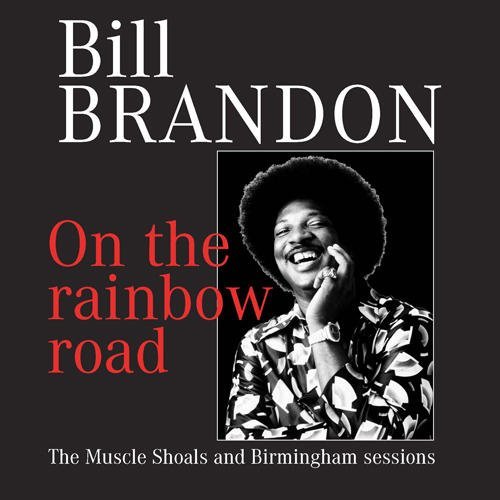
Bill Brandon - On the Rainbow Road
...and now back to the Chitlin' Circuit.
Bill Brandon is one of those great voices from the shadows who recorded a number of fine 45s in the 1960s in Muscle Shoals and Birmingham. Some of those singles pop up regularly on Southern Soul collections. But Soulscape did us a big favor not long ago by bringing the majority of his 60s work together in one dynamite compilation: On the Rainbow Road.
Bill Brandon is himself from Alabama. He began his recording career in Muscle Shoals for the Quinvy label, under the management of the legendary Quin Ivy. He moved from there to under Sam Dee's umbrella, continuing to record in Alabama. Sir Shambling provides a nice essay with some additional information on Bill Brandon: http://www.sirshambling.com/artists_2012/B/bill_brandon/index.php
If you like good Southern Soul, it is hard to imagine not liking the music on this disc. Bill Brandon is particularly effective at delivering slow ballads in the classic manner. Add to that generally high quality songs and top production - and you have yourself a winner.
Bill Brandon is one of those great voices from the shadows who recorded a number of fine 45s in the 1960s in Muscle Shoals and Birmingham. Some of those singles pop up regularly on Southern Soul collections. But Soulscape did us a big favor not long ago by bringing the majority of his 60s work together in one dynamite compilation: On the Rainbow Road.
Bill Brandon is himself from Alabama. He began his recording career in Muscle Shoals for the Quinvy label, under the management of the legendary Quin Ivy. He moved from there to under Sam Dee's umbrella, continuing to record in Alabama. Sir Shambling provides a nice essay with some additional information on Bill Brandon: http://www.sirshambling.com/artists_2012/B/bill_brandon/index.php
If you like good Southern Soul, it is hard to imagine not liking the music on this disc. Bill Brandon is particularly effective at delivering slow ballads in the classic manner. Add to that generally high quality songs and top production - and you have yourself a winner.
Sunday, January 18, 2015
Terry G - G.Zuz
This one is for Lazz. He asked for some modern Hip-Life from West Africa that fuses Hip Hop and Highlife. I consider this recent offering from Terry G to be prime product of that kind, and it is also a good representation of the grooves that are currently rocking the club scene in Nigeria. You will hear a strong influence of Reggae (Ragga) here, as well as Highlife and Hip Hop. I apologize in advance for the sound quality. The legit CD market in Nigeria has crashed, and CD collections like this one are only sold on the street. That is where I bought this. Some tracks come through better than others.
The history of this music in Nigeria really goes back to one individual: 2face Idibia. By the late 1980s, young Nigerians had turned away from the popular musics of the 60s and 70s (Highlife, Juju, Fuji, Afrobeat), and were grooving in the clubs almost exclusively to foreign Hip Hop and Reggae. 2face launched a distinctly Nigerian approach that incorporates the feel and techniques of Hip Hop with local music sensibilities and Highlife. The last two decades have witnessed an explosion of this type of music. While young Nigerians still listen to the latest foreign Hip Hop sounds, their preferred dance music is now made in Nigeria by people like 2face, P-Square, Flavour, D'Banj, Kcee, and Terry G.
Terry G. comes from Benue State, and cites 2face as his idol and inspiration. He has a particularly rhythmically charged approach to modern Nigerian music that fuses rap and singing in a seamless way somewhat similar to Ragga in Jamaica. Nigerian crowds can be very hard to please, however. Last year, Terry G performed for his fans in Benin City. Some were not pleased with the the length and depth of the concert. So they rushed the backstage area and beat Terry G to a pulp. He had to recuperate in the hospital for some time.
This is not cerebral music. It is intended 100% for getting your backfield in motion, or as they call it in Nigeria - shake yo bum bum. Terry G will knock you, Apako!
Terry G. comes from Benue State, and cites 2face as his idol and inspiration. He has a particularly rhythmically charged approach to modern Nigerian music that fuses rap and singing in a seamless way somewhat similar to Ragga in Jamaica. Nigerian crowds can be very hard to please, however. Last year, Terry G performed for his fans in Benin City. Some were not pleased with the the length and depth of the concert. So they rushed the backstage area and beat Terry G to a pulp. He had to recuperate in the hospital for some time.
This is not cerebral music. It is intended 100% for getting your backfield in motion, or as they call it in Nigeria - shake yo bum bum. Terry G will knock you, Apako!
A Gospel Blues Morning, Volume 2
The first of these was so well received that I couldn't resist going to this well again with quite a few artists not in the previous collection. There is around 90 years between the oldest songs here and the newest.
Loaves & Fishes - 18 Inspirational Songs From Gospel's Golden Age
Time for for Sunday church brothers and sisters. I find hardly a mention of this excellent compilation out there on the internet so I guess Deacon Kingcake will have to supply a word or two.For those who enjoy having some Gospel around but aren't interested in a large collection of individual artists' material, these compilations are perfect. Ace has put together a very enjoyable disc here; it is hard to question any of the inclusions, all are first rate.
The majority of these recordings come from the Specialty label, although you'll be hard pressed to read the back information which some 'arty' genius decided to do with orange and yellow printing on an orange field, thus rendering it nearly illegible. (a pet peeve)
Saturday, January 17, 2015
African Brothers Dance Band (International)
Perhaps Preslives can tell us more, but this seems to be a seminal 'Highlife' album. The band formed in the early 60's as teenagers and went through many transformations prior to this, their first LP. They were one of the first African bands to tour the U.S. and Canada in the same year (1970) that they did this album.
read a more extensive history here
Thanks to Daver88 for the link to the groups' site.
read a more extensive history here
Thanks to Daver88 for the link to the groups' site.
Sir Warrior and the Oriental Brothers International - Heavy on the Highlife!
The Oriental Brothers International band was formed by four brothers in the early 1970s, the most prominent of the brothers being Christogonus Ezebuiro "Sir Warrior" Obinna and Ferdinard Dansatch (Satch) Emeka Opara. After achieving great success in the mid-1970s, Sir Warrior and Satch Opara went their separate ways, each one keeping the title Oriental Brothers International as the name of their band. So it can be a bit confusing sorting out the discography of what looks like 100s of albums. Sir Warrior died in 1999, as was mourned greatly in Nigeria.
The English Original Music label did a good job of putting together this compilation in the late 1980s. Heavy on the Highlife! is a selection of tracks recorded in Nigeria in the 1970s and 1980s. It was one of the first CDs that I ever bought, and it has received heavy (highlife) rotation ever since. The first three tracks are classic Oriental Brothers from the 1970s. The first two are still played quite often in Nigeria. The highly infectious "Ihe Eji Aku Eme" is a 1980s track from the Oriental Brothers band led by Satch Opara. The last two tracks are from the 1980s unit led by Sir Warrior. The disc gives a good picture of what this music was and is all about.
Friday, January 16, 2015
King Sunny Ade' - The Best Of The Classic Years
"King" Sunny Adé (born Sunday Adeniyi, 22 September 1946) is a Nigerian musician, singer-songwriter, multi-instrumentalist, and a pioneer of modern world music. He has been classed as one of the most influential musicians of all time.
Adé was born to a Nigerian royal family in Ondo, thus making him an Omoba of the Yoruba people. His father was a church organist, while his mother was a trader. Adé left grammar school in Ondo under the pretense of going to the University of Lagos. There, in Lagos, his mercurial musical career started.
Sunny Adé's musical sound has evolved from the early days. His career began with Moses Olaiya's Federal Rhythm Dandies, a highlife band. He left to form a new band, The Green Spots, in 1967. Over the years, for various reasons ranging from changes in his music to business concerns, Sunny Adé's band changed its name several times, first to African Beats and then to Golden Mercury.
In the 1970s and 1980s Adé embarked on a tour of America and Europe where he played to mixed (both black and white) audiences. His stage act was characterised by dexterous dancing steps and mastery of the guitar. Trey Anastasio, American guitarist, composer and one of his devout followers, once said, "If you come to see Sunny Adé live, you must be prepared to groove all night."
After more than a decade of resounding success in Africa, Adé was received to great acclaim in Europe and North America in 1982. The global release of Juju Music and its accompanying tour was "almost unanimously embraced by critics (if not consumers) everywhere". Adé was described by The New York Times' as "one of the world's great band leaders", and in Trouser Press as "one of the most captivating and important musical artists anywhere in the world"...wiki
Adé was born to a Nigerian royal family in Ondo, thus making him an Omoba of the Yoruba people. His father was a church organist, while his mother was a trader. Adé left grammar school in Ondo under the pretense of going to the University of Lagos. There, in Lagos, his mercurial musical career started.
Sunny Adé's musical sound has evolved from the early days. His career began with Moses Olaiya's Federal Rhythm Dandies, a highlife band. He left to form a new band, The Green Spots, in 1967. Over the years, for various reasons ranging from changes in his music to business concerns, Sunny Adé's band changed its name several times, first to African Beats and then to Golden Mercury.
In the 1970s and 1980s Adé embarked on a tour of America and Europe where he played to mixed (both black and white) audiences. His stage act was characterised by dexterous dancing steps and mastery of the guitar. Trey Anastasio, American guitarist, composer and one of his devout followers, once said, "If you come to see Sunny Adé live, you must be prepared to groove all night."After more than a decade of resounding success in Africa, Adé was received to great acclaim in Europe and North America in 1982. The global release of Juju Music and its accompanying tour was "almost unanimously embraced by critics (if not consumers) everywhere". Adé was described by The New York Times' as "one of the world's great band leaders", and in Trouser Press as "one of the most captivating and important musical artists anywhere in the world"...wiki
KC's Jukejoint Jukebox #6
Let's fire up the jukebox for another 30 song spin of obscurities - as always a tip of the hat to Fritz and his archive of old 45's.
tracks by: Travis Phillips, Johnny Morisette, Albert Collins, Larry Dale, Big John Hamilton, Arlene Brown, Freddie King, Bobby Price, Raful Neal, Sonny Rhodes, Lightnin' Slim, Luther Johnson, Charles "Mad Dog' Sheffield, Little Frankie Lee, Tiny Powell, Good Time Charlie, Clarence Berry, Model T Slim, A.C. Reed, Peppermint Harris, Sammy Lewis, Jimmy Johnson, Big Ike Darby, Bob Freenly, Earl Gaines, Good Jelly Bess, Big Moose, Gip Roberts...
Thursday, January 15, 2015
Little Beaver - Joey & Party Down
Artist Biography by Ed Hogan
"Born William Hale on August 15, 1945, in Forrest City, AR, Little Beaver moved to Florida when he was a teenager. After recording for other labels, he recorded sides for the Cat label, an imprint of Henry Stone's TK Records of Hialeah, FL. His first charting singles were "Joey" and "Wish I Had a Girl Like You" b/w "Six Foot Hole." The next single, the hit "Party Down, Part 1," was later sampled by rap and hip-hop artists, like so much of the TK catalog. The mid-tempo groover was his biggest record. The Party Down LP featured vocals by Betty Wright and keyboards by Benny Lattimore ("Let's Straighten It Out") and Timmy Thomas ("Why Can't We Live Together").
Post-"Party Down" singles were "Let the Good Times Roll" b/w "Let's Stick Together," both on the Party Down LP; "Little Girl Blue"; "I Can Dig It Baby" (co-written by Hale, Betty Wright, and Willie Clarke) b/w "Get Into the Party Life"; "Give a Helping Hand" b/w "Mama Forgo"; "Funkadelic Sound"; and "We Three." Other Little Beaver albums are Little Beaver, Black Rhapsody, When Was the Last Time, and Beaver Fever, which was credited to Willie "Beaver" Hale (all were released on Cat)."
On the first of these rips you are treated to a fabulous 'mello' rip from an earlier blog-age. Thanks to another original (but forgotten) blogger for the other album.
"Born William Hale on August 15, 1945, in Forrest City, AR, Little Beaver moved to Florida when he was a teenager. After recording for other labels, he recorded sides for the Cat label, an imprint of Henry Stone's TK Records of Hialeah, FL. His first charting singles were "Joey" and "Wish I Had a Girl Like You" b/w "Six Foot Hole." The next single, the hit "Party Down, Part 1," was later sampled by rap and hip-hop artists, like so much of the TK catalog. The mid-tempo groover was his biggest record. The Party Down LP featured vocals by Betty Wright and keyboards by Benny Lattimore ("Let's Straighten It Out") and Timmy Thomas ("Why Can't We Live Together").
Post-"Party Down" singles were "Let the Good Times Roll" b/w "Let's Stick Together," both on the Party Down LP; "Little Girl Blue"; "I Can Dig It Baby" (co-written by Hale, Betty Wright, and Willie Clarke) b/w "Get Into the Party Life"; "Give a Helping Hand" b/w "Mama Forgo"; "Funkadelic Sound"; and "We Three." Other Little Beaver albums are Little Beaver, Black Rhapsody, When Was the Last Time, and Beaver Fever, which was credited to Willie "Beaver" Hale (all were released on Cat)."On the first of these rips you are treated to a fabulous 'mello' rip from an earlier blog-age. Thanks to another original (but forgotten) blogger for the other album.
Ruthie Foster - Let It Burn
Found this one on plixid or somewhere like that and it is refreshing to find another modern artist with substance. Ruthie is a Texas gal from a gospel family who sings a blend of blues, folk and gospel.
"2012 release from the Soulful vocalist. Let it Burn is a deeply intimate recording: a smoky mix of original songs coupled with inventive interpretations of an unexpected collection of covers - ranging from Adele to Los Lobos, and from The Black Keys to Johnny Cash. Recorded in New Orleans at Piety Street studios, with a small group of A-List musicians that includes George Porter Jr. of the legendary Meters, this album takes the listener on Ruthie's most personal journey yet. With her deeply moving vocals at the core, Ruthie is supported along the way by some very special guests - gospel legends The Blind Boys of Alabama and Stax Records soul man William Bell."
Wednesday, January 14, 2015
Soul of Angola 1965-75
"...Pushed by a lot of energy, the new Angolan music had in that period an incredible development. In the musseques, the sand subburbs of Luanda, in Sambizanga, Marçal, Bairro Operaio e Sao Paulo, local genres like semba and rebita, already contaminated by the Portuguese melancholy of the fado, would mix up with the sounds of the Brazilian samba, with the Congolese rumba and rock. They were young urban bands like Kiezos, the Gingas, the Jovens do Prendo, the Ngoleiros do Ritmo and Bongos. Although most of this music incarnated the fever of the Angolans for independence, for some strange reason its rise was favoured by the paternal politics of the despot.
It was on this scene that artists like Teta Lando, Artur Nunes, Bonga, Urbano De Castro, Oscar Neves, Avozinho, Minguito and many other heroes of Angolan music exploded. They compose the wonderful mosaic of the double CD Soul of Angola – anthologies de la musique angolaise 1965-1975, released by French Lusafrica in 2001. There are no words to describe the vitality, the flow, the joy and the melancholy of the voices and electric guitars of this music which vividly talks about a dream never came true and of ideals destined to disillusion for a long time." T.P. Africa read more
Baaba Maal - Djam Leelii & Mi Veewnii
"Baaba Maal (born 12 November 1953) is a Senegalese singer and guitarist born in Podor, on the Senegal River. He is well known in Africa and internationally is Senegal's most famous musician. In addition to acoustic guitar, he also plays percussion. He has released several albums, both for independent and major labels. In July 2003, he was made a UNDP Youth Emissary.Baaba sings primarily in Pulaar and is the foremost promoter of the traditions of the Pulaar-speaking peoples who live on either side of the Senegal River in the ancient Senegalese kingdom of Futa Tooro.
Baaba Maal was expected to follow his father and become a fisherman. However, under the influence of his lifelong friend and family gawlo, blind guitarist Mansour Seck, Baaba devoted himself to learning music from his mother and his school's headmaster. He went on to study music at the university in Dakar before leaving for postgraduate studies on a scholarship at Beaux-Arts in Paris.After returning from study in Paris, Baaba studied traditional music with Mansour Seck and began performing with the band Daande Lenol. Baaba's fusions continued into the next decade with his Firin' in Fouta (1994) album, which used ragga, salsa and Breton harp music to create a popular sound that launched the careers of Positive Black Soul, a group of rappers, and also led to the formation of the Afro-Celt Sound System. His fusion tendencies continued on 1998's Nomad Soul, which featured Brian Eno as one of seven producers. In addition to his various solo releases, he was featured on two tracks, "Bushes" and "Dunya Salam", on the concept album
In 1998, Baaba recorded "Bess, You Is My Woman Now" for the Red Hot Organization’s compilation album Red Hot + Rhapsody a tribute to George Gershwin which raised money for various charities devoted to increasing AIDS awareness and fighting the disease. In 2002, Baaba again worked with the Red Hot Organization, recording "No Agreement" alongside Res, Tony Allen, Ray Lema, Positive Black Soul and Archie Shepp for the tribute album to Fela Kuti, Red Hot + Riot..."
Monday, January 12, 2015
Pat Cooley - Talking To You
Daddy B. Nice's New CD Reviews
April 3, 2012:
PAT COOLEY: Talking To You (L & L) Four Stars **** Distinguished Effort. Should please old fans and gain new.
Fans of Pat Cooley and her classic single, "Older Woman, Younger Man" (from Bigg Robb's Blues, Soul & Old School LP) may be surprised to discover she has left her talented former composer/producer Frank McKinney to strike out into new musical territory. McKinney wrote "Be A Man" and "Get Out" (among others) from Cooley's most recent (and first-rate) album, Cougar.
Then fans will put on the first track of Pat's newest disc, Talking To You, and possibly do another double-take as Cooley lathers up a new version of B. B. King's "Paying The Cost To Be The Boss." It turns out that Pat Cooley's in a bluesy mood, and she's found another collaborator, Rob Harris, to enable her new direction.
Not only does "Paying The Cost" give notice that the eclectic Ms. Cooley won't take any "guff" from a man who's not paying the bills. It sets the tone for an entire set in which Cooley's bound and determined to give her fans a taste of something different: a hard-edged R&B descended not only from the Boss but the Queen.
Queen Ann Peeble's "I Didn't Take Your Man" hovers over this album like a patron saint, and writer/producer Harris furnishes Cooley with material that is both faithful to the Hi Records sound and freshly-minted.
Talking To You, the title cut, is arguably one of the weakest cuts, simply because it appears to be diluted for radio single air play under the rationale of "trying to please everybody," which more often than not ends up "pleasing no one especially." Which is not to say it isn't a radio-worthy track--just that it doesn't pack a visceral punch.
Most of the other tracks on the CD do. They are uncompromisingly potent, bluesy rockers that grab your attention like a river whose current and depth are powerful and dangerous enough to carry away the fragile and faint of heart.
Your Daddy B. Nice's favorite cut is "Dirt Road Double Wide." Harris and Cooley seem to like it, too, because they remix it for a second outing on the album's finale. Cooley is in great form, comfortable, tough and businesslike (the business of the blues, that is), and Harris provides a "Clean Up Lady"-like guitar riff and foot-stomping, horn-driven arrangement that hits the nail on the head with a sledgehammer....Daddy B. Nice
April 3, 2012:
PAT COOLEY: Talking To You (L & L) Four Stars **** Distinguished Effort. Should please old fans and gain new.
Fans of Pat Cooley and her classic single, "Older Woman, Younger Man" (from Bigg Robb's Blues, Soul & Old School LP) may be surprised to discover she has left her talented former composer/producer Frank McKinney to strike out into new musical territory. McKinney wrote "Be A Man" and "Get Out" (among others) from Cooley's most recent (and first-rate) album, Cougar.
Then fans will put on the first track of Pat's newest disc, Talking To You, and possibly do another double-take as Cooley lathers up a new version of B. B. King's "Paying The Cost To Be The Boss." It turns out that Pat Cooley's in a bluesy mood, and she's found another collaborator, Rob Harris, to enable her new direction.
Not only does "Paying The Cost" give notice that the eclectic Ms. Cooley won't take any "guff" from a man who's not paying the bills. It sets the tone for an entire set in which Cooley's bound and determined to give her fans a taste of something different: a hard-edged R&B descended not only from the Boss but the Queen.
Queen Ann Peeble's "I Didn't Take Your Man" hovers over this album like a patron saint, and writer/producer Harris furnishes Cooley with material that is both faithful to the Hi Records sound and freshly-minted.
Talking To You, the title cut, is arguably one of the weakest cuts, simply because it appears to be diluted for radio single air play under the rationale of "trying to please everybody," which more often than not ends up "pleasing no one especially." Which is not to say it isn't a radio-worthy track--just that it doesn't pack a visceral punch.
Most of the other tracks on the CD do. They are uncompromisingly potent, bluesy rockers that grab your attention like a river whose current and depth are powerful and dangerous enough to carry away the fragile and faint of heart.
Your Daddy B. Nice's favorite cut is "Dirt Road Double Wide." Harris and Cooley seem to like it, too, because they remix it for a second outing on the album's finale. Cooley is in great form, comfortable, tough and businesslike (the business of the blues, that is), and Harris provides a "Clean Up Lady"-like guitar riff and foot-stomping, horn-driven arrangement that hits the nail on the head with a sledgehammer....Daddy B. Nice
Saturday, January 10, 2015
Yinka Ayefele - Everlasing Grace
It's gospel Sunday time! Given our current detour into Africa, we decided to rock your church a bit differently this Sunday.
One of the most amazing experiences of my years living in Nigeria was going to Redeemed Church on Sundays. The church would be packed full of people in the most immaculate homemade colorful outfits that you could imagine. A full band, choir, and Nigerian drum section would occupy the left side of the stage. The Pastor would come forward and say something like, "I know that some of you have been shakin' it for the Devil all week. Now is your chance to shake it for the Lord! Let the Almighty see what you got! The music would start and every one of the 100s people would move, and I mean MOVE. If you couldn't feel the spirit in the midst of all that, I don't think that you ever could.
Yinka Ayefele is one of the most popular gospel singers inside Nigeria. He didn't start singing gospel until he experienced a near fatal accident in 1997 that confined him to a wheel chair and gave him spiritual awakening. Yinka Ayefele is a Yorbua from the South West of Nigeria (Yorubaland), and the music that he plays is distinctly Yoruba. Those of you who have listened to Yoruba traditional music, or the popular genres of Juju and Fuji, will find musical familiarity here. This music also shares with current other Nigerian pop music of today the current trend of very fast rhythms that supports the latest dance steps.
So I hope that this helps you feel the spirit this Sunday, and don't forget to shake it a bit for the Lord!
One of the most amazing experiences of my years living in Nigeria was going to Redeemed Church on Sundays. The church would be packed full of people in the most immaculate homemade colorful outfits that you could imagine. A full band, choir, and Nigerian drum section would occupy the left side of the stage. The Pastor would come forward and say something like, "I know that some of you have been shakin' it for the Devil all week. Now is your chance to shake it for the Lord! Let the Almighty see what you got! The music would start and every one of the 100s people would move, and I mean MOVE. If you couldn't feel the spirit in the midst of all that, I don't think that you ever could.
Yinka Ayefele is one of the most popular gospel singers inside Nigeria. He didn't start singing gospel until he experienced a near fatal accident in 1997 that confined him to a wheel chair and gave him spiritual awakening. Yinka Ayefele is a Yorbua from the South West of Nigeria (Yorubaland), and the music that he plays is distinctly Yoruba. Those of you who have listened to Yoruba traditional music, or the popular genres of Juju and Fuji, will find musical familiarity here. This music also shares with current other Nigerian pop music of today the current trend of very fast rhythms that supports the latest dance steps.
So I hope that this helps you feel the spirit this Sunday, and don't forget to shake it a bit for the Lord!
Shirley Brown 1977
Just so everyone understands that we are not abandoning our core mission, but instead, expanding our horizons.
"Brown was born in West Memphis, but was raised in Madison, Illinois, where she started singing in church at the age of nine. Early experience singing gospel gave her a powerful but expressive voice likened to that of Aretha Franklin. Albert King discovered her when she was aged 14, singing in the Harlem Club in Brooklyn, Illinois. Young Shirley went on the road with King for nine years. While King made sure she had a tutor, Brown often cut her classes to work with the band.
By 1972, Shirley was living in East St. Louis, Illinois, where she made her first record for the Abet label called, "I Ain't Gonna Tell" and "Love Built on a Strong Foundation". Bandleader Oliver Sain produced the record; Sain worked with King on his first hit record ten years earlier. By 1974, King recommended Brown to Stax Records in Memphis, Tennessee, where he had been one of the label's stars for some time.
Her 1974 hit, "Woman to Woman" spent two weeks at #1 in the Billboard R&B chart and climbed to #22 in the Billboard Hot 100. It sold over one million copies by December 1974, and was awarded a gold disc. It was to prove to be Stax's final major hit record (the song was later covered by Barbara Mandrell in 1978 and became a top-five country hit).
A moderately successful debut album, Woman to Woman, was released by Stax on their Truth label, but by 1975, the company was struggling financially and also facing litigation. A follow-up single, "It Ain't No Fun" was only a moderate success, and Stax closed soon afterwards.
Her signing to Arista Records in 1977 resulted in the album Shirley Brown, produced by the former Stax owner Jim Stewart and writer-producer Bettye Crutcher, who provided most of the songs. These included "Blessed Is The Woman" which reached #14 R&B (#102 pop).
Brown continued to record for several labels since then, including Fantasy, on the re-formed Stax label, and Sound Town. She has been with the Mississippi based blues and soul label, Malaco Records since 1989. She remains a popular live performer, mainly in southern states of the US, without having found the recording success of her earlier years."
"Brown was born in West Memphis, but was raised in Madison, Illinois, where she started singing in church at the age of nine. Early experience singing gospel gave her a powerful but expressive voice likened to that of Aretha Franklin. Albert King discovered her when she was aged 14, singing in the Harlem Club in Brooklyn, Illinois. Young Shirley went on the road with King for nine years. While King made sure she had a tutor, Brown often cut her classes to work with the band.
By 1972, Shirley was living in East St. Louis, Illinois, where she made her first record for the Abet label called, "I Ain't Gonna Tell" and "Love Built on a Strong Foundation". Bandleader Oliver Sain produced the record; Sain worked with King on his first hit record ten years earlier. By 1974, King recommended Brown to Stax Records in Memphis, Tennessee, where he had been one of the label's stars for some time.
Her 1974 hit, "Woman to Woman" spent two weeks at #1 in the Billboard R&B chart and climbed to #22 in the Billboard Hot 100. It sold over one million copies by December 1974, and was awarded a gold disc. It was to prove to be Stax's final major hit record (the song was later covered by Barbara Mandrell in 1978 and became a top-five country hit).
A moderately successful debut album, Woman to Woman, was released by Stax on their Truth label, but by 1975, the company was struggling financially and also facing litigation. A follow-up single, "It Ain't No Fun" was only a moderate success, and Stax closed soon afterwards.
Her signing to Arista Records in 1977 resulted in the album Shirley Brown, produced by the former Stax owner Jim Stewart and writer-producer Bettye Crutcher, who provided most of the songs. These included "Blessed Is The Woman" which reached #14 R&B (#102 pop).
Brown continued to record for several labels since then, including Fantasy, on the re-formed Stax label, and Sound Town. She has been with the Mississippi based blues and soul label, Malaco Records since 1989. She remains a popular live performer, mainly in southern states of the US, without having found the recording success of her earlier years."
Zimbabwe Frontline
"Thomas Mapfumo,
the pioneer of Zimbabwean electic mbira (kalimba) music, is the most
recognizable name among those included on this compilation of native
chimurenga ("liberation") songs. Though played largely on electric
guitars, the riffs recall the mbira, and the songs are augmented by
traditional instruments like the marimba and rattles." AMG (JA)
African Scream Contest
I've been getting a little bored lately, time for a detour!
"The subtitle here, intriguing as it is, isn't completely accurate, since the emphasis is actually more on soul and funk than raw garage rock and psychedelia. Indeed, there's a strong James Brown fixation for many artists here, and Roger Damawuzen should have won an award (or a lawsuit) for his uncanny imitation of the Godfather of Soul. It does get a little wild at times, as with "Congolaise Benin Ye" from Le Super Borgou de Parakou, but one thing that never falters here is the groove. Once a band latches onto it, they don't let go, keeping it rock-solid, but with plenty of poly-rhythms happening as part of it, giving it a wonderful, flexible feeling. There's no a bad cut here, and it's obvious that this is the result of a labor of love -- the result of two-and-a-half years work and nine trips to the countries. It may be the Francophone influence that steers the musicians away from the more obvious English and American rock sounds, although you can definitely hear the Afro-Latin percussion of Santana in the mix (and the fiery guitar work, too, at times). But whatever the artists are doing, they thankfully never try to ditch their Afro roots -- which, of course, are the bedrock of soul and rock. This all takes it in another, fabulous direction. In many ways it proved to be a bit of a dead end historically, but the music that came out of it is nothing less than sublime. And keep the player going after the last track for the hidden bonus. It's worthwhile." AMG
Thursday, January 8, 2015
Mike Farris - Shine For All The People
It surely isn't often lately that you come across a new young artist whose music shines with the light and spirit of Mike Farris and the Roseland Rhythm Revue. Mike's band captures the deep grit of Stax & Muscle Shoals Southern Soul and, with the immeasurable help of the McCrary Sisters, the fervor and passion of great Gospel music. In an age where so much popular music sounds artificial and, frankly, non-musical, Farris is a wonderful breath of fresh air. Even more importantly his music always contains a healing message of love and hope in these dark and troubled times...says kingcake
“Out of the arms of defeat Mike Farris has done a victory lap….He takes people who are hurting, who are broken, who think they are alone and through just the sound of his voice he lets them know that they’re not…that’s magic.”
- MARY GAUTHIER
Raphael Wressnig - Soul Gumbo
A contribution from our pal pmac --
"Raphael Wressnig, based in Austria but frequently on the road, is not your ordinary B-3 organ player. He’s actually one of a kind: a young master of the imposing, large instrument who is expansive in his breadth of expertise. He’s technically fluent in the blues, in jazz, in soul, and in funk, and he concocts exciting mixed-genre music from his fervid imagination. Versatile Wressnig doesn’t flaunt his virtuosic talent for the sake of spectacle but rather backs up his every movement on the keyboards, the drawbar and the bass pedal boards with a fierce emotional commitment.
Influenced by royal predecessors like Jimmy Smith, Shirley Scott, Booker T. Jones and Joe Zawinul, Wressnig has taken his music throughout Europe and all over the world, from North Africa and Asia to the Middle East to the United States, Brazil, Mexico, and the Caribbean. This self-effacing musician, a native of Graz in southeast Austria, has recorded at least 16 feature albums and appeared as a guest on about 30 others. In Spring 2013, he was honored with a nomination for best organ player of the year in Downbeat Magazine.
A fine composer with a gift for searching out splendid classic material to rearrange, Wressnig confidently brings out the inherent pyrotechnic power and mightiness of the large B-3 console. Yet he’s also comfortable with slowing down the pace and lowering the heat in order to achieve colorful passages of quieter music. Not unlike a musician born and bred in New Orleans, the B-3 player possesses special knowledge about conjuring “groove.” As his many fans know so well, this surging or swinging rhythmic “vibe” is vastly important to the success of Wressnig’s sui generis music.
In the 2010’s, Wressnig has solidified his standing as a solo artist. The sheer force of his artistic development has been a wonder to behold, whether encountered on albums or, better yet, at concerts. Live performances are particularly memorable for the happy collision of wild entertainment and focused artistry.
In January of 2014 the B-3 groove master made a trip to New Orleans, literally and spiritually, to cook some Gumbo. Soul Gumbo, that is. For spice, he brought along loyal partners Alex Schultz on guitar and sax-extraordinaire Craig Handy. To bring the heat, he called on one of the funkiest drummers around, New Orleans' own, Stanton Moore. Wressnig's exciting music – a special hybrid of soul, funk, r&b, blues and jazz – benefits from the expert, soulful playing of Crescent City dignitaries Walter “Wolfman” Washington, The Meter’s George Porter, Jr. and Eric Bloom. Piano-man and soulful troubadour Jon Cleary was a special guest, as well as bayou-blues man Larry Garner from Baton Rouge and Midwestern testifier Tad Robinson. After all, Wressnig and the coterie of American and European musicians supporting him always give their best--and it shows."
"Raphael Wressnig, based in Austria but frequently on the road, is not your ordinary B-3 organ player. He’s actually one of a kind: a young master of the imposing, large instrument who is expansive in his breadth of expertise. He’s technically fluent in the blues, in jazz, in soul, and in funk, and he concocts exciting mixed-genre music from his fervid imagination. Versatile Wressnig doesn’t flaunt his virtuosic talent for the sake of spectacle but rather backs up his every movement on the keyboards, the drawbar and the bass pedal boards with a fierce emotional commitment.
Influenced by royal predecessors like Jimmy Smith, Shirley Scott, Booker T. Jones and Joe Zawinul, Wressnig has taken his music throughout Europe and all over the world, from North Africa and Asia to the Middle East to the United States, Brazil, Mexico, and the Caribbean. This self-effacing musician, a native of Graz in southeast Austria, has recorded at least 16 feature albums and appeared as a guest on about 30 others. In Spring 2013, he was honored with a nomination for best organ player of the year in Downbeat Magazine.
A fine composer with a gift for searching out splendid classic material to rearrange, Wressnig confidently brings out the inherent pyrotechnic power and mightiness of the large B-3 console. Yet he’s also comfortable with slowing down the pace and lowering the heat in order to achieve colorful passages of quieter music. Not unlike a musician born and bred in New Orleans, the B-3 player possesses special knowledge about conjuring “groove.” As his many fans know so well, this surging or swinging rhythmic “vibe” is vastly important to the success of Wressnig’s sui generis music.
In the 2010’s, Wressnig has solidified his standing as a solo artist. The sheer force of his artistic development has been a wonder to behold, whether encountered on albums or, better yet, at concerts. Live performances are particularly memorable for the happy collision of wild entertainment and focused artistry.
In January of 2014 the B-3 groove master made a trip to New Orleans, literally and spiritually, to cook some Gumbo. Soul Gumbo, that is. For spice, he brought along loyal partners Alex Schultz on guitar and sax-extraordinaire Craig Handy. To bring the heat, he called on one of the funkiest drummers around, New Orleans' own, Stanton Moore. Wressnig's exciting music – a special hybrid of soul, funk, r&b, blues and jazz – benefits from the expert, soulful playing of Crescent City dignitaries Walter “Wolfman” Washington, The Meter’s George Porter, Jr. and Eric Bloom. Piano-man and soulful troubadour Jon Cleary was a special guest, as well as bayou-blues man Larry Garner from Baton Rouge and Midwestern testifier Tad Robinson. After all, Wressnig and the coterie of American and European musicians supporting him always give their best--and it shows."
Donnie Ray - Who's Rockin' You?
Donnie Ray was born in Texarkana, Texas on July 4, 1959 and began performing with his father's band, the Aldredge Brothers Band, when fifteen. He not only mastered lead and bass guitars, the keyboard, and drums, Donnie Ray branched out and began writing lyrics for recording studios. Inspired by the Motown Sound artists and such musical legends as Bobby "Blue" Bland, Tyrone Davis, and B. B. King, Donnie Ray has worked with such artists as Millie Jackson, Marvin Sease, and numerous others.
Donnie Ray's first CD, "Let's Go Dancing" on the Susie Q label, spawned a Chittlin' Circuit hit called "Letter To My Baby". After a less successful followup, "Are You Ready For Me", Ray signed with Ecko Records and has been releasing a steady stream of cds since.
Tuesday, January 6, 2015
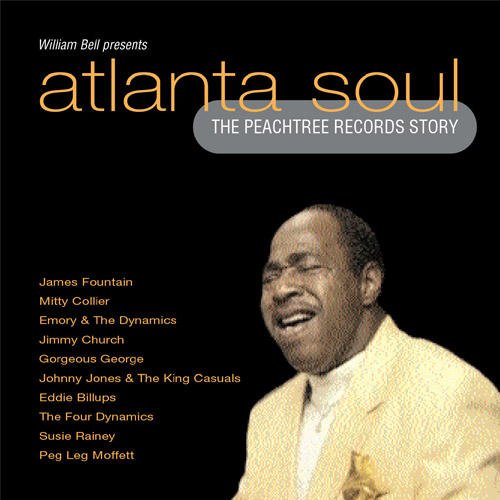
William Bell Presents Atlanta Soul: The Peachtree Records Story
William Bell was one of the great original soul singers on Stax records. He was also a first class song writer and producer. On Stax, he penned a number of classics, including "Born Under a Bad Sign," "A Sure Thing," and produced/ wrote a good amount of the songs that he recorded himself.
In the late 60s, Bell and his manager Henry Wynn formed their own label: Peachtree Records. The idea was to document with high class production the thriving soul scene in Atlanta that was otherwise receiving little attention by record companies. William Bell put his heart and soul into the venture, producing virtually all of the recordings, and writing a good share of them as well. Unfortunately, the venture was not a commercial success, and shut down soon after beginning activity. Only 20 singles were released.
As the evidence he shows, however, the quality of the music made for Peachtree was quite high. Most of these records were made by singers who had little other opportunity to record. One exception is Mitty Collier, whose brilliant 4 tracks are certainly highlights of this compilation. If you want more, an essential comprehensive collection of her Chess sides was posted earlier here at Chitlins. Gorgeous George was also a very well known figure on the Circuit, maybe as much for his costumes and stage act as for his music.
The presence of William Bell gives this compilation a special cohesive feel. Immerse yourself in the soulful sound of Atlanta and musical world of William Bell!
In the late 60s, Bell and his manager Henry Wynn formed their own label: Peachtree Records. The idea was to document with high class production the thriving soul scene in Atlanta that was otherwise receiving little attention by record companies. William Bell put his heart and soul into the venture, producing virtually all of the recordings, and writing a good share of them as well. Unfortunately, the venture was not a commercial success, and shut down soon after beginning activity. Only 20 singles were released.
The presence of William Bell gives this compilation a special cohesive feel. Immerse yourself in the soulful sound of Atlanta and musical world of William Bell!
The James Brown Story 1966-69 & 1970-73
What the reviewer below and , apparently, most of the rest of the world has failed to notice about these two LP's is that these ARE NOT the versions of these songs that were previously issued; a fact which DID NOT escape Unky Cliff. I was commissioned with the task of finding decent copies of both albums and ripping them. The resulting 79 minutes of music make a fine disc for those still addicted to hard copies.
"
In the first few years after James Brown left Polydor Records at the start of the '80s, the label did little with his catalog, issuing a perfunctory best-of and licensing early material to Solid Smoke. But in 1984, Polydor began looking for ways to repackage and reissue its treasure trove of material (which included not only Brown's '70s work for them, but also his Federal/King sides of the '50s and '60s). The initial result was two albums, Ain't That a Groove and Doing It to Death, both produced by British Brown expert Cliff White (who had compiled the well-regarded U.K. compilations Solid Gold and Roots of a Revolution). Ain't That a Groove presented Brown's hits from the second half of the '60s that hadn't turned up on The Best of James Brown, including such classics as "Don't Be a Drop Out," "I Can't Stand Myself (When You Touch Me)," "Licking Stick -- Licking Stick," "Give It up or Turnit a Loose," and "I Don't Want Nobody to Give Me Nothing (Open the Door, I'll Get It Myself)." These were the defining tracks in Brown's '60s funk revolution, irresistible dance songs that, as often as not, also contained potent social messages. The music's immediacy made it hard to think of in the retrospective sense the album implied, but with much of Brown's catalog out of print, it was good to hear these songs again." AMG
"
In the first few years after James Brown left Polydor Records at the start of the '80s, the label did little with his catalog, issuing a perfunctory best-of and licensing early material to Solid Smoke. But in 1984, Polydor began looking for ways to repackage and reissue its treasure trove of material (which included not only Brown's '70s work for them, but also his Federal/King sides of the '50s and '60s). The initial result was two albums, Ain't That a Groove and Doing It to Death, both produced by British Brown expert Cliff White (who had compiled the well-regarded U.K. compilations Solid Gold and Roots of a Revolution). Ain't That a Groove presented Brown's hits from the second half of the '60s that hadn't turned up on The Best of James Brown, including such classics as "Don't Be a Drop Out," "I Can't Stand Myself (When You Touch Me)," "Licking Stick -- Licking Stick," "Give It up or Turnit a Loose," and "I Don't Want Nobody to Give Me Nothing (Open the Door, I'll Get It Myself)." These were the defining tracks in Brown's '60s funk revolution, irresistible dance songs that, as often as not, also contained potent social messages. The music's immediacy made it hard to think of in the retrospective sense the album implied, but with much of Brown's catalog out of print, it was good to hear these songs again." AMGSunday, January 4, 2015
Bring It On Home - Black America Sings Sam Cooke
All Music Guide
- Stephen Thomas Erlewine
Previous entries in Ace's Black America Sings series have focused on Bob Dylan and the Beatles, but also Otis Redding -- a singer/songwriter who shows up on Bring It on Home: Black America Sings Sam Cooke singing "Shake," a song that became more identified with Otis than Sam. This alone suggests how great Cooke's legacy is: he wove his way into the very fabric of pop culture, quite clearly influencing generations of soul and rock singers, but also shaping how R&B could cross over into pop, along with the parameters of how black musicians could set up their own independent enterprises in the music business.
Cooke's SAR
label has been documented elsewhere and, unsurprisingly, some of the
acts show up on this 24-track set, but Bring It on Home has greater ambitions than to round up Cooke-associated acts. Certainly, there are some here -- including Bobby Womack's funky 1970 rendition of "I'm Gonna Forget About You," the Soul Stirrers, and Lou Rawls
-- but this taps into the smooth strut of his crossover pop, the grit
of his gospel, his easy touch with a love song, and his sly ways of
breaking down borders, both musical and sociological. As this
compilation rolls on, skipping between symphonic singles recorded while
Sam was alive and rawer sides from the late '60s and early '70s, what
impresses is how far and wide Cooke's influence resonates. Before
Motown, he was the one singer who figured out how to bridge the gap not
only between the church and the street, but the street and the supper
club, all the while without losing touch with his roots. He didn't sell
out, he bought in, and by hearing all these wonderful artists who
followed his path -- Johnnie Taylor, Eddie Floyd, Smokey Robinson, Brenton Wood, Aretha Franklin, the Supremes, Sam & Dave -- it becomes apparent just how important he was.
Previous entries in Ace's Black America Sings series have focused on Bob Dylan and the Beatles, but also Otis Redding -- a singer/songwriter who shows up on Bring It on Home: Black America Sings Sam Cooke singing "Shake," a song that became more identified with Otis than Sam. This alone suggests how great Cooke's legacy is: he wove his way into the very fabric of pop culture, quite clearly influencing generations of soul and rock singers, but also shaping how R&B could cross over into pop, along with the parameters of how black musicians could set up their own independent enterprises in the music business.
Cooke's SAR
label has been documented elsewhere and, unsurprisingly, some of the
acts show up on this 24-track set, but Bring It on Home has greater ambitions than to round up Cooke-associated acts. Certainly, there are some here -- including Bobby Womack's funky 1970 rendition of "I'm Gonna Forget About You," the Soul Stirrers, and Lou Rawls
-- but this taps into the smooth strut of his crossover pop, the grit
of his gospel, his easy touch with a love song, and his sly ways of
breaking down borders, both musical and sociological. As this
compilation rolls on, skipping between symphonic singles recorded while
Sam was alive and rawer sides from the late '60s and early '70s, what
impresses is how far and wide Cooke's influence resonates. Before
Motown, he was the one singer who figured out how to bridge the gap not
only between the church and the street, but the street and the supper
club, all the while without losing touch with his roots. He didn't sell
out, he bought in, and by hearing all these wonderful artists who
followed his path -- Johnnie Taylor, Eddie Floyd, Smokey Robinson, Brenton Wood, Aretha Franklin, the Supremes, Sam & Dave -- it becomes apparent just how important he was.
Friday, January 2, 2015
The Soul Clan: the Patterson Twins and the Wallace Brothers
Not to be confused with the star-studded "Soul Clan" of Solomon Burke, Don Covay, Ben E. King, Joe Tex and Arthur Conley that recorded together for Atlantic, this is a compilation of soul duos who recorded for some other labels (King, Ronn, Jewel). It is an expanded version of a Jewel LP that featured 6 tracks each from the Patterson Twins and Wallace Brothers. This collection includes 2 more tracks from the Pattersons, and two numbers each from Ted Taylor / Little Johnny Taylor, Johnny & Jon, and Lonnie & Floyd. Most of this material is not available elsewhere, and some of it is of high quality.
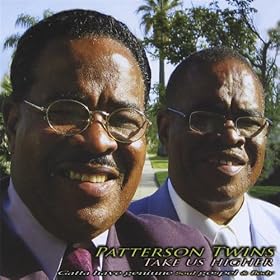
After these earlier records, the Patterson Twins made a few records for some other labels and released their only secular LP, "Let Me Be Your Lover." This LP currently sells for 100s of dollars among collectors. Presently, you can download it for free, along with some other later Pattersons tracks, at this site: http://www.funkmysoul.gr/patterson-twins-1978-let-me-be-your-lover/. That music is very much a mixed bag, and (IMO) does not come close to standing up to the earlier records. More interesting are the Twins recent gospel records. "Take Us Higher," pictured here, can be downloaded at Amazon for $8. As far as I know, the Twins are still alive and active. So download and support them.
Little Johnny Taylor and Ted Taylor (no relation) need no introduction here, and their two tracks together on the compilation are a blast. There are fine other duet recordings for Jewel by these titans. Johnny & Jon and Lonnie & Floyd are quite obscure. Lonnie and Floyd deliver a couple solid soul senders. Johnny & Jon's Christmas in Vietnam is an interesting song, although some pitch problems slightly get in the way of an otherwise very soulful performance.