Showing posts with label Howlin' Wolf. Show all posts
Thursday, December 7, 2017
Howlin' Wolf - Rockin' the Blues: Live in Germany 1964
Another cut-price CD issued in the UK that I found on my travels...Without details and a rarity...but a great recording (considering the times). Howlin' Wolf cut like a razor with his voice and delivery...
Muddy and The Wolf (with Willie Dixon as their songwriter and Bassman) created modern Blues.
Here as flac & mp3@320 - Gus
'This is a reissue of the November 6, 1964, Bremen concert that was previously available as Live in Europe 1964 on the Sundown label, with the same incorrect title references. What is first-rate is the sound, which is head-and-shoulders above most of the Howlin' Wolf live recordings of this period, undoubtedly because the show was part of the American Folk-Blues tour, large chunks of which were recorded professionally, and also the performance, which comes from a time when Wolf was still in very robust health. It's been said that if Muddy Waters had been born in Africa, he would have been a king; this show, which Chess Records could only wish they'd recorded, is a reminder that if Howlin' Wolf had been born in Africa, he'd have been a witch doctor or shaman; he's spellbinding in his performance, and the band backing him (a kind of star combo itself, with Willie Dixon and Sunnyland Slim playing alongside Hubert Sumlin) is tight, if a little restrained. And to top it off, it's mid-priced.' (Bruce Eder/AllMusic)
Monday, May 30, 2016
Howling Wolf Sings the Blues
All the Modern recordings in one remastered package! Even if you have all the Chess and Sun recordings, you need this as well!
Thanks again to our favorite Unky.
Monday, January 7, 2013
The Chess Story 1947 - 1975: Part 3 1965 - 1975 (Discs 11 - 13)
Well... this concludes The Chess Story. I find the latter years to be the weakest in terms of quality. Clearly compromises were made in pursuit of making money. Combined with changes in ownership, we are left with really dated and unimportant music. Still, there are some worthy tunes and overall it's a decent listen. I guess the point is that, even the worst Chess offerings were better than alot of the music being released during that time.
I have gone through the previous posts and reloaded all of the links. I hope this will benefit anybody who missed any. There's a 14th disc featuring interviews with Phil and Marshall Chess, if there's interest I can post it as well... enjoy!!!

I have gone through the previous posts and reloaded all of the links. I hope this will benefit anybody who missed any. There's a 14th disc featuring interviews with Phil and Marshall Chess, if there's interest I can post it as well... enjoy!!!
The Chess Story 1947 - 1975: Part 2 1957 - 1964 (Discs 6 & 7)
Hey Gang!! Sorry about the large delay with this series. I suppose I have lost some of you but I assure you, I will keep things movin on this one.
We have reached part 2 of the box, and discs 6 & 7 are really representative of the Chess heyday. Now the label is firmly established and has found its way. This means they are pumpin out the hits from their now famous roster.
As far as who's who, the list is much like the last couple of discs we heard. These artists had much to say and the recordings flowed like wine. I will give you guys some time to absorb these before unleashing the next batch... enjoy!!!
The Chess Story 1947 - 1975: Part 1 1947 - 1956 (Discs 3-5)
With all of the amazing music coming through Chitlins, it's hard to find the right time for a substantial post like this. Translation: The time is never right, so here it is!!
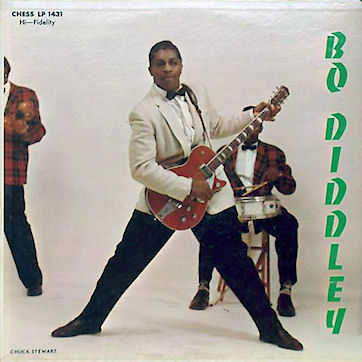
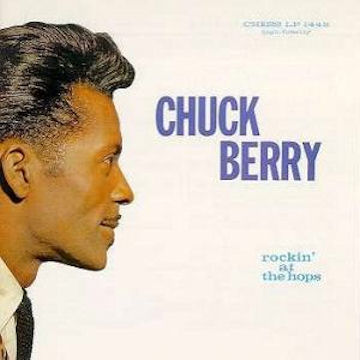
I hope you all enjoyed the first two discs, the next three are even more intruiging as Leonard Chess expands his roster and aspirations. Individual players from Muddy Waters' band begin succesful recording careers of their own. New and creative artists like Bo Diddley and Chuck Berry arrive, and by disc 5, Chess is a varied and multi faceted label.
Something that you should know, Leonard Chess also began recording jazz around this time as well. Gene Ammons, Sonny Stitt and even the great Benny Goodman were some of the first artists to record jazz on the Chess imprint. I think it would have been a great idea to include the Chess label jazz sides, just as a measure of Leonard Chess' great taste. Another area which is omitted, would be comedy LPs. Pigmeat Markham and Moms Mabley were frequent releases during these early years at Chess. Most of the sides were recorded live, but the comedy album held much esteem back in the day.
I hope you all enjoyed the first two discs, the next three are even more intruiging as Leonard Chess expands his roster and aspirations. Individual players from Muddy Waters' band begin succesful recording careers of their own. New and creative artists like Bo Diddley and Chuck Berry arrive, and by disc 5, Chess is a varied and multi faceted label.
Something that you should know, Leonard Chess also began recording jazz around this time as well. Gene Ammons, Sonny Stitt and even the great Benny Goodman were some of the first artists to record jazz on the Chess imprint. I think it would have been a great idea to include the Chess label jazz sides, just as a measure of Leonard Chess' great taste. Another area which is omitted, would be comedy LPs. Pigmeat Markham and Moms Mabley were frequent releases during these early years at Chess. Most of the sides were recorded live, but the comedy album held much esteem back in the day.
For my personal tastes, these 3 discs are the strongest in terms of all around impact. Musically, creatively and what would eventually be, historically too. The next few discs are also incredibly strong, so buckle up... Enjoy!!!
Monday, August 27, 2012
Early Black Rock 'N Roll Vol. 1 & 2
![]() |
| Shakey Jake |
Firstly, I took an interest in the Trikont label after KC's most unusual post of Black Country. As a result I picked up more than a handful of incredible comps. This is a label which select tracks meticulously and remaster them to perfection. All have been a real joy to listen to and worth every cent.
More recently, KC and I were discussing how to incorporate some of the more rock type figures into Chitlins. Chuck Berry and Bo Diddley were discussed and I was basically tasked with bringin these heavys to all of you followers.
Well, I thought to break the ice I would share these two amazing comps - guaranteed to have your media player on repeat. We are revisited by more than a couple of artists which KC has profiled extensively; Little Willie John, Howlin Wolf and Ike Turner to name a few. But we are introduced to many seminal figures in the birth of rock like Shakey Jake, the Bill Davis Trio, Lazy Lester and Slim Harpo.
![]() |
| Vol. 1 1948 - 1958 |
The music here is so infectious, it's a guarantee that you'll be boppin around once you are into it. It's easy to see why rock took off like it did, there's nothing but fun to be had listening to this stuff. Even lyrical themes of love lost, aging and other downbeat subjects are given the uptempo, dancable treatment.
Translated from the Trikont site:
Long before Elvis had rolled his pelvis, or the Rolling Stones tapped into the Mississippi-Blues, and the legions of white bands made their electrified guitars roar, black Blues-Gospel & Jazz artists had laid the cornerstone for the musical revolution known as Rock n Roll! Besides well-known names like Chuck Berry, Howlin’ Wolf, or Bo Diddley. This comp also features many unjustly overseen musical pioneers.
From gospel singer Rosetta Tharpe, to Jimi-Hendrix-idol Johnny Guitar Watson, from Ike Turners early Rockabilly-blueprints, to the Doo-Wop-Rock of Ruth Brown. Other artists, including Magic Slim, Andre Williams, Big Maybelle, Rufus Thomas, Lazy Lester, Etta James, and Jesse Stone are featured on this release.
Vol. 2 1949 - 1959
![]() |
| Big Maybelle |
(4/5 Stars, The Independent, UK)
Trikont Records
US-0392 / 0412
released 2010
Wednesday, July 11, 2012
Howlin Wolf - The Wolf
This isn't your typical "best of" album. The tracks are not all what you would find on most of his collections. No Smokestack Lightnin' or Killin Floor, but what you'll find here is a group of highly soulful tunes.
There's no listing on the album for personnel or source material. Sounds like his classic Chicago line up to me...great sound on this one, no cracklin disc copies. Ripped at 24/44.1 wav and dithered to 16/44.1 FLAC... enjoy!!
Blue Moon BMLP-1009
1984

1. Ain't Superstitious
2. Goin Down Slow
3. Somebody Walkin In My House
4. Commit A Crime
5. My Mind Is Ramblin
6. I Walked From Dallas
7. My Country Sugar Mama
8. Louise
9. Hold Onto Your Money
10. Streamline Woman
Howlin' Wolf - Vocals, Guitar
There's no listing on the album for personnel or source material. Sounds like his classic Chicago line up to me...great sound on this one, no cracklin disc copies. Ripped at 24/44.1 wav and dithered to 16/44.1 FLAC... enjoy!!
Blue Moon BMLP-1009
1984

1. Ain't Superstitious
2. Goin Down Slow
3. Somebody Walkin In My House
4. Commit A Crime
5. My Mind Is Ramblin
6. I Walked From Dallas
7. My Country Sugar Mama
8. Louise
9. Hold Onto Your Money
10. Streamline Woman
Howlin' Wolf - Vocals, Guitar
Saturday, July 7, 2012
Muddy And The Wolf
This is a great album. Side one is tracks from a Muddy session, originally released as Fathers And Sons. Side 2 features the Wolf, tracks taken from his album The London Howlin Wolf Sessions.
I actually had a mint copy of Fathers And Sons but sold it when I was offered too much to refuse. As you can see from the cover, Howlin Wolf is jammin with some British rock types.
Overall a really fun album. Ripped from my minty vinyl, but only at 320 mp3 (older rip)... Enjoy!!!
Chess CH-9100
1984
MUDDY WATERS:
Personnel: Muddy Waters (vocals, slide guitar); Michael Bloomfield (guitar); Paul Butterfield, Jeff Carp (harmonica); Otis Spann (piano); Donald "Duck" Dunn, Phil Upchurch (bass); Sam Lay (drums).
Engineer: Ron Malo, Reice Hamel.
Recorded at Ter-Mar Studios, Chicago, Illinois; Live at Super Cosmic Joy-Scout Jamboree, Chicago, Illinois, April 24, 1969. Originally released on Chess (127).
1 All Aboard 2:50
2 Blow Wind Blow See All 3:36
3 Can't Lose What You Ain't Never Had 3:04
4 Walkin' Thru the Park 3:18
5 I'm Ready 3:35
6 Long Distance Call 6:22
HOWLIN' WOLF:
Personnel: Howlin' Wolf (vocals, acoustic guitar, harmonica); Eric Clapton, Hubert Sumlin (guitar); Jeffrey M. Carp (harmonica); Steve Winwood, Ian Stewart, Lafayette Leake, John Simon (piano, organ); Bill Wyman, Phil Upchurch (bass, shakers, cow bell); Charlie Watts (drums, conga, percussion).
Engineer: Glyn Johns
Recorded at Olympic Sound Studios, London, England. Originally released on Chess (6008).
7 Rockin' Daddy 3:40
8 What A Woman! 3:01
9 Who's Been Talking? 3:05
10 Red Rooster 1:28
11 Red Rooster 2:47
12 Highway 49 3:51
13 Do the Do 2:17
I actually had a mint copy of Fathers And Sons but sold it when I was offered too much to refuse. As you can see from the cover, Howlin Wolf is jammin with some British rock types.
Overall a really fun album. Ripped from my minty vinyl, but only at 320 mp3 (older rip)... Enjoy!!!
Chess CH-9100
1984
MUDDY WATERS:
Personnel: Muddy Waters (vocals, slide guitar); Michael Bloomfield (guitar); Paul Butterfield, Jeff Carp (harmonica); Otis Spann (piano); Donald "Duck" Dunn, Phil Upchurch (bass); Sam Lay (drums).
Engineer: Ron Malo, Reice Hamel.
Recorded at Ter-Mar Studios, Chicago, Illinois; Live at Super Cosmic Joy-Scout Jamboree, Chicago, Illinois, April 24, 1969. Originally released on Chess (127).
1 All Aboard 2:50
2 Blow Wind Blow See All 3:36
3 Can't Lose What You Ain't Never Had 3:04
4 Walkin' Thru the Park 3:18
5 I'm Ready 3:35
6 Long Distance Call 6:22
HOWLIN' WOLF:
Personnel: Howlin' Wolf (vocals, acoustic guitar, harmonica); Eric Clapton, Hubert Sumlin (guitar); Jeffrey M. Carp (harmonica); Steve Winwood, Ian Stewart, Lafayette Leake, John Simon (piano, organ); Bill Wyman, Phil Upchurch (bass, shakers, cow bell); Charlie Watts (drums, conga, percussion).
Engineer: Glyn Johns
Recorded at Olympic Sound Studios, London, England. Originally released on Chess (6008).
7 Rockin' Daddy 3:40
8 What A Woman! 3:01
9 Who's Been Talking? 3:05
10 Red Rooster 1:28
11 Red Rooster 2:47
12 Highway 49 3:51
13 Do the Do 2:17
Saturday, June 30, 2012
Howlin' Wolf (The Rocking Chair Album)
It is pretty hard to find a Blues record more iconic than this album.
"....His 1962 LP Howlin' Wolf, which featured contributions from Willie Dixon, Jimmy Rogers and Sam Lay among others, is a famous and influential blues album, often referred to as "The Rocking Chair album" because of its cover illustration depicting an acoustic guitar leaning against a rocking chair. This album contained "Wang Dang Doodle", "Goin' Down Slow", "Spoonful", and "Little Red Rooster" (titled "The Red Rooster" on this album), songs which found their way into the repertoires of British and American bands infatuated with Chicago blues. In 1964 he toured Europe as part of the American Folk Blues Festival tour produced by German promoters Horst Lippmann and Fritz Rau. In 1965 he appeared on the television show Shindig at the insistence of The Rolling Stones, who were scheduled to appear on the same program and who had covered "Little Red Rooster" on an early album. He was often backed on records by bassist and songwriter Willie Dixon who is credited with such Howlin' Wolf standards as "Spoonful", "I Ain't Superstitious", "Little Red Rooster", "Back Door Man", "Evil", "Wang Dang Doodle" (later recorded by Koko Taylor), and others.

In September 1967, he joined forces with Bo Diddley and Muddy Waters for The Super Super Blues Band album of Chess blues standards, including "The Red Rooster" and "Spoonful".
In May 1970, Howlin' Wolf, his long-time guitarist Hubert Sumlin, and the young Chicago blues harmonica player Jeff Carp traveled to London along with Chess Records producer Norman Dayron to record the Howlin' Wolf London Sessions LP, accompanied by British blues/rock musicians Eric Clapton, Steve Winwood, Ian Stewart, Bill Wyman, Charlie Watts and others. He recorded his last album for Chess, The Back Door Wolf, in 1973.
Unlike many other blues musicians, after he left his impoverished childhood to begin a musical career, Howlin' Wolf was always financially successful. Having already achieved a measure of success in Memphis, he described himself as "the onliest one to drive himself up from the Delta" to Chicago, which he did, in his own car on the Blues Highway and with four thousand dollars in his pocket, a rare distinction for a black blues man of the time. In his early career, this was the result of his musical popularity and his ability to avoid the pitfalls of alcohol, gambling and the various dangers inherent in what are vaguely described as "loose women", to which so many of his peers fell prey. Though functionally illiterate into his 40s, Burnett eventually returned to school, first to earn a G.E.D., and later to study accounting and other business courses aimed to help his business career.

Wolf met his future wife, Lillie, when she attended one of his performances in a Chicago club. She and her family were urban and educated, and not involved in what was generally seen as the unsavory world of blues musicians. Nonetheless, immediately attracted when he saw her in the audience as Wolf says he was, he pursued her and won her over. According to those who knew them, the couple remained deeply in love until his death. Together they raised Bettye and Barbara, Lillie's two daughters from an earlier relationship.
After he married Lillie, who was able to manage his professional finances, Wolf was so financially successful that he was able to offer band members not only a decent salary, but benefits such as health insurance; this in turn enabled him to hire his pick of the available musicians, and keep his band one of the best around. According to his daughters, he was never financially extravagant, for instance driving a Pontiac station wagon rather than a more expensive and flashy car.
Wolf's health declined in the late 1960s through 1970s. He suffered several heart attacks and in 1970 his kidneys were severely damaged in an automobile accident. He died in 1976 from complications of kidney disease.
Howlin' Wolf - Moanin' in the Moonlight
I doubt this will require much explanation, this stands as Wolf's first Chess album but it was, in fact, a compilation of singles released throughout the 50's. There are some even earlier tracks from Sun and RPM that I haven't heard."Chester Arthur Burnett (June 10, 1910 – January 10, 1976), known as Howlin' Wolf, was an influential American blues singer, guitarist and harmonica player. He was born in West Point, Mississippi in an area now known as White Station.
With a booming voice and looming physical presence, Burnett is commonly ranked among the leading performers in electric blues; musician and critic Cub Koda declared, "no one could match Howlin' Wolf for the singular ability to rock the house down to the foundation while simultaneously scaring its patrons out of its wits." A number of songs written or popularized by Burnett—such as "Smokestack Lightnin'", "Back Door Man", "Killing Floor" and "Spoonful"—have become blues and blues rock standards.
At 6 feet, 6 inches (198 cm) and close to 300 pounds (136 kg), he was an imposing presence with one of the loudest and most memorable voices of all the "classic" 1950s Chicago blues singers. This rough-edged, slightly fearsome musical style is often contrasted with the less crude but still powerful presentation of his contemporary and professional rival, Muddy Waters. Howlin' Wolf, Sonny Boy Williamson (Rice Miller), Little Walter Jacobs, and Muddy Waters are usually regarded in retrospect as the greatest blues artists who recorded for Chess in Chicago. Sam Phillips once remarked, "When I heard Howlin' Wolf, I said, 'This is for me. This is where the soul of man never dies.''...he was named after Chester A. Arthur, the 21st President of the United States, and was nicknamed Big Foot Chester and Bull Cow in his early years because of his massive size. He explained the origin of the name Howlin' Wolf thus: "I got that from my grandfather [John Jones]." His Grandfather would often tell him stories about the wolves in that part of the country and warn him that if he misbehaved, the howling wolves would "get him". According to the documentary film The Howlin' Wolf Story, Howlin' Wolf's parents broke up when he was young. His very religious mother Gertrude threw him out of the house while he was still a child for refusing to work around the farm; he then moved in with his uncle, Will Young, who treated him badly. When he was 13, he ran away and claimed to have walked 85 miles (137 km) barefoot to join his father, where he finally found a happy home within his father's large family. During the peak of his success, he returned from Chicago to his home town to see his mother again, but was driven to tears when she rebuffed him and refused to take any money he offered her, saying it was from his playing the "Devil's music".
In 1930, Howlin' Wolf met Charley Patton, the most popular bluesman in the Delta at the time. Wolf would listen to Patton play nightly from outside a nearby juke joint. There he remembered Patton playing "Pony Blues," "High Water Everywhere," "A Spoonful Blues," and "Banty Rooster Blues." The two became acquainted and soon Patton was teaching him guitar. "The first piece I ever played in my life was ... a tune about hook up my pony and saddle up my black mare" (Patton's "Pony Blues"). Wolf also learned about showmanship from Patton: "When he played his guitar, he would turn it over backwards and forwards, and throw it around over his shoulders, between his legs, throw it up in the sky."Chester [Wolf] could perform the guitar tricks he learned from Patton for the rest of his life."Chester learned his lessons well and played with Patton often [in small Delta communities]."
Howlin' Wolf was also inspired by other popular blues performers of the time, including the Mississippi Sheiks, Blind Lemon Jefferson, Ma Rainey, Lonnie Johnson, Tampa Red, Blind Blake, and Tommy Johnson (two of the earliest songs he mastered were Jefferson's "Match Box Blues" and Leroy Carr's "How Long, How Long Blues"). Country singer Jimmie Rodgers, who was Wolf's childhood idol, was also an influence. Wolf tried to emulate Rodgers' "blue yodel," but found that his efforts sounded more like a growl or a howl. "I couldn't do no yodelin'," Barry Gifford quoted him as saying in Rolling Stone, "so I turned to howlin'. And it's done me just fine." His harmonica playing was modeled after that of Rice Miller (also known as Sonny Boy Williamson II), who had taught him how to play when Howlin Wolf had moved to Parkin, Arkansas, in 1933.During the 1930s, Wolf performed in the South as a solo performer and with a number of blues musicians, including Floyd Jones, Johnny Shines, Honeyboy Edwards, Sonny Boy Williamson II, Robert Johnson, Robert Jr. Lockwood, Willie Brown, Son House, Willie Johnson. On April 9, 1941, at age thirty, he was inducted into the U.S. Army and was stationed at several army bases. Finding it difficult to adjust to military life, Wolf was discharged November 3, 1943, during the middle of World War II, without ever being sent overseas. Wolf returned to his family and helped with farming, while performing as he had done in the 1930s with Floyd Jones and others. In 1948 he formed a band which included guitarists Willie Johnson and Matt "Guitar" Murphy, harmonica player Junior Parker, a pianist remembered only as "Destruction" and drummer Willie Steele. He began broadcasting on KWEM in West Memphis, Arkansas, alternating between performing and pitching equipment on his father's farm after his family's move to this area in the same year. Eventually, Sam Phillips discovered him and ended up signing him for Memphis Recording Service in 1951.
In 1950, Howlin' Wolf cut several tracks at Sun Studio in Memphis. He quickly became a local celebrity, and soon began working with a band that included Willie Johnson and guitarist Pat Hare. His first recordings came in 1951, when he recorded sessions for both the Bihari brothers at RPM Records and Leonard Chess's Chess Records. Chess issued Howlin' Wolf's "Moanin' At Midnight" b/w "How Many More Years" on August 15, 1951; Wolf also recorded sides for RPM, with Ike Turner, in late 1951 and early 1952. Chess eventually won the war over the singer, and Wolf settled in Chicago, Illinois c. 1953.[5] arriving in Chicago, he assembled a new band, recruiting Chicagoan Jody Williams from Memphis Slim's band as his first guitarist. Within a year Wolf enticed guitarist Hubert Sumlin to leave Memphis and join him in Chicago; Sumlin's terse, curlicued solos perfectly complemented Burnett's huge voice and surprisingly subtle phrasing. Although the line-up of Wolf's band would change regularly over the years, employing many different guitarists both on recordings and in live performance including Willie Johnson, Jody Williams, Lee Cooper, L.D. McGhee, Otis "Big Smokey" Smothers, his brother Little Smokey Smothers, Jimmy Rogers, Freddie "Abu Talib" Robinson, and Buddy Guy, among others, with the exception of a couple of brief absences in the late '50s Sumlin remained a member of the band for the rest of Wolf's career, and is the guitarist most often associated with the Chicago Howlin' Wolf sound.
In the 1950s Wolf had four songs that qualified as "hits" on the Billboard national R&B charts: "How Many More Years", his first and biggest hit, made it to #4 in 1951; its flip side, "Moanin' at Midnight", made it to #10 the same year; "Smokestack Lightning" charted for three weeks in 1956, peaking at #8; and "I Asked For Water (She Gave Me Gasoline)" appeared on the charts for one week in 1956, in the #8 position. In 1959, Wolf's first album, Moanin' in the Moonlight, a compilation of previously released singles, was released.