Welcome to church!
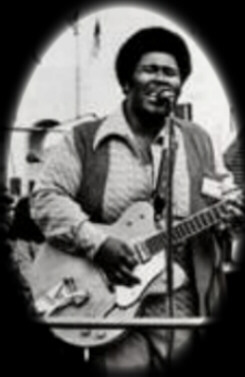
"Lucky Peterson plays blues. Mavis Staples sings gospel. One might
wonder if this Saturday night/Sunday morning combo could create a
lasting tribute to gospel great Mahalia Jackson. But it works, mainly
because the two stick to a formula Jackson favored: Vocals accompanied
only by an organ or piano.
Staples was deeply influenced by
Jackson's music and friendship. And it was her idea to record a tribute
using the accompaniment Jackson prefered. But she had trouble finding
an organ player with the reputation that would interest a record
company. Peterson had this reputation. In the mid-1990s, he was a
red-hot blues player for Verve Records, getting lots of radio play, and
gigs at major festivals. He was famous for his guitar playing, but
equally proficient on the Hammond B-3 organ. Verve promised to release
the Jackson tribute if Staples agreed to work with Peterson. The
results are stunning, especially considering the two never worked
together before.
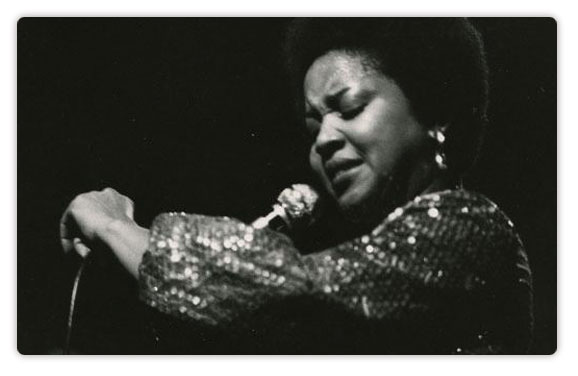
Staples' voice is characterized by a deep rasp
that adds an emotional edge to Jackson favorites like "Wade in the
Water" and "Were You There?" Peterson, for his part, has the chops
befitting a bandleader. But on this album, he gladly, almost
worshipfully, steps into the supporting role. On every track, Peterson
punctuates Staples' singing, and fills her pauses with appropriate
chords. Never once does he upstage her, or play ahead of her.
The
best example of this collaboration is "Precious Lord, Take My Hand."
Here, Staples' voice soars to the heavens - praising God, Jackson,
praising music itself - before descending to a gravelly bottom, filled
with soul and solemnity. Peterson, again, follows wherever Staples
goes. Like the perfect wingman, his eye remains on his leader, hands
reacting quickly and competently to stay in formation.
"Spirituals
& Gospel" works because of the special magic between Staples, a
leader in sacred music, and Peterson, a star of the secular world. Who
knew that great gospel needed a sinner to help it succeed? The Lord
works in mysterious ways...."
Dan Klefstad
Showing posts with label Mavis Staples. Show all posts
Sunday, March 1, 2015
Sunday, April 20, 2014
Mavis Staples- You Are Not Alone
My local buddy pmac contributed this one.
"Mavis Staples has a mighty voice. Even into her 70s, she still has dynamic range that goes from a full-throated shout to an intimate whisper without losing her easy authority over a song. Over the decades, many musicians and producers have tried to wrangle that voice onto record, with varying degrees of success. With her father, Pops Staples, she recorded a string of songs that combined gospel and folk music, many of which-- "Respect Yourself" and the sublime "(If You're Ready) Come Go with Me"-- became hits that soundtracked the tumultuous civil rights movement. In the 1970s and 80s, she worked with Curtis Mayfield, Steve Cropper, and Prince, even signing to his Purpleness' Paisley Park label for a brief period.
In the 2000s, Staples has entered an unlikely third stage in her
career, with a string of inspired albums that exhibit new range. We'll Never Turn Back,
recorded with producer Ry Cooder, revived civil rights anthems for the
dying days of the Bush era, and they still sound prescient and powerful.
Following the fierce Live: Hope at the Hideout in 2008, her latest album, You Are Not Alone,
was recorded with Wilco frontman and fellow Chicago resident Jeff
Tweedy. Tweedy clearly has a deep knowledge of and appreciation for
Staples' career, and he gives her a warmly textured backdrop that's both
familiar and inventive, with nods to past glories. He cherrypicks a
number of her old hits to revive and chooses some new covers for her to
sing, with a keen understanding of her strengths and weaknesses. In
turn, Staples gives him intuitive and moving performances on each song,
whether she's celebrating her own salvation or bemoaning a lost love.
On "Downward Road", a Pops favorite that the Staples Singers recorded decades ago, she's casually scolding as she relates the story of a woman who revels in sin and pays a hefty price. A fat bass thwacks along, creating a strange gospel plod that makes Staples sound like she's marching against the downward tide. By contrast, "In Christ There Is No East or West" is so delicate that it threatens to blow away with the breeze. It's a risky tack, as Staples could very easily have bulldozed such light accompaniment, but she adjusts her delivery to convey her awe in God's unfathomable omnipresence. This, she seems to say, is something to celebrate, and "I Belong to the Band - Hallelujah" and "Creep Along Moses" sound like party gospel-- jubilant cries heavenward.
As covers go, Creedence Clearwater Revival's "Wrote a Song for Everyone" is an obvious choice considering the public quality of Staples' music, and she sings it with such humility that it's surprising she's never recorded it before. On the other hand, Randy Newman's "Losing You" is much more private, and Staples communicates stoic, dignified heartbreak with every syllable. It's a remarkable performance, matched only by the reassuring title track, which Tweedy wrote especially for her. "You Are Not Alone", as its title suggests, intends to be a salve in hard times, and Staples rallies her most sympathetic delivery, as if comforting her listeners individually.
Rather than protest the state of the world, Staples is toasting human endurance-- hers as well as ours. After decades in the music industry, she still sounds invigorated and ecstatic, unburdened by cynicism or disappointment. With Tweedy, she has created a record that is mindful of her own past, yet these songs sound fresh, original, and often inspiring."
On "Downward Road", a Pops favorite that the Staples Singers recorded decades ago, she's casually scolding as she relates the story of a woman who revels in sin and pays a hefty price. A fat bass thwacks along, creating a strange gospel plod that makes Staples sound like she's marching against the downward tide. By contrast, "In Christ There Is No East or West" is so delicate that it threatens to blow away with the breeze. It's a risky tack, as Staples could very easily have bulldozed such light accompaniment, but she adjusts her delivery to convey her awe in God's unfathomable omnipresence. This, she seems to say, is something to celebrate, and "I Belong to the Band - Hallelujah" and "Creep Along Moses" sound like party gospel-- jubilant cries heavenward.
As covers go, Creedence Clearwater Revival's "Wrote a Song for Everyone" is an obvious choice considering the public quality of Staples' music, and she sings it with such humility that it's surprising she's never recorded it before. On the other hand, Randy Newman's "Losing You" is much more private, and Staples communicates stoic, dignified heartbreak with every syllable. It's a remarkable performance, matched only by the reassuring title track, which Tweedy wrote especially for her. "You Are Not Alone", as its title suggests, intends to be a salve in hard times, and Staples rallies her most sympathetic delivery, as if comforting her listeners individually.
Rather than protest the state of the world, Staples is toasting human endurance-- hers as well as ours. After decades in the music industry, she still sounds invigorated and ecstatic, unburdened by cynicism or disappointment. With Tweedy, she has created a record that is mindful of her own past, yet these songs sound fresh, original, and often inspiring."
Sunday, April 6, 2014
Mavis Staples - We'll Never Turn Back
A third Sunday offering? Well, in truth, this is not entirely Gospel but it is inspiring music for a Sunday afternoon with the divine Ms Mavis -- there is a whole lot of singing going on here and it ain't just Mavis! Ry Cooder is producer/collaborator here and he does a fabulous job. In perusing the reviews of this monster it seems that the biggest complaint is that it is TOO good to be true.....yeah...I'll take that thank you!
The world needs more music like this - after nearly 60 years in the struggle Mavis sees how much is still undone, and makes it clear. Turn it up! Sing out loud! Keep on walking, keep on talking, let them know we ain't dead.
Sunday, September 8, 2013
Gotta Serve Somebody: The Gospel Songs Of Bob Dylan
Brothaz an' Sistaz!!
I think we can take a short hiatus from the Mahalia project. After seeing KC's Dylan post, I really wanted to share this one. Perhaps that list will change a bit now KC?
An outstanding album recorded with gorgeous fidelity. Ripped from CD using EAC to 16/44.1 FLAC. All scans are included as well... enjoy!!
I think we can take a short hiatus from the Mahalia project. After seeing KC's Dylan post, I really wanted to share this one. Perhaps that list will change a bit now KC?
An outstanding album recorded with gorgeous fidelity. Ripped from CD using EAC to 16/44.1 FLAC. All scans are included as well... enjoy!!
| Rance Allen |
The concept of a compilation of Bob Dylan's gospel songs is certainly an idea whose time has come. That this does not feature Dylan performing the original versions of these songs is yet another. Executive producer Jeffrey Gaskill assembled a wide-ranging assortment of the hottest talent in the gospel arena, both past and present, to perform the songs from Dylan's Slow Train Coming and Saved albums, and producer Joel Moss extracted phenomenal performances from Shirley Caesar, the Fairfield Four, the Sounds of Blackness, Rance Allen, the Chicago Mass Choir fronted by Regina McCrary (who sang backup for Dylan on the 1978 and 1979 tours when these recordings were originally done), the Mighty Clouds of Joy, Helen Baylor (with Billy Preston), Aaron Neville, Dottie Peoples, Lee Williams & the Spiritual QC's, Mavis Staples, and Dylan himself (performing a duet on a completely rewritten version of "Gonna Change My Way of Thinkin'"). In addition, a reunion of Dylan's touring band from the period, which included Tim Drummond, Jim Keltner, and Spooner Oldham, performs on "Solid Rock" with the Sounds of Blackness. All of this is interesting, of course, but listeners know that all-star tributes fall short more often than not. This is no tribute, however, but a showcase of Dylan as one of the great gospel songwriters -- albeit 25 years after the fact.
Caesar's version of the title track is a scorcher and would not have been out of place in a church pastored by James Cleveland. The Sounds of Blackness' "Solid Rock" does indeed rock -- it's funky, driving, and wrapped loosely around a minor-key trill and riffpulsing just ahead of the beat. Lee Williams & the Spiritual QC's' sweet, swinging read of "When You Gonna Wake Up" is smooth and haunting, like a more streetwise version of the Impressions, giving the groove in the tune a bluesier edge than the original. Peoples' "I Believe in You" could be a testimony in church, full of understated phrasing until she gets to the refrains when it breaks and the redemptive hope in the tune comes pouring from the center of her voice. The Fairfield Four's read of "Are You Ready" is standard fare for them, meaning, of course, that the performance is beautiful, stirring, and moving, but it is less recognizable as a Dylan tune than anything else here. Neville's "Saving Grace" suffers from his now overly sweet trademark manner of phrasing. Detroit's Rance Allen kicks it on "When He Returns." His baritone is reminiscent of C.L. Franklin's, and comes from the heart of the church. He understands this is a song of great hope and personal conviction. The slight quaver in his voice at the refrain reverses the track on itself; the listener can feel something of a universal connection to the grain in his voice which, at least for Allen, and Dylan too, is not a relative but an absolute truth. The set closes with the Dylan/Staples duet. Performed by Dylan's own touring band, this is a house-burning blues, ripping in the dark, razor-cut of Dylan's voice. Staples wanders in after about a minute, and after a pleasant and
Mavis Staples
Shirley Caesar
humorous exchange, joins Dylan on the funkiest, most apocalyptic track on the set. This is raw, furious, scorching blues-funk. This is not an exercise in reverence but revelation, the roar of struggle and resolution, with the singers staring into the void and seeing the blackness and horror, retreating from the edges and the drunkenness of fear to the font of refuge. This fine collection warrants a complete reappraisal of the records these tracks came from, as well as Shot of Love and Infidels. Perhaps it also warrants a compilation of Dylan's own versions as well -- it would hardly be untimely since he continues to perform many if not all of these songs today. If you buy one gospel record in 2003, let this be it. ~ Thom Jurek/AMG
Sunday, June 9, 2013
Mavis Staples - Have A Little Faith
A pleasant Sunday morning to you all. This mornings service is by the luminous Ms Mavis Staples.
"If ever there were a time for Mavis Staples to return to recording, 2004 is it. Her tenure with her family's group the Staple Singers led by her late father Pops offered a steadying, positive presence on the pop scene during the late antiwar unrest and civil rights struggles of the 1960s through the 1970s. They offered up notions of personal responsibility, dignity, and spiritual hope in a heady and uncertain time. Have a Little Faith is a stellar collection of bluesy folk gospel and classic soul grooves recorded for modern times. Staples co-produced with Jim Tullio, who has also worked with John Martyn (who makes a cameo here) and Richie Havens. The album is subtle, laden with beautiful dark grooves, moody guitars, organic percussion, and B-3 and Rhodes piano. One can feel the presence and influence of Pops on these sides. He was a musician who understood that the empty spaces left on a record were as important as the music. Tullio gives Staples' gorgeous, grainy contralto a lot of room to weave its own magic amid the wonderfully warm, down-home swirl of the band. The album opener, "Step into the Light," was written by Robi Draco Rosa, Tullio, and Staples and features Martyn on guitar. The Delta blues acoustic slide feel that accompanies Staples at the beginning of the tune is counter-anchored by Chris Cameron's clavinet and the backing vocals of the Dixie Hummingbirds. The title cut comes right from Stax/Volt in its beautifully articulated guitar lines and a combination of B-3 and Wurlitzer. But it's Staples' voice with its welcoming conviction and certainty that soars: "There's evil all around us/We got to rise above/Got to fight the good fight/With that war with love/Hold on, hold on/Help is on the way/There's a better tomorrow/I can feel it today." What's amazing is that you believe her. Her reworking of the great Delta tune "See That My Grave Is Kept Clean" (with additional lyrics by Pops) is as storefront church as it gets. The message tunes, like "Ain't No Better Than You" and "At the End of the Day," are the gritty soul and funk tunes that are desperately needed right now, and the kind of songs that used to come bursting from the AM and FM dials by major and marginal artists alike. A Chicago choir aids Staples and the band on "In Times Like These," written by Tullio and LeRoy Marinell; even R. Kelly couldn't deliver a tune as inspirational as this one. There's nothing overblown about it's all-heavy, heart-lifting soul. The set ends with the first tune the Staples ever sang and recorded, a bare-bones, deep blues rendering of "Will the Circle Be Unbroken," with acoustic slide guitars, a bass harmonica, and hand percussion with a Wurlitzer backing Staples' understated yet devastatingly emotional performance. Have a Little Faith is a glorious return for Staples and is capable of inspiring those who are lucky enough to encounter it." Thom Jurek, AMG
Tuesday, May 14, 2013
Mavis Staples - The Volt Albums
Here is the first part of her Wiki bio:
"Mavis Staples (born July 10, 1939 in Chicago, Illinois) is an American rhythm and blues and gospel singer, actress and civil rights activist who recorded with The Staple Singers, her family's band.
Mavis Staples began her career with her family group in 1950. Initially singing locally at churches and appearing on a weekly radio show, the Staples scored a hit in 1956 with "Uncloudy Day" for the Vee-Jay label. When Mavis graduated from what is now Paul Robeson High School in 1957, The Staple Singers took their music on the road. Led by family patriarch Roebuck "Pops" Staples on guitar and including the voices of Mavis and her siblings Cleotha, Yvonne, and Purvis, the Staples were called "God's Greatest Hitmakers."
With Mavis' voice and Pops' songs, singing, and guitar playing, the Staples evolved from enormously popular gospel singers (with recordings on United and Riverside as well as Vee-Jay) to become the most spectacular and influential spirituality-based group in America. By the mid-1960s The Staple Singers, inspired by Pops' close friendship with Martin Luther King, Jr., became the spiritual and musical voices of the civil rights movement. They covered contemporary pop hits with positive messages, including Bob Dylan's "A Hard Rain's a-Gonna Fall" and a version of Stephen Stills' "For What It's Worth."
During a December 20, 2008 appearance on National Public Radio's news show "Wait Wait...Don't Tell Me," when Staples was asked about her past personal relationship with Dylan, she admitted they "were good friends, yes indeed" and that he had asked her father for her hand in marriage.
The Staples sang "message" songs like "Long Walk to D.C." and "When Will We Be Paid?," bringing their moving and articulate music to a huge number of young people. The group signed to Stax Records in 1968, joining their gospel harmonies and deep faith with musical accompaniment from members of Booker T. and the MGs. The Staple Singers hit the Top 40 eight times between 1971 and 1975, including two No. 1 singles, "I'll Take You There" and "Let's Do It Again," and a No. 2 single "Who Took the Merry Out of Christmas?"
Staples made her first solo foray while at Epic Records with The Staple Singers releasing a lone single "Crying in the Chapel" to little fanfare in the late 1960s. The single was finally re-released on the 1994 Sony Music collection Lost Soul. Her first solo album would not come until a 1969 self-titled release for the Stax label...(and) another Stax release, Only for the Lonely, in 1970."