Thursday, September 13, 2012

Bo Diddley - The Chess Box

Ellas Otha Bates (December 30, 1928 – June 2, 2008), known by his stage name Bo Diddley, was an American rhythm and blues vocalist, guitarist, songwriter (usually as Ellas McDaniel), and rock and roll pioneer. He was also known as The Originator because of his key role in the transition from the blues to rock, influencing a host of acts, including Buddy Holly, Jimi Hendrix, The Rolling Stones, The Velvet Underground, The Who, The Yardbirds, Eric Clapton, Elvis Presley, The Beatles, and George Michael, among others.  He introduced more insistent, driving rhythms and a hard-edged electric guitar sound on a wide-ranging catalog of songs, along with African rhythms and a signature beat (a simple, five-accent rhythm) that remains a cornerstone of rock and pop.  Accordingly, he was inducted into the Rock and Roll Hall of Fame and received Lifetime Achievement Awards from the Rhythm and Blues Foundation and a Grammy Award from the National Academy of Recording Arts and Sciences. He was known in particular for his technical innovations, including his trademark rectangular guitar.

_________________________________________________________


Not every single track you'll ever want or need by the legendary shave-and-a-haircut rhythm R&B/rock pioneer, but a great place to begin. Two discs (45 songs) in a great big box with a nice accompanying booklet contain the groundbreaking introduction "Bo Diddley" (never again would he be referred to as Ellas McDaniel), its swaggering flipside "I'm a Man," the killer follow-ups "Diddley Daddy," "I'm Looking for a Woman," "Who Do You Love?," and "Hey Bo Diddley;" signifying street-corner humor ("Say Man"), piledriving rockers ("Road Runner," "She's Alright," "You Can't Judge a Book by Its Cover"), and numerous stunning examples of his daringly innovative guitar style.  - Bill Dahl/AMG

Bo Diddley (vocals, guitar, violin); Jerome Green (vocals, maracas); Jody Williams (guitar);
Eddie Drennon (violone); Little Willie Smith, Lester Davenport, Billy Boy Arnold (harmonica);
Henry Gray, Lafayette Leake, Otis Spann (piano); Clifton James, Frank Kirkland (drums);
Cornelia Redmond (maracas, tambourine);
The Carnations, The Flamingos , The Moonglows (background vocals).

Recording Information:
Bo Diddley's Washington, D.C. Home (03/02/1955-12/??/1968);
Chicago, IL (03/02/1955-12/??/1968);
Cleveland, OH (03/02/1955-12/??/1968);
New York, NY (03/02/1955-12/??/1968).

Wednesday, September 12, 2012

Buddy Ace - Don't Hurt No More

This guy was another of the miracles who performed at Eli's Mile High Club in Oakland, CA. (I didn't get to see him, sadly) Eli's was most definitely a Chitlin Circuit bar/ Blues club. It was a hell of a place and I never had less than a stellar time there but it wasn't always easy to convince others to go with me and even if you took a cab there it was not easy to get one back home; Eli's was in a rough neighborhood.

"Buddy Ace (November 11, 1936 – December 26, 1994) was an American blues singer, known as the "Silver Fox of the Blues." His best known tracks were "Root Doctor" and "Pouring Water on a Drowning Man".

Born James Lee Land in Jasper, Texas, United States, he was raised in Baytown, Texas, and began his singing career by singing gospel together with Joe Tex. He joined Bobby "Blue" Bland and Junior Parker, before being signed to Duke/Peacock Records in 1955. His hits include "Nothing In the World Can Hurt Me (Except You)." In the late 1960s, he moved to California performing on live shows.

Buddy Ace died of a heart attack performing in Waco, Texas, in December 1994, aged 58."


Such a tiny bit of biographical info at wiki. I can only find a little bit more:
"Born Jimmy Lee Land in Jasper, TX, on November 11, 1936, bluesman "Buddy Ace" was known as "The Silver Fox of the Blues". His name was changed to "Buddy Ace" by Duke's Don Robey after Frankie Ace's younger brother (St. Clair Alexander) had no success with it! Lee Land was in gospel groups at first (one contained Joe Tex) before going R & B in the early 50s. He played in Bobby Bland and Junior Parker's bands before he finally got a record contract with Duke/Peacock in 1955. In the mid-'60s, Ace scored several R&B hits but never scored a major breakthrough. Relocating to Los Angeles in 1970 and later to Oakland, he spent much of this period touring in and around the Bay Area. Ace continued to perform and record into the '90s with 3 albums released on Leon Haywood's Evejim imprint. On December 26, 1994, Ace passed away in Waco, TX." Soul Blues Music   

This guy's discography is tiny; the Duke singles disc plus four albums, hopefully we will find all of them before we are thru.

Tuesday, September 11, 2012

Lonnie Johnson with Elmer Snowden - Blues, Ballads and Jumpin' Jazz

I have had a copy of Blues & Ballads for most of my adult life so imagine my joy when they finally released the second album of material from the session (it only took 38 years!) These songs are a joy to listen to - two old masters who had not seen each other in decades are clearly enjoying this chance to musically reminisce. The entire session is combined to one link here.

Blues, Ballads and Jumpin' Jazz, vol 2

1. Lester Leaps In 6:13   
2. Blue And All Alone 5:39   
3. On The Sunny Side Of The Street 6:50   
4. C-jam Blues 4:12   
5. New Orleans Blues 2:21   
6. Careless Love 4:58   
7. Stormy Weather 10:34   
8. Stormy Weather 10:34   
9. I Ain't Gonna Give Nobody None O... 5:28   
10. Birth Of The Blues 2:54
Blues & Ballads, vol 1

 1. Haunted House 5:02   
    2. Memories Of You 4:24   
    3. Blues For Chris 5:07   
    4. I Found A Dream 4:37   
    5. St. Louis Blues 3:08   
    6. I'll Get Along Somehow 4:30   
    7. Savoy Blues 4:14   
    8. Back Water Blues 5:07   
    9. Elmer's Blues 3:31   
    10. Jelly Roll Baker 4:16   

"New Orleans–born guitarist Lonnie Johnson was perhaps the only musician to have been a pioneering major influence in both the jazz and blues fields. He was as at home in the company of Louis Armstrong and Duke Ellington as he was accompanying blues singers and crooning the blues himself.Blues and Ballads, a 1960 album that paired Lonnie Johnson with fellow guitarist Elmer Snowden, produced some of the most moving performances of Johnson's prolific career. Now, 38 years later, comes more from that remarkable session. Four tracks are typically melancholy Johnson vocals featuring his sweetly stinging guitar, while the other six are instrumentals showcasing Snowden's rhythmically riveting jazz attack. One of those, the gently loping "Careless Love," is a Johnson-Snowden guitar duet that recalls Johnson's celebrated work of three decades earlier with Eddie Lang."


Singing guitarist Lonnie Johnson looms as a major stylistic innovator in both the jazz and blues fields. His single-string approach to soloing and sophisticated harmonic sense left a profound mark on several generations of guitar players, including Eddie Lang, Charlie Christian, T-Bone Walker, Lowell Fulson, and B.B. King. “He had a somewhat modern style—that is compared to the stuff that I was playing and a lot of other people were playing,” King said in 1968. “He had a modern technique of chord progressions.”

Born in New Orleans, either in 1889 or ’94, Johnson was originally a violinist and later learned banjo, mandolin, guitar, and piano. During the late 1920s, the versatile Johnson was much in demand as a guitarist for recording sessions and was as comfortable accompanying “primitive” country blues singer Texas Alexander as he was in the faster musical company of Lang (with whom he recorded a remarkable series of duets), the Duke Ellington Orchestra, and Louis Armstrong’s Hot Five.

It was as a vocalist, however, that Johnson received the greatest public acclaim. His recording of the sentimental pop song “Tomorrow Night” spent seven weeks at the top of Billboard’s “race” chart in 1948. He had three additional hit singles on King Records over the next two years, but by the end of the Fifties, he had dropped out of music entirely and was working as a janitor at a Philadelphia hotel. Disc jockey Chris Albertson located him there in 1960 and brought him the attention of Prestige Records, for whom Johnson recorded seven albums over the next two years. He remained an active performer until his death in Toronto in 1970.


Elmer Snowden (October 9, 1900 – May 14, 1973) was a banjo player of the jazz age. He also played guitar and, in the early stages of his career, all the reed instruments. He contributed greatly to jazz in its early days as both a player and a bandleader, and is responsible for launching the careers of many top musicians. However, Snowden himself has been largely overlooked in jazz history.

Born in Baltimore, Snowden is remembered today mainly as the original leader of the Washingtonians, a group he brought to New York City from the capital in 1923. Unable to get a booking, Snowden sent for Duke Ellington, who was with the group when it recorded three test sides for Victor that remain unissued and are, presumably, lost. Ellington eventually took over leadership of the band, which contained the nucleus of what later became his famous orchestra. Snowden was a renowned band leader – Count Basie, Jimmie Lunceford, Bubber Miley, "Tricky Sam" Nanton, Frankie Newton, Benny Carter, Rex Stewart, Roy Eldridge and Chick Webb are among the musicians who worked in his various bands.

Very active in the 1920s as an agent and musician, Snowden at one time had five bands playing under his name in New York, one of which was led by pianist Cliff Jackson. Unfortunately, most of his bands were not recorded, but a Snowden band that included Eldridge, Al Sears, Dicky Wells and Sid Catlett appeared in a 1932 film, Smash Your Baggage. Snowden also made numerous appearances as a sideman on almost every New York label from 1923 on. Unfortunately, he rarely received credit, except for two sides with Bessie Smith in 1925, and six sides with the Sepia Serenaders in 1934.

Though Snowden continued to be musically active throughout his life, after the mid 1930s he lived in relative obscurity in New York. He continued to play throughout the 30s, 40s and 50s, but was far from the limelight. After a dispute with the musicians union in New York, he moved to Philadelphia where he taught music, counting among his pupils pianist Ray Bryant, his brother, bassist Tommy Bryant, and saxophonist Sahib Shihab (Edmond Gregory).

Snowden was working as a parking lot attendant in 1959 when Chris Albertson, then a Philadelphia disc jockey, came across him. In 1960, Albertson brought Snowden and singer-guitarist Lonnie Johnson together for two Prestige albums, assembled a quartet that included Cliff Jackson for a Riverside session, Harlem Banjo, and, in 1961, a sextet session with Roy Eldridge, Bud Freeman, Jo Jones, and Ray and Tommy Bryant—it was released on the Fontana and Black Lion labels.

In 1963, his career boosted, Snowden appeared at the Newport Jazz Festival. He toured Europe in 1967 with the Newport Guitar Workshop. He moved to California to teach at the University of California, Berkeley, and played with Turk Murphy.

In 1969, Snowden moved back to Philadelphia, where he died on May 14, 1973.

My friend and morning coffee mate Les Muscutt is also a banjo/guitar guy who was friends with Elmer and Elmer told him it had been decades since anyone expressed interest in his guitar playing when Chris Albertson asked him to do this session. He surely must have been playing at home because his playing here is phenomenal. Lonnie defers most of the solos to Elmer despite what reviewers who think Elmer was playing rhythm might say - they clearly did not listen well enough to either the playing or the conversations between the two.

Sunday, September 9, 2012

Snooks Eaglin - New Orleans Street Singer

Snooks Eaglin, born Fird Eaglin, Jr. (January 21, 1936 – February 18, 2009), was a New Orleans-based guitarist and singer. He was also referred to as Blind Snooks Eaglin in his early years.

His vocal style is reminiscent of Ray Charles; indeed, in the 1950s, when he was in his late teens, he would sometimes bill himself as "Little Ray Charles". Generally regarded as a legend of New Orleans music, he played a wide range of music within the same concert, album, or even song: blues, rock and roll, jazz, country, and Latin. In his early years, he also played some straight-ahead acoustic blues.

His ability to play a wide range of songs and make them his own earned him the nickname "the human jukebox." Eaglin claimed in interviews that his musical repertoire included some 2,500 songs.At live shows, he did not usually prepare set lists, and was unpredictable, even to his bandmates. He played songs that came to his head, and he also took requests from the audience. He was universally loved and respected by fellow musicians and fans alike.

Eaglin lost his sight not long after his first birthday after being stricken with glaucoma, and spent several years in the hospital with other ailments. Around the age of five Eaglin received a guitar from his father; he taught himself to play by listening to and playing along with the radio. A mischievous youngster, he was given the nickname "Snooks" after a radio character named Baby Snooks.

In 1947, at the age of 11, Eaglin won a talent contest organized by the radio station WNOE by playing "Twelfth Street Rag". Three years later, he dropped out of the school for the blind to become a professional musician. In 1952, Eaglin joined the Flamingoes, a local seven-piece band started by Allen Toussaint. The Flamingoes did not have a bass player, and according to Eaglin, he played both the guitar and the bass parts at the same time on his guitar. He stayed with The Flamingoes for several years, until their dissolution in the mid-1950s.


As a solo artist, his recording and touring were inconsistent, and for a man with a career of about 50 years, his discography is rather slim. His first recording was in 1953, playing guitar at a recording session for James "Sugar Boy" Crawford. The first recordings under his own name came when Harry Oster, a folklorist from Louisiana State University, found him playing in the streets of New Orleans. Oster made recordings of Eaglin between 1958 and 1960 during seven sessions which later became records on various labels including Folkways, Folklyric, and Prestige/Bluesville. These recordings were in folk blues style, Eaglin with an acoustic guitar without a band.

There are still quite a few street musicians in New Orleans who rarely play anywhere else despite being plenty good enough, some of them claim that they make far more money on the street than they can anywhere else.

The Staple Singers - Freedom Highway

As promised, here is another classic Staples side to help prepare your soul for eternity.  Personally, I find this album comparable in every way to the last post of Circle. 

At several points the group find that incredible vibe which puts the listener into another head space.  Pops guitar is wildly unique in its simplicity and eerieness.

I hope you guys will follow along and grab these Staple albums if you don't have them.  Once I have you properly schooled in their roots, we'll dabble in their secular material.  I will predict that some of you won't even want to bother with it.  While its soulful in its own right, it doesn't even approach their gospel.


Originally released on Epic in 1965 as a live in-church session, Legacy's 1991 reissue of Freedom Highway includes two of the original LP tracks supplemented by some truly spirited late-'60s Epic recordings. Despite the glaring omissions, Freedom Highway never feels like a hastily thrown-together compilation. Instead, it follows an arc that deftly mirrors the religious, political, and social fervor of the '60s as filtered through the warm vibrato of Pops Staples' amplifier and the golden throats of his brood. Gospel standards like "Will the Circle Be Unbroken" and "Wade in the Water" benefit from the full band arrangements, giving them a swift kick of rock & roll that would eventually morph into the soul-funk sound of their popular '70s period. Pops, inspired by his meeting with Martin Luther King, Jr., contributes the wickedly infectious title cut -- one of the two live tracks from the original -- and the incendiary "Why Am I Treated So Bad," a bluesy lament inspired by the hardships of the "Little Rock 9." As always, the vocals and harmonies are nothing short of astounding, most notably on the Mavis Staples-led "Move Along Train" -- never has gospel sounded so sexy. Each song bristles with emotion and resonates deeper with every repeated listen, resulting in an experience that transcends scripture while remaining true to its alternately redemptive and fiery foundations. Freedom Highway captures a family approaching the cusp of catharsis, and its charms lie in the world-weary delivery of its message. Their devotion has been tested and their hands have been bloodied, but their faith has grown into an endless garden because of it, and by the time they reach the spookiest version of "This Train" ever put to tape, listeners will no doubt feel as empowered as the stoic passengers themselves.  - James Christopher Monger/AMG

Columbia 6033
1965

How Can I Keep From Singing: Early American Religious Music And Song Vol. 1 & 2

This is a killer collection of early gospel rarities, mixed with some which you may already know.  I took the time to do some scanning, so its all included.  Yazoo is another great label for comps and themed collections.

The Southern Church Of Chitlins is in.....enjoy!!

Another of Yazoo Records' wonderful themed compilations, How Can I Keep From Singing is a collection of sacred music from the 1920s and 1930s. It provides an indispensable series of portraits that sheds light on how people from the period celebrated their religion in song. Beyond historical significance, every performance here is an enjoyable listening experience, and there are many highlights. Jay Bird Coleman delivers a fantastic harmonica duet with Ollis Martin on "I'm Gonna Cross the River of Jordan." Their performance is raw and seems to lie outside of the confines of the church, much closer to the earth. The music seems to jump out of the recording. "He's Got Better Things for You" by the Memphis Sanctified Singers is equally exciting and is sung so beautifully that it could win the church new converts. "He's got the holy ghost and the fire," the singer advertises. This is religious music, but she isn't above making the song a showcase for her unique style as she growls her way through the chorus. On "Woke Up This Morning," Roosevelt Graves & Brother create a joyful syncopation with two voices, guitar, and some basic percussion. Typically, Yazoo gives no thought to musical or racial segregation. Thus, the heavily stylized voice of Rev. H.B. Jackson is backed by the authentic gospel sounds of Rev. E.D. Campbell & Congregation. Uncle Dave Macon (a white, vaudeville-influenced performer), who delivers a humorous, spoken introduction on "Walking in Sunlight," is followed by the unique tradition of sacred harp singing on a performance by the Middle Georgia Singing Convention. Slim Ducket & Pig Norwood's wonderful, subdued reading of "I Want to Go Where Jesus Is," which seems to bear the mark of a blues (secular) performer, is up against Rev. J.O. Hanes. The group's "The Great Transaction's Done," with its inclusion of a sermon, attempts to recreate the environment of a church meeting on record. By making faith the only requirement, Yazoo has brought together a range of performers, styles, and voices to gather and congregate, resulting in a blend that's all too rare. - Nathan Bush/AMG


As with its predecessor, How Can I Keep from Singing, Vol.2: Early American Religious Music and Song combines a mere handful of well-known performers from the golden age of American Folk Music with a number of more mysterious names. In the place of obvious choices like Rev. Gary Davis and Blind Willie Johnson, for example, we find Shands Superior Jubilee Singers and Ridgel's Fountain Citians. After all, both Davis and Johnson have full-length Yazoo collections devoted to their music. What How Can I Keep from Singing does so well then, is to convey the scope of religious song (on record) during the 1920s and '30s. Placing bluesman Sam Collins' gorgeous "I Want to Be Like Jesus in My Heart" between the sacred harp singers of "Weeping Mary" and Morris Family's "He Rose Unknown" proves how much apparently disparate musicians had in common, even if the sound of their music seemed so far apart. Even secular performers join in. Sacred music certainly wasn't prominent in the repertoire of Cliff Carlisle, but that hardly concern's Yazoo. The guitarist and his quartet give a spirited reading of the popular "Shine on Me." The sound of the Golden Jubilee Quartet on "Job" seems to predate everything from the sacred style adopted by bluegrass singers in the '40s to the rockabilly panache of the '50s. Elsewhere, Washington Philips finds comfort on "Jesus Is My Friend," Shands Superior Jubilee Singers describe appropriate attire for heaven on "Silver Slippers" and the genteel voices of the Copperhill Male Quartet sound chilling delivering the title of "There Is a Fountain Filled with Blood." In bringing together these artists, Yazoo creates a religious community on How Can I Keep from Singing. Though the musicians themselves might not have recognized it as such, on record it seems very real indeed.  - Nathan Bush/AMG

The Dixie Hummingbirds - Journey to the Sky

Formed in 1928 in Greenville, South Carolina, by James B. Davis and his classmates, they sang in local churches until they finished school, then started touring throughout the South.

Lead singer Ira Tucker joined the group in 1938 at age 13, and they signed with Decca Records. In addition to his formidable vocal skills, Tucker introduced the energetic showmanship - running through the aisles, jumping off stage, falling to his knees in prayer - copied by many quartets that followed. Tucker also took the lead in the stylistic innovations adopted by the group, combining gospel shouting and subtle melismas with the syncopated delivery made popular by The Golden Gate Quartet, as well as adventuresome harmonies, which the group called "trickeration", in which Paul Owens or another member of the group would pick up a note just as Tucker left off. The group relocated to Philadelphia, Pennsylvania in the 1940s.

During the years, a number of talented singers starred in the group—their bass, William Bobo (known as Thunder), baritone Beachy Thompson, James Walker (who replaced Owens), and Claude Jeter, who went on to star for The Swan Silvertones. The Hummingbirds added a guitarist, Howard Carroll, who added even more propulsive force to their high-flying vocals.

The Hummingbirds absorbed much from other artists as well, performing with Lester Young in the 1940s and sharing Django Reinhardt records with B.B. King in the 1950s. Tucker and the Hummingbirds inspired a number of imitators, such as Jackie Wilson and James Brown, who adapted the shouting style and enthusiastic showmanship of hard gospel to secular themes to help create soul music in the 1960s.

The group recorded for a number of different labels over the years, while touring the circuit of black churches and gospel extravaganzas. They occasionally came to the attention of white listeners—at Café Society, the integrated New York nightclub favored by jazz cognoscenti, in 1942, at the Newport Folk Festival in 1966, and as backup for Paul Simon on the 1973 single "Loves Me Like a Rock". For a long time, the group was signed to Don Robey's Peacock Records, based in Houston, Texas. In 1973, Robey sold Peacock to ABC Records, which released a cover of "Loves Me Like a Rock," produced by Walter "Kandor" Kahn and the group's lead vocalist Ira Tucker, which reached #72 on Billboard Magazine's Top 100 R&B Singles chart. The single also won a Grammy for "Best Soul Gospel Performance". Kahn and Tucker produced an album for ABC entitled We Love You Like A Rock. The album contained Stevie Wonder's "Jesus Children", on which Wonder played keyboards.

At that time, the group consisted of five vocalists: Ira Tucker Sr., James Davis, Beachy Thompson, James Walker and William Bobo. Howard Carroll was the group's guitarist. The group now consists of William Bright (vocals), Carlton Lewis, III (vocals), Torrey Nettles (drums/vocals),) and Lyndon Baines Jones (guitar & vocals and Ira Tucker, Jr (vocals)

In 1973 The group sang the backup vocals on Paul Simon's "Loves Me Like a Rock", and "Tenderness", from his album "There Goes Rhymin' Simon".

In 2003, the Hummingbirds were the subject of an award-winning book about their 75-year career span, Great God A'Mighty! The Dixie Hummingbirds: Celebrating the Rise of Soul Gospel Music [Oxford University Press] by Jerry Zolten. The book was favorably reviewed in The New York Times. 2-26-2003.

In February 2008, the first feature-length documentary/concert film featuring the life and history of the Dixie Hummingbirds was released in commemoration of their extraordinary eighty years as performers. The Dixie Hummingbirds: Eighty Years Young has been shown on the Gospel Music Channel and has played at numerous film festivals. Produced and directed by award-winning filmmaker Jeff Scheftel, and executive produced by University of Hawaii musicologist Jay Junker, the film is now available on DVD, featuring extensive interviews with Ira Tucker, Sr., archival footage, and following the current group as they perform in numerous venues and rehearse under Mr. Tucker's spirited guidance, in their hometown of Philadelphia, and across the vast landscape of America.

Ira Tucker, Sr. died due to complications from heart disease on the morning of June 24, 2008, at the age of 83. The group will go on, thereby preserving the rich legacy left by Tucker, James Davis, William Bobo, Beachey Thompson, James Walker, Howard Carroll, et al., with possible new additions to their personnel down the road.

This package came from Uncle Cliffy without numbering and 5 extra track from somewhere, I numbered the first 28 as they are on the official release and added the 5 at the end, finishing with the magnificent  Christian Automobile.

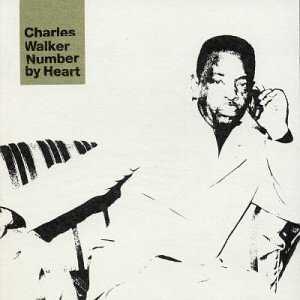
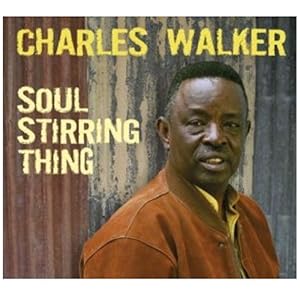
Charles Walker - Number By Heart


Here is another great record made in 2003 by Nashville producer/guitarist Fred James for another fine and distinctive Nashville soul singer, Charles Walker.    There are striking similarities between Charles Walker and Freddie Waters - their backgrounds, their approach to singing, and the tremendous quality of the "comeback" work that they did for Fred James a decade ago.   Listen in particular to the similarity in delivery of “It Tears Me Up.”   That is no accident.  Charles Walker was present, and sang background vocals, at Freddie Waters’ One Step Closer to the Blues" session. 
 
Charles Walker worked the Chitlin’ Circuit for a number of years, and was also based in New York for a while in the 1960s with his band, Little Charles and the Sidewinders.  He recorded as early as 1959, but only managed to release a handful of singles before essentially retiring from music in the 1970s.   He became active again in the 1980s and early 1990s after relocating to Europe, and resumed recording after his return to the States in 1993.   “I’m Available,” recorded for Black Magic, and later re-released as "Leavin’ This Town” on Cannonball Records, announced the presence of a great R&B voice from the shadows. 

Since that time, Charles Walker has been primarily fronting a funk band, the Dynamites, and made several records with this unit.   While some of these records are quite nice, they do not showcase the real talent of Charles Walker, which is Deep Southern Soul.

Enter Fred James.   As was the case with Freddie Waters, Fred James set Charles Walker up with an optimal group of musicians and set of songs for “Number By Heart” for Zane Records.  The result again was magic, timeless and distinctive Southern Soul served up the right way.

Since the release of Number By Heart, I impatiently awaited the the follow-up.  It took seven years, but Fred James finally brought Charles Walker back in the studio again in 2010.  While the result, Soul Stirring Thing, may not quite reach the heights of “Number By Heart,” it is nevertheless a superb release in the same vein.  Those who enjoy “Number By Heart” would be well advised to pick it up.

Friday, September 7, 2012

Brother Tyrone - Mindbender


Brother Tyrone toasts the reopening of Chickie Wah Wah on Jan. 30
Keith Spera, nola.com: "As excitable as Al Green in the pulpit, blues and soul singer Tyrone Pollard, known professionally as Brother Tyrone, declares his new "Mindbender" CD to be "slap ya mama-type soul."
As his high-pitched exhortation dissolves into a rasp of a laugh, he further pronounces the song "If You Ain't Cheating" to be "First and Danneel Street-type soul. It's not just salt and pepper soul. It's the real deal."
Even in his hometown, Pollard is little known outside the Central City and Treme barrooms he's worked for 30 years. But the back-to-basics "Mindbender" has generated favorable reviews as far away as Europe. It could pass for a long-lost recording from the catalog of Mississippi's Malaco Records.

On Friday, Jan. 30, Pollard performs at the relaunch of Chickie Wah Wah, the Canal Street club that first opened in June 2006. For months the venue has been mostly dark as owner Dale Triguero installed a kitchen. Triguero formerly owned the Old Point Bar and occasionally booked Pollard there.
"He's unbelievable," Triguero said. "It would be criminal for people to not know who he is. It's that real. He has no idea how talented he is."
Pollard grew up in the Irish Channel and graduated from Walter L. Cohen High School. At age 8, he sang James Brown's "I Feel Good" in a talent contest. He later incorporated elements of Otis Redding, Sam Cooke and Willie Hutch into his voice, and considers Cyril Neville to be one of the "baddest" singers around.
"Somewhere along the line I heard Bobby 'Blue' Bland, got hooked on the blues, and I've been there ever since," he said. (I hear Johnny Adams too, kc)

Given the low wages -- he recalls a 10-piece band splitting $60 -- he decided not to pursue a full-time music career. As a teenager, he often worked at his father's gas station. That prepped him for a lifetime spent in automotive-related jobs -- parts driver, warehouse worker, undercoat applicator. . .
"Music was something I did on the side," he said. "I always wanted a job -- I had bills to pay, and I knew I had that money. (Music) was my play money. Most of the time I'd buy records with it."

Brother Tyrone describes his music as "slap ya mama-type soul." He showcases his sound on his new "Mindbender" CD.
Largely removed from the mainstream New Orleans music scene, he sang Maze and other hits of the day at the Golden Pheasant, the Fox Lounge, the Afro Lounge, the Zodiac Lounge.
During a mid- '90s gig at a Treme club called Grease, he met guitarist Everette Eglin. Eglin had moved to New Orleans from Oakland, Calif., where he backed Buddy Ace, Little Johnnie Taylor, Lowell Fulson, Jimmy Witherspoon and Ike Turner. They forged a creative partnership; Eglin bestowed Pollard's "Brother Tyrone" stage name. "I tell that cat he needs to check his roots -- I think there's some sisters or brothers somewhere in that (family) tree," Pollard said, laughing. "The cat's just too soulful. Blue-eyed soul? He's above that. He knows more about the blues than my grandpa." In 1999, they recorded an album called "Blue Ghetto" at a small eastern New Orleans studio. Despite limited distribution, it earned local airplay and led to Pollard's New Orleans Jazz and Heritage Festival debut.

When Hurricane Katrina hit, he was living with his girlfriend in the Lafitte housing development. He waded through chest-high floodwaters to the Ernest N. Morial Convention Center, and now lives outside Baton Rouge near Southern University.

By 2008, he and Eglin had cobbled together enough money to record the second Brother Tyrone album, "Mindbender." Eglin assembled a crack New Orleans band featuring keyboardist Marc Adams and Roadmasters bassist Jack Cruz and drummer Wilbert "Junkyard Dog" Arnold, (link) who has since passed away. Several cuts feature the Rev. Mark Sandifer and the Gospel Stars of Uptown's Greater Jehovah Missionary Baptist Church. They cover the likes of Otis Spann's "Country Girl," Johnnie Taylor's "Just Because" and Eddie Floyd's "I Never Found a Girl" Eglin also wrote original songs based on Pollard's life. In "If You Ain't Cheating," a woman encountered in a bar invites the protagonist to cheat on his Katrina-exiled wife. On "New Roll and Tumble," he "hits the streets running from New Orleans to Baton Rouge."

Since boyhood, his biggest fan has been his mother, Gardenia. He aspires to make many more albums.
"I've been out there 30 years on and off doing this," he said. "It's past due. It's really time."

Once you have been blown away by the mp3s, you can buy this today right here:

 http://www.louisianamusicfactory.com/showoneprod.asp?ProductID=6041

or

 http://www.cdbaby.com/cd/brothertyrone

SO GOOD YOU WILL HAVE TO LISTEN TWICE THE FIRST TIME!

Lowell Fulson - The Complete Kent Recordings vols 3 & 4

As promised!

Volume Three

Volume Four

Wednesday, September 5, 2012

Lowell Fulson - Kent Recordings 1 & 2

The more knowledgeable of followers here will likely be scratching their heads about now and wondering why I would start Lowell with THESE recordings. Well the truth is - mostly by mistake - but since I have these uploaded and they are totally killer, lets just say I am using this material to whet your taste for the earlier Chess material. Also I'll let you all know now that I don't have the JSP set that covers 1946 to 1953 so that would make a killer contribution. (Hint, Hint)

I approached this four disc set with full intentions of paring it down; the only problem is that I REALLY like Lowell Fulson and there just wasn't anything I could bring myself to exclude! These first two volumes give you 51 tracks that are the Meat of his Kent output. Volumes 3 & 4 have the collectors stuff but they will follow shortly as they are too good to leave out.

" Lowell Fulson (March 31, 1921 – March 7, 1999) was a big-voiced blues guitarist and songwriter, in the West Coast blues tradition. Fulson was born in Tulsa, Oklahoma. He also recorded for business reasons as Lowell Fullsom and Lowell Fulsom. After T-Bone Walker, Fulson was the most important figure in West Coast blues in the 1940s and 1950s.

According to some sources, Fulson was born on a Choctaw reservation in Oklahoma. Fulson stated that he was of Cherokee ancestry through his father, but he also claimed Choctaw ancestry. At the age of eighteen, he moved to Ada, Oklahoma, and joined Alger "Texas" Alexander for a few months in 1940, but later moved to California, forming a band which soon included a young Ray Charles and tenor saxophone player, Stanley Turrentine. He recorded for Swing Time Records in the 1940s, Chess Records (on the Checker label) in the 1950s, Kent Records in the 1960s, and Rounder Records (Bullseye) in the 1970s.

Fulson was drafted in 1943, but left the United States Navy in 1945. His most memorable and influential recordings included: "Three O'Clock Blues" (now a blues standard); the Memphis Slim-penned "Everyday I Have the Blues"; "Lonesome Christmas"; "Reconsider Baby" recorded in 1960 by Elvis Presley and in 1994 by Eric Clapton for his From the Cradle album as well as by Joe Bonamassa); and "Tramp" (co-written with Jimmy McCracklin and later covered by Otis Redding with Carla Thomas, ZZ Top (on 2003's Mescalero), Alex Chilton, and Tav Falco.

"Reconsider Baby" came from a long term contract agreed with Chess Records in 1954. It was recorded in Dallas under Stan Lewis' supervision with a saxophone section that included David "Fathead" Newman on tenor and Leroy Cooper on baritone.

Jackie Brenston played in Fulson's band between 1952 and 1954. (remember Jackie from Ike Turner?)

Fulson stayed with the Checker label into 1962, when he moved to the Los Angeles-based Kent Records. 1965's "Black Nights" became his first hit in a decade, and "Tramp," did even better, restoring the guitarist to R&B stardom.

In 1993 at the Paramount Theatre in Oakland, California a show entitled "California Blues - Swingtime Tribute" opened with Fulson plus Johnny Otis, Charles Brown, Jay McShann, Jimmy Witherspoon, Jimmy McCracklin and Earl Brown. Fulson's last recording was a duet of "Every Day I Have the Blues" with Jimmy Rogers on the latter's 1999 Atlantic Records release, "The Jimmy Rogers All-Stars: Blues, Blues, Blues."

A resident of Los Angeles, Fulson died in Long Beach, California, in March 1999, at the age of 77. His companion Tina Mayfield stated that the causes of death were complications from kidney disease, diabetes, and congestive heart failure. He was the father of four and grandfather of thirteen

Tuesday, September 4, 2012

Ida Goodson - Pensacola Piano

Most folks are not aware that Pensacola has been home to a satellite New Orleans music community almost since the birth of Jazz. By far some of the most significant contributions were made by the Goodson sisters.

The Baptist Reverend Madison Goodson and his wife Sarah Jenkins had 7 girls in the 1900's  Maggie, Mabel, Dalla, Sadie, Edna, Wilhelmina, and culminating in Ida in 1909.All were trained in piano and voice - the good reverend intended them to be musical vessels of God and permitted no jazz or blues in his house. Of course human nature being what it is all the girls fell in love with the new New Orleans Jazz and the blues of Bessie Smith (Sadie, Willie and Ida all accompanied Bessie at different points in time in the 20's and 30's) The girls would teach each other songs when the parents were away and post a sentry against a surprise return, all learned to segue into Gospel songs at a moments notice.

After the death of their mother in 1921, the girls left home one by one beginning with Sadie who went straight to New Orleans, married a jazz musician (actually several, the last being Kid Sheik) and became a mainstay in the New Orleans Jazz scene for more than 70 years. She was an original piano player for the Preservation Hall Band, and in the 60's & 70's both she and Willie (later Billie Pierce) sat at the PHB piano bench in rotation with Sweet Emma Barrett. (there were multiple versions of the band at the same time)

By 1926 we can assume that the good reverend's heart had born all it could stand from his rebellious girls and he passed away. The two eldest girls, Maggie and Mabel died around the same time (both in their early 20's), Edna and Dalla apparently ran off with minstrel shows and Willie followed Sadie to New Orleans around 1930, marrying trumpeter DeDe Pierce and changing her name to Billie Pierce. Billie became world famous as something of a vamp, at times with Sadie on piano, other times she played it herself. Sadie too played the vamp role but usually to a raunchy, small club audience. Edna focused on singing and at times appeared in the 20's and 30's with one or the other of her sisters. Dalla seems to have vanished. Ida found work in a theater where she accompanied visiting artists like Bessie Smith but also played behind the silent movies. She eventually went on the road with a Pensacola jazz band that Willie had left and even came to New Orleans for a short time but she stayed on in Pensacola playing with an assortment of local bands and in different styles over the years. She could play Jazz, Barrelhouse Blues, Swing or Gospel. By the 50's the demand for jazz musicians in Pensacola faded and Ida returned to Gospel music full time, immersing herself in the church as her father had hoped for so many years earlier.

There are a few recordings of Sadie and Billie out there but Ida is quite elusive. You can read about a live performance of a duet with Sadie recorded by the Florida Folk Archive and a short film called Wild Women Don't Have the Blues but good luck ever finding either. There was allegedly a recording made by a European producer and sold in Europe only, no sign of that either. This impossibly rare and perfectly mint album was produced on a grant by Florida Folklife Program which means there may have been all of a couple hundred ever made. (a friend who works for a similar agency here in Louisiana now tells me that 100 is the more likely number)

What stunned me immediately is that Ida's piano style is instantly identifiable as being straight out of the tradition of Tuts Washington and James Booker. A genuine New Orleans Piano Professor in a little old lady from Pensacola! Having heard recordings of all three, Ida is the most impressive piano player, while Billie had the stronger voice. This album came to me as a side benefit of my new vinyl ripping business, I'm keeping it for now because it is so impossibly rare, no one can come up with a price! There aren't any others in evidence!

**added note: Sadie and her husband Kid Sheik (she married him at 80 years old) left New Orleans and moved north to Detroit in the mid 90's. She must have left some bad blood down here with Preservation Hall because her name no longer appears in the historical rosters of the band. She was reputed to be a hard, short tempered woman, given to single snarled comment interviews when pestered by journalists.

Roy Hawkins - Bad Luck And Forgotten Thrills

 "If ever an artist had a right to claim the blues, it was Roy Hawkins. Born in Texas, he migrated to California in the late '30s, and by the mid-'40s the piano playing Hawkins was a fixture on the West Coast jazz and R&B scene. A car accident left him with a paralyzed arm, however, ending his piano career, but he was a subtle songwriter and singer, and his autobiographical "Why Do Everything Happen to Me" was a high-charting R&B hit in 1950.

The following year another Hawkins original, "The Thrill Is Gone," attracted some attention, but not as much as B.B. King's cover version would get some 20 years later in 1970. Even then Hawkins continued to be snake bit, since royalties from King's hit version of "The Thrill Is Gone" were mistakenly assigned to a pair of writers who had written a completely different song with the same title.

By the mid-'50s, Hawkins was essentially a forgotten man as far as the music business was concerned, and although he recorded sporadically through 1961, he never managed anything beyond regional success. Even the year of his death is up for debate, but is believed to have been in 1973.

His complete obscurity is baffling, really, since his recorded work was always consistent, even compelling and poetic. Bad Luck Is Falling: The Modern, RPM and Kent Recordings, Vol. 2 follows Ace Records' first volume of Hawkins' collected work, 2000s The Thrill Is Gone, and collects what's left of his tracks for the various Bihari Brothers imprints (Modern, RPM and Kent) between 1949 and 1961, as well as four tracks from his 1948 session for Down Town Records, the masters of which were in turn leased to Modern. An alternate take of "The Thrill Is Gone" from 1951 is here (the released single version is on The Thrill Is Gone), and Hawkins gives the song a much more ominous and less-resigned feel than King's big-band version.

 Other highlights include a fine cover of Percy Mayfield's "What a Fool I Was," a lovely version of Kurt Weill and Maxwell Anderson's "September Song," a rendition of Richard M. Jones' oft-covered "Trouble in Mind," and a pair of solid originals, the ragged, New Orleans-styled "Welcome Home" and the eerie, creeping urban blues sound of Hawkins' 1948 version of "Strange Land" (a 1961 remake of the song is also included here). All good stuff, although listeners may want to check out the first volume, The Thrill Is Gone, first.

That Hawkins continues to be so little-known is inexcusable, and that there is only one known photograph of him seems impossible to believe. He is well due for rediscovery, but if Hawkins' personal history is any guide, something is bound to go wrong, so pick up these two volumes from Ace before they inexplicably go up in smoke.


Lightnin' Hopkins - Blues In My Bottle / Walkin This Road By Myself

BVLP 1045   Lightnin' Hopkins - Blues In My Bottle                     

Lightnin' Hopkins (g, vo)

Houston, TX, July 26, 1961


The late great Lightnin' Hopkins was one of the most natural of bluesmen, a poet who would often make up lyrics as he recorded. He was at his best when unaccompanied, as on this 1961 Prestige date. Though he usually played electric guitar, the Texas blues titan performed on this release with an acoustic, and the result is most rewarding. Tunes include "Goin' to Dallas to See My Pony Run" and "Buddy Brown's Blues."  - Roundup Newsletter/AMG

_____________________________________________________________________

BVLP 1057   Lightnin' Hopkins - Walkin' This Road By Myself


Lightnin' Hopkins (g, vo)
Houston, TX, July 7, 1961

Billy Bizor (hca, vo) Lightnin' Hopkins (g, vo) Spider Kilpatrick (d)
Houston, TX, February 17, 1962

Buster Pickens (p) Lightnin' Hopkins (g, vo) Donald Cooks (b) Spider Kilpatrick (d)
Houston, TX, February 20, 1962
Lightnin' Hopkins had a hard and fast approach to dealing with the abundance of record labels he recorded for during his career. The irascible bluesman would show up at the session in question but would refuse to play a note until he was paid his fee upfront. Once paid and satisfied, he'd unpack his stock set of boogie blues riffs and pretty much improvise songs on the spot until he'd fulfilled his agreed upon quota. Then he would leave. This system led to an awful lot of similarly constructed and executed throwaway tracks, but Hopkins had a special gift for personalizing the blues that came through in the best of these improvised songs, and a few gems always showed up in the process. This disc features Hopkins with drummer Spider Kilpatrick, harmonica player Billy Bizor, and pianist Buster Pickens,  produced by Kenneth S. Goldstein and Mack McCormick. The end result is a pleasant representation of what Hopkins did both as a solo act, when he was arguably at his best, and with a small, sympathetic combo. - Steve Leggett/AMG

Charles Brown - Driftin' Blues (1945-56) vols 1 & 2

Charles Brown is another situation like Amos Milburn where I have too much material with the 5 disc Mosaic box (Amos was 7!). I discovered this nice 20-side compilation and extracted it but there was still too much good material left behind so I constructed a volume two with 22 more sides. Even allowing for the fact that the original compilation cherry picked all the hits for what is here volume one, I think my volume two stands up quite well to it. Your other great benefit here is that while I used that Collectibles format for volume one, I used the Mosaic remasters as the source.

"Charles Brown (September 13, 1922 – January 21, 1999), born in Texas City, Texas was an American blues singer and pianist whose soft-toned, slow-paced blues-club style influenced the development of blues performance during the 1940s and 1950s.

As a child, Brown demonstrated his love of music and took classical piano lessons. Early on, Brown moved out to Los Angeles, where the great influx of blacks created an integrated nightclub scene in which black performers tended to minimize the rougher blues elements of their style. The blues club style of a light rhythm bass and right-hand tinkling of the piano and smooth vocals became popular, epitomized by the jazz piano of Nat King Cole. When Cole left Los Angeles, California to perform nationally, his place was taken by Johnny Moore's Three Blazers, featuring Charles Brown's gentle piano and vocals.

Brown signed with Aladdin Records and his 1945 recording of, "Driftin' Blues", with a small combo on that record label went on the U.S. Billboard R&B chart for six months, putting Brown at the forefront of a musical evolution that changed American musical performance. His style dominated the influential Southern California club scene on Central Avenue during that period and he influenced such performers as Floyd Dixon, Cecil Gant, Ivory Joe Hunter, Percy Mayfield, Johnny Ace and Ray Charles.

"Driftin' Blues" was the first of several hits. Brown subsequently released "Get Yourself Another Fool", "Black Night", "Hard Times" and "Trouble Blues", all major hits in the early 1950s on such labels as Modern Records as well as Aladdin. Though he was unable to compete with the burgeoning rock and roll sound that was increasing in popularity, he managed to maintain a small, devoted audience. Additionally, his songs were covered by the likes of John Lee Hooker and Lowell Fulson.

Brown's approach was too mellow to survive the transition to rock's harsher rhythms, and he faded from the national limelight. His "Please Come Home for Christmas", a hit in 1960 on the King Records remained seasonally popular. "Please Come Home for Christmas" sold over one million copies by 1968, and was awarded a gold disc in that year. During the 1960s Brown recorded a couple of albums for Mainstream Records.

In the 1980s he made a series of appearances at New York's club, Tramps. As a result of these appearances he signed a new recording contract with Blue Side Records and recorded One More for the Road in three days. Blue Side Records closed soon after but distribution was picked up by Alligator Records. Soon after the success of One More for the Road, Bonnie Raitt helped usher in a Charles Brown comeback tour.

He began a recording and performing career again, under the musical direction of guitarist Danny Caron, to greater success than he had achieved since the 1950s. Several records received Grammy Award nominations.

He is a member of the Rock and Roll Hall of Fame, and received both the National Endowment for the Arts' National Heritage Fellowship and the W. C. Handy Award.

Brown died of congestive heart failure in 1999 in Oakland, California, and was interred at Inglewood Park Cemetery, Inglewood, California.

Monday, September 3, 2012

Blowing the Fuse 1951

"This seventh volume -- of 11 (16 actually) in the Bear Family Blowing the Fuse series -- is another case of the woollier and wilder side of R&B as it moved into the 1950s. The 28 tracks from 1951 showcased here offer sure signs of the music's big bang that would erupt as rock & roll in just a few short years. While many of the artists here have appeared on the other volumes in the series, it nonetheless remains stellar in both selection and sound. Sure, Amos Milburn's "Bad, Bad Whiskey," and Joe Liggins' "Little Joe's Boogie" have appeared on dozens of compilations, but hardly juxtaposed against Margie Day's read of "Little Red Rooster," Muddy Waters' "Long Distance Call," the Larks' "Eyesight to the Blind," or Tiny Bradshaw's "Walkin' the Chalk Line." What's more, other well-known R&B pharaohs like Louis Jordan, Wynonie Harris, the Treniers, Johnny Otis and Peppermint Harris (with Maxwell Davis on "I Got Loaded") are here as well. The number of groups coming out of the woodwork on this set, such as the Four Buddies, the Larks, the Clovers and the Dominoes showcase a shift in the way these comps were arranged and produced -- by Dave "Daddy Cool" Booth. One of the treasures here is Joe Turner with Van "Piano Man" Walls on the inimitable "Chains of Love," which is underscored later by Earl Bostic's swaggering "Flamingo." The set closes with the Howlin' Wolf burner "How Many More Years." Each of these 28 cuts have their own set of liner notes by Colin Escott, and the digipack itself is just to die for.  Thom Jurek