Wednesday, April 29, 2015

Dan Greer - Beale Street Soul Man

It just seems Kent has found some endless supply of unknown, behind the scenes guys who were making great records that were not ever released. Not every song here is a jaw dropping winner or anything like that, but some are pretty terrific and his voice carries a lot of passion.

"Dan was a talented writer and producer, and these activities ultimately got in the way of his ability to concentrate on being a performer. Born in Holly Springs, Mississippi, he moved to Memphis with his mother in the early 50s and lived close to the thriving musical scene on Beale Street. The talent he mixed with – William Bell, Maurice White, Louis Williams of the Ovations, Percy and Spencer Wiggins and many others – were part of the generation that underpinned the golden era of Memphis soul.

Dan returned to Holly Springs to attend art college, where he learned the techniques that have sustained him for the past five decades as a talented designer. When he came back to Memphis he got into the music business. After hanging out at Stax and Fernwood, he ended up working at Goldwax, alongside new songwriting partner George Jackson. The pair had their songs recorded by all the label’s biggest stars – James Carr, the Ovations and Spencer Wiggins – as well as releasing their own 45 under the name George & Greer. Their partnership fell apart when George was poached by Rick Hall to work exclusively at Fame.

This may have been good for Dan, as it forced him to push forward on his own. He produced a single on the singer Barbara Ingram, which led to him releasing his own disc on Ode, ‘Curiosity Killed The Cat’. This brought him to the attention of Gene Lucchesi at the Sounds Of Memphis Studio, who was just starting up his own label. Recognising Dan’s all-round talent, Gene signed Dan as head of A&R, songwriter, producer and artist. Dan was behind the desk on records by Barbara Brown, the Minits, Lou Roberts, Vision and Spencer Wiggins. He signed the Ovations and scored a couple of big R&B hits with them, confirming his theory that the label needed an established act.

Dan also found time to release three singles of his own, but with his busy schedule it seems likely he didn’t have time to promote them properly. Yet during his three years at the label he continued to record. Some of these recordings were used as templates for versions by other artists – check Dan’s brilliant version of ‘She’s Not Mama’s Little Girl Anymore’, which was released by Lou Roberts – but many of his excellent songs have never been heard before." By Dean Rudland, Ace Records site

By Dean Rudland
By Dean Rudland

Wednesday, April 22, 2015

Percy Sledge - The Atlantic Recordings (Rhino Box)

A relode for those who missed it - RIP Percy.

Percy got no love first time around; this time I'm coming back with the mother-lode Rhino box! They dug deep for this 4 disc set, but they seem to have used a better strategy than on some previous sets; even the 4th disc is worthwhile! Two things are clear: Sledge's Atlantic output was pretty consistently top shelf, and no other southern soul singer spent more time straddling the country/r&b line than Percy.

"Percy Sledge worked in a series of blue-collar jobs in the fields in Leighton, Alabama before taking a job as an orderly at Colbert County Hospital in Sheffield, Alabama. Through the mid 1960s, he toured the Southeast with the Esquires Combo on weekends, while working at the hospital during the week. A former patient and mutual friend of Sledge and record producer Quin Ivy introduced the two. An audition followed, and Sledge was signed to a recording contract.
Sledge's soulful voice was perfect for the series of soul ballads produced by Ivy and Marlin Greene, which rock critic Dave Marsh called "emotional classics for romantics of all ages."

"When a Man Loves a Woman" was Sledge's first song recorded under the contract, and was released in March 1966. The song's inspiration came when Sledge's girlfriend left him for a modeling career after he was laid off from construction job in late 1965. Because bassist Calvin Lewis and organist Andrew Wright helped him with the song, he gave all the songwriting credits to them. It reached #1 in the U.S. and went on to become an international hit. "When A Man Loves A Woman" was a hit twice in the UK, reaching #6 in 1966 and, on reissue, peaked at #2 in 1987. The song was also the first gold record released by Atlantic Records. The soul anthem became the cornerstone of Sledge's career, and was followed by "Warm and Tender Love" (Covered by UK songstress Elkie Brooks in 1981), "It Tears Me Up", "Take Time to Know Her" (his second biggest U.S. hit, reaching #11 and written by Steve Davis), "Love Me Tender", and "Cover Me".

Sledge charted with "I'll Be Your Everything" and "Sunshine" during the 1970s, and has become an international concert favorite throughout the world, especially in the Netherlands, Germany, and on the African continent, and South Africa in particular.

Sledge's career enjoyed a renaissance in the 1980s once "When a Man Loves a Woman" re-entered the Top 10 in the UK Singles Chart, peaking at #2, behind the reissued Ben E King classic "Stand By Me", after being used in a Levi's commercial.

In 1994, Saul Davis and Barry Goldberg produced his new album, Blue Night, for Philippe Le Bras' Sky Ranch label and Virgin Records. It featured Bobby Womack, Steve Cropper, and Mick Taylor among others. Blue Night received a Grammy nomination for Best Contemporary Blues Album, Vocal or Instrumental, and in 1996 it won the W.C. Handy Award for best soul or blues album.

In 2004, Davis and Goldberg also produced the Shining Through the Rain album which led to his induction into the Rock & Roll Hall Of Fame. Songs on the CD were written by Mikael Rickfors, Steve Earle, the Bee Gees, Carla Olson, Denny Freeman, Allan Clarke and Jackie Lomax.

In December, 2010, Rhino Handmade issued a 4 CD retrospective "The Atlantic Recordings" which covers all of the issued Atlantic masters, as well as many of the tracks unissued in the US. What makes this limited edition release frustrating is that many of the mono tracks on discs 2, 3 and 4 have previously been issued in stereo (disc 1 comprises Sledge's first two LPs which were not recorded on stereo equipment).

In October 2011 Sledge featured on the Cliff Richard album Soulicious, also appearing live on stage in the tour of the same name, reprising his top hit "When A Man Loves A Woman" as well as dueting with Sir Cliff.
Awards

Sledge was an inaugural Rhythm and Blues Foundation Pioneer Award honoree in 1989. He won the W.C. Handy Blues Awards in 1996 for best Soul/Blues album of the year with his record Blue Night. In 2005, he was inducted into the Rock and Roll Hall of Fame.

In May 2007, Percy Sledge was inducted into the Louisiana Music Hall of Fame for his contributions to the state's music. Sledge is also an inductee of the Delta Music Museum in Ferriday, Louisiana.

In November 2004, Percy Sledge was inducted into the Carolina Beach Music Hall Of Fame.

Among the many notable performances of Sledge's career was a cabaret appearance in 2005 alongside Liverpool's infamous "Steam Packet" at The Pumphouse, Albert Dock."

Monday, April 20, 2015

James Govan - I'm In Need

  When Kent records recently gathered 16 tracks recorded by James Govan in Fame Studios in the 60s for a CD release, "Wanted: The Fame Recordings," it turned some R&B/Soul lovers heads around.  When King Cake posted that CD here a while back, it also turned some heads around on this blog.  Here is a great soul singer in the grand tradition who somehow never got the breaks or recognition that he deserved.

Well, I have a little secret for y'all.  Those Fame recordings, as good as they are, are not James Govan's best recordings.  Here they are.  In 1982, David Johnson brought James Govan to Broadway Sound Studios in Sheffield, Alabama, also bringing in top musicians from Muscle Shoals and carefully choosing a fine group of songs that completely showcase Govan's talents.  Unfortunately, classic Southern Soul was no longer a commercially viable commodity by 1982.  The DJs wouldn't even spin the 45s.  David Johnson gave it up quickly.  He never even released a Govan album.  This disc of Broadway Sound material, "I'm in Need," was only gathered together by Charly Records (as a bootleg) in the UK in the 1990s.  These tracks were again released on a great CD a while back, "The Broadway Sound Sessions," together with a good album by Sandra Wright.  This CD went out of print very fast, however.

What can I say about the music here?   Those who know and love the Fame Studios disc will still be astonished.   James Govan's vocal artistry improved by the 1980s, in fact substantially improved.   In my view, this is soul singing of the highest order, good enough to put Mr. Govan in the Pantheon along with the greats.   His vocal timbers deepened markedly between the 60s and 80s, and James Govan DELIVERS these songs in a deeper way than he did before.


Enjoy - and let's keep this place alive.


Monday, March 30, 2015

Edison Machado e Samba Novo (1964)

Short and sweet, with an all-star cast already featured on significant Brasilian projects posted in lossless format over at the Crypt.

Led by Edison Marchado – drummer on “Turma da Gafieira” and “Embalo” – the rhythm section is completed by Tenorio Jr on piano and Sebastião Neto on bass

The rest of the band is Paulo Moura on alto, J.T. Meirelles on tenor, and Raul de Souza on valve trombone, with Edson Maciel on slide and Pedro Paulo on trumpet.  All of these brass and reed guys played on Tenorio Jr’s “Embalo”, while Moura, Meirelles and Raulzinho were also part of Os Cobras' "O LP".

Moacir Santos, the great self-taught sax-monster also previously featured at the Crypt, is producer and arranger. He is also composer of four of the tracks, the first of which - "Nanã".- is "Coisa Nº 5" from his seminal recording "Coisas".

Tracks:
Nanã   (Moacir Santos)
Só Por Amor   (Baden Powell & Vinicius)
Aboio   (J. T. Meirelles)
Tristeza Vai Embora   (Baden Powell & Mário Telles)
Miragem   (J. T. Meirelles)
Quintessência   (J. T. Meirelles)
Se Você Disser Que Sim   (Moacir Santos & Vinicius)
Coisa Nº 1   (Moacir Santos)
Solo   (J. T. Meirelles)
Você  (Rildo Hora & Clóvis Mello)
Menino Travesso   (Moacir Santos & Vinicius)

Edison Machado É Samba Novo (1964)
54.4 MegaBytes at 256 kbps
http://www.mediafire.com/download/fz1co3bylxjq63k/Edison_Machado_é_Samba_Novo_(1964_).rar


Sunday, March 29, 2015

Snooks Eaglin - The Way It Is

The final album from the great Snooks Eaglin is a dynamite one. Jon Cleary and his Absolute Monster Gentlemen make up the backing rhythm section and Astral Projects' Tony Degradi is in the horn section. Great stuff.

Sadly the label, Money Pit Records, allowed this to go out of print almost as fast as it came out so now it sells for stupid bucks!

Monday, March 23, 2015

The Rise and Fall of Paramount Records - Extra Overload Bonus

The Paramount Art Book pdf
51 MegaBytes
https://mega.co.nz/#!2cwSAIoL!Va50VDyPJBfWqis5VKtF_JctlbYMmFkDuXiJy_xWYTI

Other Resources for the Curious:
Tuuk's book:
is the definitive history of Paramount
http://www.mainspringpress.com/book_paramount.html

Alex van der Tuuk's on-line archive:
more to find out about all things Paramount
http://www.paramountshome.org/

The Rise and Fall of Paramount - Volume 2, part 3 - our final tranche

"Radio killed Paramount" 

The decline began around 1928, the year Paramount cancelled Ma Rainey’s contract in spite of her having been their biggest star before Blind Lemon.  It was indication of Vaudeville’s fading out of fashion.  But radio’s impact came on more slowly - “most of our customers of the blues were black, and didn't have money to buy radios in those days, and so it took a year or two,” said Herb Schiele, Vice Prez of Artophone, a Paramount distributor which had forsaken records for Philco radios by 1930. Paramount's previous main distributor, the E.E. Forbes Piano Company of Birmingham, had already turned to Majestic radios.

This loss of ready access into the all-important Mississippi market increased Paramount’s dependence on advertising and mail-order.  But then those mailed orders began to pile up uncollected in post offices, forcing the company to pay postage if the stock was to be reclaimed. The unsold records were taken as a sign that the "race" record business was finished. Because of the fall in mail order revenues, they cut advertising.  Their final Chicago Defender ad was April 26th, 1930.

Paramount executives were reluctant to continue the label in face of the economic collapse which had been accelerated by the stock market crash of ’29.  Their record-presses were scaled back from more than 50 to some 10, reduced to only three five-hour shifts per week and, apparently aiming to divest themselves completely of the record business, they tried to sell-off their masters and failed.

Although between 1930 and 1932, Paramount's production costs were kept so low they had amazingly still managed to break even, the industry-wide sales of $11 million in ’32 were nonetheless only a mere tenth of the figure for 1920.

1932 was when the money ran out for everything – including music.

By 1933, nearly half of U.S. banks had failed, and 30% of the workforce was unemployed – that’s almost 15 million people. Paramount added to that number by firing its lower echelon employees at their Christmas party, and then went quietly out of business, the only record company of the era to fold of its own accord, without bankruptcy or imposed receivership.

The closure decision was based on their belief that the "race" business had been killed by radio. But the real culprit was the Great Depression - which, I guess, helps explain why their passing went by so largely unnoticed. 

"You can’t sell the records if no one has money to buy them"

The Rise and Fall of Paramount Volume 2, Part 3
1.76 GigaBytes
https://mega.co.nz/#!qZ42FKaC!RnvffpwXgsHBOlLdJGO4fJYLrJnRHLY13RwgXAlUZVA

Sunday, March 22, 2015

Awadi - Presidents d'Afrique (2010) - Senegal

Colonialism in Africa...
... is not responsible for genocide. It is not responsible for dictators. It is not responsible for fanaticism. It is not responsible for the corruption, prevarication. It is not responsible for waste and pollution…
The tragedy of Africa is that the African man has never really entered history. The African peasant who for centuries has lived according to the seasons, whose ideal is to be in harmony with nature, has known only the eternal renewal of time via the endless repetition of the same actions and the same words.  In this mentality, where everything always starts over again, there is no place for human adventure, nor for any idea of progress.
Nicolas Sarkozy, president of France, speaking in Dakar on July 26th 2007

Presidents d’Afrique is an African response to Sarko from the highly influential and musically respected Francophone Hip-Hop artist, Didier Awadi.

It has taken me a while to open up to rap & hip-hop.  But not being fluent in French means being able to completely ignore what's being said, and maybe that's what helped a genre-newbie like me take notice instead of the way it's put together - the architecture, the construction, of elements assembled and stitched into the weave of a whole sonic fabric.

But if I never saw art in the genre before, I sure noticed its status as international medium for the dispossessed.  And what’s being voiced here comes from the long history of struggle against colonialism which marks past and future right across the continent.

Awadi’s assemblage takes excerpts from speeches by black leaders like Thomas Sankara, Nelson Mandela, Martin Luther King, Kwame Nkrumah, Patrice Lumumba, Cheikh Anta Diop, Malcolm X and Frantz Fanon, sets their statements to music, and then blends rappers from across Africa, the Caribbean and America, to create a profound monument to revolutionary leaders who gave their lives for a Pan-African ideal of unity, independence and pride.
Some say that we don’t have a sense of history and memory in Africa. With this album we will make them think again…
Didier Awadi, Dakar, 2010

Awadi - Presidents d'Afrique - PLUS
121.3 MB
https://mega.co.nz/#!mcRH0ApQ!Iya15BTIzefOGD9VkPPtGZz8ruQORaa-tqwEwhZ17yo
A couple of the tracks sound like they cut off too early and abruptly.
In compensation, extra tracks from elsewhere are included.

Saturday, March 21, 2015

Tabu Ley Rochereau - The Voice of Lightness

"Pascal-Emmanuel Sinamoyi Tabu (13 November 1937 or 1940 – 30 November 2013), better known as Tabu Ley Rochereau, was a leading African rumba singer-songwriter from the Democratic Republic of the Congo. He was the leader of Orchestre Afrisa International, as well as one of Africa's most influential vocalists and prolific songwriters. Along with guitarist Dr Nico Kasanda, Tabu Ley pioneered soukous (African rumba) and internationalised his music by fusing elements of Congolese folk music with Cuban, Caribbean and Latin American rumba. He has been described as "the Congolese personality who, along with [the dictator] Mobutu, [most] marked Africa's 20th century history." He was dubbed "the African Elvis" by the Los Angeles Times.After the fall of the Mobutu regime, Tabu Ley also pursued a political career.

During his career, Tabu Ley composed up to 3,000 songs and produced 250 albums." more @ wiki

Friday, March 20, 2015

The Rise and Fall of Paramount - Volume 2, part 2 - our fifth tranche

With our final tranche - coming next - we will have the whole collection of 1600 tracks.

How do we deal with such a random avalanche of unknown treasures?

iTunes works for me – I can order and search by title, by year, or by artist as I choose.  My fondness for Big Bill Broonzy means he was one of the first whose Paramount sides were played in my kitchen.  And I could listen to them vaguely in the order they were recorded and convince myself I was studying an artist’s development. I was curious also about Perry Bradford – the hustler and producer behind Mamie Smith’s “Crazy Blues” and the birth of the race-records industry.  So I checked out his Jazz Phools.  Harry Smith’s anthology had introduced me to the charm of Dock Boggs, so I was happy to find a couple of other titles here.

Other than this purposeful strategy, I have simply resorted to good old lucky dip, and here are a few nuggets that the randomness of iTunes’ “shuffle” control brought to my attention:

Two tracks from The Famous Blue Jay Singers of Birmingham turned up at Chitlins already (one on “Great Gospel - People Get Ready”, the other on CD4 of “Goodbye Babylon”). And there are eight more tracks here on Paramount from 1931.  "Clanka-A-Lanka (Sleep on Mother)" has become a favourite.

Blind Blake is a constant wonder.  He recorded "Sun to Sun" in November 1931, but modern ears had no chance to hear it until a copy was found in a North Carolina steamer trunk by the collector Marshall Wyatt in 2007.  It’s included here alongside 42 others.

Geeshie Wiley’s "Last Kind Words Blues" features on some other collections also, and I have always dug it.  There are a three other sides on Rise and Fall: two from 1931 are with Elvie Thomas.  Check this out while we’re at it: http://www.nytimes.com/interactive/2014/04/13/magazine/blues.html?partner=rss&emc=rss&smid=tw-nytimes&_r=3

Slim Barton & Eddie Mapp – I’d never heard of ‘em, either. Guitar and harmonica duo making music for dancing and drinking (on very bad shellac), their "Wicked Treatin’ Blues" is full of sadness and despair.

Rube Lacy is another unknown to me, but then as far as anyone can tell he only recorded “Ham Hound Crave” and “Mississippi Jail House Groan”. 

There are two Ollies I stumbled into – Ollie Powers and
Ollie Hess – and the latter’s "Mammy’s Lullaby" charmed and disarmed me. 

Just one track from a pianist called George Hamilton - "Chimes Blues" – but it’s a delight; Brother Fullbosom’s "A Sermon on a Silver Dollar" was my introduction to an unexpected genre of preaching; Elder J.J. Hadley on parts 1 & 2 of “Prayer of Death“ is really Charlie Patton. 

Part 2 of Volume 2 - our fifth and penultimate tranche of Paramount
1.75 GigaBytes
https://mega.co.nz/#!zZZC2LAB!YvK1HJBB-n932pICGyMUa7gSk8y1d9tBUpkr5xm8p7k

Thursday, March 12, 2015

Boo Boo Davis - East St. Louis

"James "Boo Boo" Davis (born November 4, 1943) is an American electric blues musician. Davis is one of the few remaining blues musicians that got experience singing the blues based on first-hand experience in the Mississippi Delta, having sung to help pass the time while picking the cotton fields.

Davis was born in Drew, Mississippi, where he was raised in the heart of Mississippi Delta. Davis's passion for music started at age five when his mother took him to church and he played the harmonica and sang. When he was eighteen years old he began playing drums for the family band, Lard Can Band, because Davis did not possess a drum kit and was forced to play on a lard can. The band featured his multi-instrumental father, Sylvester Sr., his younger brother Sylvester Jr. on the guitar, and his sister Clara on vocals. The band played throughout the state of Mississippi, including a stint as the back up for B.B King, who was unknown at the time." wiki

Wednesday, March 11, 2015

Mojo Buford - Campagne & Reefer

"George "Mojo" Buford (November 10, 1929 – October 11, 2011) was an American blues harmonica player, best known for his work in Muddy Waters' band.

Buford relocated from Hernando, Mississippi to Memphis, Tennessee in his youth, where he studied the blues. He relocated to Chicago in 1952, forming the Savage Boys that eventually became known as the Muddy Waters, Jr. Band. They substituted for Muddy Waters at local nightclubs whilst he was touring.

Buford first played in Muddy Waters' backing band in 1959, replacing Little Walter, but in 1962 moved to Minneapolis to front his own band, and record albums. It was in Minneapolis that Buford gained his nickname "Mojo", because of the audiences requesting him to perform his cover version of "Got My Mojo Working." Buford returned to Muddy Waters' combo in 1967 for a year when he replaced James Cotton. He had a longer tenure with Muddy Waters in the early 1970s, and returned for the final time after Jerry Portnoy departed to form The Legendary Blues Band.

He also recorded for the Mr. Blues label (later re-issued on Rooster Blues), Blue Loon Records, and the British JSP label.

Buford died on October 11, 2011, in Minneapolis, after a long hospitalization. He was 81." wiki

Tuesday, March 10, 2015

The Rise and Fall of Paramount - Volume 2 - our fourth tranche

Williams’ 1927 departure signals the beginning of decline, but it's not over yet.

So many Blind Lemon Jefferson records were sold that the original metal masters wore out and songs had to be re-recorded. He cut a total of 93 sides in three years for Paramount. And his popularity was only approached by that of Blind Arthur Blake – the man who "made his guitar sound like saxophone, trombone, clarinet, bass fiddle, and ragtime piano”, who Bill Broonzy regarded as “the best picker there is”.

Following the unexpected success of Fiddlin’ John Carson for Okeh, sales for Lemon and Blake also helped push Paramount’s door open to the old-time or hillbilly market.  So fiddlers and string-bands had become a label focus by the start of this period, with maybe the earliest suspicions of bluegrass. 

It was all the same to Paramount executives, though – a complete and totally impenetrable mystery to them – just like race-records had been.  This absolute incomprehension and absence of discrimination is undoubtedly, if accidentally, what makes their catalogue for us today such a luxuriant long-exposure snapshot of a hugely significant era in the birth of the record industry and the development of popular music.

We hear the roots of gospel and swing alongside distillations of blues and jazz – and the incipience of rock and roll. We get Charley Patton and Son House, Lottie Kimbrough and Dock Boggs, Geeshie Wiley and Skip James, Thomas Dorsey and Emry Arthur.....

Nope.
It’s not over yet.
But we're getting there.


Here's a track-list for Volume 2
Only 247 KBytes
https://mega.co.nz/#!qQID1DrA!zh7q7u2JGh3E4cH3LHuHqvaEF2ZXX-VFFfhDUUUILS4

Here's the 1st bit of Vol 2 - and the fourth gargantuan part of our Paramount series
1.77 GigaBytes
https://mega.co.nz/#!zdIBCTJS!Rj27dv-3wIpVx4XGlokoKw5tQlekXIgGoaZK07aM0F0

Samba Mapangala and Orchestre Virunga - Malako

Soukous originated in the Belgian and French colonies of Congo, influenced by the Cuban Rumba styles so popular in the ‘40s & ‘50s.  It is known as “Congo” in West Africa because of it.  In Zambia and Zimabwe it is called “Rumba” still; in Kenya, Uganda and Tanzania it is “Lingala” after the native Congolese language of the lyrics. Borne across to the east African coast by people on the move, the songs were sung also in Kiswahili, common to people of central and eastern Africa.

Samba Mapangala’s path was similar.  Originally from a port city on the river Congo, he left Mobutu’s Zaire in 1975 and travelled with other musicians to Amin’s Uganda, where they formed a band called Les Kinois (The Kinshasans), eventually reaching Nairobi in 1977. The band enjoyed great popular success there in Kenya but disbanded in 1980.

Mapangala formed Orchestre Virunga in 1981, and recorded “Malako” the same year.  Four tracks of sinuous molten vocals over hypnotic interlocking guitar lines on fluid dancing bass patterns, percussion fast & light, sweet saxophones, beautiful harmonies, and brilliant solos.

Similarly to the Orchestra Baobab happenstance, cassette copies circulating around the expatriate communities of Europe became highly sought-after cult items that reached the attention of the burgeoning “World Music” industry.  

The Earthworks label re-released it in 1990 (with a couple of extra tracks to boost the product to acceptable CD length) and broadened the Virunga audience enough to justify tours through Africa, Europe and North America.  After a final Virunga tour in 1997, Samba settled with his family in Washington D.C.

The band name is taken of course from the volcanic mountain range in what is now the Democratic Republic of Congo, the place where Dian Fossey introduced the world to the mountain gorillas.

Orchestre Virunga - Malako (1982)  87MegaBytes
http://www.mediafire.com/download/8t95o694uqxmcll/Malako.rar

Saturday, March 7, 2015

Chocolate Milk - Action Speaks Louder Than Words


It is fair to say that funk dominated the New Orleans music scene in the 70's. This band, however, was really built to make a national impact on that front more so than even the mighty Meters. I think that Toussaint envisioned these guys as the New Orleans version of Earth, Wind and Fire and for a hot moment when this album hit that looked like a possibility. To the average young black man in New Orleans in 1974, THIS was the the sound of contemporary New Orleans much more than the more familiar SeaSaint products that appear on most compilations today. For one thing these guys did not play Toussaint's music; the only band he produced that didn't as far as I can remember. I'm listening this morning as I write and that EWF comparison seems more and more on the mark. These guys were musicians, singers and song writers (sound familiar?) and where early EWF is more rooted in jazz, these guys were funky from the git-go. The title cut cracked the Hot 100, but beyond that they never really caught on despite being far more talented than 90% of the competition.

btw The only tune here that the guys didm't write themselves is that utterly luminous version of 'Tin Man'.

Wednesday, March 4, 2015

The Rise and Fall of Paramount - a third tranche


In 1922, Paramount evaded bankruptcy by embracing the race-records market which had been discovered and established after Mamie Smith's huge 1920 success with "Crazy Blues" for the Okeh label.

In 1923, they bought up the Black Swan label and began using the services of Mayo Williams, a graduate of Brown University who had specialised in football and philosophy, and had become a black Chicago south-side bootlegger with important connections.

Paramount's treasure-laden five-years from '23 to '27 were defined by Williams - whose nickname of "Ink" was derived from his ability to get big names to sign on the dotted line..

He established Ma Rainey as the biggest blues star in the country after Bessie Smith, enjoyed several hits with Ida Cox and Alberta Hunter, found and recorded both Big Bill Broonzy and Blind Blake in Chicago, and managed and produced Blind Lemon Jefferson.


Record sales had been taking a hit from the rise of radio as the new technology replaced the wind-up Victrola as the source of home entertainment. But few places in the countryside were yet wired for electricity.  So labels turned their attention to rural markets and rushed to find blues music from the south that would sell to country audiences.

Paramount struck gold with Blind Lemon Jefferson - the first and most successful country blues star of the '20s, whose work would define and refine the down-home sound for all those who followed.

Mayo Williams, having identified a future for himself in the worlds of copyright and publishing, withdrew from the company in 1927.

His departure marked the end of an era alright.

But the biggest shadow yet to come was the one cast by the fat lady hanging just around the next corner.

Here's the Paramount Field Manual for Volume 1
327 MegaBytes
https://mega.co.nz/#!PBgB2ZbB!o9-BaUWJmh4qxEYWp7p2tcp4b1VUemnDarUYwRBKRuM
And here's our third and final tranche of tracks from Volume 1
159 GigaBytes
https://mega.co.nz/#!GZYA1JYB!5_h9cn90ZQDsZD1IOcdqyyfth4i8BWPGzGdOd7ep1y4

Monday, March 2, 2015

Trio Mocoto' - Samba Rock

"Trio Mocotó is a Brazilian band, originally formed in 1968 in the Jogral nightclub in São Paulo, and reformed in 2000. The group was influential in forming the musical style that became known as samba rock or samba soul. In 1969, they were backing Jorge Ben, being featured on seminal albums Força Bruta, Negro É Lindo and Tábua de Esmeralda.

In 1971, they had a hit with the single "Coqueiro Verde" (written by Erasmo Carlos). Their return to the studios with Samba Rock in 2001 was followed by tours and live appearance in main music festivals in Europe and Japan, with renewed energy and public. The group received in 2001 the APCA (São Paulo Art Critics Association ) award for Best Group, and in 2006 Nereu's album as solo artist "Samba Power" received again the APCA, this time with Best Album of the Year." wiki

The band's early material is definitely better suited to The Crypt as it more Samba Jazz (I'll post a 1974 set with Dizzy Gillespie over there soon), this one is a whole different animal entirely! All three guys had remained very active during their 25 years apart and had absorbed all kinds of new sounds and rhythms including rock, soul and hip hop. It all combines in a wonderful, fun ride here. You will not be able to sit still for very long with this one coming out of your speakers!!!

Sunday, March 1, 2015

Donald Harrison Jr. - Indian Blues

I noticed a request for this one whilst editing the comments over at Buddy Bolden's Backroom (check the doors, brother). This stands as one of the greatest 'Indian' albums of the modern age (ya know....post 70's) Being that it comes from a monster jazz dude like Donald it obviously leans a bit more jazzy than the glorious dirty funk of the Wild Magnolias, but that sure as shit don't mean it ain't loaded to the gills with New Orleans spirit and soul. To the best of my knowledge it also stands as the only recorded document of Don's dad, the great Big Chief Donald Harrison Sr. It is a thing of great beauty.


Lucky Peterson & Mavis Staples - Spirituals and Gospel

Welcome to church!

"Lucky Peterson plays blues. Mavis Staples sings gospel. One might wonder if this Saturday night/Sunday morning combo could create a lasting tribute to gospel great Mahalia Jackson. But it works, mainly because the two stick to a formula Jackson favored: Vocals accompanied only by an organ or piano.

Staples was deeply influenced by Jackson's music and friendship. And it was her idea to record a tribute using the accompaniment Jackson prefered. But she had trouble finding an organ player with the reputation that would interest a record company. Peterson had this reputation. In the mid-1990s, he was a red-hot blues player for Verve Records, getting lots of radio play, and gigs at major festivals. He was famous for his guitar playing, but equally proficient on the Hammond B-3 organ. Verve promised to release the Jackson tribute if Staples agreed to work with Peterson. The results are stunning, especially considering the two never worked together before.

Staples' voice is characterized by a deep rasp that adds an emotional edge to Jackson favorites like "Wade in the Water" and "Were You There?" Peterson, for his part, has the chops befitting a bandleader. But on this album, he gladly, almost worshipfully, steps into the supporting role. On every track, Peterson punctuates Staples' singing, and fills her pauses with appropriate chords. Never once does he upstage her, or play ahead of her.

The best example of this collaboration is "Precious Lord, Take My Hand." Here, Staples' voice soars to the heavens - praising God, Jackson, praising music itself - before descending to a gravelly bottom, filled with soul and solemnity. Peterson, again, follows wherever Staples goes. Like the perfect wingman, his eye remains on his leader, hands reacting quickly and competently to stay in formation.

"Spirituals & Gospel" works because of the special magic between Staples, a leader in sacred music, and Peterson, a star of the secular world. Who knew that great gospel needed a sinner to help it succeed? The Lord works in mysterious ways...."  Dan Klefstad

The Rise and Fall of Paramount - a second tranche

Serendipity.

The Wisconsin Chair Company only stumbled into the phonograph-cabinet business after fire destroyed the Edison Phonograph Works in New York, and they got the sub-contract. Somehow as part of the deal they were also outfitted with disc manufacturing equipment.  The phonograph furniture they were now making was pretty expensive. They saw making records as a novelty device for driving cabinet sales.  That’s all.

Paramount Records and New York Recording Laboratories were incorporated by the parent furniture company in 1917.  But quality was never a prime consideration. The priority instead was low cost.  Their cheap shellac used filler materials such as pipe-clay, crushed limestone, silica, cotton flock, lamp black and various odds and ends.   These records weren't made to last.  Not like their furniture. They became notorious for poor sound and a sad lack of durability.

Those first five years of not really knowing what they were doing, and not really caring much about it, brought Paramount to the brink of bankruptcy.

Their second five years, 1923-27, is the period for which Paramount seems most remembered. Here's where they constructed the country blues and made "the Delta" into its heartland.

Of course, they had no idea at the time just how significant their catalogue would become to us guys inhabiting the future.  If they had, perhaps their legacy would have been preserved on better quality shellac.

Here's our second part of Volume 1.
1.79 MegaBytes
https://mega.co.nz/#!TUIz3Jhb!e4DwBeAdem6Cavmu5zDIreBuxRNbIzPbbhwRH438Qp0
The Paramount Track List Vol 1.pdf:
https://mega.co.nz/#!TNY2BSYJ!bxTm_WSSyiaIfVwzCnUbvgmNNczSZ_cBbKVlAEByQas

Wednesday, February 25, 2015

The Rise and Fall of Paramount Records

Paramount’s founders were owners of a Wisconsin furniture company who knew absolutely nothing about the record business.  Their big idea was to do everything as cheaply as possible.  And somehow, with great luck and a fair wind, they evaded impending bankruptcy to become the most important label in the race-records marketplace.

Cheapo-cheapo production principles had led them to use the least costly and most crappy crumbling shellac they could lay hands on.  So overcoming the extreme challenges of preservation and restoration is a great triumph. And the compilation, design and production of this two-volume archival history, by Jack White’s Third Man Records in partnership with Dean Blackwood & John Fahey’s Revenant Records, is a real labour of love.

Volume 1 covers the decade 1917-27.

Volume 2 covers the company’s final 5 years between '28 and '32.

There are 1600 tracks in total.

Of which this is the first tranche.

(Maybe the next ones should be smaller.)


Volume 1 - part 1   1.71 GigaBytes
https://mega.co.nz/#!TUYRwJzJ!h-WvdwmKZ9gMvn04OGObLKCwfH-SJvm4WsGFCTvHaLg

Tuesday, February 24, 2015

Albert King - King does the King's Thing

"Originally titled King Does the King's Thing, here's Albert King adding his own touch to a batch of Elvis Presley tunes. Because King's style is so irreducible, the concept actually works, as he fills this album with his traditional, high-voltage guitar work and strong vocals. That isn't surprising, since four of the nine tunes on here originally started as R&B hits covered by Presley, including an instrumental version of Smiley Lewis' "One Night." No matter what the original sources may be, though, this is a strong showing in King's catalog." Cub Koda

Friday, February 20, 2015

Lágbájá - Nigeria

Before chancing on a random torrent a few weeks back, I had heard none of this music, and the artist name of Lágbájá was new to me.  But I am now a fan and, out of the selection available to me for listening and study, these are the 26 tracks which hit me the best and the sweetest and the most serious.

Here’s what I have learned:

Our most effective English translation of the Yoruba “lágbájá” would be “anonymous”. Lagos-born Bisade Ologunde adopted it as his name on behalf of the faceless and voiceless, and performs in a mask to underline his identification as: 'The man without a face who speaks for the people without a voice'.

Like his old friend Fela Kuti, he presents political and social comment using a colloquial urban blend of English and Yoruba, adding costumes and production design that make connections to the ancient tradition of Egungun – the ancestral spirits who guide the people towards peace and truth.

The music uses singers and western horns, with guitars and keyboards, over a central percussion ensemble of traditional drums, and mixes traditional Yoruba music with Afro-pop styles of juju, west-coast high-life, and Fela’s afro-beat, all blended together with large dollops of funk and jazz.

Also like Fela, Lágbájá plays saxophone – only much better.
(Thankfully.)

And I greatly respect and appreciate the triumph of Yoruba roots and the rhythm culture of interlocking interdependence over the simplifying tendencies of western pop, and how – even in his most contemporary incarnations of Quincy-Jones-standard modernity – the traditional remains central.   “Konko Below” for example, which I think for some reason might be the most recent track here, is one which flirts easily with a style cliché or two out of rap/R&B convention, yet still it is impossible to deny the Yoruba drums pulsing at its heart.

But it seems as if the current ascendancy of the hip-hop aesthetic, driven by the rise of Naija nu-stars like 9ice or 2 Face Idibia or Terry G, may have re-cast the masked-one now as old-hat.  A musicologically principled distance from the more faddishly en vogue currents, together with his pecuniary frustrations over the encroachments of technology and free-downloading, might help explain why he seems to have released little these days.

With performance success in Ghana, France, Brazil and Britain, a chance for the international market that all African artistes hunger for, and an AllMusic.com biography which has him “based in Manhattan”, he has been subject to critique based on an expatriate absence which he denies, claiming to be always home in Lagos where - also vaguely reminiscent of Fela - he has a club.

His club-concept is named Motherlan’ and aims to follow village-square traditions of being a community gathering-place for a range of artistic and devotional events like dance, and story-telling, and ceremonies in the moonlight.

There is YouTubery under the same name.
You should check it out.

Lazz’s Lágbájá Collection (at a dissatisfying mixture of low and lower kbps, but the brilliance of the music still shines through) 
187.2 MB 
https://mega.co.nz/#!WVAB3a4A!B9o3vg9Kh9Xai6MIPD-Q1IMQEyooh6y5zwQJUGnHkio

Original R&B - Smokin', Drinkin' and Messi' Around


Tuesday, February 17, 2015

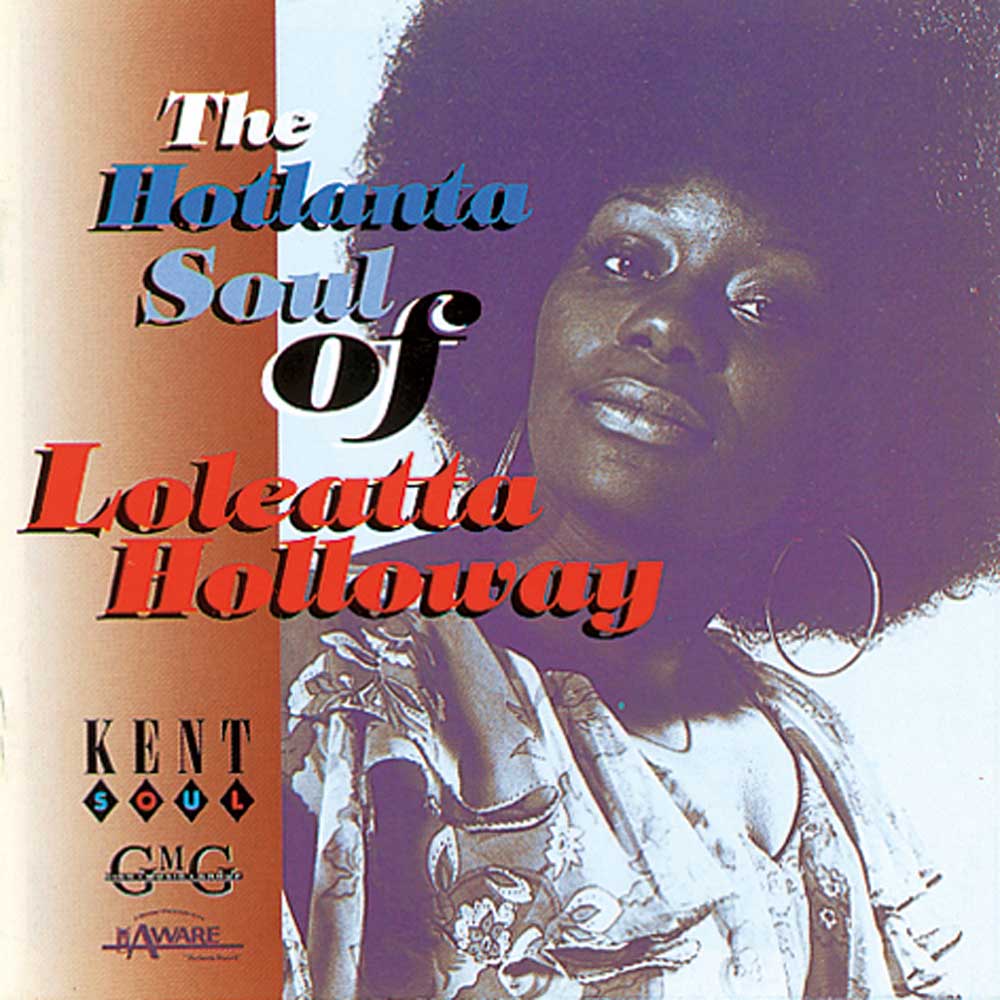
Loleatta Holloway - The Hotatlanta Soul of Loleatta Holloway

Loleatta Holloway is probably still best known to the public as one of the disco queens of the 1970s.  But that part of her career might soon be forgotten.   Fortunately, Ms. Holloway had the opportunity to document her real vocal artistry under close to ideal circumstances during the early 70s before the dark cloud of disco descended on the world of Soul.   This work, mostly recorded in Atlanta and often under the production of Sam Dees, stands as a timeless testimony to one of the truly great soul divas, a soul diva who almost came along too late. 

Loleatta Holloway was born in Chicago in 1946 and began to sing gospel at an early age.  Her vocal prowess pushed her up in the ranks of gospel music very quickly; she became a member of none other than the Caravans in the 1960s, and then worked the programs successfully as a solo artist.   Her crossover into secular music came with the acceptance of an offer to play the starring role in a Chicago musical - "Don't Bother Me, I Can't Cope."   Her first secular recordings (included here) were produced by her husband and manager, Floyd Smith: Rainbow '71, For Sentimental Reasons, Bring it On Up.

Her first 45 and live performances got noticed right away, and Michael Thevis soon took her to the Hotatlanta Studio where she recorded the remaining tracks on this compilation for Aware records.    Here we have a fortunate combination of mostly high quality songs and production (often Sam Dees) and a great soul diva at the height of her powers.

Sadly, we lost Loleatta Holloway prematurely in 2011.  This is her recorded legacy that will live forever.  


Sunday, February 15, 2015

Orchestra Baobab - Senegal


Orchestra Baobab was the multi-ethnic house-band of the Baobab Club in Dakar right from when the elite room opened in 1970 until the joint went dark in 1979 – by which time they were established as Senegal’s most popular band.

Sounds and styles from the Caribbean had already been embraced throughout west Africa since the ‘50s, and the special accent of Orchestra Baobab came from their adoption of Cuban instrumentation and rhythmic styles parsed through the individual roots and origins of a polyglot membership.

Balla Sidibe and Rudy Gomis, for example, are from the southern forest region of Casamance and harmonise in Portuguese creole, while the northern Wolof griot vocal style of Ndiouga Dieng replicates that of his predecessor Laye M’Boup, killed in a 1975 car crash,  and Medoune Diallo’s is the voice we hear singing in Spanish.  Sax-player Issa Cissoka and drummer Mountage Koite are both from Mande griot families - Cissoko from Mali, and Koite from eastern Senegal – and bassist Charlie N’Diaye is from Casamance in the south.  On lead guitar, Barthelemy Attisso is from Togo, and rhythm guitarist Latfi Ben Geloume is from a Moroccan family exiled to Senegal’s Saint Louis.   Baro N'Diaye, the original saxophonist-leader of the group, seems to have been plain ordinary French-Senegalese – as was singer/percussionist Mapenda Seck.

“Baobab à Paris” is indication of the reach of their appeal into France, where there is a large expatriate community - and yet, shortly after the Baobab Club’s closure and then on through the ‘80s, audience tastes back home in Dakar began turning to the grittier sounds of bands like the Etoile de Dakar (featuring a young Youssou N'Dour) and the popularity of Orchestra Baobab began to wane.

In 1987, the band split up.

“Pirates Choice” was recorded in 1982 and released on cassette.  A vinyl version was later released in France and quickly became a sought-after cult rarity which came to the attention of the World Circuit label, who re-released it in 1989 as a double CD packaged with extra tracks.

The solid success of the re-release right across the label’s niche network meant there was an audience for live performance strong enough to sustain international touring if only the band were still in existence.  African performing artists all desire to achieve success on a world stage, though – so perhaps it was not really very hard at all, especially with the intercession and support of Youssou N’Dour, for World Circuit in 2001 to persuade the band to reform for tours of Europe and the United States and a new CD.

“Specialist In All Styles” was released in 2002 – twenty years after “Pirates Choice”.

The band are still the same guys.  Pretty much.  Thierno Koite, perhaps a relative of the drummer Mountaga Koite, replaced Baro N'Diaye, the original sax-player.  And Assane M’Boup, who may similarly be kin to original singer Laye M’Boup, replaced Mapemda Seck.   Only two personnel changes between them.  Plus, on the new one, we have guest performances from producer Youssou N’Dour, from Ibrahim Ferrer, and from Thio M'Baye on sabar drums.

The singing is beautiful and all of the music is absolutely made for dancing.

Baobab à Paris Vol 1 On Verra Ca (1978) - 320kbps 52.4 MB

https://mega.co.nz/#!7RIGzb5B!1SLPrClFptq_dDd-mC9-qInaDUgE2DzI89QVyrb7Ioo

Baobab à Paris Vol 2 Africa '78 (1978) - 320kbps 52.4 MB
https://mega.co.nz/#!PFZG2BYJ!cgvL31u96DqQddDQB-QP-B3iHKWn-smoadQXiJ3cZdQ

Pirate's Choice- The Legendary 1982 Session Disc 1 (1982) - 320kbps 94.7 MB
https://mega.co.nz/#!XMoU3A7Y!oK4QbcDB_LdgjQuYzrHArogOOYZsVuOeeT0BLs1huM0

Pirate's Choice- The Legendary 1982 Session Disc 2 (1982) - 320kbps  94.0 MB
https://mega.co.nz/#!fEBzxJRA!urO-vZH3lbge5xNcCCdRXTN1EVNQzrGGzujA7grB-1g

Specialist In All Styles (2002) - 192kbps  68.5 MB
https://mega.co.nz/#!acJxXQjS!wi1byg77U_CaMLpqUCUuauZtJ9qV2wtw8j8WQnSTeGg

Thursday, February 12, 2015

Tony Allen - Film Of Life

"For his tenth album, Tony Allen, the co-creator of Afrobeat, has pulled out all the stops. At his side are French producers The Jazzbastards and fellow world-class musicians including Damon Albarn (Gorillaz, The Good the Bad & the Queen, Blur). With Film of Life, Allen has produced an album that has the ring of a true self-portrait, offering an overview of his rich and exemplary career that brings together bebop, Afrobeat jazz and psychedelic pop."

" A sleek, sensuous, wildly diverse album from an old master. Building from the old Afro-Beat sound he helped create, Nigerian-born drummer Tony Allen shifts and arcs into heavy dub and clubby funk, off-kilter pop and artsy, Eno-esque electronica... It's smooth, multi-textured music that feels in turns joyful and dark, playful and forboding, and consistently wickedly creative. Currently pushing 75, Afrobeat elder Tony Allen is still very much in the groove, and this is a fine album, very listenable and enticing. Recommended! (DJ Joe Sixpack, Slipcue Guide To World Music)"

The RPM Blues Story

RPM was a subsidiary of Modern Records, one of the major blues and R&B labels of the '50s. One Day's 2014 compilation The RPM Blues Story focuses on the imprint's best blues sides, with everything recorded in the late '40s and '50s. Lots of big names -- B.B. King, Lowell Fulson, Howlin' Wolf, Lightnin' Slim, Johnny "Guitar" Watson -- are present on this collection, all doing raw, vital work that is matched nicely by the lesser-known names here. It all results in an excellent (and affordable) primer on one of the best R&B/blues labels of its time. AMG

Saturday, February 7, 2015

Washboard Sam 1935 - 1947

Whether Washboard Sam really was a half-brother of Big Bill Broonzy (and his 17 or 18 brothers and sisters) as is often claimed, is relatively unimportant in the face of the role he himself played as blues pioneer.
Born as Robert Brown in Arkansas in 1910, Washboard Sam is one of the great black musicians, singers and lyric composers of the pre-1945 period, without whom the developments in rhythm & blues in Chicago, the blues capital of the post-war years, would scarcely have been imaginable. Sam came to Chicago in 1932, played a little washboard and sang, and soon found himself with an exclusive contract with Bluebird, the label under which the Victor company (now known as the Bluebird Record Company) managed to make a business out of country blues in the 1930s. Washboard Sam and
Big Bill Broonzy made a considerable contribution to this success. They gathered together a whole group of instrumentalists for their recording sessions including pianists such as Roosevelt Sykes, Bob Call (Black Bob), Joshua Altheimer and even at this stage, electric guitarists such as George Barnes. Washboard Sam wrote the music and lyrics of both humorous and melancholic melodies; however those that are most loved have always been the ones with the most swing to them. The wide choice of titles available cover the entire range of his musical ideas and achievements. After the War, sales of records produced by the 'older' blues generation, i e that of Washboard Sam, Big Bill or Tampa Red began to drop and were increasingly replaced by the new, more aggressive recordings by artists such as Muddy Waters, Lightnin' Hopkins or B B King. In 1946, Washboard Sam withdrew from the overheated, unpredictable music scene of Chicago. He became a policeman with a ...'quiet family life' (S B Charters) which he only interrupted for a few recordings in 1953 and 1954, and a European tour in 1964. Washboard Sam died in 1966 following heart failure. (From sleeve notes)

Note : 18 tracks 17 of which appear on CD for the first time - CD cover has error missing out the number 12 and showing a jump from 11 to 13 !!! Sloppy !!!...Full personnel etc shown in scans  

New Orleans Soul - The Original Sound of New Orleans Soul 1960-76

Another interesting comp from the Soul Jazz folks. Much of it is stuff many will have, but even for me there are a number of things I hadn't encountered yet. Worth the effort.

" For more than ten years Soul Jazz Records have been exploring and documenting the sound of New Orleans Funk. Now they turn their attention to the flipside of this musical coin - New Orleans Soul.

These two musical forms share a lineage that begins with the city's enormous rhythm and blues explosion in the post-war 1940s and 1950s. New Orleans Soul incorporated the soulful vocals of the gospel church, the driving beat of rhythm and blues, as well as traces of the second-line parade bands and the latinized rhythms of the city.

Here you will find New Orleans soul in all its glorious variations from the deep, deep soul of singers Aaron Neville, Willie Tee and Robert Parker to the storming northern soul of Maurice Williams and Eldridge Holmes, the funky soul of Eddie Bo, Lionel Robinson and Ernie K-Doe all alongside the Crescent City's finest soul sisters Irma Thomas, Betty Harris, Jean Knight, Inell Young and more!

The main force behind New Orleans Soul is Allen Toussaint, a virtual one-man hit-making machine in the 1960s, writing, arranging and producing hit after hit for an unending list of unbelievably talented local singers such as Eldridge Holmes, Maurice Williams, Betty Harris, Ernie K Doe and Diamond Joe all of whom are featured.

New Orleans is also a city of great musical families. Vocalist Aaron Neville was the brother of Art Neville (who formed The Meters) and later in the 1970s joined with brother Cyril to form The Neville Brothers. Soul vocalist supreme Willie Tee is also known as Wilson Turbinton, who alongside brother Earl, formed the super-heavy funk band The Gaturs and backed the Mardi Gras Indian group The Wild Magnolias.

Also included here are rare, lost and killer soulful tracks from New Orleans artists Eddie Bo (and protégée vocalist Inell Young), Jean Knight, Jimmy Hicks, Francine King and more!"