Showing posts with label Ohio. Show all posts

Friday, November 11, 2016

Bobby Womack and The Valentinos

a repost by request:

When considering what to tell in the epic myth-like tale of the life of Bobby Womak, I came to the same conclusion that wikipedia's editors did...the tale is too rich to abbreviate. If you have been here through enough of the blog you caught the very first chapter in the SAR set. This portion really just covers The Valentino's - there will be even more about Bobby alone. His story is in many ways the tale of the fallout from the killing of Sam Cooke. Womak played the role of pawn, hero, villain, tragic hero, resurrected hero...it is the stuff of a fantastic book, complete with side plots, or a movie crafted from the very real history of soul.

"The Valentinos (also known as The Womack Brothers), was a Cleveland, Ohio-based family R&B group, mainly famous for launching the careers of brothers Bobby Womack and Cecil Womack, the former brother finding bigger fame as a solo artist and the latter finding success as a member of the husband and wife team of Womack & Womack with Linda Cooke. During their 22-year tenure, the group was known for R&B hits such as "Lookin' for a Love", famously covered by The J. Geils Band and later a solo hit for Bobby Womack and "It's All Over Now", famously covered by The Rolling Stones.

The foundation of the Valentinos started in church where the five Womack brothers - Friendly, Jr. (born 1941), Curtis (born 1943), Bobby (born 1944), Harry (1945-1974) and Cecil (1947-2013) - performed at their father Friendly's church located from the East 85th & Quincy area of Cleveland. The group started out around 1952 when eight-year-old Bobby Womack played guitar for his father after he had broken a string. Following this, he discovered that all five of his sons could sing, forming the Womack Brothers.

Attracting a gospel following, in 1954, the group, under the name Curtis Womack and the Womack Brothers, cut a single, "Buffalo Bill" with the Pennant label; both Curtis and Bobby Womack were only ten years old at the time of the recording. In 1956, Sam Cooke discovered the group performing while he and his then group, The Soul Stirrers, were headlining and was so impressed with the brothers that he promised to help the group advance in their careers. In 1960, a couple of years after he founded SAR Records and becoming a crossover solo sensation, Cooke made good on his promise signing the teenage act to the label. The group arrived to California in a beat-up Cadillac prior to Cooke signing them.

Still going by The Womack Brothers, SAR cut two gospel singles the group recorded in 1961 and 1962 including "Somebody's Wrong" and "Couldn't Hear Nobody Pray". After the singles failed to chart, Cooke advised the group to go a secular direction. Upon this, they changed their name to the Valentinos and while both Bobby and Curtis continued to switch leads, Sam Cooke reportedly favored Bobby and while some SAR singles featured Curtis in lead, the Bobby-led singles would garner the most airplay.

Shortly afterwards, the group under its new moniker, recorded "Lookin' for a Love", which was a pop rendition of "Couldn't Hear Nobody Pray". The song would peak at number eight on the R&B charts and number 72 on the Billboard Hot 100, going on to sell two million copies. The hit landed them an opening spot on James Brown's national tour.

In early 1964, the group issued their next hit, "It's All Over Now", which was co-written by Bobby and sister-in-law Shirley. Prior to them releasing it, however, word got around that The Rolling Stones wanted to cover it. Despite Bobby's initial protests, the Stones were eventually allowed to release it and their version became their first national hit in the U.S. Bobby's anger cooled after he received his first royalty check for the single following the Stones' release of the single.

Around 1963, Womack began touring with Cooke as his backing guitarist. Bobby added in instrumentation to several of Cooke's albums including Night Beat and Ain't That Good News. Around the same time Bobby was one of the first people to hear Cooke's chilling anthem, "A Change Is Gonna Come". In December 1964, the Valentinos' career was put in jeopardy when Cooke was suddenly shot and killed while at a Los Angeles motel.

Struggling to deal with the sudden loss of Cooke, the group lay low. Not long after Cooke was buried, however, in March of the following year, Bobby, who had just turned 21, married Cooke's widow, 29-year-old Barbara Campbell. Womack would claim later that he initially had wanted to console Barbara after she lost her husband fearing she "may do something crazy" because of the attention given to Sam Cooke's stature. Womack, his family and friends later say that Barbara fell in love with Bobby and convinced him to marry her. Womack even wore one of Sam's suits to the wedding by Barbara's request.

The marriage angered many of Cooke's loyal fans due to the fact that Cooke's death was still being investigated at the time. In response to the negative attention, Bobby chose to leave the Valentinos and start his solo career in 1965, first recording for Him Records and later the Chess Records subsidiary, Checker. But due to the Cooke scandal, radio deejays refused to play his records and onstage, he was often referred to as "the kid that married Sam Cooke's wife". Womack settled on session work for the time being as a rhythm guitarist, beginning in 1966, while the rest of the Valentinos, who had initially disbanded following Cooke's death, was urged by Bobby to regroup.

Following Cooke's death, SAR Records folded and the remaining Valentinos auditioned for several record labels before Chess Records picked them up. In 1966, they recorded two singles, "Do It Right" and "Let's Get Together" but neither single failed to chart and the brothers were dropped from the label soon after. Following this, the youngest Valentino, Cecil Womack, was the next brother to leave the group after he decided to marry former Motown singer Mary Wells. Cecil was only 19 at the time of the marriage, Wells was 23. In 1968, Wells and Cecil helped the brothers get signed to Jubilee Records. Several of the brothers - including Bobby - would contribute to the sessions of Mary Wells' Jubilee album, "Servin' Up Some Soul", many of the tracks being Cecil and Mary compositions. That same year, the remaining trio of Friendly, Jr., Curtis and Harry recorded the single "Tired of Being Nobody" followed by the Cecil Womack penned "Two Lovers History" before calling it a day.

Meanwhile Bobby Womack's career was on a rise again, this time as a session musician and songwriter. After contributing guitar to recordings by Aretha Franklin, he gave up some of his compositions to Wilson Pickett, who later took the Womack single, "I'm in Love", to the top 40 on the pop and soul charts. Several of Womack's other songs including "I'm a Midnight Mover" would also be recorded by Pickett. Following this success, Minit Records signed Bobby and released the album, Fly Me to the Moon, which featured the singer's first charted hit, a cover of The Mamas & The Papas' "California Dreaming". Once again being able to have a career after years of struggle following his marriage to Barbara Cooke, Womack would continue his session work, working with musicians such as Gábor Szabó, with whom he would write "Breezin'" with. By 1970, Womack's brothers rejoined him as background vocalists on his work, starting with the 1970 release of his second solo album, My Prescription.

In 1971, Bobby signed with United Artists Records and released his breakthrough album, Communication, which featured the top ten R&B hit, "That's the Way I Feel About Cha", in which the rest of his brothers (The Valentinos) , contributed background vocals to. The brothers would be featured on several of Womack's other albums over the years including Understanding, Facts of Life and Lookin' for a Love Again, the latter album in which the brothers re-recorded "Lookin' for a Love" in a modern funk setting. The remake later shot up to number one R&B and number ten pop becoming the biggest hit the brothers ever sang on, selling over two million copies. Bobby Womack later produced a version of "I Can Understand It" for the remaining Valentinos, releasing it on the Clean Records label. The song gave the Valentinos some traction again on the R&B charts leading to them appearing on Soul Train where Bobby was a frequent guest.

However, this period of success would unfortunately be short lived. On March 9, 1974, Harry Womack was shot to death by his girlfriend during a fight while living in Bobby's Los Angeles home. Bobby said later that he received a phone call from his oldest brother Friendly, Jr., who told him of what had happened to Harry. Bobby was then doing an interview for a local radio station while "Lookin' for a Love" was rising on the charts when he got the call. Bobby said he was shocked by the news and tried to escape the building of the station, later landing in a hospital from his fall where he made a full recovery. In response, Bobby moved his entire family including parents Friendly and Naomi to California to strengthen a fragile family bond. The Valentinos ceased recordings after Harry's death settling on background work with brother Bobby.

Bobby Womack's solo career struggled following the death of his brother as did the careers of the other ex-Valentinos. In 1982, Bobby Womack's solo career received a boost with the release of "If You Think You're Lonely Now", which featured his surviving brothers and other singers backing him. The following year, Cecil Womack, now married to Linda Cooke, Sam Cooke's daughter and Bobby's former stepdaughter, began finding success on his own with Linda as the duo Womack & Womack, releasing the album, Love Wars, which boosted the hit single, "Baby I'm Scared of You", which Cecil and Linda wrote. The duo later had a hugely successful international hit with "Teardrops". Friendly Womack and Curtis Womack continued to provide background vocals for brother Bobby's recordings until the nineties when both singers announced retirements.

An estrangement in the family occurred following the 1977 divorce of Cecil Womack and Mary Wells as it was alleged that a reason for the divorce (filed by Cecil) was due to Mary Wells carrying on an extramarital affair with Curtis. Curtis and Mary continued to date and in 1986, Wells gave birth to Curtis' daughter Sugar. Mary and Cecil had three children during their marriage including record producer Meech Wells (born Cecil Womack, Jr.). In the late eighties, disenchanted with life in the United States and searching for their African roots, Cecil and Linda Womack and their children moved to an African country and changed their name to the Zekkariyas where they continued recording music. As a songwriting team for Philadelphia International Records, the couple wrote hits for Teddy Pendergrass and Patti LaBelle. Cecil died on February 1, 2013 in Africa. In 2009, Bobby Womack was inducted to the Rock & Roll Hall of Fame. During the ceremony, he performed his 1972 hit "Across 110th Street" and the Valentinos hit "It's All Over Now", in which Rolling Stone member Ron Wood backed him. Wood inducted Womack to the Hall. Womack's family with the exception of Cecil Womack was present for the induction ceremony. The family patriarch and founder of the Womack Brothers, Friendly Womack, Sr., died of cancer in 1981. Their mother, Naomi, is still living.

Some of the group's recordings are most noted for their covers by artists of various genres. Alongside the Rolling Stones, Solomon Burke and Wilson Pickett recorded covers of the Valentinos tunes "Everybody Wants to Fall in Love" and "I Found a True Love", both of which were written solely by Bobby. In 1971, The J Geils Band covered "Lookin' for a Love" a couple years before the brothers re-recorded it for Bobby's solo release, Lookin' for a Love Again. Another composition that was first recorded by Bobby as a solo release and revived by the Valentinos a year later, "I Can Understand It", became a major hit for the funk band New Birth. Prior to her later work with Cecil, Linda helped Bobby co-write the hit "A Woman's Gotta Have It", which also featured Cecil singing background for his brother. Cecil and Linda's composition, "Love TKO", a major hit for Teddy Pendergrass, has been covered several times."

Friday, October 31, 2014

Screamin' Jay Hawkins - Voodoo Jive

 Jalacy Hawkins (July 18, 1929 – February 12, 2000), Born and raised in Cleveland, Ohio, Hawkins studied classical piano as a child and learned guitar in his twenties. His initial goal was to become an opera singer (Hawkins has cited Paul Robeson as his musical idol in interviews), but when his initial ambitions failed he began his career as a conventional blues singer and pianist.

Hawkins was an avid and formidable boxer. In 1949, he was the middleweight boxing champion of Alaska.

In 1951, Hawkins joined guitarist Tiny Grimes's band, and was subsequently featured on some of Grimes's recordings. When Hawkins became a solo performer, he often performed in a stylish wardrobe of leopard skins, red leather and wild hats.

His most successful recording, "I Put a Spell on You" (1956), was selected as one of The Rock and Roll Hall of Fame's 500 Songs that Shaped Rock and Roll. According to the AllMusic Guide to the Blues, "Hawkins originally envisioned the tune as a refined ballad." The entire band was intoxicated during a recording session where "Hawkins screamed, grunted, and gurgled his way through the tune with utter drunken abandon." The resulting performance was no ballad but instead a "raw, guttural track" that became his greatest commercial success and reportedly surpassed a million copies in sales, although it failed to make the Billboard pop or R&B charts.

The performance was mesmerizing, although Hawkins himself blacked out and was unable to remember the session. Afterward he had to relearn the song from the recorded version. Meanwhile the record label released a second version of the single, removing most of the grunts that had embellished the original performance; this was in response to complaints about the recording's overt sexuality. Nonetheless it was banned from radio in some areas.

Soon after the release of "I Put a Spell on You", radio disc jockey Alan Freed offered Hawkins $300 to emerge from a coffin onstage. Hawkins accepted and soon created an outlandish stage persona in which performances began with the coffin and included "gold and leopard skin costumes and notable voodoo stage props, such as his smoking skull on a stick – named Henry – and rubber snakes." These props were suggestive of voodoo, but also presented with comic overtones that invited comparison to "a black Vincent Price."

Hawkins' later releases included "Constipation Blues" (which included a spoken introduction by Hawkins in which he states he wrote the song because no one had written a blues song before about "real pain"), "Orange Colored Sky", and "Feast of the Mau Mau". Nothing he released, however, had the monumental success of "I Put a Spell on You". In fact, "Constipation Blues" has been described as "gross".In Paris in 1999 and at the Taste of Chicago festival, he actually performed the song with a toilet onstage.

He continued to tour and record through the 1960s and 1970s, particularly in Europe, where he was very popular. He appeared in performance (as himself) in the Alan Freed bio-pic American Hot Wax in 1978. Subsequently, filmmaker Jim Jarmusch featured "I Put a Spell on You" on the soundtrack – and deep in the plot – of his film Stranger Than Paradise (1983) and then Hawkins himself as a hotel night clerk in his Mystery Train and in roles in Álex de la Iglesia's Perdita Durango and Bill Duke's adaptation of Chester Himes' A Rage in Harlem.

In 1983, Hawkins relocated to the New York area. In 1984 and 1985, Hawkins collaborated with garage rockers The Fuzztones, resulting in "Screamin' Jay Hawkins and The Fuzztones Live" album recorded at Irving Plaza in December 1984. They perform in the 1986 movie Joey.

In July 1991, Hawkins released his album Black Music for White People. The record features covers of two Tom Waits compositions: "Heart Attack and Vine" (which, later that year, was used in a European Levi's advertisement without Waits' permission, resulting in a lawsuit), and "Ice Cream Man" (which, contrary to popular belief, is a Waits original, and not a cover of the John Brim classic). Hawkins also covered the Waits song, "Whistlin' Past the Graveyard", for his album Somethin' Funny Goin' On. In 1993, his version of "Heart Attack and Vine" became his only UK hit, reaching #42 on the UK singles chart.

Hawkins died on February 12, 2000 after surgery to treat an aneurysm. He left behind many children by many women; an estimated 55 at the time of his death, and upon investigation, that number "soon became perhaps 75 offspring"

Saturday, June 28, 2014

Bobby Womack - The American Singles 1967-1976

For those of you who may have the album versions of these songs, you will need these as well as most of them seem to be different, if only in the mix in some cases -- for those who don't have either, I will do some sort of mega-post on the albums too as they also include songs never released as singles The story is so huge, it requires multiple chapters.

continued......."Womack worked at Chips Moman's American Studios in Memphis and played on recordings by Joe Tex and The Box Tops. Womack played guitar on several of Aretha Franklin's albums, including Lady Soul, but not on the hit song, "Chain of Fools", as erroneously reported. His work as a songwriter caught the eye of music executives after Wilson Pickett took a liking to some of the songs and insisted on recording them. Among those songs included the hits, "I'm a Midnight Mover" and "I'm in Love".

In 1968, he signed with Minit Records and recorded his first solo album, Fly Me to the Moon, where he scored his first major hit with a cover of The Mamas & The Papas' "California Dreamin'". In 1969, Womack forged a partnership with Gábor Szabó and with Szabó, penned the instrumental, "Breezin'", later a hit for George Benson. Womack also worked with rock musicians Sly and the Family Stone and Janis Joplin, contributing vocals and guitar work on The Family Stone's accomplished album, There's a Riot Goin' On, and penning the ballad "Trust Me", for Joplin on her album, Pearl. Womack was one of the last people to speak to Joplin before her death in October 1970.

After two more albums with Minit, Bobby switched labels, signing with United Artists where he changed his attire and his musical direction with the album, Communication. The album bolstered his first top 40 hit, "That's the Way I Feel About Cha", which peaked at number two R&B and number twenty-seven on the Billboard Hot 100 in the spring of 1972.
1972-1985: Solo success

Following Communication, Womack's profile was raised with two more albums, released in 1972. The first of which was Understanding, noted for the album track, "I Can Understand It", later covered by the funk band New Birth and a three-sibling lineup of Bobby's old group, the Valentinos, and two hit singles, "Woman's Gotta Have It" and "Harry Hippie", the latter song was written for Womack by Jim Ford in a country version, in which Womack re-arranged in an R&B version. "Harry Hippie" later became Womack's first to be certified gold. Contrary to popular belief, the song was not about Womack's brother Harry. "Woman's Gotta Have It" became Womack's first to hit number-one on the R&B charts.

Another hit album released after Understanding was the soundtrack to the blaxploitation film, Across 110th Street. The title track became popular during its initial 1972 release and later would be played during the closing scene of the film, Jackie Brown, years later. In 1973, Womack released another hit album, Facts of Life, and had a top 40 hit with "Nobody Wants You When You're Down and Out", an older song Sam Cooke had done years before.

In 1974, Womack released his most successful single during this period with a remake of his first hit single, "Lookin' for a Love". Bobby's solo version of the song became even more successful than the original with the Valentinos', becoming his second number-one hit on the R&B chart and peaking at number ten on the Billboard Hot 100, becoming his only hit to reach that high on the pop chart. The song was featured on the album, Lookin' for a Love Again and featured the minor charted "You're Welcome, Stop on By", later covered by Rufus & Chaka Khan. Womack's career began stalling after Womack suffered from the tragic news of his brother Harry's death. Womack continued to record albums with United Artists through 1975 and 1976 but with less success than previous albums. In 1975, Womack collaborated with Rolling Stones member Ronnie Wood, on Wood's second solo album, Now Look."

Bobby Womack - The Minit LP's

from the bio..."In 1968, he signed with Minit Records and recorded his first solo album, Fly Me to the Moon, where he scored his first major hit with a cover of The Mamas & The Papas' "California Dreamin'". In 1969, Womack forged a partnership with Gábor Szabó and with Szabó, penned the instrumental, "Breezin'", later a hit for George Benson. Womack also worked with rock musicians Sly and the Family Stone and Janis Joplin, contributing vocals and guitar work on The Family Stone's accomplished album, There's a Riot Goin' On, and penning the ballad "Trust Me", for Joplin on her album, Pearl. Womack was one of the last people to speak to Joplin before her death in October 1970."

I think I've posted enough of the story of this man's life that you can  perceive the almost mythological pendulum swings. Tragedy and triumph have regularly taken their turns with Bobby. I have to confess that I nearly succumbed to the temptation to just fling the rest of the classic Womack out whole-hog in a post unworthy of the material and it's importance..... fortunately sanity has won out, I believe the true genius of Bobby Womack has to be experienced in pieces small enough to fully digest. It is certainly true that others, Al Green in particular, occupied the national spotlight during this period and Bobby's magic was only sporadically recognized, but we have the privilege today of fully appreciating what escaped our earlier attention and perhaps amend our perception. Even in those moments where this stuff crosses WAY over into hokey bullshit, Bobby somehow delivers it with a conviction that makes you buy into it.

Bobby Womack - Understanding & Communication / The Womack Live & Safety Zone

If you were to point to the 'sweet spot' of Womack's career, this is considered by most to be it. According to the discography Understanding preceded Communication but the excerpt from the wiki bio below claims the opposite. What is clear is that Bobby has his ears open to the music world around him and influences from the like of Sly and the Family Stone, Jimi Hendrix, and James Brown are taking his music to exciting new places.

".....After two more albums with Minit, Bobby switched labels, signing with United Artists where he changed his attire and his musical direction with the album, Communication. The album bolstered his first top 40 hit, "That's the Way I Feel About Cha", which peaked at number two R&B and number twenty-seven on the Billboard Hot 100 in the spring of 1972.

Following Communication, Womack's profile was raised with two more albums, released in 1972. The first of which was Understanding, noted for the album track, "I Can Understand It", later covered by the funk band New Birth and a three-sibling lineup of Bobby's old group, the Valentinos, and two hit singles, "Woman's Gotta Have It" and "Harry Hippie", the latter song was written for Womack by Jim Ford in a country version, in which Womack re-arranged in an R&B version. "Harry Hippie" later became Womack's first to be certified gold. Contrary to popular belief, the song was not about Womack's brother Harry. "Woman's Gotta Have It" became Womack's first to hit number-one on the R&B charts.


Another hit album released after Understanding was the soundtrack to the blaxploitation film, Across 110th Street. The title track became popular during its initial 1972 release and later would be played during the closing scene of the film, Jackie Brown, years later...."

Some of the packaging choices made by Stateside are a little bit confusing. This volume combines what was the third and final Minit album 'The Womack Live', 1970 with 1975's Safety Zone - the final two volumes also choose to ignore the chronology for reasons that don't seem to be space oriented. It is an odd choice here because the style and instrumentation are so obviously 5 years apart. I've been tempted for a while now to reformat these chronologically and listening to it today I think I'm finally convinced.

Sunday, June 22, 2014

Little Miss Cornshucks 1947-1951

 Little Miss Cornshucks or Lil' Miss Cornshucks was the stage name of Mildred Jordan (née Mildred Cummings; May 26, 1923, Dayton, Ohio – November 11, 1999, Indianapolis, Indiana). She was an American rhythm and blues and jazz singer and songwriter who in her stage show styled herself as a country girl from the 1940s and early 1950s. Her vocal style inspired R&B and soul singers such as LaVern Baker, Ruth Brown, Aretha Franklin, Otis Redding, Sam Cooke, Wynona Carr and Billy Wright.

Born in Dayton, Ohio, Mildred Cummings was the youngest child of a large musical family of African-American origin; she began to sing with her sisters, as the Cummings Sisters, performing spirituals in Dayton and the surrounding area. By the 1930s, she was making solo appearances in young people's amateur talent shows or in front of her family. She preferred ballads and developed a stage wardrobe that appealed to black southerner agricultural workers who at that time were migrating to the US northern cities. In her stage show she performed barefoot, with a straw hat, braids, backwoods clothes and a basket. In US and Canadian English a cornshuck is the husk of an ear of maize.

In 1940, Cummings married Cornelius Jorman, with whom she had three children. Her husband worked as her manager and accompanied her at her performances. By in 1942 she was a star in the Chicago area, performing at the Rhumboogie Club. The band leader and arranger Marl Young who worked at the club recognised her talent and signed her under contract to the then famous Club DeLisa. A year later, the future owner of Atlantic Records, Ahmet Ertegun, heard her sing in Washington DC and wrote in his memoirs:

    "1943, I was about 19 years old; I went to a nightclub in the northeast black district of Washington DC and heard a singer named Little Miss Cornshucks and thought: 'Oh God!' She was better than anything I had heard so far. She came across like a country girl, provided with a headscarf and a basket in her hand and so on; but she could sing the blues better than anyone I've heard to date. That night I asked her if I could record a record with her. We then played Kansas City and a few other blues numbers and the song 'So Long'. She had such a wonderful sound and I remember how I always thought, 'Oh my God, and I have no record company; I can make the drive just for myself.'" "So Long" became her signature tune and a regional hit in 1943 for the short-lived Sunbeam label.

For health reasons, Miss Cornshucks had to interrupt her career in the mid 40s. She returned to Ohio and there she finally separated from her husband Cornelius, who was involved in the drug trade. She then returned to her native Indianapolis and became increasingly dependent on alcohol.

Her Sunbeam recordings were now republished on the Old Swingmaster label and she enjoyed some success in the Detroit area based at the Frolics Bar. Performances in New York and Washington followed. During one of these tours she met the dancer Henry "Henny" Ramsey, who became her lover and with whom she spent several years on tour while her children stayed with her family in Dayton. Ramsey and Cornshucks lived together for a while in Los Angeles, where she appeared in the clubs of Central Avenue, such as the Last Word Room and Club Alabam.

In 1948 she appeared at the Million Dollars Theatre in downtown Los Angeles. This was a converted former cinema. She was billed as "the new look in comedy" and "a rustic comedienne". Her comedic talent gave her a small film role in Campus Sleuth, a 1947 B-movie made by Monogram Pictures, and produced by the Bowery Boys and Charlie Chan.

In May 1948, she recorded new songs for the small label Miltone in California under the direction of saxophonist and producer Maxwell Davis . The 1950s saw her return to Chicago and she continued to sing in the clubs there while living in Kenosha , Wisconsin. In late 1960 she came out of retirement to record an LP for the Chess label, produced by Sonny Thompson, entitled The Loneliest Gal In Town. Success eluded her and went instead to Aretha Franklin who recorded a single of the LP's soul style version of ''Try a Little Tenderness'' and had a hit with it.

She died at her home in Indianapolis in November 1999, aged 76 , after a series of strokes.

Sunday, April 20, 2014

Sister Wynona Carr - Dragnet For Jesus

It is Easter Sunday and once again the organ swells in the background signifyin' another Gospel Sunday here on the Chitlin Circuit.

"Wynona Carr (August 23, 1924 – May 12, 1976) was an African-American gospel, R&B and rock and roll singer-songwriter, who recorded as Sister Wynona Carr when performing gospel material.

Wynona Merceris Carr was born in Cleveland, Ohio, where she started out as a gospel singer, forming her own five-piece group The Carr Singers around 1945 and touring the Cleveland/Detroit area. Being tipped by The Pilgrim Travelers, who shared a bill with Carr in the late 1940s, Art Rupe signed her to his Specialty label, giving Carr her new stage name "Sister" Wynona Carr (modelled after pioneering gospel singer Sister Rosetta Tharpe) and cutting some twenty sides with her from 1949 to 1954, including a couple of duets with Specialty's biggest gospel star at the time, Brother Joe May."

As complete a bio-page as you could want can be found HERE.

Monday, February 24, 2014

Bull Moose Jackson - Big Fat Mamas Are Back In Style Again

Benjamin Clarence "Bull Moose" Jackson (April 22, 1919 – July 31, 1989) was an American blues and rhythm and blues singer and saxophonist, who was most successful in the late 1940s.

Born in Cleveland, Ohio, United States, he learned to play the saxophone and started his first band, The Harlem Hotshots, while he was still in high school. In 1943, he was recruited as a saxophonist by bandleader Lucky Millinder, and the musicians in Millinder's band gave him the nickname "Bull Moose" for his appearance. He began singing when required to stand in for Wynonie Harris at a show in Texas.

Millinder encouraged Jackson to sign a solo contract with Syd Nathan of King Records to play rhythm and blues. He first recorded in his own right in 1946, with "I Know Who Threw the Whiskey", an answer song to Millinder's "Who Threw the Whiskey in the Well". The following year, his recording of "I Love You, Yes I Do" reputedly became the first R&B single to sell a million copies, holding the #1 spot on the R&B chart for three weeks and crossing over to the pop chart, where it made #24.

He formed his own group, The Buffalo Bearcats, and over the next five years recorded in a wide variety of musical styles, including both romantic crooning and bawdy jump blues. Other big hits in 1948 included the double-sided hit "All My Love Belongs to You" / "I Want a Bowlegged Woman", and his biggest R&B chart hit, "I Can't Go On Without You", which stayed at # 1 on the R&B chart for eight weeks. He also made an appearance in the 1948 film, Boarding House Blues, with Millinder.

In 1949, he covered "Why Don't You Haul Off and Love Me" a song that been successful for Wayne Raney as well as several country and western performers.

Jackson toured throughout the late 1940s and early 1950s. Around 1951, his band included bebop composer and arranger Tadd Dameron on piano, and another jazz musician, Benny Golson, on saxophone.

Some of Jackson's later risqué material, including "Big Ten Inch Record" (later covered by Aerosmith on Toys in the Attic) and "Nosey Joe" (written by Leiber and Stoller), both from 1952, were too suggestive for airplay, but remained popular.

Jackson continued to record until the mid-1950s, but the advent of rock-and-roll largely sidelined older musical artists, and so he instead went to work for a catering firm in Washington, D.C.. In 1961 he re-recorded, "I Love You, Yes I Do" with modernized high-fidelity and had a minor hit.

In the early 1980s he was persuaded by Carl Grefenstette to perform and record again with the Pittsburgh R&B revival band, The Flashcats, who had been playing his songs, and to record the album Moosemania! in 1985. Jackson also toured nationally and internationally. However, his health was deteriorating from lung cancer, and he died in Cleveland during the summer of 1989.

Sunday, February 23, 2014

Andrew Tibbs

Andrew Tibbs was born Melvin Andrew Grayson on 2 February 1929 in Columbus, Ohio. His father was the prominent Chicago Baptist minister, Reverend S. A. Grayson, and Tibbs got his start singing in church choirs. His brother Robert for a time was married to Dinah Washington. When he surreptitiously began singing blues in clubs, he used his middle name and his mother's maiden name, becoming "Andrew Tibbs." His route to Aristocrat began when in 1947 he was singing at Jimmy's Palm Garden. At intermission, he would go around the corner to the Macomba Lounge and sing during that club's intermissions. Sammy Goldberg saw him at the club and signed him to Aristocrat; Leonard Chess saw commercial potential in recording Tibbs, and decided to invest in the company, which was already recording Tom Archia. Tibbs' debut session has always been said to be the first one that Leonard Chess attended.

When interviewed by Jim O'Neal in Living Blues (1982), Tibbs explained how he just got up and sang traditional blues verses in the clubs, so he had never needed to come up with any compositions. Two numbers were hastily concocted for the recording date: Tibbs and Tom Archia worked out "Bilbo Is Dead" in the back seat of a cab on the way to the session, and Tibbs brought the lyrics into the session inscribed on a paper bag.

Theodore Gilmore Bilbo (October 13, 1877 – August 21, 1947) was an American politician. Bilbo, a Democrat, twice served as governor of Mississippi (1916–20, 1928–32) and later became a U.S. Senator (1935–47). A master of filibuster and scathing rhetoric, a rough-and-tumble fighter in debate, he made his name a synonym for white supremacy. Proud of being a racist, Bilbo believed in the natural inferiority of black people, was a fiery defender of segregation, and was a member of the Ku Klux Klan.
Of short stature (5 ft 2 in, 1.57 m), Bilbo wore flashy clothing, and was nicknamed "The Man" because he tended to refer to himself in the third person. [...] — Wikipedia

Wednesday, November 27, 2013

Darrell Banks - I'm The One Who Loves You

 Patsoul's contribution of Banks' Atlantic album gave us the opening chapter of his musical legacy. Here is the next and sadly final chapter of that story.

Banks came to Stax in 1969 and a flurry of recording resulted in the one full LP, a couple singles and some demo's. Once again the amazing folks of Kent/Ace have managed to assemble everything and preserve this too brief talent. Banks was shot and killed in early 1970.

Sunday, July 21, 2013

Wynona Carr - Jump Jack Jump!

...Not having too much success on the charts (except for "The Ball Game" (1952), which became one of Specialty's best selling gospel records and most recently featured in the movie 42), Carr grew increasingly unhappy with the straight gospel direction of her career and pleaded with Rupe to let her record "pops, jumps, ballads, and semi-blues". Rupe relented and from 1955 to 1959 Carr recorded two dozen rock & roll and R&B sides for Specialty, which, like her gospel songs, she mostly wrote herself. Despite scoring an R&B hit with "Should I Ever Love Again?" in 1957, overall the change from spiritual to secular music didn't help Carr much in terms of sales or recognition. Unfortunately she also contracted tuberculosis around this time, which kept her from doing the necessary promotional work and touring for two years, effectively ending her tenure with Specialty in the summer of 1959.

In 1961 Carr signed with Frank Sinatra's Reprise Records and released an unsuccessful pop album. She moved back to Cleveland, sinking into obscurity and suffering from declining health and depression; she died there in 1976.


Sunday, June 23, 2013

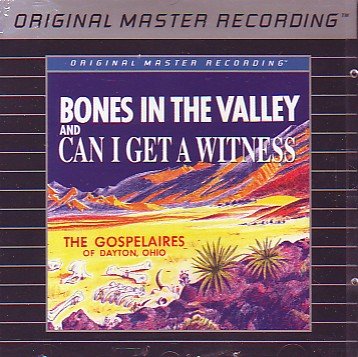
The Gospelaires of Dayton, Ohio - Bones in the Valley and Can I Get a Witness


I'm going to re-run this marvelous post from Preslives that appeared around a year ago; I imagine the are a number of you that missed this rareity.

The Gospelaires of Dayton, Ohio were one of the most dynamic quartets that took the 1950s sound of Julius Cheeks and the Sensational Nightingales forward into the 1960s.  As Gospel supplied the elements that fueled the evolution of R&B into Soul in the 1950s and 1960s, Gospel also wasted no time in borrowing back what it could from R&B to modernize the spiritual sound.  This cross-pollination was so intense that, by the mid-1970s, much of R&B and gospel became virtually indistinguishable except for the lyrics.   Like other quartets that came to prominence in the 1960s like the Violinaires and the Mighty Clouds of Joy, the Gospelaires made use of a full R&B-type band accompaniment and vocal innovations of secular groups like the Five Royals to carry on the rich hard gospel tradition.

The Gospelaires were formed in the mid-1950s in Dayton, Ohio, and steadily built a strong reputation that led to a contract for Peacock records in 1957.   The two records on this compilation come from their mid-1960s prime, when the group was fronted by the one-two punch of Bob Washington and Paul “Easy” Arnold.  The Gospelaires trademark was the use of repeated hypnotic riffs, over which Washington and Arnold would steadily turn up the heat with the aim of driving the Congregation into a frenzy   There exist some good video tapes of this unit doing exactly that.   You might find a few on Youtube. 

This CD that combines The LPs Can I Get a Witness and Bones in the Valley is another of the precious few short-lived Peacock Spiritual Series releases from late 1980s, after which time the reissue of the Peacock gospel catalog was abandoned indefinitely by MCA.     

May this music help infuse your Soul with the spirit on this Sunday morning!


Friday, June 14, 2013

Darrell Banks Is Here!

Numba three in our series from the Shares courtesy of 'patsoul.

"Darrell Banks (born Darrell Eubanks) (July 25, 1937 – February 24, 1970) was an American soul singer.

Born in Mansfield, Ohio, Banks grew up in Buffalo, New York, and learned to sing in gospel churches before choosing a career in secular music. He signed with Solid Hitbound Productions/Revilot Records, who released his 1966 single "Open the Door to Your Heart" (which, curiously, is legally named "Baby Walk Right In"), written by Donnie Elbert. When the single came out, Banks was credited as the songwriter instead of Elbert, and a protracted legal battle ensued; however, while the courts settled the matter (eventually in Elbert's favor), the tune scaled the US charts, peaking at #2 R&B and #27 on the Billboard Hot 100. A second single, "Somebody (Somewhere) Needs You", hit #34 R&B and #55 pop later that year. Moving to Atco Records, he released the singles "Here Come the Tears"/"I've Got That Feelin" and "Angel Baby (Don't Ever Leave Me)"/"Look into the Eyes of a Fool" in 1967, neither of which charted. Atco also released a full-length of his which included his Revilot singles. Atco subsidiary Cotillion Records released his last single under the Atlantic Records umbrella, "I Wanna Go Home"/"The Love of My Woman".

From there Banks signed to Stax Records, who released another full-length album of his in 1969 material and two more noncharting singles. They would be Banks's last recordings; in February 1970, Banks was shot and killed by policeman Aaron Bullock in Detroit, Michigan after Banks intervened in his affair with Banks's girlfriend, Marjorie Bozeman." wiki

Tuesday, December 18, 2012

Larry Darnell - I'll Get Along Somehow


When the Chubbman first posted this I promised that I had an addendum. Of course, being me, it took a little longer than anticipated and so I am driven to move this back to the front so y'all will notice.

I have great affection for these Rt 66 LP's so I won't duplicate anything, but Unky Cliff (aka Captain Excess) has another of those cheapo Bayou Records discs that has stuff unseen elsewhere. Every label has it's niche.

The add-on has 14 additional tracks, almost doubling you up.

link in comments