Showing posts with label Chess. Show all posts

Sunday, February 5, 2017

Sugar Pie DeSanto - Go Go Power (w. suppliments)


Another repost by request:

Sugar Pie DeSanto (born Umpeliya Marsema Balinton, Oct 16, 1935) was a Fillmore girl back when that tag used to mean something, back when San Francisco still had a soul and it was centered in The Fillmore. Her 2 years junior cousin, Etta James, was a Fillmore girl too; she hung out and sang with 'Peliya's' little sister.

Post war, the Fillmore was probably the most culturally and racially diverse neighborhood in America. That both girls should come from mixed parentage  was not particularly unusual in this neighborhood; Sugar's father was Filipino, Etta's father was unknown (unless you buy her mother's Minnesota Fats story).

The neighborhood was jumping and alive with multi-ethnic businesses, and it was the heart of the Black entertainment district as well. Charles Sullivan was the Mayor of Fillmore Street and his Majestic Ballroom was rechristened The Fillmore Auditorium in 1952. Bird, Sammy, Billie, Redd Fox, Moms Mabley, everyone came to The Fillmore. Music clubs like Bop City, The Blue Mirror, and New Orleans Swing Club were places to make the scene. On the weekends and at smaller venues there were talent contests and these were usually haunted by Johnny Otis, always on the hunt for new talent.

In 1954 Otis first found younger cousin Etta at such an event and later the same year he discovered 19 year old Umpeylia at some other event and he signed her too, giving her the name 'Little Miss Sugar Pie'. At 4 foot 11inches and 90 pounds the name fits the package (DeSanto is a later addition by a disc jockey). Unfortunately, Sugar Pie performs only sporadically with Otis' small groups (not the Revue, Etta sang there), Otis records a few sides on her for Federal without much success.


After a couple of years with Johnny Otis, Sugar Pie moves on as a solo singer. She is too much a class act to say it herself, but I would suggest that during  this period Otis was just too focused on Etta, to Sugar's detriment. Bob Geddins steps in in 1957 and they have a sustained success (eventually Billboard R&B #4 after being leased to Chess) with 'I Want to Know', on which they share songwriter credit. Sugar Pie parlays the tours on her hit and her explosively acrobatic stage act into a slot with the James Brown Revue for 1959-60 and then moves to Chicago, signing with Chess, where.... Etta had signed the year before.

Despite making around 30 credible to fabulous sides in her 5 years at Chess, she is always under used and under promoted, once again in Etta's unintentional shadow. Peylia makes ends meet by exploiting a skill her cousin lacked, songwriting. In her tenure at Chess, songwriting royalties and live performances are what paid the bills. The killer stuff you hear on this set got little notice and less promotion, most of it was outright shelved.

In 1964 the American Folk Blues Festival tour took Sugar Pie to Europe, where she was the only female artist, a distinction given to only one female act per year. Other artists included Willie Dixon, John Henry Barbee, Sleepy John Estes, Clifton James, Sunnyland Slim, Hubert Sumlin, Lightnin Hopkins and Sonny Boy Williamson. DeSanto's legendary live act rocked the house every show.

Near the end of her tenure at Chess, DeSanto and James were finally recorded together on 4 or 5 songs written by Sugar Pie - one hopes it was an attempt to give her some overdue recognition - it didn't work and by the end of the 60's Sugar Pie had left both Chess and Chicago to return to San Francisco.

For the last 30 years she has been a Bay Area fixture, sometimes called the Blues Queen of SF, but she sings all genres and played in many diverse settings - a pro singer and prolific songwriter who seems to have a little wave of popularity every decade or so.

Saturday, February 4, 2017

Chess Soul

Another repost by request:

"While Chess made numerous legendary contributions to the fields of blues and rock & roll, its reputation as a major mover and shaker in the soul field from 1961 to 1971 is unassailed. This 2-CD, 45-track compilation is another excellent entry in the Chess 50th Anniversary Series and shows why the label had the Windy City almost sewn up when it came to brand-name artists and material. Whether the tracks were master purchases from a smaller Chicago or Southern label (Jan Bradley's "Mama Didn't Lie," Cookie and the Cupcakes' "I've Been So Lonely," the Kolettes' "Who's That Girl?," Big Maybelle's "Don't Pass Me By" or Denise LaSalle's "A Love Reputation") or in-house productions from Billy Davis and Leonard Caston, next to Stax or Atlantic, no one stood for soul music in the 1960s like Chess Records. Featuring the label's strong hitmakers and soul shouters Etta James (the devastating "Only Time Will Tell"), Billy Stewart (the scat classic "Summertime"), Fontella Bass ("Rescue Me"), Gene Chandler ("I Fooled You This Time"), Mitty Collier ("I'm Satisfied") and Sugar Pie DeSanto ("Soulful Dress") alongside isolated moments of Chi-Town brilliance (the Radiants' "Voice Your Choice," the Knight Brothers' "Temptation 'Bout to Get Me" and Tony Clarke's "The Entertainer") with early Muscle Shoals productions thrown in to give the big picture (Laura Lee's "Dirty Man," Maurice and Mac's "You Left the Water Running"), this is one very potent two-disc anthology and an essential addition to anyone's soul collection." by Cub Koda

Friday, November 11, 2016

Bobby Womack and The Valentinos

a repost by request:

When considering what to tell in the epic myth-like tale of the life of Bobby Womak, I came to the same conclusion that wikipedia's editors did...the tale is too rich to abbreviate. If you have been here through enough of the blog you caught the very first chapter in the SAR set. This portion really just covers The Valentino's - there will be even more about Bobby alone. His story is in many ways the tale of the fallout from the killing of Sam Cooke. Womak played the role of pawn, hero, villain, tragic hero, resurrected hero...it is the stuff of a fantastic book, complete with side plots, or a movie crafted from the very real history of soul.

"The Valentinos (also known as The Womack Brothers), was a Cleveland, Ohio-based family R&B group, mainly famous for launching the careers of brothers Bobby Womack and Cecil Womack, the former brother finding bigger fame as a solo artist and the latter finding success as a member of the husband and wife team of Womack & Womack with Linda Cooke. During their 22-year tenure, the group was known for R&B hits such as "Lookin' for a Love", famously covered by The J. Geils Band and later a solo hit for Bobby Womack and "It's All Over Now", famously covered by The Rolling Stones.

The foundation of the Valentinos started in church where the five Womack brothers - Friendly, Jr. (born 1941), Curtis (born 1943), Bobby (born 1944), Harry (1945-1974) and Cecil (1947-2013) - performed at their father Friendly's church located from the East 85th & Quincy area of Cleveland. The group started out around 1952 when eight-year-old Bobby Womack played guitar for his father after he had broken a string. Following this, he discovered that all five of his sons could sing, forming the Womack Brothers.

Attracting a gospel following, in 1954, the group, under the name Curtis Womack and the Womack Brothers, cut a single, "Buffalo Bill" with the Pennant label; both Curtis and Bobby Womack were only ten years old at the time of the recording. In 1956, Sam Cooke discovered the group performing while he and his then group, The Soul Stirrers, were headlining and was so impressed with the brothers that he promised to help the group advance in their careers. In 1960, a couple of years after he founded SAR Records and becoming a crossover solo sensation, Cooke made good on his promise signing the teenage act to the label. The group arrived to California in a beat-up Cadillac prior to Cooke signing them.

Still going by The Womack Brothers, SAR cut two gospel singles the group recorded in 1961 and 1962 including "Somebody's Wrong" and "Couldn't Hear Nobody Pray". After the singles failed to chart, Cooke advised the group to go a secular direction. Upon this, they changed their name to the Valentinos and while both Bobby and Curtis continued to switch leads, Sam Cooke reportedly favored Bobby and while some SAR singles featured Curtis in lead, the Bobby-led singles would garner the most airplay.

Shortly afterwards, the group under its new moniker, recorded "Lookin' for a Love", which was a pop rendition of "Couldn't Hear Nobody Pray". The song would peak at number eight on the R&B charts and number 72 on the Billboard Hot 100, going on to sell two million copies. The hit landed them an opening spot on James Brown's national tour.

In early 1964, the group issued their next hit, "It's All Over Now", which was co-written by Bobby and sister-in-law Shirley. Prior to them releasing it, however, word got around that The Rolling Stones wanted to cover it. Despite Bobby's initial protests, the Stones were eventually allowed to release it and their version became their first national hit in the U.S. Bobby's anger cooled after he received his first royalty check for the single following the Stones' release of the single.

Around 1963, Womack began touring with Cooke as his backing guitarist. Bobby added in instrumentation to several of Cooke's albums including Night Beat and Ain't That Good News. Around the same time Bobby was one of the first people to hear Cooke's chilling anthem, "A Change Is Gonna Come". In December 1964, the Valentinos' career was put in jeopardy when Cooke was suddenly shot and killed while at a Los Angeles motel.

Struggling to deal with the sudden loss of Cooke, the group lay low. Not long after Cooke was buried, however, in March of the following year, Bobby, who had just turned 21, married Cooke's widow, 29-year-old Barbara Campbell. Womack would claim later that he initially had wanted to console Barbara after she lost her husband fearing she "may do something crazy" because of the attention given to Sam Cooke's stature. Womack, his family and friends later say that Barbara fell in love with Bobby and convinced him to marry her. Womack even wore one of Sam's suits to the wedding by Barbara's request.

The marriage angered many of Cooke's loyal fans due to the fact that Cooke's death was still being investigated at the time. In response to the negative attention, Bobby chose to leave the Valentinos and start his solo career in 1965, first recording for Him Records and later the Chess Records subsidiary, Checker. But due to the Cooke scandal, radio deejays refused to play his records and onstage, he was often referred to as "the kid that married Sam Cooke's wife". Womack settled on session work for the time being as a rhythm guitarist, beginning in 1966, while the rest of the Valentinos, who had initially disbanded following Cooke's death, was urged by Bobby to regroup.

Following Cooke's death, SAR Records folded and the remaining Valentinos auditioned for several record labels before Chess Records picked them up. In 1966, they recorded two singles, "Do It Right" and "Let's Get Together" but neither single failed to chart and the brothers were dropped from the label soon after. Following this, the youngest Valentino, Cecil Womack, was the next brother to leave the group after he decided to marry former Motown singer Mary Wells. Cecil was only 19 at the time of the marriage, Wells was 23. In 1968, Wells and Cecil helped the brothers get signed to Jubilee Records. Several of the brothers - including Bobby - would contribute to the sessions of Mary Wells' Jubilee album, "Servin' Up Some Soul", many of the tracks being Cecil and Mary compositions. That same year, the remaining trio of Friendly, Jr., Curtis and Harry recorded the single "Tired of Being Nobody" followed by the Cecil Womack penned "Two Lovers History" before calling it a day.

Meanwhile Bobby Womack's career was on a rise again, this time as a session musician and songwriter. After contributing guitar to recordings by Aretha Franklin, he gave up some of his compositions to Wilson Pickett, who later took the Womack single, "I'm in Love", to the top 40 on the pop and soul charts. Several of Womack's other songs including "I'm a Midnight Mover" would also be recorded by Pickett. Following this success, Minit Records signed Bobby and released the album, Fly Me to the Moon, which featured the singer's first charted hit, a cover of The Mamas & The Papas' "California Dreaming". Once again being able to have a career after years of struggle following his marriage to Barbara Cooke, Womack would continue his session work, working with musicians such as Gábor Szabó, with whom he would write "Breezin'" with. By 1970, Womack's brothers rejoined him as background vocalists on his work, starting with the 1970 release of his second solo album, My Prescription.

In 1971, Bobby signed with United Artists Records and released his breakthrough album, Communication, which featured the top ten R&B hit, "That's the Way I Feel About Cha", in which the rest of his brothers (The Valentinos) , contributed background vocals to. The brothers would be featured on several of Womack's other albums over the years including Understanding, Facts of Life and Lookin' for a Love Again, the latter album in which the brothers re-recorded "Lookin' for a Love" in a modern funk setting. The remake later shot up to number one R&B and number ten pop becoming the biggest hit the brothers ever sang on, selling over two million copies. Bobby Womack later produced a version of "I Can Understand It" for the remaining Valentinos, releasing it on the Clean Records label. The song gave the Valentinos some traction again on the R&B charts leading to them appearing on Soul Train where Bobby was a frequent guest.

However, this period of success would unfortunately be short lived. On March 9, 1974, Harry Womack was shot to death by his girlfriend during a fight while living in Bobby's Los Angeles home. Bobby said later that he received a phone call from his oldest brother Friendly, Jr., who told him of what had happened to Harry. Bobby was then doing an interview for a local radio station while "Lookin' for a Love" was rising on the charts when he got the call. Bobby said he was shocked by the news and tried to escape the building of the station, later landing in a hospital from his fall where he made a full recovery. In response, Bobby moved his entire family including parents Friendly and Naomi to California to strengthen a fragile family bond. The Valentinos ceased recordings after Harry's death settling on background work with brother Bobby.

Bobby Womack's solo career struggled following the death of his brother as did the careers of the other ex-Valentinos. In 1982, Bobby Womack's solo career received a boost with the release of "If You Think You're Lonely Now", which featured his surviving brothers and other singers backing him. The following year, Cecil Womack, now married to Linda Cooke, Sam Cooke's daughter and Bobby's former stepdaughter, began finding success on his own with Linda as the duo Womack & Womack, releasing the album, Love Wars, which boosted the hit single, "Baby I'm Scared of You", which Cecil and Linda wrote. The duo later had a hugely successful international hit with "Teardrops". Friendly Womack and Curtis Womack continued to provide background vocals for brother Bobby's recordings until the nineties when both singers announced retirements.

An estrangement in the family occurred following the 1977 divorce of Cecil Womack and Mary Wells as it was alleged that a reason for the divorce (filed by Cecil) was due to Mary Wells carrying on an extramarital affair with Curtis. Curtis and Mary continued to date and in 1986, Wells gave birth to Curtis' daughter Sugar. Mary and Cecil had three children during their marriage including record producer Meech Wells (born Cecil Womack, Jr.). In the late eighties, disenchanted with life in the United States and searching for their African roots, Cecil and Linda Womack and their children moved to an African country and changed their name to the Zekkariyas where they continued recording music. As a songwriting team for Philadelphia International Records, the couple wrote hits for Teddy Pendergrass and Patti LaBelle. Cecil died on February 1, 2013 in Africa. In 2009, Bobby Womack was inducted to the Rock & Roll Hall of Fame. During the ceremony, he performed his 1972 hit "Across 110th Street" and the Valentinos hit "It's All Over Now", in which Rolling Stone member Ron Wood backed him. Wood inducted Womack to the Hall. Womack's family with the exception of Cecil Womack was present for the induction ceremony. The family patriarch and founder of the Womack Brothers, Friendly Womack, Sr., died of cancer in 1981. Their mother, Naomi, is still living.

Some of the group's recordings are most noted for their covers by artists of various genres. Alongside the Rolling Stones, Solomon Burke and Wilson Pickett recorded covers of the Valentinos tunes "Everybody Wants to Fall in Love" and "I Found a True Love", both of which were written solely by Bobby. In 1971, The J Geils Band covered "Lookin' for a Love" a couple years before the brothers re-recorded it for Bobby's solo release, Lookin' for a Love Again. Another composition that was first recorded by Bobby as a solo release and revived by the Valentinos a year later, "I Can Understand It", became a major hit for the funk band New Birth. Prior to her later work with Cecil, Linda helped Bobby co-write the hit "A Woman's Gotta Have It", which also featured Cecil singing background for his brother. Cecil and Linda's composition, "Love TKO", a major hit for Teddy Pendergrass, has been covered several times."

Saturday, October 22, 2016

Willie Mabon - I'm The Fixer

 Willie Mabon (October 24, 1925 – April 19, 1985)

Born Willie James Mabon, and brought up in Hollywood, Memphis, Tennessee, he had become known as a singer and pianist by the time he moved to Chicago in 1942. He formed a group, the Blues Rockers, and in 1949 began recording for the Aristocrat label, and then Chess.

His biggest success came in 1952 when his debut solo release, "I Don't Know", topped the Billboard R&B chart for eight weeks. It was one of the most popular releases of its era, becoming Chess's biggest hit in the period before Chuck Berry's and Bo Diddley's success. It also became one of the first R&B hit records to be covered by a leading white artist, Tennessee Ernie Ford. Mabon's original was played on Alan Freed's early radio shows and also sold well to white audiences, crossing over markets at the start of the rock and roll era.

Mabon returned to the top R&B slot in 1953 with "I'm Mad", and had another hit in 1954 with the Mel London song "Poison Ivy". However, his career failed to maintain its momentum, and record releases in the late 1950s on a variety of record labels were largely unsuccessful. Releases in the 1960s included "I'm The Fixer" and "Got To Have Some".

After a 1972 move to Paris, Mabon toured and recorded in Europe as part of promoter Jim Simpson's American Blues Legends tour, recording The Comeback for Simpson's Big Bear Records label, and his 1977 album on Ornament Records. He also performed at the Montreux Jazz Festival. In April 1985, after a long illness, Mabon died in Paris.

Friday, October 30, 2015

Shades Of Mitty Collier - The Chess Singles 1961-1968


Mitty Lene Collier (born 21 June 1941) Mitty Collier was born in Birmingham, Alabama, the seventh child of Rufus and Gertrude Collier, and attended Western-Olin High School, Alabama A & M College and Miles College where she majored in English. She began singing in church as a teenager, and toured with gospel groups, the Hayes Ensemble and the Lloyd Reese Singers, before starting to sing rhythm and blues in local clubs to help subsidize her college education. In 1959, while visiting Chicago, she entered DJ Al Benson's talent show at the Regal Theater, winning for six straight weeks and gaining her a slot on a bill with B. B. King and Etta James as a prize. This brought her to the attention of Ralph Bass of Chess Records, who offered her a recording contract.

She recorded for the Chess label from 1961 to 1968, releasing 15 singles and one album, mostly produced by Billy Davis. Her first record was "Gotta Get Away From It All", which was not a hit. Her first real success came in 1963 with "I'm Your Part Time Love", an answer record to Little Johnny Taylor's "Part Time Love". It reached # 20 on the Billboard R&B chart, and was followed up with "I Had A Talk With My Man", a secularized version of James Cleveland's gospel song "I Had A Talk With God Last Night". The orchestrated ballad reached # 41 on the Billboard Hot 100 and # 3 on the Cash Box R&B chart, and became her best known song, later being covered by Dusty Springfield and Shirley Brown among others. Her next record, "No Faith, No Love", was also a reworking of a James Cleveland song, and reached # 29 on the Billboard R&B chart and # 91 on the pop chart. She released an album, Shades Of A Genius, in 1965. Her last hit, in 1966, was "Sharing You" (# 10 on the R&B chart, # 97 pop). She left Chess in 1968 after recording a single, a new version of "Gotta Get Away From It All" recorded at FAME Studios in Muscle Shoals with producer Rick Hall. She recorded five further singles and an album with William Bell's Peachtree label in Atlanta, Georgia. However, in 1971 she developed polyps on her vocal cords, losing her singing voice, and gave up her secular music career.

She then began to devote her life to her Christian beliefs. After recovering her voice she recorded several albums of gospel music, of which the first, The Warning in 1972, featured "I Had A Talk With God Last Night". Later albums included Hold The Light (1977) and I Am Love (1987). She also established a Bible Study Telephone Prayer Line and a community outreach program, "Feed-A-Neighbor" (FAN), for which she received the key to the city of Birmingham in 1987. She became a preacher, and was ordained in 1989, later being appointed pastor of the More Like Christ (MLC) Christian Fellowship Ministries in Chicago. She has also worked at the University of Chicago, as well as writing plays and continuing to sing gospel music. She has received a number of other humanitarian and other awards, including the National Council of Negro Women (NCNW) Woman of Wonder Award 2000. wikipedia

Saturday, October 10, 2015

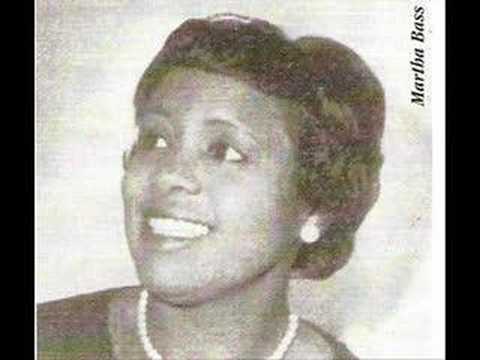
Martha Bass - I'm So Grateful

Martha Bass today is not nearly as well known as her daughter, Fontella Bass, or her son, David Peaston.   This is partly due to the fact that she had curiously few opportunities to record.  Fortunately, we have this masterpiece, I'm So Grateful, that preserves her legacy as one of the great gospel divas of her time.  

Martha Bass was born in Saint Louis in 1921, and was trained as a gospel singer by the legendary Willie Mae Ford Smith (aka Mother Smith).  She became one of the Clara Ward Singers briefly, but hardly had the opportunity to record until Chess Records took her into the studio in the 1960s.  This LP was certainly the crowning achievement of her partnership with Chess. 

There are 11 tracks on the LP, but separate recordings were made for the mono and stereo versions.  So the CD release on Righteous Records ripped here contains both the stereo and mono versions.

 If you like good gospel music, I am sure that you will enjoy Martha Bass.  


Saturday, February 22, 2014

Little Walter - Walter's Blues

This recently released remastered version sounds better than anything that I've heard previously. The disc has 25 cream of the crop Chess tracks; the best you will get in a single disc.

"Marion "Little Walter" Jacobs is widely considered the greatest blues harmonica player ever. A Creole who could speak French, he was born in Marksville, Louisiana in 1930. He took up the harmonica as a child, at first playing polkas and waltzes, and by the time he was 12 he was on his own, working the sidewalks and bars of New Orleans with his instrument. He had also discovered the music of John Lee Williamson, and modeled his early blues style on that of Williamson’s.

When he was fourteen he drifted to Helena, Arkansas, and came under the influence of Rice Miller, who along with Walter Horton, gave him pointers on the harp. The following year, Little Walter’s evolution beyond traditional folk-blues began when he started to listen to the records of jump saxophonist Louis Jordan and learn his solos note for note on harmonica.

In 1947 he arrived in Chicago with Honeyboy Edwards, and became a part of the fabled Maxwell Street scene that at one time or another included almost every postwar Chicago blues luminary. He first recorded that year behind singer Othum Brown on the Ora Nelle label, and also began playing in a trio with Jimmy Rogers and Muddy Waters, whom he had met on Maxwell Street. It was the core of what was to be the world’s most celebrated blues band.

Little Walter began recording in 1950 with Muddy, first on the Parkway label, and then for Chess, the label he was to stay with for the rest of his short life. With Waters’s "Long Distance Call," Walter became the first to record amplified harmonica. Muddy’s records did well, but despite his musical success, Jacobs had serious problems. He was prone to heavy drinking, and got into fights. "He was hellacious when he drank," Lazy Lester Johnson once told me, "and he liked the bottle." The only one who could control him, it seemed, was Muddy.

On May 12, 1952, Little Walter recorded an instrumental under his own name that the Muddy Waters band had been using to close sets with. "Juke," with its fat, amplified tone and sax-like phrases, was released under Little Walter’s own name and became a huge hit. Following its success, he left Waters’ band to form his own group, but continued to record with Muddy. From then on, either under his own name or Muddy’s, he recorded a string of sides that has been the envy of every blues harp player since. But all that changed when rock ‘n roll came along in the mid-1950s. Sales of blues records dropped and Little Walter was bitter about it.

In 1964 he toured Europe with the Rolling Stones, but substance abuse and his hot temper still plagued him. "Little Walter was dead ten years before he died," Muddy Waters told Patrick Day, gesturing to indicate drinking and then shooting dope. At gigs, as well as offstage, he would sometimes wave a pistol or two around, and had trouble keeping a band together. Photos taken towards the end of his life show a scarred, haggard man looking closer to 55 than 35.
On February 14th, 1968, Walter Jacobs died of injuries sustained in a Chicago street fight. He was only 37 years old." Glenn Weiser

Tuesday, August 6, 2013

The Definitive Buddy Guy

"George "Buddy" Guy (born July 30, 1936, Lettsworth, Louisiana) is an American blues guitarist and singer. Critically acclaimed, he is a pioneer of the Chicago blues sound and has served as an influence to some of the most notable musicians of his generation, including Eric Clapton, Jimmy Page, Jimi Hendrix and Stevie Ray Vaughan.
In the 1960's Guy was a member of Muddy Waters' band and was a house guitarist at Chess Records. He can be heard on Howlin' Wolf's "Killing Floor"and Koko Taylor's "Wang Dang Doodle" as well as on his own Chess sides and the series of records he made with harmonica  player Junior Wells.
Ranked 30th in Rolling Stone magazine's list of the "100 Greatest Guitarists of All Time", Guy is known for his showmanship on stage: playing his guitar with drumsticks or strolling into the audience while playing solos. His song "Stone Crazy" was ranked 78th in Rolling Stone's list of the 100 Greatest Guitar Songs of All Time." (Wikipedia)

'Definitive' may be a bit over- the- top in it's claim, but generally this is a good single CD compilation of Buddy Guy's material between 1958 and 2001 even for a seasoned collector ( and 'Stone Crazy' is included here !) . It contains most of his best and better known 60's efforts and is a pleasing mix of new and old, studio and live. Full musician credits etc are shown in the scans provided.
 His later Silvertone recordings like 'Damn Right I Have The Blues' are excellent and are selling well - If there is a demand I shall post one/some...
In the Blues spectrum Buddy is at the extremity, his vocals and particularly his guitar are intense and wailing but always heartfelt and authentic. Once heard or seen - never forgotten- Enjoy   .


Monday, January 7, 2013

The Chess Story 1947 - 1975: Part 3 1965 - 1975 (Discs 11 - 13)

Well... this concludes The Chess Story.  I find the latter years to be the weakest in terms of quality.  Clearly compromises were made in pursuit of making money.  Combined with changes in ownership, we are left with really dated and unimportant music.  Still, there are some worthy tunes and overall it's a decent listen.  I guess the point is that, even the worst Chess offerings were better than alot of the music being released during that time.

I have gone through the previous posts and reloaded all of the links.  I hope this will benefit anybody who missed any.  There's a 14th disc featuring interviews with Phil and Marshall Chess, if there's interest I can post it as well... enjoy!!!


The Chess Story 1947 - 1975: Part 2 1957 - 1964 (Discs 8 - 10)

More from the heyday of Chess and the last installment of Part 2...  enjoy!!!


The Chess Story 1947 - 1975: Part 2 1957 - 1964 (Discs 6 & 7)

Hey Gang!!  Sorry about the large delay with this series.  I suppose I have lost some of you but I assure you, I will keep things movin on this one.

We have reached part 2 of the box, and discs 6 & 7 are really representative of the Chess heyday.  Now the label is firmly established and has found its way.  This means they are pumpin out the hits from their now famous roster.

As far as who's who, the list is much like the last couple of discs we heard.  These artists had much to say and the recordings flowed like wine.  I will give you guys some time to absorb these before unleashing the next batch... enjoy!!!


The Chess Story 1947 - 1975: Part 1 1947 - 1956 (Discs 3-5)

With all of the amazing music coming through Chitlins, it's hard to find the right time for a substantial post like this.  Translation:  The time is never right, so here it is!! 

I hope you all enjoyed the first two discs, the next three are even more intruiging as Leonard Chess expands his roster and aspirations.  Individual players from Muddy Waters' band begin succesful recording careers of their own.  New and creative artists like Bo Diddley and Chuck Berry arrive, and by disc 5, Chess is a varied and multi faceted label.

Something that you should know, Leonard Chess also began recording jazz around this time as well.  Gene Ammons, Sonny Stitt and even the great Benny Goodman were some of the first artists to record jazz on the Chess imprint.  I think it would have been a great idea to include the Chess label jazz sides, just as a measure of Leonard Chess' great taste.  Another area which is omitted, would be comedy LPs.  Pigmeat Markham and Moms Mabley were frequent releases during these early years at Chess.  Most of the sides were recorded live, but the comedy album held much esteem back in the day.

For my personal tastes, these 3 discs are the strongest in terms of all around impact.  Musically, creatively and what would eventually be, historically too.  The next few discs are also incredibly strong, so buckle up...  Enjoy!!!


The Chess Story 1947 - 1975: Part 1 1947 - 1956 (Disc 1 & 2)

Chess Records was an American record label based in Chicago, Illinois. It specialized in blues, R&B, soul, gospel music, early rock and roll, and occasional jazz releases.
Run by brothers Leonard and Phil Chess, the company produced and released many important singles and albums, which are now regarded as central to the rock music canon. Musician and critic Cub Koda described Chess Records as "America's greatest blues label."  The Chess Records catalogue is now owned by Universal Music Group and managed by Geffen Records.

Chess Records was based at several different locations on the south side of Chicago, Illinois, initially at two different locations on South Cottage Grove Ave.  The most famous location was 2120 S. Michigan Avenue from around 1956 to 1965, immortalized by British rock group The Rolling Stones in "2120 South Michigan Avenue", an instrumental recorded at that address during their first U.S. tour in 1964; the Stones would record at Chess Studios on two more occasions. The building is now home to Willie Dixon's Blues Heaven Foundation. In the mid-60s Chess re-located to a much larger building at 320 East 21st Street, the label's final Chicago home.

Leonard bought a stake in a record company called Aristocrat Records in 1947; in 1950, Leonard brought his brother, Phil into the operation and they became sole owners of the company, renaming it Chess Records. The first release on Chess was the 78 RPM single "My Foolish Heart" b/w "Bless You" by Gene Ammons, which was released as Chess 1425 in June 1950, and became the label's biggest hit of the year.

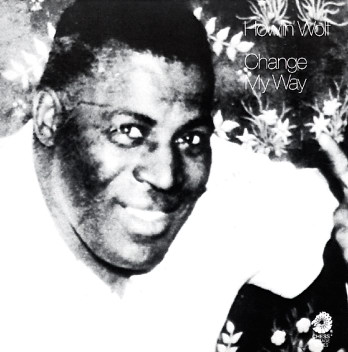
In 1951, the Chess brothers began an association with Sam Phillips' Memphis Recording Service. One of the most important recordings that Phillips gave to Chess was "Rocket 88" by Jackie Brenston and his Delta Cats which topped Billboard magazine's R&B Records chart and was inducted into the Grammy Hall of Fame in 1998 because of its influence as a rock and roll single. One of the most important artists that came out of Memphis was Howlin' Wolf, who stayed with the label until his death in 1976.

In 1952, the brothers also started Checker Records as an alternative label for radio play (radio stations would only play a limited number of records for any one imprint). In December 1955, they launched a jazz and pop label called Marterry (a name created from the first names of Leonard and Phil's sons Marshall and Terry). This was quickly renamed Argo Records, but the name was changed again in 1965 to Cadet Records to end confusion with an older British classical music label.

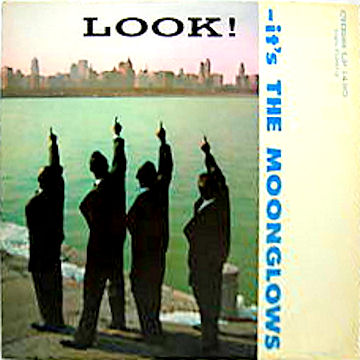
In 1953, Leonard Chess and Gene Goodman set up Arc Music BMI, a publishing company that would publish songs by many rhythm and blues artists. In the mid 1950s the Chess brothers received two doo-wop groups by Alan Freed, the Coronets and the Moonglows; the former group was not very popular but the latter achieved several crossover hits including "Sincerely", which was inducted into the Grammy Hall of Fame in 2002. Several of Chess's releases gave a writing credit to Alan Freed. During the 1950s, Leonard and Phil Chess handled most of the production. They brought in legendary producer, Ralph Bass in 1960 to handle the gospel output and some of the blues singers. Bassist and songwriter Willie Dixon was also heavily involved in organizing blues sessions for the label, and is now credited retroactively as a producer on some re-releases. During the 1960s, the company's A&R manager and chief producer for soul/R&B recordings was Roquel "Billy" Davis, who had previously worked with Motown founder Berry Gordy on songs for Jackie Wilson, Etta James, Marv Johnson and on early Motown releases.

Female fans at a Little Walter store appearance.
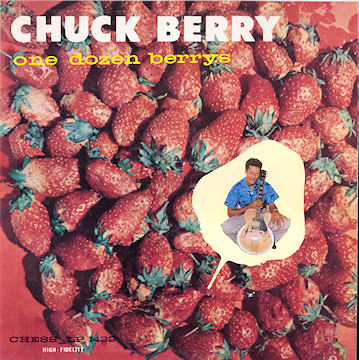
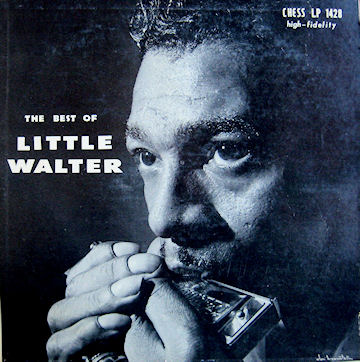
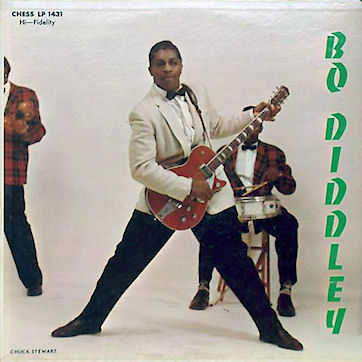
In 1958, Chess began producing their first LP records which included such albums as The Best of Muddy Waters, Best of Little Walter, and Bo Diddley. Chess Records was also known for its regular band of session musicians who played on most of the company's Chicago soul recordings, such as drummer Maurice White and bassist Louis Satterfield, both of whom would later shape the funk group Earth, Wind, & Fire; guitarists Pete Cosey, Gerald Sims and Phil Upchurch; pianist Leonard Caston, later a producer with Motown; and organist Sonny Thompson.

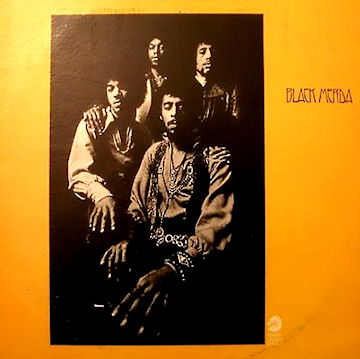
In 1969, Chess Records established a subsidiary label called Middle Earth Records in the U.K., which was distributed by Pye Records. The subsidiary specialized in Psychedelic rock and was a joint venture with the Middle Earth Club in London. The Middle Earth label released only 4 albums titles and about a dozen singles before it was closed in 1970. The company was briefly run by Marshall Chess, son of Leonard, in his position as vice-president between January and October 1969, and then as president, following its acquisition by GRT, before he went on to found Rolling Stones Records. In 1969, the Chess brothers sold the label to General Recorded Tape (GRT) for $6.5 million. In October 1969, Leonard Chess died and by 1972, the only part of Chess Records still operating in Chicago was the recording studio, Ter-Mar Studios.

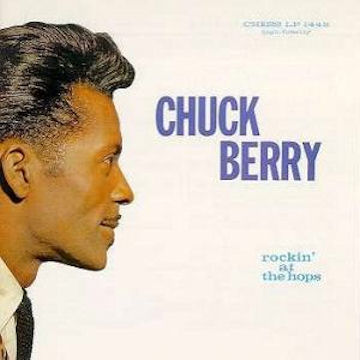
Although Chess had produced many R&B number ones and major pop hits over the years, it was in 1972 that the label finally reached the top of the Billboard Hot 100 with Chuck Berry's "My Ding-A-Ling", a live recording from a concert in Manchester, England. However, this became the company's 'swansong' release. GRT had moved the label to New York City, operating it as a division of Janus Records. Under GRT, Chess effectively vanished as an important force in the recording industry. In August 1975, GRT sold what remained of Chess Records to New Jersey-based All Platinum Records.

In the early 1980s, noticing that much of the Chess catalog was unavailable, Marshall Chess was able to convince Joe and Sylvia Robinson, who ran All Platinum, to re-issue the catalog themselves under his supervision (All Platinum had been licensing selected tracks out to other companies, which ultimately resulted in the disappearance of some original master tapes). The re-issued singles and LPs sold well, but by the mid-80s, All Platinum fell into financial difficulties and the Chess master recordings were acquired by MCA Records, which itself was later merged into Universal Music imprint, Geffen Records.

_______________________________________________

This post marks the beginning of a wonderful journey for all of us.  I'm really excited to share The Chess Story - a 3 part, 14 disc monster of a collection.  The incredible part of the "story" is also told in what it lacks, its jazz arm.  There are some jazz gems included but for the most part we are treated to everything else that Chess was involved in.

Unless you are willing to shell out some big bucks for a copy on the used market, this set has long been OOP.  For those who are fortunate enough to already own it, I encourage you to listen along with us and share your thoughts.

The set runs chronologically, in three parts.  We will kick it off from the formative years, the genesis of Chess.  Part 1 has some really wonderful music, much of which was performed by artists I have never heard of.  I will give you guys some time to listen and hopefully we can get a good chat goin. 

I worked quite hard at tagging this thing as each part has its own cover, title, etc.  I would suggest starting a folder for the entire set, and simply add the discs as you receive them.  Once they are all in your folder, the tagging will be complete and based on that.  Enjoy!!!


First the good news, which is really good: the sound on this 340-song set is about as good as one ever fantasized it could be, and that means it runs circles around any prior reissues; from the earliest Aristocrat sides by the Five Blazers and Jump Jackson & His Orchestra right up through Muddy Waters' "Going Down to Main Street," it doesn't get any better than this set. The clarity pays a lot of bonuses, beginning with the impression that it gives of various artists' instrumental prowess. In sharp contrast to the past efforts in this direction by MCA, however, the producers of this set have not emasculated the sound in the course of cleaning it up, as was the case with the Chuck Berry box, in particular. When the rock & roll era dawns at Chess as depicted on disc five, the sound is nice and dirty, just really sharp. The contents of the set are largely "limited" -- if that's the word for any 340-song collection -- to Chess' blues, R&B, rock & roll, and soul output, although Ramsey Lewis gets a nod, as does comedian Pigmeat Markham. What's more, the care lavished on the songs is virtually universal -- there was time spent getting all of it right. One wishes that the same could be said for one of the featured bonuses on this set, the CD-ROM that comprises the 15th disc (disc 14 is a pair of interviews with Phil Chess and Marshall Chess). First, there are the skimpy film clips, misspellings ("Arether Franklin") and incorrect dates. There also would have been enough room to put a complete Chess discography on the CD-ROM, rather than just the MCA reissues of Chess' material. The CDs themselves conveniently assembled in three fold-out volumes in a slipcase, but identifying individual tracks and artists means constantly referring back to the booklets glued into those volumes; additionally, it would've been nice to have had a sessionography on the songs, or at least the release dates, or even release years. This set is available only as a British import as of the spring of 2000; it is unbeatable for sound, and should be considered on that -- but only on that -- basis.  - Bruce Eder/AMG