Showing posts with label Muscle Shoals. Show all posts

Thursday, January 25, 2018

George Jackson - The Fame Recordings Vol. 1-3

A repost by request:

George Henry Jackson (March 12, 1945 – April 14, 2013) was an American rhythm & blues, rock and soul songwriter and singer. His prominence was as a prolific and skilled songwriter; he wrote or co-wrote many hit songs for other musicians, including "One Bad Apple", "Old Time Rock and Roll" and "The Only Way Is Up". As a southern soul singer he recorded a mere 15 singles between 1963 and 1985, with some success.

Jackson was born in Indianola, Mississippi, and moved with his family to Greenville at the age of five.  He started writing songs while in his teens, and in 1963 introduced himself to Ike Turner. Turner took him to Cosimo Matassa's studios in New Orleans to record "Nobody Wants to Cha Cha With Me" for his Prann label, but it was not successful. Jackson then traveled to Memphis to promote his songs, but was rejected by Stax before helping to form vocal group The Ovations with Louis Williams at Goldwax Records. Jackson wrote and sang on their 1965 hit "It's Wonderful To Be In Love", which reached no.61 on the Billboard Hot 100 and no.22 on the R&B chart. He also wrote for other artists at Goldwax, including Spencer Wiggins and James Carr, and recorded with Dan Greer as the duo George and Greer. After the Ovations split up in 1968, he recorded briefly for Hi Records, and also for Decca using the pseudonym Bart Jackson. As a singer, he had a versatile tenor that was influenced by Sam Cooke, and released many records over the years, for a host of different labels, but his recordings never made him a star.

At the suggestion of record producer Billy Sherrill, Jackson moved to Rick Hall's FAME Studios at Muscle Shoals in the late 1960s, Alabama, where he wrote for leading singers including Clarence Carter - whose "Too Weak To Fight" reached no.13 on the pop chart and no.3 on the R&B chart in 1968 - Wilson Pickett, and Candi Staton. Some of Jackson's songs for Staton, including her first hit in 1969, "I'd Rather Be An Old Man’s Sweetheart (Than A Young Man’s Fool)", are "widely regarded as examples of some of the finest southern soul ever recorded by a female artist, with lyrics that were full of meaning and innuendo, a hallmark of Jackson’s best work." Jackson also recorded for Fame Records, and had his first chart success as a singer in 1970 with "That's How Much You Mean To Me", which reached no. 48 on the R&B chart. The Osmonds visited the FAME studio in 1970, and heard and liked Jackson's song "One Bad Apple", which he had originally written with The Jackson 5 in mind. The Osmonds recorded the song, and it became the group's first hit, rising to the top of the Hot 100 in February 1971; it also reached no.6 on the R&B chart.

In 1972 he briefly rejoined the Hi label, and had his second and last solo recording success with "Aretha, Sing One For Me", an answer song to Aretha Franklin's "Don't Play That Song"; Jackson's song reached no.38 on the R&B chart. He then released several singles for MGM Records, while continuing to write for other artists. In the early 1970s he began working as a songwriter for the Muscle Shoals Sound Studio and, with Thomas Jones III, wrote "Old Time Rock and Roll" which Bob Seger recorded in 1978; Seger's version reached no.28 on the pop chart. While with Muscle Shoals Sound, he also wrote "Down Home Blues", recorded by Z. Z. Hill, which became a theme tune for Malaco Records in the 1980s; "Unlock Your Mind", recorded by the Staple Singers and a no.16 R&B hit in 1978; and "The Only Way Is Up", originally recorded by Otis Clay in 1980. A version of "The Only Way Is Up" by Yazz & The Plastic Population reached no.1 on the UK singles chart, and no.2 on the Billboard dance chart, in 1988.

In 1983, Jackson formed his own publishing company, Happy Hooker Music, before joining Malaco Records as a staff songwriter. There he wrote hits for Johnnie Taylor, Bobby Bland, Latimore, Denise LaSalle, and Z.Z. Hill. He recorded an album of his own songs, Heart To Heart Collect, in 1991 for Hep' Me Records. In 2011, a compilation CD of his FAME recordings, Don't Count Me Out, was released.

Jackson died on April 14, 2013, at his home in Ridgeland, Mississippi, from cancer at the age of 68. He left a son and two grandchildren.

Sunday, July 23, 2017

Geater Davis - Sadder Shades of Blue

Let's rerun Preslives original post and get another dose of Geater
-->
Geater Davis is one of those voices from the Chitlin’ Circuit  that is much loved by his peers and hard core Blues/Soul fans, but hardly known to the general music-loving public.  Fortunately, his recorded legacy has been issued on CD on a couple of fine compilations.  His first recordings can be found on a CD from Soundscape Records that I believe is still in print, “I’ll Play the Blues For You: The Legendary House of Orange Sessions.”   This older compilation on West Side, which is now out of print, compiles mostly recordings done in Fame Studios in Muscle Shoals for John Richbourg’s Sound Stage 7 label.    There is only a small overlap between these two compilations.  If you really like this one, be sure and buy the other one!   One song that is on both compilations is the first recording of a number that later became closely associated with Albert King – “I’ll Play the Blues For You. “

 
--> Geater Davis owes an obvious strong debt to Bobby Bland.   But his sound is more rural, with more Southern sanctified grit.   The voice is unique.  Once it grabs you, you’re hooked.    I can still remember the very first time that I heard Geater Davis on “Sadder Shade of Blue,” while listening to a "Lost Soul" compilation LP.   It blew my mind right from the get go.  I've been hunting down everything that I could find by Geater Davis ever since.   

  Geater Davis was born and raised in Texas.  He worked the Circuit for most of the 60s without a recording contract.   Allen Orange heard Davis in the late 60s and was so impressed that he started his own record label to record him: House of Orange.  In the early 70s, Davis moved to the Sound Stage Seven label where he recorded most of the tracks found here. Geater Davis died in 1984 at the young age of 38.

Tuesday, September 6, 2016

The Best of James and Bobby Purify

"The vocal duo of James Lee Purify (born May 12, 1944, Pensacola, Florida) and his cousin Robert Lee Dickey (September 2, 1939, Tallahassee, Florida – December 29, 2011, Tallahassee) formed in 1965. Dickey had previously worked as a guitarist with the Dothan Sextet. The duo were signed by Don Schroeder to Bell Records in 1966, with Dickey taking his cousin's surname as a stage name. They had immediate success with "I'm Your Puppet", written by Spooner Oldham and Dan Penn and produced by Penn at the FAME Studios in Muscle Shoals, Alabama. The record, released in September 1966, spent 14 weeks on the US chart and sold an estimated one million copies.

Although "I'm Your Puppet" was their biggest hit, they had several further successes on both the Hot 100 and R&B chart in the US in the late 1960s, including a revival of "Shake a Tail Feather", originally by The Five Du-Tones, and "Let Love Come Between Us". Oliver's cover of the twosome's 1968 hit "I Can Remember" reached the top 25 of the Billboard Easy Listening Chart in the mid summer of 1970. The duo continued to record and tour together until 1971, when Dickey retired from the music business for health reasons and returned to Tallahassee, where he worked as a city maintenance supervisor as well as singing and playing guitar with his church and as a member of the Bethlehem Male Singers.

James Purify then worked as a solo singer until 1974, when Penn introduced him to Ben Moore (James B. Moore, born 1941, Atlanta, Georgia). Moore had previously worked with Otis Redding, James Brown and as a member of Jimmy Tig and the Rounders, before forming half of the duo Ben and Spence, who recorded for Atlantic Records in the 1960s. Moore adopted the stage name "Bobby Purify", and the duo toured together until the 1980s. They re-recorded "I'm Your Puppet", which became a #12 hit in the UK in 1976, and an album, Purify Bros...

Moore began recording as a solo singer for Mercury Records in 1977, and (as "Bobby Purify") released an album, Purified in 1979. He also continued to tour as half of the duo with James Purify. He was nominated for a Grammy Award in 1983, in the category of Best Soul Gospel Performance - Traditional, for the song "He Believes In Me". In 1998, Moore went blind from severe glaucoma and completely dropped out of the music industry. With the encouragement of Ray Charles, however, he returned to performing and recording. Following a new Bobby Purify album, the Dan Penn-produced Better To Have It in 2005, he joined the gospel band Blind Boys of Alabama."

Tuesday, June 16, 2015

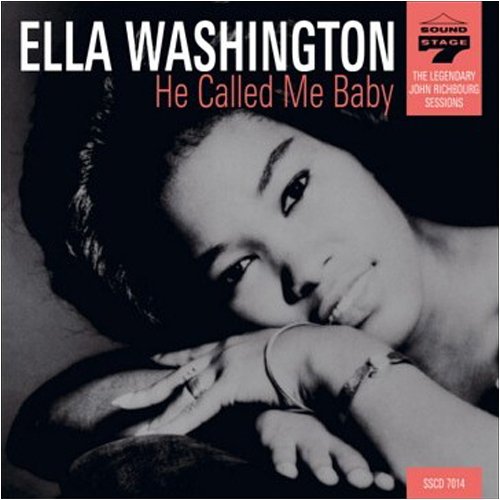
Ella Washington - He Called Me Baby

A repost by request: This originally came from PresLives and all thanks go to him.

The famous Nashville DJ John Richbourg (John R) had an exceptional ear for blues and R&B.  When he created his own Sound Stage 7 label, he brought a number of first rate singers to Muscle Shoals for the production of some classic Southern Soul.   With the exception of Joe Simon, none of these singers had much commercial success, which would appear to be due to the lack of promotion that Sound Stage 7 received outside of the local market.   An earlier post here was devoted to the unique Geater Davis.  We have here a CD collection from Soulscape Records that gathers together virtually all of the Sound Stage 7 recordings of the great soul diva, Ella Washington.  Ella was probably John R's single favorite artist at Sound Stage 7.  She sang at the latter's funeral in 1986.

Ella Washington was born and raised in Miami, Florida.  Her talents first came to the attention of local R&B artists Paul Kelly and Clarence Reid, who helped launch her recording career in the mid-1960s and secured her a few local hits.   She came to the attention of John R in 1967, who recorded her for Sound Stage 7 from 1967-1971.  "He Called Me Baby" brought her the greatest commercial success, making #38 on the National R&B chart and #77 on Billboard.   As you can hear from this collection, however, there are plenty of tracks here that could have been big hits if they had received the proper promotion.

In 1973, Ella Washington retired from secular music and became a gospel singer.   Since that time, she has released only one album, the quite good and obscure "If You Can Take It, You Can Make It."

Ella Washington has just about everything that you could want in a soul diva: a full and powerful voice, impeccable pitch, an ability to move from soft sexy croon to sanctified roar, and the taste to subordinate all of that to the
effective delivery of a song.   She also has a lisp that, in my opinion, actually adds a endearing personal quality to her singing.   Thank God that John R had the sense to take her to the Southern Soul heaven of Muscle Shoals to make this timeless music.  


Monday, April 20, 2015

James Govan - I'm In Need

  When Kent records recently gathered 16 tracks recorded by James Govan in Fame Studios in the 60s for a CD release, "Wanted: The Fame Recordings," it turned some R&B/Soul lovers heads around.  When King Cake posted that CD here a while back, it also turned some heads around on this blog.  Here is a great soul singer in the grand tradition who somehow never got the breaks or recognition that he deserved.

Well, I have a little secret for y'all.  Those Fame recordings, as good as they are, are not James Govan's best recordings.  Here they are.  In 1982, David Johnson brought James Govan to Broadway Sound Studios in Sheffield, Alabama, also bringing in top musicians from Muscle Shoals and carefully choosing a fine group of songs that completely showcase Govan's talents.  Unfortunately, classic Southern Soul was no longer a commercially viable commodity by 1982.  The DJs wouldn't even spin the 45s.  David Johnson gave it up quickly.  He never even released a Govan album.  This disc of Broadway Sound material, "I'm in Need," was only gathered together by Charly Records (as a bootleg) in the UK in the 1990s.  These tracks were again released on a great CD a while back, "The Broadway Sound Sessions," together with a good album by Sandra Wright.  This CD went out of print very fast, however.

What can I say about the music here?   Those who know and love the Fame Studios disc will still be astonished.   James Govan's vocal artistry improved by the 1980s, in fact substantially improved.   In my view, this is soul singing of the highest order, good enough to put Mr. Govan in the Pantheon along with the greats.   His vocal timbers deepened markedly between the 60s and 80s, and James Govan DELIVERS these songs in a deeper way than he did before.


Enjoy - and let's keep this place alive.


Monday, January 19, 2015

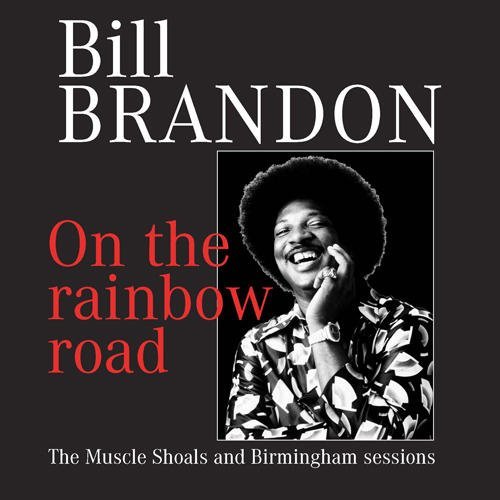
Bill Brandon - On the Rainbow Road

...and now back to the Chitlin' Circuit. 

Bill Brandon is one of those great voices from the shadows who recorded a number of fine 45s in the 1960s in Muscle Shoals and Birmingham.  Some of those singles pop up regularly on Southern Soul collections.  But Soulscape did us a big favor not long ago by bringing the majority of his 60s work together in one dynamite compilation: On the Rainbow Road.

Bill Brandon is himself from Alabama.  He began his recording career in Muscle Shoals for the Quinvy label, under the management of the legendary Quin Ivy.  He moved from there to under Sam Dee's umbrella, continuing to record in Alabama.   Sir Shambling provides a nice essay with some additional information on Bill Brandon:   http://www.sirshambling.com/artists_2012/B/bill_brandon/index.php

If you like good Southern Soul, it is hard to imagine not liking the music on this disc.  Bill Brandon is particularly effective at delivering slow ballads in the classic manner.   Add to that generally high quality songs and top production - and you have yourself a winner. 

Sunday, June 16, 2013

Dan Penn and Eddie Hinton

If you do any reading about the history of Fame studios and Muscle Shoals, you will find numerous references to Dan Penn's legendary demos that often left the stars who were given those demos to learn the songs, shaking their heads in wonder. More than once the comment was heard "Why the hell do you need someone else to sing this? This version is terrific!"; then someone would point out the skinny blond kid over in the corner with his guitar and say "Yeah, but it's him." The idea that maybe they might have a talent who could have been a superstar somehow never seemed to occur to anyone, including apparently Penn himself. 

Now nearly five decades later (the recordings were made between 1964 and 1966) we are finally able to experience what they were all talking about and I for one, find them even better than I could have imagined. No matter weather you may prefer the originally released versions, they were after all sung by some great singers, each of these is a remarkable little gem and a wonderful insight into the songwriter's original vision of the song. I couldn't stop listening to this one for a week after I got it.

 You would think that one unknown white soul genius in a tiny group of musicians would be plenty but when writer/guitarist Dan Penn left the Muscle Shoals Sound he was soon replaced by another jaw dropping talent named Eddie Hinton. These too are primarily unreleased song demos that will have you shaking your head in wonder. So much talent! No wonder that Duane Allman tried to poach him for the Allman Brothers Band (I assume instead of Dickie Betts?); his vocals and guitar would have made them even more epic!

Hinton, much more than Penn, did pursue individual success but bad luck, drugs and mental issues combined to keep him in obscurity. 

"Eddie Hinton (15 June 1944 – 28 July 1995) was an American songwriter and session musician best known for his work with soul music and R&B singers. He played lead guitar for Muscle Shoals Sound Rhythm Section from 1967 to 1971.

As a session guitarist, Hinton played on hit records recorded by Wilson Pickett, Arthur Conley, Aretha Franklin, Joe Tex, Solomon Burke, Percy Sledge, The Staple Singers, The Dells, Paul Kelly, Johnny Taylor, Elvis Presley, The Box Tops, R.B. Greaves, Boz Scaggs, Evie Sands, Looking Glass, Toots Hibbert and Otis Redding.

Hinton was a songwriter in his own right as well. His most well known song is "Breakfast in Bed" which has been recorded many times, most notably by Dusty Springfield and by UB40 with Chrissie Hynde. He also co-wrote "It's All Wrong But It's All Right" sung by Laura Lee." wiki


Sunday, October 28, 2012

Dan Penn - Do Right Man

There has really never been a doubt about who the first white guy to get a post here would be, it was only a matter of when and I just can't resist anymore because it just isn't fair to keep this in my pocket any longer. Do yourself a favor today, you need this album, period!

"If James Brown is Soul Brother Number One, you can make a very credible case for Dan Penn being number two. The Alabama native has had a hand in writing a fair number of classic soul songs, and here he commits his versions of them to tape for the first time, recording, of course, in Muscle Shoals, with their fabulous house band, and a horn section including former Memphis Horn member Wayne Jackson. It's a tall order Penn sets himself, offering himself up for comparison with greats like James Carr, Aretha Franklin, and James and Bobby Purify, who have sung his songs -- and that's just the start of the list. However, he comes out very well, beginning with a quiet take on"The Dark End of the Street," coming across like a note to a secret lover, rather than a cry of pain. "It Tears Me Up" conveys the anguish,"You Left the Water Running" bounces in its pain, and "Do Right Woman Do Right Man" is advice to a friend, instead of Aretha's extra freedom cry for equal rights."I'm Your Puppet" becomes a sigh of resignation. Given tracks like that, the other songs will inevitably suffer by comparison, and, to be fair, "Memphis Women and Chicken" is little more than a throwaway. But even the lesser-known material from a craftsman-like Penn is head and shoulders above most of the competition, and "Zero Willpower," a song that he took 20 years to complete, has soul classic written all over it, as good as the greatest hits. Penn can't just write 'em, he can perform 'em too, in a manner as soulful as the greats, as this record shows. The man deserves to be an American musical icon." by Chris Nickson, AMG

 I just had to include this review so that it isn't just me gushing over this magnificent little gem. I can't seem to get this one off my player, I'm just hooked on it. From the opening moments of "Dark Side" you will be transfixed by the power of this man's genius. I have read all the stories of how Dan's demo's were so good they challanged the artists who had the hits with them to even match the deep soul of Penn's versions, but until you hear something like this it isn't real to you. The vulnerability in Penn's  version of "It Tears Me Up" is unbelievably moving, it is unfathomable that they did not put it on the radio in 1994, how could it miss being a hit?

I enthusiastically second the final statement of the review, Penn belongs in a very special group of pure originals, Muscle Shoals should erect statues of Dan Penn and Spooner Oldham in the center of town for crying out loud. Oh Yeah, Spooner? Well of course he's on the record too!

 
 "Dan Penn (born Wallace Daniel Pennington, 16 November 1941) is an American singer, musician, songwriter, and record producer who co-wrote many soul hits of the 1960s including "Dark End Of The Street" and "Do Right Woman, Do Right Man" with Chips Moman as well as "Out Of Left Field" and "Cry Like A Baby" with Spooner Oldham. Penn also produced many hits including "The Letter" by The Box Tops. Though considered to be one of the great white soul singers of his generation, Penn has released relatively few records featuring his own vocals and musicianship preferring the relative anonymity of songwriting and producing.

Penn grew up in Vernon, Alabama, and spent much of his teens and early twenties in the Quad Cities/Muscle Shoals area. He was a regular at Rick Hall's FAME Studios as a performer, songwriter, and producer. It was during his time with FAME that Penn cut his first record, "Crazy Over You" in 1960, and wrote his first hit, "Is a Bluebird Blue?" which was recorded by Conway Twitty in the same year, and was later covered by James Brown. The success of the #6 pop hit, "I'm Your Puppet" by James & Bobby Purify convinced him that songwriting was a lucratively worthwhile career choice.


In early 1966, Penn moved to Memphis, began writing for Press Publishing Company, and worked with Chips Moman at his American Studios. Their intense and short-lived partnership produced some of the best known and most enduring songs of the genre. Their first collaboration, the enduring classic "Dark End of the Street", was first a hit for James Carr and has since been recorded by many others including Roy Hamilton, Aretha Franklin, Clarence Carter, Elvis Costello, Frank Black, Gram Parsons, Richard & Linda Thompson, Emmylou Harris, and Linda Ronstadt. It was also used in the hit movie "The Commitments".
A few months later, during the legendary recording sessions that saw Jerry Wexler introduce Aretha Franklin to FAME Studios and her first major success, the pair wrote "Do Right Woman, Do Right Man" in the studio for her, which went to #37 in Billboard in 1967. The song has since been recorded many times including by Barbara Mandrell, Cher, Etta James, Joan Baez, Marva Wright, Phoebe Snow and Willie Nelson. It has also been recorded with Japanese lyrics as "Onna No Sadame". In early 1967 Penn produced "The Letter" for The Box Tops.

He and long-time friend and collaborator Spooner Oldham also wrote a number of hits for the band, including "Cry Like A Baby", another song which has been covered many times, including by Cher, Kiki Dee, Kim Carnes and Lulu. Other songs written or co-written by Penn which have been recorded many times include "I'm Your Puppet" a #6 hit in 1966 for James and Bobby Purify, and also recorded by Sam & Dave, Dionne Warwick, Elton John, Irma Thomas, Marvin Gaye & Tammi Terrell, Peter & Gordan and Tierra, "Woman Left Lonely" recorded by Janis Joplin, Elkie Brooks, (Do Right Woman) Charlie Rich, Cat Power, Irma Thomas, Rita Coolidge, Patti Page & Clementine, and "Sweet Inspiration" a #5 hit for the Sweet Inspirations in 1968, and also recorded by The Supremes, Vonda Sheppard, Rita Coolidge, and Wilson Pickett, and "You Left The Water Running" a #42 hit for Otis Redding in 1966, and later recorded by the Flying Burrito Brothers, Huey Lewis, and Wilson Pickett.

Other notable songs written or co-written by Dan Penn are "I Hate You" recorded by Bobby Blue
Bland and Jerry Lee Lewis, "Handy" and "Everyday Livin' Days" recorded by Merrilee Rush, "I Got a Feelin For You" recorded by Kelly Willis, "I'm Not Done Lovin' You Yet" record by Neil Young's wife Pegi on her solo album, Like A Road Leading Home recorded by Albert King and Jerry Garcia, "Nobody's Fool" recorded by Alex Chilton, "Time I Took A Holiday" recorded by Nick Lowe, "Where You Gettin' It" recorded by Theryl DeClouet, "Out of Left Field" recorded by Percy Sledge and Hank Williams, Jr., and "Slippin' Around" recorded by Clarence Carter and the Detroit Cobras.

Penn continued writing and producing hits for numerous artists during the 1960s and finally released a record of his own, the 1972 single entitled "Nobody's Fool". He was coaxed into the studio again in 1993 to record the acclaimed "Do Right Man" which saw him reunited with many of his friends and colleagues from Memphis & Muscle Shoals. He also has recently written and produced for the Hacienda Brothers.

He now lives in Nashville, and continues to write with Oldham and other contemporaries such as Donnie Fritts, Gary Nicholson and Norbert Putnam. He and Carson Whitsett have had their collaborations recorded by Irma Thomas and Johnny Adams and often teamed with writers Jonnie Barmett and later, Hoy Lindsey. The Penn/Whitsett/Lindsey team are responsible for Solomon Burke's "Don't Give Up On Me" (also recorded by Joe Cocker), and Penn produced 2005's Better to Have It by Bobby Purify that featured twelve songs from the team. He and Oldham also tour together as their schedules permit."

I wonder who that bass player with him is?


Tuesday, August 28, 2012

The FAME Studios Story 1961 - 1973: Home Of The Muscle Schoals Sound

This 3 disc comp is nothing short of excellent.  The story of FAME is told through the music - from the pop side all the way to the gut bucket r&b side.

A wide range of artists worked with this legendary outfit, but one thing ties them all together... success!!

I'm sure you guys already have alot of these tracks but they made a huge effort to include some rarities;  undoubtedly for the collector types.

Enjoy!!!


Certain studios and labels occupy almost mythical stature in American musical history and FAME Studios, home of the Muscle Shoals sound, is among the elite. During the '60s and into the early '70s, the rotating crew at FAME Studios cranked out single after single, building a legacy that rivals such '60s stalwarts as Motown, Stax/Volt, and Chess, yet despite being the point of origin for such timeless 45s as Wilson Pickett's "Land of 1000 Dances," Arthur Alexander's "You Better Move On," Joe Tex's "Hold What You've Got," Etta James' "Tell Mama," Clarence Carter's "Patches," James & Bobby Purify's "I'm Your Puppet," and Aretha Franklin's "I Never Loved a Man (The Way I Love You)," the label and studio aren't as well known as their peers. Ace's peerless three-disc box The FAME Studios Story: 1961-1973 should go a long way in firming up the label and studio's reputation in the eyes of the mass public. Anchored on those big hits, the compilation tells the story of FAME in exhaustive yet exciting detail, digging up a wealth of rarities (ranging from an unedited acoustic version of "You Left the Water Running" by Otis Redding and a version of "Another Man's Woman, Another Woman's Man" whose singer is unknown to a bunch of singles that rarely pop up on reissues), but this is hardly something for crate-diggers. This is a big, bold set filled with surprises for even seasoned record collectors and much of that has to do with context. Expertly compiled by Alec Palao, Tony Rounce, and Dean Rudland, The FAME Studios Story doesn't shy away from the moments when the Muscle Shoals sound seeped into the mainstream: very early in the set, teen idol Tommy Roe pops up with "Everybody" and toward the end the Osmonds come in with their Jackson 5 knockoff "One Bad Apple" and the revelation is how the FAME musicians gave these teenybopper stars some real swing and funk. That turns out to be the key to the FAME sound -- while Stax/Volt always had grit on the soles of their shoes, FAME was a little lighter, able to ease into slicker crossover material, something that served them well whenever they cranked out some bubblegum or backed Bobbie Gentry or, especially, when they cut effervescent pop-soul/Northern soul singles by Spooner & the Spoons ("Wish You Didn't Have to Go") and David & the Giants ("Ten Miles High"). Which isn't to say FAME didn't get down and dirty (of course they did -- witness Wicked Wilson Pickett's "Hey Jude," complete with guitar from Duane Allman), but they were versatile, adapting to the needs of either the performer or the song. And that very versatility may be part of the reason why FAME isn't as immediately recognizable a name as Motown or Stax -- the Muscle Shoals crew could cop both of those sounds, after all -- but it's also the reason why this set is such a wildly entertaining listen, in addition to being a historically necessary document housed in a very handsome hardcover book.

- Stephen Thomas Erlewine/AMG