The links that patsoul generously added to the previous Eddie Floyd post have made me aware that the version of this that I have actually encompasses the last two Stax albums, Baby Lay Your Head Down and Soul Street.These are the last two chapters in Eddie's Stax output.Thursday, July 11, 2013
Eddie Floyd - Soul Street
The links that patsoul generously added to the previous Eddie Floyd post have made me aware that the version of this that I have actually encompasses the last two Stax albums, Baby Lay Your Head Down and Soul Street.These are the last two chapters in Eddie's Stax output.Tuesday, July 9, 2013
Blowing the Fuse 1950
Another rerun by request
Blowing the Fuse is a killer series of compilation CDs issued by Germany's premier archivist label, Bear Family. Subtitled "R&B Classics That Rocked the Jukebox," each volume is compiled by year. 1950 was a boom year for jukeboxes across the United States. This volume, like most of the others, contains 28 affirmed classics of the early postwar years though some of these titles have been obscured a bit by history. Assembled by Dave "Daddy Cool" Booth, the sequencing of these tracks has proved invaluable in this series. Some of the more relatively obscure titles here include Calvin Boze's "Safronia B," Goree Carter's "Come On Let's Boogie," Doc Sausage's' "Rag Mop," and Jewel King's "3 x 7 = 21." But there are plenty of well-known wonders too from Percy Mayfield, Ruth Brown, Roy Milton, Wynonie Harris, Lightnin' Hopkins, Eddie Mack, Professor Longhair, Joe Liggins, T-Bone Walker and over a dozen others. Sound quality is very fine throughout. Colin Escott's detailed liner notes -- a set for each cut -- are in his usual form, authoritative and engaging, and the photographs in this handsome digipack are just beautiful.
Freddie Waters - One Step Closer to the Blues
Nashville is usually associated with Country Music rather
than R&B. Yet quite a number
of fine R&B artists came out of Nashville. Among soul singers, we have Earl
Gaines, Roscoe Shelton, and Charles Walker (the subject of my next post). Freddie Waters may have
been the most distinctive of all the Nashville soul singers, someone who channeled Sam
Cooke through his own unique sound and approach that is recognizable from the first
few notes.
-->
Freddie Waters began his professional career in Nashville as
the lead singer in the Hytones, and was then signed as a solo act by Ref-O-Ree Records. His fine singles for that
label and live shows had enough success on the Chitlin’ Circuit to earn him a
recording session for Stax Records. Unfortunately, his output on Stax was limited to
only one 45: “Groovin’ on My Baby’s Love,” and his career fizzled after that.
Over the next 28 years, Freddie Waters had few other opportunities to record. He cut a few more singles for
the obscure October Records in Nashville, and then made a solid, if rather uneven, album for
TJ Records.
Fortunately, Fred James had enough sense to bring Freddie
Waters into the studio one more time in 2000 , fix him up with a dynamite band,
and produce this beautiful album for Black Magic Records. Two
months after recording One Step Closer to the Blues, Freddie Waters had left
us. For me, this stellar session reaches its absolute apex with the
cover of Percy Sledge’s classic “It Tears Me Up.” It tears ME up
every time I hear it, a true masterpiece and vivid demonstration of the
incredible under-appreciated talent of Freddie Waters.
Monday, July 8, 2013
Definitive Collection Of Piano Blues And Boogie
Another thread I'd like to start this month is a look at the great piano players of Blues and R&B. This compilation kind of sets an overview of prewar blues piano.
1. Pinetop Smith - Pine Top's Boogie Woogie
2. Cow Cow Davenport - Cow Cow Blues
3. Will Ezell - Heifer Dust
4. Montana Taylor - Detroit Rocks
5. Charlie Spand - Soon This Morning Blues
6. Roosevelt Sykes - 44 Blues
7. Romeo Nelson - Head Rag Hop
8. Speckled Red - Wilkins Street Stomp
9. Wesley Wallace - No.29
10. Whistlin' Alex Moore - Blue Bloomer Blues
11. Litle Brother Montgomery - Vicksburg Blues
12. Skip James - If You Haven't Any Hay
13. Turner Parrish - Fives
14. Leroy Carr - Blues Before Sunrise
15. Walter Roland - Every Morning Blues
16. Cripple Clarence Lofton - Strut That Thing
17. Meade Lux Lewis - Honky Tonk Train Blues
18. Albert Ammons - Boogie Woogie Blues
19. Champion Jack Dupree - Junker Blues
20. Pete Johnson - Death Day Boogie
21. Big Maceo - Worried Life Blues
22. Jimmy Yancey - Yancey Special
Boogie - Woogie
is a style of piano playing that developed around the turn of the 20th century, and had solid roots in New Orleans, Louisiana. This fast paced twelve-bar blues with a driving rhythm in the left hand spread from Southern black musicians up to the North. This style of music was played in "speakeasies" and in the "rent parties" of the Chicago black communities in the 1920’s and the early 30’s depression years.
The "eight beats to the bar" strumming rhythm style, adapted from blues guitar players, was well established in Chicago by 1920, but the name "boogie woogie" did not come into wide use until Clarence "Pine Top" Smith’s now famous recording.
In addition to Smith, other historic boogie -woogie players include Cripple Clarence Lofton, Speckled Red, Cow Cow Davenport, Jimmy Yancey (who inspired jazz pianist Vince Guaraldi), the younger Meade Lux Lewis, Albert Ammons, and Pete Johnson.
Boogie - Woogie was often referred to as "Barrelhouse Music." The lively style developed as a response from blues pianists to keep pace with the rowdy atmosphere and to be heard above the noise in the barrelhouses in which they performed.
Boogie - woogie became a national craze in the 1930’s and early 40’s but soon subsided. Often heard in big-band arrangements, the most successful version of The Original Boogie Woogie was Tommy Dorsey’s smash hit for Victor, recorded 1938 and reissued 1943. Later, with blues guitar players leading the way, the original boogie-woogie strumming style returned to the South. The style has remained an essential element in the repertoires of blues and country players up to the present day.
Sunday, July 7, 2013
Eddie Floyd - Rare Stamps
Here ya go frankie!
Rare Stamps was an odd release. It would appear to have been meant as something of a greatest hits album even though it is only his 3rd album of 8 on Stax. Five of the tracks here come from those first two albums but seven more singles culled from the same period make it essential, at least until we finally get that complete Eddie Floyd Stax set from someone like Ace. For now, to fill in your Stax sides, you will need this one too.
I do have Eddie's final Stax album Soul Street ready to go but there is a 4 album gap before that:
You've Got to Have Eddie - (1969) - Stax
California Girl - (1970) - Stax
Down to Earth - (1971) - Stax
Baby Lay Your Head Down - (1973) - Stax
Let's see if someone offers up any of these titles before I jump ahead to Soul Street.
Inez Andrews and The Andrewettes - The Need Of Prayer
This Sunday offering is dedicated to Preslives and features his personal favorite, the divine Inez Andrews!
I happened upon this gem in a Gospel bin, selling for only $5. It has been my experience that most used Gospel LP's and 45's are in such terrible shape, they simply aren't worth the time. People who first purchased these records tended to play them a lot and handled them with less care than would a collector. When I pulled this one from it's sleeve it was in decent, cleanable shape with only a little surface damage. The rip has about 20 seconds of scratch at the start of each side (which I have minimized as much as I dare) and thereafter is remarkably clean. Not only that, it has absolutely no overlap with the 20 tracks of Inez Andrews previously offered here!
As with all the Peacock albums that I have seen, this is a compilation of singles but to me the band sounds pretty consistently the same. As is usual with Gospel LP's, there are no musician credits; for that matter even the Andrewettes don't get named.
Enjoy your Sunday
I happened upon this gem in a Gospel bin, selling for only $5. It has been my experience that most used Gospel LP's and 45's are in such terrible shape, they simply aren't worth the time. People who first purchased these records tended to play them a lot and handled them with less care than would a collector. When I pulled this one from it's sleeve it was in decent, cleanable shape with only a little surface damage. The rip has about 20 seconds of scratch at the start of each side (which I have minimized as much as I dare) and thereafter is remarkably clean. Not only that, it has absolutely no overlap with the 20 tracks of Inez Andrews previously offered here!As with all the Peacock albums that I have seen, this is a compilation of singles but to me the band sounds pretty consistently the same. As is usual with Gospel LP's, there are no musician credits; for that matter even the Andrewettes don't get named.
Enjoy your Sunday
Saturday, July 6, 2013
Stompin' 1 - 21 Crazed Rhythm 'N' Blues Pounders!
This is the first of at least 33 volumes in this series but I've got to let y'all know up front that I only have the first 5. The series appears to be the sole output of a label called Stompin' that is a sub-label of a small New York reissue house called Norton Records. They sell from their site and are also available from Roots & Rhythm. A look at their catalog leaves me gape-jawed by the obscurity of most of it - where the hell do they find this shit?Speaking of obscure, just look down the list of these tracks! I believe that I've heard more of this kind of music than most folks and I only know a couple of these names! Often the music will be familiar but these are not the versions you know. My fear that these would turn out to be obscure for good reason was unfounded, this stuff is very entertaining!
Thursday, July 4, 2013
Bettye LaVette - Child of the Seventies
When last we heard from Mz LaVette she had recorded some credible singles, had a minor hit at 16, and had toured in James Brown's Review, the teenager was blossoming into a real talent in her early 20's and so...
"....In 1972, she signed once again with Atlantic/Atco. She was sent to Muscle Shoals Sound Studio in Alabama to record what was to be her first full length album. Titled Child of the Seventies, it was produced by Brad Shapiro and featured the Muscle Shoals Rhythm Section, now known as The Swampers, but Atco chose not to issue the album.
The mid 1970s saw a brief stint and two 45s with Epic, and in 1978 she released the disco smash on West End Records "Doin’ The Best That I Can". In 1982, she was signed by her hometown label, Motown, and sent to Nashville to record. The resulting LP (her first album actually issued), titled Tell Me A Lie, was produced by Steve Buckingham. The first single, “Right In The Middle (Of Falling In Love)” hit the R&B Top 40. She briefly gave up recording for a six–year run in the Broadway smash Bubbling Brown Sugar, appearing alongside Honi Coles and Cab Calloway.
After LaVette had played her own personal mono recordings of Child of the Seventies for Gilles Petard, a French soul music collector, he sought the master recordings at Atlantic, whose personnel had previously thought they had been lost in a fire some years back. In 1999, he finally discovered the masters and then licensed the album from Atlantic and released it in 2000 as Souvenirs on his Art and Soul label...." wiki
I'm having the same reaction upon hearing this album and realizing that it was deliberately shelved, that I did the first time I heard Paul Pena's New Train (another album inexplicably suppressed in the same year); "What the hell were they thinking?". This album has variety in genre's, great musicians and arrangements, cool songs and strikingly original vocals. Individual songs had appeal across a variety of radio markets, how did they miss it?
You have my old pal wouter to thank for this one, he kindly sent the lossless links (rapidshare) and I have added mp3 links (embedupload).
Wednesday, July 3, 2013
Joe Simon - Better Than Ever & Simon Sings
I've been kind of waiting to start Joe Simon with more of his Vee Jay and Sound Stage Seven stuff but neither Cliff nor I have them. Instead we will start the last Sound Stage Seven album from 1969 and the Monument album of the same year. There are 3 other SS7 albums and a Buddha release of the Vee Jay material....anyone?
"Simon was born September 2, 1943 in Simmesport, Louisiana. Similar to many other African-American artists from the era, Simon began singing in his father's Baptist church. He pursued his vocal abilities full-time once the family moved to Richmond (near Oakland, California) in the late 1950s. There Simon joined the Golden West Gospel Singers and became influenced by Sam Cooke and Arthur Prysock. With this, the group decided to turn secular and recorded "Little Island Girl" as the Golden Tones in 1959.
Hush Records label owners Gary and Carla Thompson urged Simon to record on his own, and in 1964 Simon scored considerable success on the Vee-Jay label with "My Adorable One". Simon scored again in 1965 on the Chicago based label with "Let's Do It Over", which landed a #13 spot on the US Billboard R&B chart. However, the Vee-Jay label folded soon after the latter song's release and Simon found himself traveling across the country singing.
Simon caught the eye of Nashville, Tennessee, R&B disc jockey John Richbourg during this time, and Richbourg not only became Simon's manager/record producer but also brought the singer to Monument Records' subsidiary label Sound Stage 7 in 1966. That year Simon released "Teenager's Prayer", which peaked at #11 on Billboard's R&B chart. Within the next two years, Simon released a string of hits: "(You Keep Me) Hanging On", "The Chokin' Kind" (Billboard Hot 100 #13), "Farther On Down The Road", and "Yours Love". "The Chokin' Kind" was written by Harlan Howard, spent 12 weeks in the charts, and had sold one million copies by 16 June 1969. In addition, Simon was given a Grammy Award in 1970 for Best Male R&B Vocal Performance.
Under the encouragement of Richbourg, Simon moved to the Polydor distributed Spring Records label in 1970, which paired Simon with Kenny Gamble and Leon Huff. The team scored a #3 R&B hit in 1971 with "Drowning In The Sea of Love" and a #1 R&B hit in the summer of 1972 with "Power Of Love". Both songs reached #11 on the Hot 100. "Drowning In The Sea of Love" sold over 1.5 million copies and the R.I.A.A. on 6 January 1972 gave a gold disc. "Power of Love", written by Gamble, Huff and Simon was Simon's third million seller, and the R.I.A.A. awarded gold disc status on 29 August 1972.
Simon continued to release R&B hits with "Pool Of Bad Luck", "Trouble In My Home", "Step By Step", "I Need You, You Need Me", "Music In My Bones", "Carry Me", and 1975's "Get Down, Get Down (Get On The Floor)", which gave Simon his third #1 R&B hit, and also a #8 Hot 100 hit. Simon's success escalated with his writing/producing the theme tune for the film, Cleopatra Jones in 1973.
In the late 1970s/early 1980s, Simon decided to remove his tenor/bass-baritone voice from the secular music world and devote it and his life to Christianity. Simon began evangelist preaching in Flossmoor, Illinois. In 1983, he produced the album Lay My Burden Down for former Davis Sisters second lead Jackie Verdell. Simon released a gospel album titled This Story Must Be Told in the late 1990s.
"Simon was born September 2, 1943 in Simmesport, Louisiana. Similar to many other African-American artists from the era, Simon began singing in his father's Baptist church. He pursued his vocal abilities full-time once the family moved to Richmond (near Oakland, California) in the late 1950s. There Simon joined the Golden West Gospel Singers and became influenced by Sam Cooke and Arthur Prysock. With this, the group decided to turn secular and recorded "Little Island Girl" as the Golden Tones in 1959.
Hush Records label owners Gary and Carla Thompson urged Simon to record on his own, and in 1964 Simon scored considerable success on the Vee-Jay label with "My Adorable One". Simon scored again in 1965 on the Chicago based label with "Let's Do It Over", which landed a #13 spot on the US Billboard R&B chart. However, the Vee-Jay label folded soon after the latter song's release and Simon found himself traveling across the country singing.
Simon caught the eye of Nashville, Tennessee, R&B disc jockey John Richbourg during this time, and Richbourg not only became Simon's manager/record producer but also brought the singer to Monument Records' subsidiary label Sound Stage 7 in 1966. That year Simon released "Teenager's Prayer", which peaked at #11 on Billboard's R&B chart. Within the next two years, Simon released a string of hits: "(You Keep Me) Hanging On", "The Chokin' Kind" (Billboard Hot 100 #13), "Farther On Down The Road", and "Yours Love". "The Chokin' Kind" was written by Harlan Howard, spent 12 weeks in the charts, and had sold one million copies by 16 June 1969. In addition, Simon was given a Grammy Award in 1970 for Best Male R&B Vocal Performance.
Under the encouragement of Richbourg, Simon moved to the Polydor distributed Spring Records label in 1970, which paired Simon with Kenny Gamble and Leon Huff. The team scored a #3 R&B hit in 1971 with "Drowning In The Sea of Love" and a #1 R&B hit in the summer of 1972 with "Power Of Love". Both songs reached #11 on the Hot 100. "Drowning In The Sea of Love" sold over 1.5 million copies and the R.I.A.A. on 6 January 1972 gave a gold disc. "Power of Love", written by Gamble, Huff and Simon was Simon's third million seller, and the R.I.A.A. awarded gold disc status on 29 August 1972.Simon continued to release R&B hits with "Pool Of Bad Luck", "Trouble In My Home", "Step By Step", "I Need You, You Need Me", "Music In My Bones", "Carry Me", and 1975's "Get Down, Get Down (Get On The Floor)", which gave Simon his third #1 R&B hit, and also a #8 Hot 100 hit. Simon's success escalated with his writing/producing the theme tune for the film, Cleopatra Jones in 1973.
In the late 1970s/early 1980s, Simon decided to remove his tenor/bass-baritone voice from the secular music world and devote it and his life to Christianity. Simon began evangelist preaching in Flossmoor, Illinois. In 1983, he produced the album Lay My Burden Down for former Davis Sisters second lead Jackie Verdell. Simon released a gospel album titled This Story Must Be Told in the late 1990s.
Tuesday, July 2, 2013
Remembering Eddie Bo (expanded)
This is numba three of my July re-run requests. The request was from my home-boy pmac and he will be happy to know that the request resulted in my reworking my Edwin Bocage files and expanding this post to 56 tracks of music from this unique and pioneering funk master. There are now two collections of Eddie'
s music here. The first set were all released in Eddie's name but you will see that on the second set the songs aren't always in his name; he recorded under numerous
alias' and also produced and played with many other artists. His signature
sound, however, is always in clear evidence on all of these tracks. Neither of these sets completely corresponds to these covers, there is much more here than that and many tracks have been replaced with better copies than those used on the released discs!
original post: On
March 18th New Orleans lost another of our treasures as R & B
pioneer, Funk originator and New Orleans piano giant Mr. Eddie Bo passed
away. Eddie was a sweet man whom I had the good fortune to get to know
when his girl friend and then infant daughter used to be my neighbors.
Eddie was always good-natured and friendly and would stop to chat when I
was on the porch. I last saw him on the Fairgrounds for Jazz Fest and
he made a point of stopping to say hello and impressing the hell out of
my friends; always a gentleman was Eddie. The following is quoted with permission from the very hip site 'Funky 16 Corners'.

"Eddie Bo (Edwin Bocage to his mama) is one of the most important – and least known – of the great funksters of the 60’s and 70’s. His recording career, stretching from the mid-50’s on started out in New Orleans R&B like ‘Twinkle Toes’ and ‘Check Mr. Popeye’ and moved on, in the mid-60’s to some of the grooviest soul and funk made in New Orleans, or anywhere else for that matter. While he made plenty of his own records – among them the mighty and legendary ‘Hook & Sling Pts 1&2" which was a minor national hit in 1969 – he was also a major producer, arranger and collaborator on scores of other records. His importance to the New Orleans scene can not be overestimated. The fact that he wasn’t better known nationally is a crime, and probably due in large part to the fact that most of his records were made for small independent labels like Scram, Seven B, and Bo Sound. Some of his best stuff did see national distribution but with the exception of ‘Hook & Sling" and "Check Your Bucket" not many got anywhere near the charts outside of the Big Easy. To put it in perspective, where James Brown is the Charlie Parker of funk, , Eddie Bo is the music’s Thelonious Monk, working with a strange, sometimes unfamiliar palette of sounds and rhythms, which reveal their beauty and complexity a little more with every listen. Much of this palette is common to New Orleans funk and soul: the drums of the Wild Indian tribes and the "second line", the soulful piano of players like Professor Longhair, James Booker, Huey Piano Smith, Fats Domino and Bo himself, and the spice of the wild and unique mix of cultures that has been in New Orleans for hundreds of years. It doesn’t hurt that Bo had drummers like James Black and Smokey Johnson creating the beats on his records." (from Funky 16 Corners with permission, thank you Laurence)
Jimmy Lewis - Totally Involved 1974
Now here is another guy whom we have to cover even though he is far more important as a writer than as a performer. Despite his limitations as a singer, there is something appealing about this stripped down and laid back set of soul. Jimmy Lewis' songs are the selling point, they are like no others.
"Jimmy Lewis was born in 1939 in Nashville, Tennessee. He recorded a dozen singles in the 1960's, including a duet with Ray Charles, but he soon found that his compositional skills were much more in demand. Based in Los Angeles, he continued composing for Ray Charles and other artists. In the 80's he wrote many of Z.Z. Hill's best songs for Mississippi's Malaco Records. He reunited with Ray Charles again in the 90's.
It was also in the 90's that Lewis began his stint as primary writer, arranger and producer for Peggy Scott-Adams. His easy-going style meshed perfectly with Scott-Adams' hard-hitting style, and the collaboration resulted in a string of Southern Soul hits that as much as any other song-producing team defined the sound of Southern Soul from the mid-nineties into the new millennium.
As a musical entrepreneur, Lewis has been a human dynamo. Besides writing, arranging and producing Scott-Adams and other artists for his Miss Butch label, Lewis has cranked out solo Jimmy Lewis CD's regularly through the 90's and 00's.
Despite limited "pipes," Lewis has won over chitlin' circuit deejays and fans by composing colorful, culturally "incorrect" portraits of real life, and novelty songs enriched with modern-day folklore. Today he's regarded as perhaps the foremost storyteller in contemporary Southern Soul rhythm and blues. Towards the end of 2004, Southern Soul deejays began using the phrase "the late great Jimmy Lewis." Jimmy Lewis entered "Soul Heaven" on September 10, 2004. May he rest (and play) in peace." Daddy B. Nice
"Jimmy Lewis was born in 1939 in Nashville, Tennessee. He recorded a dozen singles in the 1960's, including a duet with Ray Charles, but he soon found that his compositional skills were much more in demand. Based in Los Angeles, he continued composing for Ray Charles and other artists. In the 80's he wrote many of Z.Z. Hill's best songs for Mississippi's Malaco Records. He reunited with Ray Charles again in the 90's.
As a musical entrepreneur, Lewis has been a human dynamo. Besides writing, arranging and producing Scott-Adams and other artists for his Miss Butch label, Lewis has cranked out solo Jimmy Lewis CD's regularly through the 90's and 00's.Despite limited "pipes," Lewis has won over chitlin' circuit deejays and fans by composing colorful, culturally "incorrect" portraits of real life, and novelty songs enriched with modern-day folklore. Today he's regarded as perhaps the foremost storyteller in contemporary Southern Soul rhythm and blues. Towards the end of 2004, Southern Soul deejays began using the phrase "the late great Jimmy Lewis." Jimmy Lewis entered "Soul Heaven" on September 10, 2004. May he rest (and play) in peace." Daddy B. Nice
Monday, July 1, 2013
Marva Wright - Blues Queen of New Orleans
NUMBA 2 on the July Repost Parade --
I had to giggle while putting together this post as I recalled the comments about the 'vulnerable cry" in the voice of our last two ladies featured here...I doubt anyone ever made such an observation about Miz Marva! Marva seemed to appear out of nowhere in the late 80's, unknown to those outside of the Gospel community and even there she mostly sang in her own church.

Apparently it was family financial pressures that caused her to take some gigs as a backup singer but in seemingly no time at all she was a fully formed, room-rockin, wallpaper peeling Blues Queen whom I recall Irma Thomas once slyly introducing as 'a friend of mine who can sing a little bit'.
We lost big sweet Marva far too soon; a photo on my office wall of Bo Dollis' 2009 Jazz Fest performance has a smiling and vibrant looking Marva standing behind a very frail looking Bo. Sadly only months later it is Marva who left us. That picture on my wall and the one below with Walter are how I will always remember her.
"Born in New Orleans, Louisiana, Wright's first public singing efforts were heard in church, with her mother the late Mattie Gilbert, a piano player and gospel singer as her accompanist. Top honors in a school-sponsored singing competition followed. Mahalia Jackson, the esteemed gospel singer, was an early friend of the family.
Wright did not turn professional until 1987, when she was almost forty years old. Even then, she only began singing as a way to support her family with a second job. Early in 1989 during a live set at Tipitina's in New Orleans, Wright made her first recording, Mama, He Treats Your Daughter Mean. She made her debut on national television in 1991, when her hometown was the setting for a
special that revolved around the Super Bowl where she met CBS news anchorman Ed Bradley, in which at that time he thought she only sang Gospel, it wasn't until the same year that he rediscovered her at the New Orleans Jazz and Heritage Festival, and from that day on had been introducing her every year. Heartbreakin' Woman, Wright's first full-length release, appeared later that year. Wright's 1993 album Born With The Blues was originally released in France, then three years later the major-label imprint Virgin picked it up for the rest of the world. Her 2007 effort, After The Levees Broke, addressed the devastation of Hurricane Katrina - which destroyed her house and all her belongings - by re-purposing songs like Willie Nelson's "Crazy," Sam Cooke's "A Change Is Gonna Come," and Bruce Hornsby's "The Way It Is.". In August 2008, she performed with the Louisiana Wetlands All Stars at both the Democratic National Convention in Denver, Colorado as well as the Republican National Convention in Minnesota.
Marva is well known all over Europe where she had many of fans and frequent visits overseas, doing festivals in places like France, Italy, Germany, Australia to name a few.
She also sang backup for such artists as Allen Toussaint, Glen Campbell, and Joe Cocker, and the long list of others Wright performed with includes Cyril Neville, Harry Connick, Jr., Bobby McFerrin, Aaron Neville, Fats Domino, Lou Rawls, and Marcia Ball.
In May and June 2009, Wright suffered a pair of strokes from which she never fully recovered, and on March 23, 2010, she died a few days after her 62nd birthday at her eldest daughter's home in New Orleans."
I miss you Mizz Marva, I'll light a candle for you this morning, but I'm sure that Heavenly Choir is loving your joyful shout.
I had to giggle while putting together this post as I recalled the comments about the 'vulnerable cry" in the voice of our last two ladies featured here...I doubt anyone ever made such an observation about Miz Marva! Marva seemed to appear out of nowhere in the late 80's, unknown to those outside of the Gospel community and even there she mostly sang in her own church.

Apparently it was family financial pressures that caused her to take some gigs as a backup singer but in seemingly no time at all she was a fully formed, room-rockin, wallpaper peeling Blues Queen whom I recall Irma Thomas once slyly introducing as 'a friend of mine who can sing a little bit'.
We lost big sweet Marva far too soon; a photo on my office wall of Bo Dollis' 2009 Jazz Fest performance has a smiling and vibrant looking Marva standing behind a very frail looking Bo. Sadly only months later it is Marva who left us. That picture on my wall and the one below with Walter are how I will always remember her."Born in New Orleans, Louisiana, Wright's first public singing efforts were heard in church, with her mother the late Mattie Gilbert, a piano player and gospel singer as her accompanist. Top honors in a school-sponsored singing competition followed. Mahalia Jackson, the esteemed gospel singer, was an early friend of the family.
Wright did not turn professional until 1987, when she was almost forty years old. Even then, she only began singing as a way to support her family with a second job. Early in 1989 during a live set at Tipitina's in New Orleans, Wright made her first recording, Mama, He Treats Your Daughter Mean. She made her debut on national television in 1991, when her hometown was the setting for a
special that revolved around the Super Bowl where she met CBS news anchorman Ed Bradley, in which at that time he thought she only sang Gospel, it wasn't until the same year that he rediscovered her at the New Orleans Jazz and Heritage Festival, and from that day on had been introducing her every year. Heartbreakin' Woman, Wright's first full-length release, appeared later that year. Wright's 1993 album Born With The Blues was originally released in France, then three years later the major-label imprint Virgin picked it up for the rest of the world. Her 2007 effort, After The Levees Broke, addressed the devastation of Hurricane Katrina - which destroyed her house and all her belongings - by re-purposing songs like Willie Nelson's "Crazy," Sam Cooke's "A Change Is Gonna Come," and Bruce Hornsby's "The Way It Is.". In August 2008, she performed with the Louisiana Wetlands All Stars at both the Democratic National Convention in Denver, Colorado as well as the Republican National Convention in Minnesota.
Marva is well known all over Europe where she had many of fans and frequent visits overseas, doing festivals in places like France, Italy, Germany, Australia to name a few.
She also sang backup for such artists as Allen Toussaint, Glen Campbell, and Joe Cocker, and the long list of others Wright performed with includes Cyril Neville, Harry Connick, Jr., Bobby McFerrin, Aaron Neville, Fats Domino, Lou Rawls, and Marcia Ball.
In May and June 2009, Wright suffered a pair of strokes from which she never fully recovered, and on March 23, 2010, she died a few days after her 62nd birthday at her eldest daughter's home in New Orleans."
I miss you Mizz Marva, I'll light a candle for you this morning, but I'm sure that Heavenly Choir is loving your joyful shout.
Marva Wright - Marvalous
Numba' One on the July re-post request line!
Another visit down to my home with our beloved and missed Mz Marva. there are some repeated tunes here but they are not the same versions. Not every Mardi Gras Records release is of the highest audio quality, but this one sounds just fine!
01. Members Only (4:20)
02. I Had a Talk With My Man (4:17)
03. Shake a Hand (3:52)
04. Driving Wheel (3:54)
05. Further on Up the Road (3:28)
06. Mr. Big Stuff (3:58)
07. Built for Comfort (3:42)
08. Wang Dang Doodle (5:13)
09. You Can Have My Husband (3:06)
10. Down Home Blues (4:03)
11. Mama, He Treats Your Daughter Mean (3:02)
12. You Send Me (3:54)
13. It's Raining (4:02)
Personnel:
------
Marva Wright (Vocals)
Thomas Bingham (Guitar)
Lester Snell (Piano, Organ)
The Staff (Bass, Drums)
Lannie McMillan (Tenor Saxophone)
Mashaa, William & Betram Brown (Background Vocals)
If you can listen to the opening cut "Members Only Tonight" and be unmoved, then frankly son, I am worried about you. This one is a more emotionally charged album than my previous Marva post. Seeing her deliver these songs in a small venue was a powerful experience, not soon forgotten, but these versions have the backup singers and full band to showcase her properly.
One thing for sure, revisiting these two albums has made it clear to me that I need ALL the rest.
JULY - RePost Request Month
This may well lead to a ummm dense month because I do have a few other things in mind too, but I'd like to encourage folks to explore the back pages and if you missed something that you'd like to see a rerun on then leave a request ON THE ORIGINAL POST. Please notice those caps.
The first entries on this list are the recent requests for my first 2 Marva Wright posts so you will see those in a sec ---- maybe this process will bring a few more voices to the party -=- also some classic soul still sittin' in the cue and a look at some of the piano giants of blues....sum-sum-summertime!
Sunday, June 30, 2013
The Violiaires - Groovin' With Jesus
"Groovin' with Jesus is soul music in every possible sense of the term -- few other records achieve so flawless a balance between the spiritual and the secular, offering salvation in both the Holy Ghost and the unholy groove. The Violinaires' postmodern gospel-funk fits comfortably alongside crossover acts like Aretha Franklin, channeling the power of the church to tackle the sociopolitical conflicts of the post-civil rights era -- from the Sly & the Family Stone-inspired title cut to covers of Hair's "Let the Sunshine In" and George Harrison's "My Sweet Lord," Groovin' with Jesus never allows its higher purpose to undercut the low-down soulfulness of the music, delivering filthy funk in the classic James Brown tradition." AMG
Saturday, June 29, 2013
Shakey Jake Harris - Mouth Harp Blues
"Jake Harris knew how to shake a pair of dice in order to roll a lucrative winner. He also realized early on that his nephew, guitarist Magic Sam, was a winner as a bluesman. Harris may not have been a technical wizard on his chosen instrument, but his vocals and harp style were proficient enough to result in a reasonably successful career (both with Sam and without).
Born James Harris, the Arkansas native moved to Chicago at age seven. Admiring the style of Sonny Boy Williamson, Harris gradually learned the rudiments of the harp but didn't try his hand at entertaining professionally until 1955. Harris made his bow on vinyl in 1958 for the newly formed Artistic subsidiary of Eli Toscano's West Side-based Cobra Records. His only Artistic 45, "Call Me If You Need Me"/"Roll Your Moneymaker," was produced by Willie Dixon and featured Sam and Syl Johnson on guitars.
The uncompromising Chicago mainstream sound of that 45 contrasted starkly with Jake Harris' next studio project. Prestige's Bluesville subsidiary paired him with a pair of jazzmen -- guitarist Bill Jennings and organist Jack McDuff -- in 1960 for a full album, Good Times (the unlikely hybrid of styles working better than one might expect). The harpist encored later that year with Mouth Harp Blues, this time with a quartet including Chicagoan Jimmie Lee Robinson on guitar and a New York rhythm section (both of his Bluesville LPs were waxed in New Jersey).
Jake Harris and Magic Sam remained running partners for much of the '60s. They shared bandstands at fabled West Side haunts such as Sylvio's, where he was captured on tape in 1966 singing "Sawed Off Shotgun" and "Dirty Work Goin' On" (later available on a Black Top disc by Sam) -- and Big Bill Hill's Copacabana before Harris moved to Los Angeles in the late '60s. He recorded for World Pacific and briefly owned his own nightclub and record label before returning to Arkansas, where he died in 1990. AMG
Born James Harris, the Arkansas native moved to Chicago at age seven. Admiring the style of Sonny Boy Williamson, Harris gradually learned the rudiments of the harp but didn't try his hand at entertaining professionally until 1955. Harris made his bow on vinyl in 1958 for the newly formed Artistic subsidiary of Eli Toscano's West Side-based Cobra Records. His only Artistic 45, "Call Me If You Need Me"/"Roll Your Moneymaker," was produced by Willie Dixon and featured Sam and Syl Johnson on guitars.
The uncompromising Chicago mainstream sound of that 45 contrasted starkly with Jake Harris' next studio project. Prestige's Bluesville subsidiary paired him with a pair of jazzmen -- guitarist Bill Jennings and organist Jack McDuff -- in 1960 for a full album, Good Times (the unlikely hybrid of styles working better than one might expect). The harpist encored later that year with Mouth Harp Blues, this time with a quartet including Chicagoan Jimmie Lee Robinson on guitar and a New York rhythm section (both of his Bluesville LPs were waxed in New Jersey).Jake Harris and Magic Sam remained running partners for much of the '60s. They shared bandstands at fabled West Side haunts such as Sylvio's, where he was captured on tape in 1966 singing "Sawed Off Shotgun" and "Dirty Work Goin' On" (later available on a Black Top disc by Sam) -- and Big Bill Hill's Copacabana before Harris moved to Los Angeles in the late '60s. He recorded for World Pacific and briefly owned his own nightclub and record label before returning to Arkansas, where he died in 1990. AMG
Thursday, June 27, 2013
Bill Coday - Love Gangsta
Hopefully most of y'all remember that Preslives first introduced us to Bill Coday last year.Born May 10, 1942, in Coldwater, Mississippi, Coday, the second of twelve children, was brought up in rural Arkansas with a strong religious Baptist background. Like many other great R&B singers, Bill was brought up singing gospel in church choirs and local quartets. Soon he crossed over to the Blues and began performing in juke joints around Blytheville, AK, with a band that included blues guitarist Son Seals Jr. He moved to Chicago in 1961 was spotted by Denise LaSalle while he was performing at the Black Orchid club. "Denise and her former husband, Bill Jones, owned Crajon Records. They signed me to their label, changing my name from "Chicago Willie" to "Bill Coday."
LaSalle teamed Coday with Memphis soul icon Willie Mitchell (co-architect of the Al Green/Hi Records sound). Coday's first singles for Crajon Productions were "Sixty Minute Teaser" and "I Get High on Your Love". "They did fairly well, but it was the next record that would launch my career in the R&B field". That next singlewas "Get Your Lies Straight," that put Coday on the map when he charted at #14 on the R&B charts in 1971. The follow up single was leased to Galaxy Records and "When You Find a Fool, Bump His Head," (a LaSalle composition) reached #48 R&B in summer 1971.
In 1973 Coday was signed to Epic Records, resulting in the minor hit "I'm Back To Collect" and a couple other singles including "A Man Ain't A Man" & "I Don't Want To Play The Game". Following this brief alliance Bill's recording days pretty much dried up for the next two decades. He still made a living on the road and "may have recorded in Muscle Shoals" in the late 70s (Bill doesn't remember). He was also briefly affiliated with Phil Walden, founder of Capricorn Records but they didn't see eye to eye so Bill parted ways and went back on the road. In 1984 it was LaSalle again that jump started Bill's career, hiring him as an opening act which eventually led to a recording contact with Ecko Records. So finally in 1995 Coday's second full length recording (if you count a 1978 collection of Crajon singles) was released and quickly became a hit on the "Chitlin' Circuit" with such colorful songs like "Her Love Is Good Enough To Put In Collard Greens" & "Dr. Thrillgood". The set also included and update of is signature hit, "Get Your Lies Straight". Five more CDs followed for Ecko until he decided to start his own record label, B & J Records, with partner James Wolfe. His first release was "Jump Start".
Tuesday, June 25, 2013
Bobby Bland - That Did It!, The Duke Recordings, vol 3
The final volume of Bobby's great Duke recordings. As I sit in the office today and listen I am wondering how in the hell he didn't have any breakthrough hits out of this stuff. Remember that this is largely 1965-66 when you are listening and tell me why none of these great songs ever manages to cross over. Bobby always does well on the R&B charts but he is absent from the Pop charts. At least one answer is that he is still mostly singing adult songs for adults and the path to crossover is the Teen market.
" That Did It is the third and final installment in MCA's series of double-disc compilations of Bobby Blue Bland's Duke recordings. This set collects everything he recorded between 1965 and 1972, including two unreleased tracks and several alternate takes. Although the music on That Did It isn't quite as strong as the songs on the first two installments of the series, it does collect a full 16 singles that have never appeared on an album before, as well as featuring several top-notch album tracks. For Bland fans, the collection remains a necessary purchase -- this is Bland's final set of essential recordings."
Bobby Bland - Turn On Your Lovelight (The Duke Recordings, vol 2)
The coolest thing about writing this blog is the listening to prepare! Each time one of these guys has totally knocked me out and I'm sitting there thinking 'well what the hell tops that' and I pull up the next item on my list (yeah, there is a list and no I ain't giving anyone a peek) and as soon as it starts to play my grin spreads and I say 'Okay, that will work'.
The amazing thing to me is that I am being very picky about what goes up here and yet there is no issue with material, I could easily maintain this pace for a year without scraping for quality stuff.
I think I mentioned in part one of 3B that I have personally referred to him as The Voice' for a long time. Given the recent posts here I was certain I would be rethinking that moniker as I wrote this one. Well I'm sitting here listening to disc one of this pair and I am not moved to recant a damn thing! This here is one Singin' Mo Fo! Listening to Bobby and Junior Parker (who is up next) I am at a complete loss to explain how neither guy ever crossed over to the white market. They always did well on the Circuit and in the Race Market but despite singing far superior songs that others had hits with, the Pop charts ignored them.
I frankly thought that as I sat here certain tracks would elicit special raves but this stuff is so uniformly excellent that it is hard to single tunes out (I should, however, mention that Stormy Monday is currently kicking my ass). Bobby's band leans heavily on Jazz on many tracks with some absolutely killer trumpet and saxophone solos on the ballads.
Bobby Bland - The Duke Recordings, Vol. 1 (2 discs)
They most often call him "Bobby Blue" but to me he is better called "The Voice". Here is a man who is so DAMN good that even after he develops his 'frog' or 'chicken bone', an at least partially involuntary kind of throat feedback that results in this awful 'BLAT', but we choose to ignore it because what he sings in between is too pretty to believe. In his prime he is simply an unmatched Blues Crooner whose liquid pipes quickly exceed even his former boss Junior Parker! (yeah, HE is coming soon too!)
"Robert Calvin Bland (born January 27, 1930) better known as Bobby "Blue" Bland, is an American singer of blues and soul. He is an original member of the Beale Streeters, and is sometimes referred to as the "Lion of the Blues". Along with such artists as Sam Cooke, Ray Charles, and Junior Parker, Bland developed a sound that mixed gospel with the blues and R&B.
Bobby "Blue" Bland was born in the small town of Rosemark, Tennessee. Later moving to Memphis with his mother, Bland started singing with local gospel groups there, including amongst others The Miniatures. Eager to expand his interests, he began frequenting the city's famous Beale Street where he became associated with an ad hoc circle of aspiring musicians named, not unnaturally, the Beale Streeters.
Bland's recordings from the early 1950s show him striving for individuality, but any progress was halted by a spell in the U.S. Army. When the singer returned to Memphis in 1954 he found several of his former associates, including Johnny Ace, enjoying considerable success, while Bland's recording label, Duke, had been sold to Houston entrepreneur Don Robey. In 1956 Bland began touring with Little Junior Parker. Initially he doubled as valet and driver, a role he reportedly fulfilled for B. B. King and Rosco Gordon. Simultaneously, Bland began asserting his characteristic vocal style. Melodic big-band blues singles, including "Farther Up the Road" (1957) and "Little Boy Blue" (1958) reached the US R&B Top 10, but Bobby's craft was most clearly heard on a series of early 1960s releases including "Cry Cry Cry", "I Pity The Fool" and the sparkling "Turn On Your Love Light", which became a much-covered standard. Despite credits to the contrary, many such classic works were written by Joe Scott, the artist's bandleader and arranger.Bland continued to enjoy a consistent run of R&B chart entries throughout the mid-'60s. Never truly breaking into the mainstream market, Bland's highest charting song on the pop chart, "Ain't Nothing You Can Do" peaked at #20 during the same week The Beatles held down the Top 5 spots. Bland's records mostly sold on the R&B market and he had 23 Top Ten hits on the Billboard R&B charts and in the 1996 Top R&B book by Joel Whitburn, Bland was rated the #13 all-time best selling artist.

Financial pressures forced the singer to cut his touring band and in 1968 the group broke up. He suffered from depression and became increasingly dependent on alcohol. He stopped drinking in 1971; his record company Duke was sold by owner Don Robey to the larger ABC Records group. This resulted in several successful and critically acclaimed contemporary blues/soul albums including His California Album and Dreamer, arranged by Michael Omartian and produced by ABC staff man Steve Barri. The albums, including the later "follow-up" in 1977 Reflections in Blue, were all recorded in Los Angeles and featured many of the city's top sessionmen at the time.
The first single released from His California Album, "This Time I'm Gone For Good" took Bland back into the pop Top 50 for the first time since 1964 and made the R&B top 10 in late 1973. The lead-off track from Dreamer, "Ain't No Love In the Heart of the City", was a strong R&B hit. Later it would surface again in 1978 by the hard rock band Whitesnake featuring singer David Coverdale. Much later it was sampled by Kanye West on Jay-Z's Hip Hop album The Blueprint (2001). The song is also featured on the soundtrack of the crime drama The Lincoln Lawyer (2011) starring Matthew McConaughey. The follow-up, "I Wouldn't Treat A Dog" was his biggest R&B hit for some years, climbing to #3 in late 1974, but as usual his strength was never the pop chart (where it hit #88). Subsequent attempts at adding a disco/Barry White flavor were mostly unsuccessful. A return to his roots in 1980 for a tribute album to his mentor Joe Scott, produced by music veterans Monk Higgins and Al Bell, resulted in a fine album Sweet Vibrations, but it failed to sell well outside of his traditional "chitlin circuit" base.
In 1985, Bland was signed by Malaco Records, specialists in traditional Southern black music for whom he made a series of albums while continuing to tour and appear at concerts with fellow blues singer B. B. King. The two had collaborated for two albums in the 1970s. Despite occasional age-related ill-health, Bland continues to record new albums for Malaco, perform occasional tours alone, with guitarist/producer Angelo Earl and also with B.B. King, plus appearances at blues and soul festivals worldwide.
Monday, June 24, 2013
RIP Bobby 'Blue' Bland...
NY Times:
Bobby (Blue) Bland, the debonair balladeer whose sophisticated, emotionally fraught performances helped modernize the blues, died on Sunday at his home in Germantown, Tenn., a suburb of Memphis. He was 83.
His death was confirmed by his son, Rodd, who played drums in his band.
Though he possessed gifts on a par with his most accomplished peers, Mr. Bland never achieved the popular acclaim enjoyed by contemporaries like Ray Charles and B. B. King. But he was nevertheless a mainstay on the rhythm-and-blues charts and club circuit for decades.
His vocals, punctuated by the occasional squalling shout, were restrained, exhibiting a crooner’s delicacy of phrasing and a kind of intimate pleading. He influenced everyone from the soul singers Otis Redding and Wilson Pickett to rock groups like the Allman Brothers and The Band. The rapper Jay-Z sampled Mr. Bland’s 1974 single “Ain’t No Love in the Heart of the City” on his 2001 album, “The Blueprint.”
Mr. Bland’s signature mix of blues, jazz, pop, gospel and country music was a good decade in the making. His first recordings, made in the early 1950s, found him working in the lean, unvarnished style of Mr. King, even to the point of employing falsetto vocal leaps patterned after Mr. King’s. Mr. Bland’s mid-’50s singles were more accomplished; hits like “It’s My Life, Baby” and “Farther Up the Road” are now regarded as hard-blues classics, but they still featured the driving rhythms and stinging electric guitar favored by Mr. King and others. It wasn’t until 1958’s “Little Boy Blue,” a record inspired by the homiletic delivery of the Rev. C. L. Franklin, that Mr. Bland arrived at his trademark vocal technique.
“That’s where I got my squall from,” Mr. Bland said, referring to the sermons of Mr. Franklin — “Aretha’s daddy,” as he called him — in a 1979 interview with the author Peter Guralnick. “After I had that I lost the high falsetto. I had to get some other kind of gimmick, you know, to be identified with.”
The corresponding softness in Mr. Bland’s voice, a refinement matched by the elegant formal wear in which he appeared onstage, came from listening to records by pop crooners like Nat King Cole, Tony Bennett and Perry Como.
Just as crucial to the evolution of Mr. Bland’s sound was his affiliation with the trumpet player and arranger Joe Scott, for years the director of artists and repertory for Duke Records in Houston. Given to dramatic, brass-rich arrangements, Mr. Scott, who died in 1979, supplied Mr. Bland with intricate musical backdrops that set his supple baritone in vivid relief.
The two men accounted for more than 30 Top 20 rhythm-and-blues singles for Duke from 1958 to 1968, including the No. 1 hits “I Pity the Fool” and “That’s the Way Love Is.” Steeped in vulnerability and emotional candor, his performances earned him a devoted female audience.
Though only four of his singles from these years — “Turn On Your Love Light,” “Call on Me,” “That’s the Way Love Is” and “Ain’t Nothing You Can Do” — crossed over to the pop Top 40, Mr. Bland’s recordings resonated with the era’s blues-leaning rock acts. The Grateful Dead made “Love Light” a staple of their live shows. The Band recorded his 1964 single “Share Your Love With Me” for their 1973 album, “Moondog Matinee.” Van Morrison included a version of “Ain’t Nothing You Can Do” on his 1974 live set, “It’s Too Late to Stop Now.”
Mr. Bland himself broke through to pop audiences in the mid-’70s with “His California Album” and its more middle-of-the-road follow-up, “Dreamer.” But his greatest success always came in the rhythm-and-blues market, where he placed a total of 63 singles on the charts from 1957 to 1985. He signed with the Mississippi-based Malaco label in 1985 and made a series of well-received albums that appealed largely to fans of traditional blues and soul music.
Mr. Bland was inducted into the Rock and Roll Hall of Fame in 1992 and received a Grammy Award for lifetime achievement in 1997.
Robert Calvin Brooks was born on Jan. 27, 1930, in Millington, Tenn., just north of Memphis. His father, I. J. Brooks, abandoned the family when Bobby was very young. His mother, Mary Lee, married Leroy Bridgeforth, who also went by the name Leroy Bland, when Bobby was 6.
Mr. Bland dropped out of school in the third grade to work in the cotton fields. Though he never learned to write music or play an instrument, he cited the music of the pioneering blues guitarist T-Bone Walker as an early influence.
After moving to Memphis in 1947, Mr. Bland began working in a garage and singing spirituals in a group called the Miniatures. In 1949 he joined the Beale Streeters, a loose-knit collective whose members at various points included Johnny Ace, Rosco Gordon, Earl Forest and B. B. King, all of whom went on to become popular blues performers as solo artists.
Mr. Bland also traveled as a part of the Johnny Ace Revue and recorded for the Chess, Modern and Duke labels before being drafted into the Army in 1952. Several of these recordings were made under the supervision of the producer Sam Phillips at Sun Studios in Memphis; none sold particularly well.
After his time in the service Mr. Bland worked as a chauffeur, a valet and an opening act for the Memphis rhythm-and-blues singer Junior Parker, just as he had for Mr. King. He toured as a headliner throughout the ’60s, playing as many as 300 one-night engagements a year, a demanding schedule that exacerbated his struggles with alcohol. He performed widely, in the United States and abroad, until shortly before his death.
In addition to his son, Rodd, Mr. Bland’s survivors include his wife, Willie Mae; a daughter, Patrice Moses; and four grandchildren. Rodd Bland said his father had recently learned that the blues singer and harmonica player James Cotton was his half-brother.
Mr. Bland’s synthesis of Southern vernacular music and classy big-band arrangements made him a stylistic pioneer, but whatever he accomplished by way of formal innovation ultimately derived from his underlying faith in the emotional power of the blues.
“I’d like to be remembered as just a good old country boy that did his best to give us something to listen to and help them through a lot of sad moments, happy moments, whatever,” he said in a 2009 interview with the syndicated “House of Blues Radio Hour.”
“Whatever moments you get of happiness, use it up, you know, if you can, because it don’t come that often.”
Daniel E. Slotnik
Sunday, June 23, 2013
Brother Cecil Shaw - I Want To Know
It has been a while since we had a two-part Sunday service and I got carried away reloading these gems from Preslives - I will have some totally new things next week, I promise.
Judging from the recent discussion on the blog, at least a few people are enjoying the gospel posts. So I will continue in that direction.
"I Want to Know" is another of the most important short-lived gospel releases on the Acrobat label - the complete recordings of Brother Cecil Shaw. True, records would indicate that there were another 11 songs recorded. But they have never seen the light of day, and it seems that nobody is planning to open up the Peacock vaults any time soon.
Despite making relatively few recordings, Brother Cecil Shaw was an important figure in gospel history, one of the key figures in the great transition in gospel quartet singing from Jubilee to hard and "shout" gospel. Two of the pioneers in that transition have been featured in previous posts on this blog: R.H. Harris with the Soul Stirrers and Silas Steele, who is featured on the Spirit of Memphis collection. Some other key figures did not make any recordings at all. For Brother Cecil Shaw, we are lucky to have these 18 tracks
I will not go into any biographic details here since I can refer you to a fantastic comprehensive essay on Brother Cecil Shaw written by Opal Lee Nations that can be downloaded here: http://www.opalnations.com/files/Brother_Cecil_Shaw_Blues_Rhythm_198_April_2005.pdf
Opal Lee Nations notes that Brother Cecil Shaw was one of the few singers who could go toe to toe with Archie Brownlee and Julius Cheeks on the program. In fact, he reports an event in this essay where Archie Brownlee and the Blind Boys refused to perform after a tremendous opening set from Brother Cecil Shaw.
On these recordings, you can hear a resemblance in vocal approach and dynamics between Brother Cecil Shaw and Archie Brownlee. Although Archie Brownlee started recording at any earlier date than Brother Cecil Shaw, whose first recordings date from 1952, the latter was very much active in the 1940s. Brother Cecil Shaw may have therefore been a strong influence on Brownlee. Opal Lee Nations also notes that the most famous Blind Boys song that features Archie Brownlee, My Father, was actually based on the Brother Cecil Shaw song, Jesus Be My Keeper. The Blind Boys covered several other Brother Cecil Shaw compositions as well.
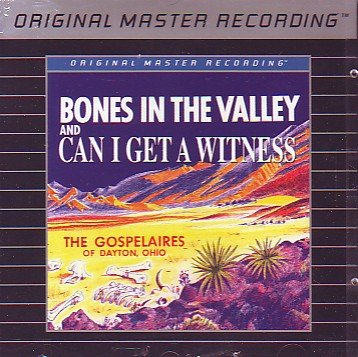
The Gospelaires of Dayton, Ohio - Bones in the Valley and Can I Get a Witness
I'm going to re-run this marvelous post from Preslives that appeared around a year ago; I imagine the are a number of you that missed this rareity.
The Gospelaires of Dayton, Ohio were one of the most dynamic quartets that took the 1950s sound of Julius Cheeks and the Sensational Nightingales forward into the 1960s. As Gospel supplied the elements that fueled the evolution of R&B into Soul in the 1950s and 1960s, Gospel also wasted no time in borrowing back what it could from R&B to modernize the spiritual sound. This cross-pollination was so intense that, by the mid-1970s, much of R&B and gospel became virtually indistinguishable except for the lyrics. Like other quartets that came to prominence in the 1960s like the Violinaires and the Mighty Clouds of Joy, the Gospelaires made use of a full R&B-type band accompaniment and vocal innovations of secular groups like the Five Royals to carry on the rich hard gospel tradition.
The Gospelaires were formed in the mid-1950s in Dayton,
Ohio, and steadily built a strong reputation that led to a contract for Peacock
records in 1957. The two
records on this compilation come from their mid-1960s prime, when the group was
fronted by the one-two punch of Bob Washington and Paul “Easy” Arnold. The Gospelaires trademark was the use of repeated
hypnotic riffs, over which Washington and Arnold would steadily turn up the heat
with the aim of driving the Congregation into a frenzy There exist some good video tapes of this unit doing
exactly that. You might find
a few on Youtube.
This CD that combines The LPs Can I Get a Witness and Bones in the Valley is another of the precious few short-lived Peacock Spiritual Series releases from late 1980s, after which time the reissue of the Peacock gospel catalog was abandoned indefinitely by MCA.
May this music help infuse your Soul with the
spirit on this Sunday morning!
Saturday, June 22, 2013
Luther Ingram - Four On Koko
Thanks again to Cliff!"While R&B singer Luther Ingram remains best remembered for the piercing 1972 ballad "(If Loving You Is Wrong) I Don't Want to Be Right," he was also a gifted songwriter, teaming with Mark Rice to co-write the Staple Singers' classic empowerment anthem "Respect Yourself." Born November 30, 1944, in Jackson, TN, Ingram spent the majority of his adolescence in Alton, IL, launching his singing career in a group featuring his siblings. As a teen he also began writing songs, and later ventured out as a solo act, most notably opening for Ike Turner in East St. Louis.
Ingram eventually migrated to New York City, where according to legend he briefly roomed with a then-unknown Jimi Hendrix. In 1965 he signed to Decca and cut his debut single, "You Never Miss Your Water," followed by a cover of Jamo Thomas' "(I Spy) For the FBI" on Smash. After little-heard efforts for indies Hurdy-Gurdy ("Run for Your Life") and HIB (the instrumental "Exus Trek"), Ingram relocated to Memphis, signing to producer Jimmy Baylor's fledgling KoKo label. Initial efforts like the 1967 single "I Can't Stop" and the next year's "Missing You" failed to generate much interest, but when Baylor negotiated a distribution deal with Stax Records in 1969, Ingram's fortunes improved dramatically. Later that same year he scored his first R&B Top 20 hit with "My Honey and Me." 1970's "Ain't That Loving You (For More Reasons Than One)" not only cracked the R&B Top Ten, but also peaked just outside the pop Top 40.
With his recording career flourishing, Ingram expanded into freelance songwriting, partnering with R&B veteran Rice in 1971 for the Staples' "Respect Yourself." The single was a crossover smash, fall just shy of the Billboard Top Ten, and in the years to come received cover treatments by everyone from Joe Cocker to actor Bruce Willis. A year later Ingram notched a blockbuster of his own with "(If Loving You Is Wrong) I Don't Want to Be Right," a potent tale of infidelity written by Homer Banks, Raymond Jackson, and Carl Hampton. Ingram's rich, intimate vocal proved a perfect match for the material, selling over a million copies and reaching number three on the pop charts, although country crossover queen Barbara Mandrell later scored a smash cover version as well. A series of R&B chart hits including "You Were Made for Me," "Always," and "Love Ain't Gonna Run Me Away" followed, and in 1973 he returned to the pop Top 40 one final time with the sublime "I'll Be Your Shelter (In Time of Storm)." At the peak of Ingram's fame, however, KoKo ran into financial turmoil and during the remainder of the 1970s he issued only a handful of additional singles, all of them undermined by distribution and marketing issues. After more than a decade out of the limelight, Ingram signed to Profile in 1986 and resurfaced on the R&B Top 40 with "Baby Don't Get Too Far." The minor hits "Don't Turn Around" and "Gotta Serve Somebody" followed, and in 1992 he wrapped his recording career with the Ichiban single "I Like the Feeling." After years of health struggles including kidney disease and diabetes, Ingram died of heart failure on March 19, 2007." by Jason Ankeny,AMG
Friday, June 21, 2013
Ann Sexton - The Beginning
In the course of presenting this blog and the reading/research necessary in doing that, I have often been confused by references placing what are to me clearly southern soul artists in something called 'Northern Soul' (note capitals). I have finally come to understand that those references are to a U.K. musical/dance movement that doesn't actually include what I would call northern soul (i.e. Motown, Philly, etc.). How confusing! Anyway that explains the reference in the wiki article below.
"Ann Sexton (born Mary Ann Sexton, February 5, 1950) She was born in Greenville, South Carolina, and is the cousin of singer and songwriter Chuck Jackson. Influenced by gospel music, she sang in her church choir and won local talent shows before singing back-up on a recording by Elijah and the Ebonies. She married the group's saxophonist, Melvin Burton, and the pair formed their own band, Ann Sexton and the Masters of Soul, in the late 1960s.
She was seen performing with the group by songwriter David Lee, the owner of the small local Impel record label, who recorded and released her first solo single, "You're Letting Me Down", in 1971. She then signed to John Richbourg's Seventy 7 Records, part of the Sound Stage 7 group, for whom she recorded a series of singles in Nashville and Memphis, Tennessee. In 1973, "You're Gonna Miss Me" reached no.47 on the Billboard R&B chart, and she released the album Loving You, Loving Me. Many of her recordings were co-written by herself and her husband, and several later became popular on the Northern soul scene in the UK. She recorded ballads as well as dance tracks, and the Sound Stage 7 label released her album The Beginning in 1977. It featured the single "I'm His Wife (You're Just a Friend)" which reached no.79 on the R&B chart.
She later worked at a New York school as a paraprofessional, using her married name Mary Burton. After her 1973 recording of "You're Losing Me" was featured in the 2003 film, 21 Grams, Sonny Hudson, who worked in the same school, answered some internet inquiries about her. Hudson, acting on her behalf and that of the German DJ and promoter Dan Dombrowe, began negotiations and after a lengthy period, Sexton agreed to go on stage again after a 30 year absence. In March 2007, she made her first performance since the 1970s at the Baltic Soul Weekender in Germany. She performed again at the Baltic Soul Weekender in April 2008, and has continued to make occasional appearances at festivals in the US and Europe since then." wiki
The Five Stairsteps
This one is for and from Cliff, this was a group from his Chicago youth. I have to admit that I've been a little slow to post it because stylistically I'd call this northern soul as opposed to southern soul. To me it shares more with Motown than Muscle Shoals, but what the hell.
"May 29, 2013 Clarence Burke Jr., the lead singer of the Five Stairsteps, a sibling rhythm-and-blues group that had its best-known hit in 1970 with “O-o-h Child,” died on Sunday in Marietta, Ga. He had turned 64 the day before. His death was confirmed by Joe Marno, his friend and manager. No cause was given.
The Five Stairsteps — four brothers and a sister — formed in Chicago in the mid-1960s, having learned to play instruments and sing from their father, Clarence Sr., a police officer, and their mother, Betty. They were once called “the first family of soul,” a moniker later adopted by the Jackson 5.
It was Betty Burke who came up with the name the Five Stairsteps after noticing that when the siblings stood next to one another in order of age, they resembled a staircase.
Besides being the lead singer, Mr. Burke was the group’s choreographer and guitar player and wrote a number of its songs. At 16 he was the co-author of the group’s first hit, “You Waited Too Long,” which reached No. 16 on the Billboard R&B chart in 1966.
The Stairsteps had a string of hits, including “World of Fantasy” and “Something’s Missing,” but their only Top 10 pop hit was the tender ballad “O-o-h Child,” written by Stan Vincent, which sold more than a million copies and reached No. 8. The song has been sampled by many hip-hop artists, notably Tupac Shakur in his 1993 hit “Keep Ya Head Up.”
The others in the group were his sister, Alohe (contralto), and his brothers James III (first tenor), Kenneth (second tenor) and Dennis (baritone). A younger brother, Cubie, joined the group later.
Clarence N. Burke Jr. was born on May 25, 1949, in Chicago and attended Harlan High School there, as did his siblings. They survive him, as do his parents; two more brothers, Leonard and Martin; his wife, Crystal Howell-Burke; three sons, Clarence III, James IV and Khabeer; two daughters, Dichelle Connell and Nadirah Bannister; and many grandchildren. He lived in Marietta.
The Stairsteps’ last hit was “From Us to You,” released on George Harrison’s Dark Horse label in 1976. The band broke up soon after, but four of the brothers, including Mr. Burke, formed another group, the Invisible Man’s Band, in 1980. That group’s biggest hit was “All Night Thing.”
At his death Mr. Burke was still recording and performing as a solo artist." NY Times Obit
"May 29, 2013 Clarence Burke Jr., the lead singer of the Five Stairsteps, a sibling rhythm-and-blues group that had its best-known hit in 1970 with “O-o-h Child,” died on Sunday in Marietta, Ga. He had turned 64 the day before. His death was confirmed by Joe Marno, his friend and manager. No cause was given.The Five Stairsteps — four brothers and a sister — formed in Chicago in the mid-1960s, having learned to play instruments and sing from their father, Clarence Sr., a police officer, and their mother, Betty. They were once called “the first family of soul,” a moniker later adopted by the Jackson 5.
It was Betty Burke who came up with the name the Five Stairsteps after noticing that when the siblings stood next to one another in order of age, they resembled a staircase.
Besides being the lead singer, Mr. Burke was the group’s choreographer and guitar player and wrote a number of its songs. At 16 he was the co-author of the group’s first hit, “You Waited Too Long,” which reached No. 16 on the Billboard R&B chart in 1966.
The Stairsteps had a string of hits, including “World of Fantasy” and “Something’s Missing,” but their only Top 10 pop hit was the tender ballad “O-o-h Child,” written by Stan Vincent, which sold more than a million copies and reached No. 8. The song has been sampled by many hip-hop artists, notably Tupac Shakur in his 1993 hit “Keep Ya Head Up.”
The others in the group were his sister, Alohe (contralto), and his brothers James III (first tenor), Kenneth (second tenor) and Dennis (baritone). A younger brother, Cubie, joined the group later.Clarence N. Burke Jr. was born on May 25, 1949, in Chicago and attended Harlan High School there, as did his siblings. They survive him, as do his parents; two more brothers, Leonard and Martin; his wife, Crystal Howell-Burke; three sons, Clarence III, James IV and Khabeer; two daughters, Dichelle Connell and Nadirah Bannister; and many grandchildren. He lived in Marietta.
The Stairsteps’ last hit was “From Us to You,” released on George Harrison’s Dark Horse label in 1976. The band broke up soon after, but four of the brothers, including Mr. Burke, formed another group, the Invisible Man’s Band, in 1980. That group’s biggest hit was “All Night Thing.”
At his death Mr. Burke was still recording and performing as a solo artist." NY Times Obit