Wednesday, August 5, 2015

Johnny Heartsman - Sacramento

"Johnny Heartsman (February 9, 1937 – December 27, 1996) was an American electric blues and soul blues musician and songwriter. Heartsman showed musical diversity, playing a number of musical instruments, including the electric organ and flute. His distinctive guitar playing appeared on a number of 1950s and 1960s San Francisco Bay Area recordings, and he was still playing up to the time of his death.

His best known recording, "Johnny's House Party", was a R&B hit in 1957. His other better known tracks were "Paint My Mailbox Blue" and "Heartburn". He variously worked with Jimmy McCracklin, Sugar Pie DeSanto, Big Mama Thornton, Ray Agee, Jimmy Wilson, Johnny Fuller, Al King, Tiny Powell and Joe Simon.

Heartsman was born in San Fernando, California, United States. Originally influenced by Lafayette Thomas, in his teenage years Heartsman started operating as a session musician, in the studio with local record producer, Bob Geddins. One of his earliest involvements was playing the bass guitar for the 1953 recording of "Tin Pan Alley" by Jimmy Wilson. His own efforts yielded the instrumental track, "Johnny's House Party (Parts 1 & 2)" on the Music City label, which reached number 13 on the US Billboard R&B chart in June 1957. The record billed the act as 'John Heartsman, the Rhythm Rocker and the Gaylarks'.

His session work continued into the early 1960s, and he played on Tiny Powell's "My Time After Awhile", and Al King's cover version of "Reconsider Baby". Heartman's guitar playing technique involved imaginative use of the guitar's volume control, producing "an eerie moan". Heartsman's later work included playing in show bands, appearing in concert in cocktail lounge settings, and as the touring organist for Joe Simon. He spent 1970-1973 in Midland, Texas, as the houseband leader at The Chateau Club. It was here that he hired young blues guitarist and singer/songwriter Jay Boy Adams. Adams credits Heartsman as one of his musical mentors. By the late 1980s, Heartsman had reverted to playing the blues, and he released his debut album, Sacramento, in 1987. It was described by one reviewer as "a great success". He had previously appeared at the San Francisco Blues Festival in 1985. The record producer, Dick Shurman, oversaw Heartsman's The Touch, released by Alligator Records in 1991.

Over the years, Heartsman's songwriting ability saw him pen tracks for Jesse James ("Are You Gonna Leave Me"), Roy Buchanan ("Goose Grease"), John Hammond, Jr. (Got to Find My Baby"), Amos Garrett ("Move On Down The Line"), and several more for Joe Simon.

He continued his varied career before succumbing to the effects of a stroke in Sacramento, California, in December 1996, at the age of 59." wikipedia

Monday, August 3, 2015

Carl LeBlanc & Coco Robicheaux - Modern New Orleans Griots

"A griot (/ˈɡri.oʊ/; French pronunciation: ​[ɡʁi.o]), jali or jeli (djeli or djéli in French spelling) is a West African historian, storyteller, praise singer, poet and/or musician. The griot is a repository of oral tradition and is often seen as a societal leader due to his traditional position as an adviser to royal personages. As a result of the former of these two functions, he is sometimes also called a bard. According to Paul Oliver in his book Savannah Syncopators, "Though [the griot] has to know many traditional songs without error, he must also have the ability to extemporize on current events, chance incidents and the passing scene. His wit can be devastating and his knowledge of local history formidable". Although they are popularly known as "praise singers", griots may use their vocal expertise for gossip, satire, or political comment." wiki

So I had this possibly brilliant idea that the first of these albums could put the second one into a clearer context. I have been quite fortunate in my time here in "the city that care forgot" to know both of these gentlemen. Carl I know only to chat with for a bit now and then when we run into each other. Coco I knew quite well and drank with him often enough to be treated to many a tale including some of those included on this album. I recall be doubled over in laughter by a tale of youthful fishing exploits and the mummification of said fish. He was a very talented artist as well, that bronze bust of Professor Longhair at Tipitina's is an example of his work. A treasured old Meters t-shirt I've had more than 30 years is another.

It was Carl's brilliant album, of course, that was the source of my concept here as it is he who suggested to me that the West African tradition is alive and well in our wonderful cultural gumbo called New Orleans. He explains his connection quite well on the album, the stories are New Orleans stories. Now Coco was of Cajun, American Indian, Salem Witch and Voodoo ancestry as he told it, and I choose to accept all that as the 'reality' that actually matters. There are obvious reflections of the African griot in the Native American brujos and medicine men. I'd say that Coco embraced those traditions, particularly here on his final album.

This album hasn't been particularly well received, even folks who enjoyed his earlier albums seem under whelmed, but I choose to believe that is at least in part because the album is misunderstood. Musically Dave Easley and Jim Singleton and a host of other great Nola musicians provide mesmerizing backdrops for Coco's story-songs which are equally mesmerizing for me.
"Perhaps if you were to listen a little betta..."

I would be horribly remiss if I failed to mention how proud Coco was that his daughter was responsible for the cover art and design.


Sunday, August 2, 2015

South Carolina Gospel

The Gospel Friend series continues! Thanks again to Cliff for these rare discs.

"South Carolina Gospel", Gospel Friend CD, PN-1506:

"This is a CD of black quartet gospel (13 songs) by the Original Golden Stars of Greenwood, S.C., and solo singing with a choral group (13 songs), by the exciting lead voice of Reverend Norris Turner. Here is more than 76 minutes of soulful, vibrating gospel singing from the black southern church, recorded between 1958 and 1979.

The music was originally released on local South Carolina record labels like Pitch and HSE and was then exclusively distributed in the black community. It is now reissued, for the first time, for the benefit of gospel lovers all around the world. This has been possible after the producer's visit to South Carolina in 2005 and after almost five years of research, to which some of the leading authorities of the genre have helpfully contributed."

Bob Marovich, gospel DJ, author and editor at www.theblackgospelblog.com:
"The Golden Stars' high, tight harmonies, propelled by insistent electric guitar work ... are excellent examples of how gospel quartet's influence on pop music boomeranged in the late 50s and early 1960s to bestow its parent with the street-corner rawness of rock and soul ... What the 1970s tracks demonstrate, more than anything, ist that [Norris] Turner's voice remained amazingly vibrant after more than three decades on the gospel highway ... Notini's liner notes are fascinating and informative, assisted greatly by personal reminiscenses he collected while visiting [Reverend Norris] Turner and other members of the Original Golden Stars, such as Alphonso Devlin and Rev. George Devlin... Five of Five Stars.

Chris Smith, Blues & Rhythm reviews editor:
“...this is a splendid release ... the sort of record we used to buy long ago: outstanding music by artists one was unfamiliar with, accompanied by thoroughly researched, authoritative notes ... Everything on this release is very much worth hearing ... “.

Tuesday, July 28, 2015

The Best Of Newark Gospel

Some truly wonderful stuff here including a bunch of Marion Williams tracks!

No memory of the origin of this, but thanks to the original uploader!

Sunday, July 26, 2015

Powerhouse Gospel of Independent Labels 1946-1959

A repost by request for her LOLness.

A pleasant good morning my brothers and sisters - Deacon Kingcake here - I am sitting in my coffee shop this morning with sweet gospel sounds playing on the system (Cliff and I have taken over their drive) and this Sunday I have a special collection of sanctified sounds. The wonderful folks at JSP have put out some marvelous Gospel sets over the last 10 years - this set set focus' on the rafter shaking, powerhouse Gospel that is my personal

favorite.

The Brooklyn All Stars - On Peacock and Nashboro

Happy Sunday, Chitlins' people!  Please allow me to make an offering today for your spiritual nourishment - vintage recordings of Hardie Clifton and the Brooklyn All Stars.  Hardie Clifton may not be a household name in the USA, but he most certainly had one of the great voices in gospel during the late 50s through the 80s.  He possessed a powerful, soaring falsetto that he could alternatively drench with Sam Cooke-esque sweet soul or break into rough scream.   I have packaged together here three dynamite singles that the Brooklyn All Stars waxed under their first recording track for Peacock, together with a collection on Nashboro that was briefly available on CD under the title "The Best of the Brooklyn All Stars."  
The first six tracks here come from Peacock, while the remaining 14 tracks comprise the disc pictured on the right.

The Brooklyn All Stars were formed by Charlie Storey in New York immediately after World War II.  He recruited the exceptional bass-baritone Thomas Spann, who took over the leadership of the group in the mid-50s when Storey left for other waters.  Thomas Spann continued to lead the Brooklyn All Stars well into the new millennium.  He is very much alive today, and just celebrated his 90th birthday last month.    

The Brooklyn All Stars rose to prominence after Spann recruited the teenage Hardie Clifton in the latter 1950s and trained him vocally.  This led to recording opportunities with Peacock and the the three precious singles included here.   They are all superb, with "Careless Soul" perhaps the greatest of all of them, a true masterpiece and showcase for Hardie Clifton.  "Singing for the Lord" is another stone masterpiece.

By the time that the Brooklyn All Stars signed with Nashboro in the 1960s, Jimmy Outler had briefly joined the group.  A dedicated disciple of Sam Cooke, Jimmy Outler had just succeeded remarkably well in the very challenging job of filling Johnnie Taylor's shoes, who had filled Sam Cooke's shoes as lead singer of the Soul Stirrers.  A run-in with the law soon forced Outler into hiding, however, and his work with the Brooklyn All Stars here was actually done under an assumed name. On the Nashboro sides included here, Clifton and Outler alternate leads.  There are many highlights among the Nashboro recordings.  I have a particular attachment to Hardie Clifton's delivery of "Nobody's Fault But Mine."


The Brooklyn All Stars went from Nashboro to Jewel in the 1970s, and released a number of high quality albums, many of them featuring Thomas Spann more prominently that had been the case in the past.  Hardie Clifton passed in 1990, but the Brooklyn All Stars kept going.


Saturday, July 25, 2015

Blind John Davis/Hot Lips Page - Nothin' But The Blues/The Blues Jumped The Rabbit

Here is a fun thing found out on the torrents - 2 albums: A 1973 live date from Blind John Davis is my primary interest here, but the undated Hot Lips Page disc is certainly worth the listen too!

Wednesday, July 22, 2015

Collectors Album - C.J.'s Roots of Chicago Blues

This is a repost of my 2012 post, I've redone the rip at least once since then.

 LOOK CLOSELY my friends, it does not get much rarer than this! (unless of course you are talking volumes 2 & 3) Three records were ever published on Blue Flame, this one, a Volume 2, and a Volume 3! My friend Cliff bought this in the mid 70's prior to leaving Chicago; the record is still in good shape! (Blue Flame was a independent Chicago Blues weekly) A copy of Vol. 2 was posted in 2012 @ 'Don't Ask Me... Blog. To date I only know of the existence of a third volume through comments elsewhere.


"Little Mack Simmons (January 25, 1933 — October 24, 2000) was an African American, Chicago blues harmonica player, singer and songwriter.
Malcolm Simmons was born in Twist, Arkansas. In his youth he befriended James Cotton, and they grew up learning to play the harmonica. Simmons relocated to St. Louis, Missouri, at the age of 18 and worked on the railroad. At this time Simmons made his stage debut with Robert Nighthawk.

In 1954 he moved again to Chicago, put together his own backing band, and had a five year residency at Cadillac Baby's. He commenced recording in 1959, issuing records on a number of labels including Chess.


In the late 1950s and early 1960s Simmons recorded several more obscure singles, often simply billed as Little Mack (or Mac). Simmons went on to provide the opportunity for others talents to be seen. He owned and managed Chicago's Zodiac Lounge from the mid to late 1960s. In addition, he owned a recording studio and recorded on his own labels, PM Records and Simmons Records. Simmons left the music industry at that time for the ministry, and was rarely heard in 30 years, notwithstanding an album he recorded in 1975 in Paris, France.

His return to blues music arrived with High & Lonesome (1995), which was an early success for St. George Records, an independent record label. Simmons' energetic style, accompanied by Studebaker John, belied his years. Come Back to Me Baby (1996), with featured sidemen John Primer, Willie Kent and Jake Dawson (guitarist) was also well received.
Simmons died in October 2000, of colon cancer, in his adopted hometown of Chicago, at the age of 67."

Homesick James (May 3, 1914 – December 13, 2006) was an American blues musician. He most notably played slide guitar, and recorded covers of "Stones In My Passway" and "Homesick". James worked with his cousin, Elmore James, and Sonny Boy Williamson II. He was born in Somerville, Tennessee, United States, the son of Cordellia Henderson and Plez Williamson Rivers, who were both musicians. He developed a self-taught style of slide guitar through playing at local dances in his teens. Little is known about his early life. He claimed to have played with Yank Rachell, Sleepy John Estes, Blind Boy Fuller and Big Joe Williams, among others, and to have been acquainted with Robert Johnson. He also claimed to be the older cousin of Elmore James, to have bought James his first guitar, and to have taught him how to play slide. However, some of these claims are unconfirmed.

By the mid 1930s he was based in Chicago, and working with Horace Henderson's band at the Circle Inn, and with pianist Jimmy Walker at the Square Deal Club. He may have first recorded for RCA Victor in 1937, but this is also unconfirmed, and by 1938 may have begun playing electric guitar. His first known recordings were in 1952 for Chance Records, recording the tracks "Lonesome Ole Train" and "Homesick" which gave him his stage name. During the late 1940s and 1950s he worked with both Sonny Boy Williamson II (Rice Miller), and with Elmore James, and in the early 1950s he worked in bands including Baby Face Leroy Foster, Snooky Pryor, Floyd Jones, and Lazy Bill Lucas. He was a longtime member of Elmore James' band from 1955 to 1963, contributing to such tracks as "Dust My Broom," "The Sky Is Crying," and "Roll and Tumble." Elmore James is said to have died on Homesick's couch, while the latter frantically searched for the former's heart pills.

As a solo performer, he recorded for the Colt and USA labels in 1962, including a cover version of Robert Johnson's "Crossroads". Homesick James's slide guitar style, not as refined as Elmore James', traces back to Johnson's. He also recorded a 1964 album for Prestige Records, Blues On the South Side (Prestige OBCCD 529-2), including another of his best-known covers, "Stones In My Passway", and some tracks for Vanguard that are available on the compilation album Chicago: The Blues Today. One of his own songs, "Gotta Move" (also on Blues On the South Side) was covered (as "Got To Move") both by Elmore James and Fleetwood Mac."

Theodore Roosevelt "Hound Dog" Taylor (April 12, 1915 - December 17, 1975) was an American Chicago blues guitarist and singer. Taylor was born in Natchez, Mississippi in 1915 (although some sources say 1917). He originally played piano, but began playing guitar when he was 20. He moved to Chicago in 1942.

He became a full-time musician around 1957 but remained unknown outside of the Chicago area where he played small clubs in the black neighborhoods and also at the open-air Maxwell Street Market. He was known for his electrified slide guitar playing roughly styled after that of Elmore James, his cheap Japanese Teisco guitars, and his raucous boogie beats. He was also famed among guitar players for having six fingers on his left hand.

After hearing Taylor with his band, the HouseRockers (Brewer Phillips on second guitar and Ted Harvey on drums) in 1970 at Florence's Lounge on Chicago's South Side, Bruce Iglauer - at the time a shipping clerk for Delmark Records - tried to get him signed by his employer.  Having no success getting Delmark to sign Taylor, Iglauer formed a small record label with a $2500 inheritance and recorded Taylor's debut album, Hound Dog Taylor and the HouseRockers, on his fledgling Alligator Records in 1971. It was the first release on Alligator, now a major blues label. It was recorded in a studio in just two nights. Iglauer began managing and booking the band, which toured nationwide and performed with Muddy Waters and Big Mama Thornton. The band became particularly popular in the Boston area, where Taylor inspired a young protégé named George Thorogood. A live album Live At Joe's Place documented a Boston appearance from 1972.

Their second release, Natural Boogie, was recorded in late 1973, and led to greater acclaim and touring. In 1975, Taylor and his band toured Australia and New Zealand with Freddie King and Sonny Terry and Brownie McGhee. His third Alligator album, Beware of the Dog, was recorded live in 1974 but was only released after his death. More posthumous releases occurred as well, including Genuine Houserocking Music and Release the Hound, on the Alligator label as well as some bootleg live recordings.

Taylor died of lung cancer in 1975, and was buried in Restvale Cemetery in Alsip, Illinois.

Taylor was posthumously inducted into the Blues Hall of Fame in 1984.

Sunday, July 19, 2015

Wings Over Jordan Choir - Trying To Get Ready

The WINGS OVER JORDAN CHOIR (WOJC), a prominent African American choir during the late 1930s and early 1940s, made broadcast history with the first independently produced national and international radio programs created by AFRICAN AMERICANS. The group made contributions to choral music and the improvement of race relations. The choir was founded in 1935 by the Rev. GLENN T. SETTLE , pastor of Gethsemane Baptist Church on E. 30th and Scovill Ave. in Cleveland. Rev. Settle believed in using Negro spirituals to spread Christianity. He promoted establishing a radio program to address the Negro community and introduce the non-Negro to the Negro experience. In 1937, the ensemble performed weekly on the "Negro Hour" over RADIO station WGAR, a CBS affiliate. It soon became a hit.

On 9 Jan. 1938 the group adopted the (Image)(Image) name Wings Over Jordan Choir and The Wings Over Jordan national broadcasting began. WOJC Choir, ca. 1940s. WRHS. performed a decade long series of weekly, sometimes daily, programs for CBS and WGAR exclusively. WOJC was the first full-time professional black choir in America. At its height, the choir performed before sold-out, non-segregated audiences in over 40 states, 5 European countries, Canada, and Mexico. During WORLD WAR II, under USO sponsorship, WOJC toured Army camps in Europe. WOJC's fame resulted in the publication of a songbook and record album, a movie contract, performances with major symphony orchestras, and an invitation to sing at the White House. The choir received numerous honors, including radio's prestigious Peabody Award.

Sunday, July 12, 2015

Georgia Peach - Lord Let Me Be More Humble in This World

In 2005, the Swedish label Gospel Friend released Lord Let Me Be More Humble in This World, a 24-track sampling of records cut during the years 1930-1960 by the amazing Georgia Peach, a powerhouse Pentecostal singer whose career paralleled those of Sister Rosetta Tharpe and Mahalia Jackson. Although examples of her work have resurfaced on gospel collections originating from various countries, Lord Let Me Be More Humble in This World appears to have been the first digital-age album devoted exclusively to the works of Georgia Peach. It includes "Now Is the Needy Time" from her first recording session (which took place in December 1930), but somehow omits the most celebrated title from that date, "Stand by Me." Neither does it contain her 1932 rendition of "When the Saints Go Marching In," although the flipside of that popular Banner record, "Who Is That Knocking?" is on the track list. On later recordings she is backed by vocal groups like the Reliable Jubilee Singers, the Harmonaires, and the Sky Light Singers. The tune selection, photographs, and historical data make this an uncommonly fine tribute to a ridiculously underappreciated artist. AMG

Saturday, June 27, 2015

The Dixie Hummingbirds - Jesus Has Traveled This Road Before 1939-52

More from Cliff's Gospel Friend series gift.

Interestingly enough, even though I have an alleged 'complete' 1939-47 set of the Birds, there seems to be quite a bit here that I didn't have.

Wednesday, June 24, 2015

This May Be My Last Time Singing, discs 1-3

This May Be My Last Time Singing,

"Despite provenance and proliferation on par with other vintage genres, gospel just doesn’t seem to garner the same degree of crate-digging diligence that other types of music foster in collectors. The disparity might have something to do with the one-note topicality of sacred songs: it’s only possible to praise God and Jesus verbally in finite different ways, and many revered gospel artists weren’t prone to experimentation outside of time-tested forms. There’s also the ambivalence or aversion of certain secular ears to such religious sentiments voiced in song. What’s harder to dismiss or refute is the passion and power that so often suffuses a gospel performance by artists wholly invested in the means of expression, whether in person or on record. These vessels of faith through song carry conviction that is both undeniable and largely indefinable on secular grounds. As my brother, an ordained Baptist minister, puts it, “you need not believe what they believe, but you best believe their belief in it.”

A companion compilation to Tompkins Square’s Fire in My Bones, This May Be My Last Time Singing both builds on and diverges from the parameters of its predecessor. Curator Mike McGonigal once again mined deep into his respective collections of records and associated ephemera, but switched gears a bit to focus on a narrower time frame with pieces culled from 45 RPM sides within a quarter-century time frame. In order to maximize the variety of content, he also set a rule to feature each artist or group just once in a track list that runs 72 deep. It’s a rule he bends only slightly in a single instance.

As with the small galaxy of labels excavated by The Numero Group within the realms of soul and funk, the outfits under McGonigal’s scrutiny were nearly all operations of mom and pop-scale. Larger established entities like Specialty, Nashboro and Chalice (Stax’s gospel subsidiary) signed popular national acts and garnered large market shares, while companies like Booker, Bible Days, Sterling Chapel and dozens of others worked the regional fringes. Local focus and financing meant latitude to record the commercially suspect, and the set’s selections bear this out in glorious profusion. Local churches or the artists themselves bankrolled many of the cuts with commercial aspirations secondary, if manifest at all.

Highlights are too numerous to recount at length, but the diversity of tracks goes a long way toward combating the aforementioned redundancy in lyrical content that can sometimes undermine gospel song craft. Electric guitar work by turns gorgeous and bracing abounds, beginning with the delicate preface to Sam Williams & the Harris Singers, “He Will Fix It.” Little more than a fragment, “Jesus Been Good” by The Fantastic Angels hitches a cherub-voiced choir to a bluesy groove laid out by crisp guitar and sparse syncopated drums. R. Jenkins and the Dayton Harmonaires sing praises over a wah-wah-juiced, boogaloo backbeat on “Put Your Hand in the Hand.” The Exciting Traveling Four traffic in the can’t-miss combination of oscillating rink organ and barber shop harmonies on its 1982 opus, “Oh Lord I Have No Friend.” Stacking tracks against each other makes for striking contrasts. Sounds of Soul opt for a percolating drum machine backdrop to its 1970 ode to the savior, “Perfect Like Angels,” while Jessie Lee Harris relies solely on piano and her sweetly serene voice to convey confidence in her savior’s care.

Numerous cuts reflect their age and the effects of avid use of previous owners. Recorded in 1980, Rev. George Oliver’s “I Got to Move to a Better Home” is in worse shape than a Son House Paramount 78, but made all the more affecting because of the washed out, crackle-laden fidelity. Similarly, Elder Robert McMurray’s gravel-voiced sermon, “Walk with God” repeatedly pushes back against an undulating wall of obfuscating sonic sludge.

It’s remarkable how many pieces echo potential counterparts in the blues, soul and doo-wop idioms. Rev. R. Henderson’s spare and repetitive guitar riff on “Stop Living on Me” could easily be the work of some grizzled Fat Possum resident of the past decade. Similarly, The Dedicators’ “So Many Have Fallen By the Wayside” and Brother Smith & His Stars of Harmony’s “God Don’t Take No Vacation” wouldn’t be out of place in rotation on a Southside Chicago soda shop jukebox. The quietly awesome sacred steel & washboard of the set’s penultimate track, Rev. Lonnie Farris’ “Jesus is Living Today,” travels yet another tributary.

The music speaks vociferously for itself, but McGonigal also includes a small fortune of edifying context through track-by-track annotations and photographs. There are even facsimiles of a handful of Sunday School pins from his personal collection. Say what you will about Greil Marcus and his dog-eared catch-phrase “Old Weird America,” but the appellation works just as well in encapsulating the odd and vibrant splendor of many of these sides, as well as the multiplicity of faith-rooted personalities behind them." By Derek Taylor

Wednesday, June 17, 2015

Freddie King - Larger Than Life (1975)

This was a Freddie King release in 1975 by RSO Records incorporating some studio tracks, not included on the previous album 'Burglar' - posted earlier here - and some tasty live cuts ( featuring some fine sax blowing from David 'Fathead' Newman ).
As it was originally released on a UK label , produced by Mike Vernon, it may have been overlooked in the USA and elsewhere (as was 'Burglar' it seems). So I offer it here to the Chitlins crowd as I know Freddie is a favourite and a Blues legend...Enjoy.
Tracks  : 01 It's Better To Have ( And Don't Need )  02 You Can Run, But You Can't Hide 03 Woke Up This Morning 04 It's Your Move 05 Boogie Bump 06 Meet Me In The Morning 07 The Things I Used To Do 08 Ain't That I Don't Love You 09 Have You Ever Loved A Woman

Tuesday, June 16, 2015

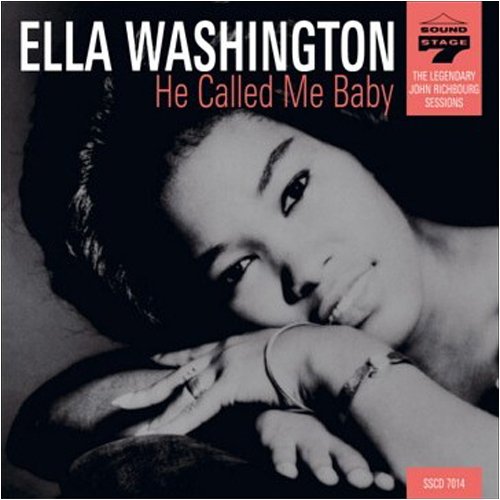
Ella Washington - He Called Me Baby

A repost by request: This originally came from PresLives and all thanks go to him.

The famous Nashville DJ John Richbourg (John R) had an exceptional ear for blues and R&B.  When he created his own Sound Stage 7 label, he brought a number of first rate singers to Muscle Shoals for the production of some classic Southern Soul.   With the exception of Joe Simon, none of these singers had much commercial success, which would appear to be due to the lack of promotion that Sound Stage 7 received outside of the local market.   An earlier post here was devoted to the unique Geater Davis.  We have here a CD collection from Soulscape Records that gathers together virtually all of the Sound Stage 7 recordings of the great soul diva, Ella Washington.  Ella was probably John R's single favorite artist at Sound Stage 7.  She sang at the latter's funeral in 1986.

Ella Washington was born and raised in Miami, Florida.  Her talents first came to the attention of local R&B artists Paul Kelly and Clarence Reid, who helped launch her recording career in the mid-1960s and secured her a few local hits.   She came to the attention of John R in 1967, who recorded her for Sound Stage 7 from 1967-1971.  "He Called Me Baby" brought her the greatest commercial success, making #38 on the National R&B chart and #77 on Billboard.   As you can hear from this collection, however, there are plenty of tracks here that could have been big hits if they had received the proper promotion.

In 1973, Ella Washington retired from secular music and became a gospel singer.   Since that time, she has released only one album, the quite good and obscure "If You Can Take It, You Can Make It."

Ella Washington has just about everything that you could want in a soul diva: a full and powerful voice, impeccable pitch, an ability to move from soft sexy croon to sanctified roar, and the taste to subordinate all of that to the
effective delivery of a song.   She also has a lisp that, in my opinion, actually adds a endearing personal quality to her singing.   Thank God that John R had the sense to take her to the Southern Soul heaven of Muscle Shoals to make this timeless music.  


Monday, June 15, 2015

Buddy Johnson At The Savoy Ballroom 1945 - 46

A fantastic radio broadcast ripped at 24/48 and transferred to FLAC.  Interesting... Dupree Bolton is in the band.  Enjoy!!!

Alto-Sax – Joe O'Laughton
Baritone-Sax – Teddy Conyers
Bass – Leon Spann
Drums – Teddy Stewart
Guitar – Jerome Darr
Piano – Buddy Johnson
Tenor-Sax – Dave van Dyke, Jimmy Stamford
Trombone – Bernard Archer, Gordon Thomas, Leonard Briggs
Trumpet – Dupree Bolton, Frank Brown, John Wilson, Willis Nelson
Vocals – Arthur Prysock
Vovals – Ella Johnson


A1 (Theme) Wlak'em - Opus #2
A2 Since I Fell For You
A3 St. Louis Blues
A4 Waitin' For The Train To Come In
A5 Night Shift
A6 Jodi
B1 One O'Clock Boogie
B2 The Other Side Of The Rainbow
B3 Exactly Like You
B4 One For A Nickel
B5 Gee, It's Good To Hold You
B6 In There
B7 Traffic Jam
B8 (Theme) If You Never Return

Jazz Archives JA-25
1975

Sunday, June 14, 2015

Clara Ward and the Ward Singers - I Feel the Holy Spirit

Good Morning my dear friends and welcome to another Sunday Morning Gospel hour brought to you by the Reverend  Clifford, with your host, Deacon KC. This morning we have a particularly special service from the great Clara Ward and the Ward Singers. 
(this is the third of the Gospel Friend series distributed by Bear Family.)

"Clara Ward (April 21, 1924 – January 16, 1973) was an American gospel artist who achieved great artistic and commercial success in the 1940s and 1950s, as leader of The Famous Ward Singers.

A gifted singer and arranger, Ward adopted the lead-switching style, previously used primarily by male gospel quartets, creating opportunities for spontaneous improvisation and vamping by each member of the group, while giving virtuoso singers such as Marion Williams the opportunity to perform the lead vocal in songs such as "Surely, God Is Able" (among the first million-selling gospel hits), "How I Got Over" (composed by Williams, and one of the most famous songs in the Black gospel repertoire), and "Packin' Up"."
 more

Saturday, June 13, 2015

Walter Wolfman Washington - Leader Of The Pack

I was searching a Russian torrent site the other night and came upon this rareity by accident. To tell you the truth, I don't recall this album at all and Walter has been a friend for a long time! All the previous Hep-Me material that I've heard came from the singles collected on that "Best of New Orleans R&B" series with the really bright covers. This album packages the first 8 of those 11 tracks into a miraculously more cohesive whole than I ever recall that CD being. I know that I have that disc - gonna have to revisit it.

In the mean time I have already loaded this up even tho I now realize that I already had it differently packaged. Walter's guitar is killin' and the horns are terrific. Hell yeah!

Wednesday, June 10, 2015

Tony Owens - I Got Soul

A repost by request: I first heard of Tony Owens in a book on New Orleans R&B by Jeff Hannusch. Hannusch had mentioned that Owens was now a carriage driver over by Jackson Square, but the picture used in the book was so bad it was impossible to tell what he looked like. Eventually, I found the 45 that is in my jukebox post and I took down to the square to see if I could meet him. It took several tries but eventually I did meet him and in the course of chatting he told me about this disc. It was a bitch to find and of course there was no cheap copy anywhere, but eventually I managed to find one within reason. One of these days I'll get Tony to autograph it.

"Tony Owens has been singing professionally for over 35 years. He started singing as a child in a little Baptist church in an old New Orleans neighborhood called Zion City.

Tony recorded a smash hit song in the 1970s titled "Confessing a Feeling" that skyrocketed in the national R&B charts. He now has a CD on the market on the London-based Grapevine record label, titled I Got Soul. (Now out of print) Commenting on his singing style, Tony says, "If I can touch someone's heart in some way, if I could bring back a pleasant memory, if I could make someone smile, if I could open someone's eyes with a song, then I believe God would smile upon me, and that is how I measure my personal success! I want people to say 'When you hear Tony sing, you don't just hear him, you feel him.'"


Motel Lover 4 - Drama and Sitations

There has been some pressure to create a Volume 4 to this series inspired by the original CD, and so, with considerable assistance from Uncle Clifford, here it is. The theme for this one is Drama & Situations. No slick studio-created voices here, no matter what the other production short comings may be, THESE ARE SINGERS! Here is at least one answer to the question where are the great singers these days.

 Once again you may wish to exercise some caution in where and for whom you play this. 

 Artists include: Stan Mosley, OB Buchana, Karen Wolfe, Nellie 'Tiger' Travis, Toni Green, Sheeba PottsWright, Mr. Sam, Vic Allen, Bobbye 'Doll' Johnson and Omar Cunningham.

Sunday, June 7, 2015

Aretha Franklin - One Lord, One Faith, One Baptism

Here's a nice treat for a blessed Sunday at Chitlins.  I found this double LP in near mint condition at a local thrift - for a buck!!  I knew right away that it would be destined for this place.

Overall it's an excellent album but let's establish something... this record is a straight up church service.  Anybody lookin for an Aretha studio album should probably move on.  Her voice is certainly a large presence on here, but it's one of a few including Mavis Staples, her sister Erma & the good Rev. Jesse Jackson.  There is a longer list of characters infact, should you choose to listen.

It plays like a service would - preaching with song in between.  Jesse Jackson is given a full 10 minutes on side three, opening and getting things moving.  There are no boring or slow moments and the music is all fantastic.  I want to point out that the song "Higher Ground" begins at the end of side 3, and finishes at the end of side 4.  I blended them together as best I could and tagged them as one track.  You will hear a brief fade out and in during the song.  Aside from that, this transfer turned out really nicely at 24/48 FLAC... enjoy!!!
Fifteen years after Amazing Grace, her groundbreaking gospel record, Aretha Franklin returned to the church yet again, and though the results couldn't top the wall-to-wall power and spirit found on her first, the double-album One Lord, One Faith, One Baptism, it's still a worthy document of what the church meant to her. The roster of invited guests was enough to get gospel fans excited, including the Rev. Jesse Jackson, Rev. Jasper Williams, and Rev. C.L. Franklin (her brother, who delivered the invocation), plus Mavis Staples, Joe Ligon (from the Mighty Clouds of Joy), and her sisters, Carol and Erma. Slotted next to sanctified standards like "Surely God Is Able" and "The Lord's Prayer," were several great selections from the pop repertoire, including a scorching version of "Higher Ground."Staples stops by for an ebullient run through the latter-day standard "Oh Happy Day," and the performance closes with a touching finale, "Packing Up, Getting Ready to Go," featuring Staples and Ligon, plus Carol and Erma Franklin. - John Bush / AMG
Arista ‎– AL-8497
Recorded at the New Bethel Baptist Church, 8430C 1 Franklin Blvd., Detroit, Michigan
July 27, 28, 30, 1987

A1 Walk In The Light 4:00
A2 Prayer Invocation By Rev. Cecil Franklin 5:44
A3 Introduction Of Aretha And The Franklin Sisters By Rev. Jesse Jackson 0:37
A4 Jesus Hears Every Prayer 5:16
A5 Surely God Is Able 6:01
B1 The Lord's Prayer 5:05
B2 Introduction Of Aretha And Mavis Staples By Rev. Jesse Jackson 3:22

B3 Oh Happy Day 6:09
B4 We Need Power 6:30
C1 Speech By Rev. Jesse Jackson 9:57
C2 Ave Maria 6:48
C3 Introduction To Higher Ground By Rev. Jaspar Williams 4:10
C4 Higher Ground 1:07
D1 Higher Ground (Continued) 2:04
D2 Prayer Invocation By Rev. Donald Parsons 7:29
D3 I've Been In The Storm Too Long 7:55
D4 Packing Up, Getting Ready To Go 5:34

Arranged By [Music And Choir] – Minister Thomas A. Whitfield
Bass – Lanar Brantley (tracks: A1, A4, A5, B1, B3, B4, C4, D3, D4)
Conductor [Choir] – Michael E. Fletcher
Guitar – Michael Wright (tracks: A1, A4, A5, B1, B3, B4, C4, D3, D4)
Organ – Earl J. Wright, Jr. (tracks: A1, A3, A4, B1, B3, B4, D3, D4)
Percussion – Dana Davis (tracks: A1, A4, A5, B1, B3, B4, C4, D3, D4)
Piano – Nick Johnson (tracks: A4, A5, B3, B4, C4,, D4, D5), Thomas A. Whitfield (tracks: A1, C2, C3)
Producer, Vocals – Aretha Franklin

J. Earle Hines - Jesus Steps Right In

Part 2 of 10 in the Gospel Friend Series.

"...gospel historian Anthony Heilbut once labeled Prof Hines the first bona fide gospel superstar. In the liner notes to the various artists album 'The Great Gospel Men' Heilbut wrote of the singer and choir director, "When he performed, audiences could not contain themselves. Men and women ran into each other, people fell out of balconies. Ambulances were summoned; overwrought ecstatics collapsed. Male quartets began scuffling, trying to get similar responses. After such frenetic showmen as Hines or Brother Joe May, it became clear that gospel involved more than singing. If you didn't move the people out of their seats, into the aisles and - ideally - leave them flat on their backs, you had not scored."... more

Friday, June 5, 2015

Mel Waiters Memorial, Part 2

 Having seen him twice in the past year or so, I must say that I'll miss Mel's yearly visit to New Orleans, he was a fine showman and had many enthusiastic fans here in the Crescent City. Cliff even saw him at a private party here and, of course, got to meet him and chat for a bit. A gracious and witty gentleman by Cliff's report.

Rest in Peace Brother Mel.


Classic Chitlin Circuit Soul


Monday, June 1, 2015

Reverend James Cleveland - Hallelujah: Hob Recordings

Following up on KCs great recent and other posts of the music of Rev. James Cleveland, I decided to share this one.  KC has shared some great recordings, but I don't believe that these yet include the sides that the Reverend made for Hob records in 1959-1960.  So here is something like a greatest hits collection from that ball of wax.  I don't believe that much else, if anything, from Cleveland on Hob made it to CD, at least outside of Japan. 

The subtitle of this CD is "A Collection of His Finest Recordings."   While Music Club likes to use that moniker for all of their CDs :), this time there may be something to the claim.  Cleveland made so many great classic recordings that it is difficult to argue that one particular set is the finest.   But I tend to think that these Hob recordings are at least among the finest.  Cleveland is in brilliant vocal form, the songs and good, and so is the production.   So there is nothing to complain about here, except maybe the sound quality, which is not as good as KCs most recent post of the 70s Savoy material.  So you might not want to crank up your stereo quite as high when you listen to this one. :)


Mel Waiters Memorial pt 1

 Soul and rhythm and blues singer Mel Waiters has died at the age of 58.

A longtime performer on the famed Mississippi recording label Malaco Records, Waiters died early Thursday after a short battle with cancer, his booking agent's office confirmed.

Waiters was popular for years on the blues festival and touring circuit across the south, thanks in part to his soulful party songs like "Hole In The Wall" and "The Smaller The Club".

Waiters was born and raised in San Antonio, Texas, where he honed is voice in both the church choir and in nightclubs beginning in the early 1970s. Before his recording career, he worked as a radio DJ and as an entertainer on military bases.

He is survived by his wife, Portia, and a daughter, Brittney.

Waiters joined southern soul blues artists such as Marvin Sease, Denise LaSalle and Willie Clayton on the Jackson based Malaco recording label. The quartet often performed often on blues cruises, on package tours and at festivals together.

He performed many times on the Mississippi Gulf Coast as part of the Gulf Coast Blues Festival as well at other events nearby including The New Orleans Jazz and Heritage Festival, The Big Easy Blues Fest and the Crescent City Blues and BBQ Festival delighting the crowd with other fan favorites such as "Hit It and Quit It" and "Got My Whiskey." His most recent album was February's "True Love," on his own Brittney Records label.

He is survived by his wife, Portia, and a daughter, Brittney.