Sunday, January 13, 2013

Gospel Celebrities & Celestial Lights

 Yet another Gospel wonder compiled by the great Opal Louis Nations. Pretty much an all star affair that would serve as a fine template to begin a Gospel collection simply by exploring each of the artists appearing here. So much here I can't mention all but in particular note Morgan Babb (the vocal style copied by O.V. Wright) and the amazing Joe Hinton.

"This two disc release from specialist label Fantastic Voyage mostly features formative gospel music and sanctified blues from between 1949 to 1959 and the sheer diversity and quality contained within its 52 tracks makes it a musical treasure trove of the highest order. As its title boasts, a plethora of celebrities of their time - both gospel and secular - are featured here with legends such as the Staple Singers, the Golden Gate Quartet, Mahalia Jackson, Sister Rosetta Tharpe and the Five Blind Boys Of Alabama making appearances alongside the likes of Little Richard who appears here in accomplished blues singer mode. Elsewhere, a fascinating insight into the gospel roots of eventual mainstream big-timers such as Lou Rawls and Sam Cooke is given - the latter checks in with a delightful, previously unissued take of "Jesus, Wash Away My Troubles" - whilst pre-teen cuts from future stars Bobby Womack and Candi Staton in "The Bible Tells Me So" and "Too Late" add further historical value. As with many retrospective compilations, what makes this release stand out is the number of unexpected nuggets that grab the listener's attention. For example, the privilege of hearing previously unreleased live performances of "Jesus Brought Me" and "I Found Joy" by Dewey Young and the Swan Silvertones for the first time cannot be underestimated whilst the simply exquisite doo wop exposé "Ladder Of Prayer" at the hands of the vastly underrated Joe Hinton is the icing on the cake of this superlative and essential release. (Lins Honeyman; Cross Rhythms)

disc 1:
1. Mother Take Your Rest - The Soul Seekers 2. Jesus, Wash Away My Troubles - Sam Cooke & The Soul Stirrers 3. Dedication To Mother - Rev. Morgan Babb & The Philco Singers 4. Low Is The Way [Original Version] - The Staple Singers 5. Walk Around Me (My) Lord - The Sensational Wonders (A.K.A. The Mighty Clouds Of Joy) 6. When He Spoke [Live] - Mahalia Jackson 7. On Revival Day - Marie Knight & The Sensational Nightingales 8. I've Got A New Home - Nightingale & The Dixie Nightingales 9. I'm Tired - Ethel Davenport With Brownie Mcghee 10. Coming Up Thru The Years - The Five Blind Boys Of Alabama 11. When He Calls Me - Marion Williams 12. Robe Of Calvary - The Orioles 13. Amazing Grace [Instrumental] - Jesse Fuller 14. Ladder Of Prayer - Joe Hinton 15. Too Late - Candi Staton & The Jewel Gospel Trio 16. I'll Live Again - The Dixie Hummingbirds 17. This Same Jesus - The Staple Singers 18. God Has Promised [Fragments, Live] - George Mccurn & The Pilgrim Travelers 19. I Want To Go To Heaven And Rest - Nappy Brown With The Selah Singers 20. I Can Hear The Angels - Sister Rosetta Tharpe & The Harmonizing Four 21. I May Never Pass This Way Again - The Zion Travelers 22. I'm A Pilgrim - The Golden Gate Quartet 23. Big Wheel - The Gospel Clefs 24. Just A Little Talk With Jesus - The Jordanaires 25. Search Me Lord - Betty Hutton Presents Odessa Mccastle & Catherine Burkes With The Antioch Evangelist Temple 26. Steal Away To Jesus - The Gospel Clefs

disc 2:
1. On The Rock - The Soul Seekers 2. Cold Cold Ground - Rev. Morgan Babb & The Philco Singers 3. Living For My Jesus - Ollie Nightingale & The Dixie Nightingales 4. Since He Lightened My Heavy Load - The Staple Singers 5. Beautiful City - The Zion Travelers 6. Each Day [Live] - Mahalia Jackson 7. Book Of Revelations - The Gospel Clefs 8. In The Upper Room - Lavern Baker & The Alex Bradford Singers 9. I'm Serving The Lord - The Soul Seekers 10. This Old World (That Great Judgment Day) - Goldia Haynes With Joe Liggins 11. Have Thine Own Way - The Golden Gate Quartet 12. Satisfied With Jesus - Marie Knight & The Sensational Nightingales 13. Hark From The Tomb - Jesse Fuller 14. Last Mile Of The Way [Take 2] - Sam Cooke, Paul Foster & The Soul Stirrers 15. Be Ready When He Comes - Ann Cole & The Colemanaires 16. Somebody Touched Me - Judy Guions & The Drinkard Singers 17. Say A Prayer For The Boys In Korea - Little Joe Cook & The Evening Star Quartet 18. Ocean Of Prayer - The Sims Brothers (A.K.A. The Sims Twins) 19. Believe In Me - The Zion Travelers 20. Today (Evening Song) - The Dixie Hummingbirds & The Angelic Gospel Singers 21. Talking About My Mother [Alt. Take] - Little Richard 22. Strange Things Happening Every Day - Bill Doggett Quintet With Sister Dorothy Willett 23. The Bible Tells Me So - 10-Year-Old Bobby Womack & The Womack Brothers 24. Won't Be Back - Lou Rawls & The Chosen Gospel Singers 25. This May Be The Last Time [Original] - The Staple Singers 26. Jesus Brought Me / I Found Joy [Fragments, Live] - Dewey Young & The Swan Silvertones

Saturday, January 12, 2013

Dinah Washington - The Queen Sings 1944-1947

Dinah is some of the earliest music I remember hearing at home, my Mom has always been  a fan. I've not read enough about her to be able to do any better than the wiki for now:

"Ruth Jones was born in Tuscaloosa, Alabama, United States, and moved to Chicago as a child. Dinah became deeply involved in gospel and played piano for the choir in St. Luke's Baptist Church while she was still in elementary school. She sang gospel music in church and played piano, directing her church choir in her teens and being a member of the Sallie Martin Gospel Singers. She sang lead with the first female gospel singers formed by Ms Martin, who was co-founder of the Gospel Singers Convention. Jones' involvement with the gospel choir occurred after she won an amateur contest at Chicago's Regal Theater where she sang "I Can't Face the Music".

After winning a talent contest at the age of 15, she began performing in clubs. By 1941-42 she was performing in such Chicago clubs as Dave's Rhumboogie and the Downbeat Room of the Sherman Hotel (with Fats Waller). She was playing at the Three Deuces, a jazz club, when a friend took her to hear Billie Holiday at the Garrick Stage Bar. Joe Sherman was so impressed with her singing of "I Understand", backed by The Cats and The Fiddle, who were appearing in the Garrick's upstairs room, that he hired her. During her year at the Garrick - she sang upstairs while Holiday performed in the downstairs room - she acquired the name by which she became known. She credited Joe Sherman with suggesting it. Hampton's visit brought an offer, and Dinah went to work as his female vocalist in 1943 after she had sung with the band for its opening at the Chicago Regal Theatre. She sang with the Hampton band for two years.

She made her recording debut for the Keynote label that December with "Evil Gal Blues", written by Leonard Feather and backed by Hampton and musicians from his band, including Joe Morris (trumpet) and Milt Buckner (piano). Both that record and its follow-up, "Salty Papa Blues", made Billboard's "Harlem Hit Parade" in 1944.

She stayed with Hampton's band until 1946 and, after the Keynote label folded, signed for Mercury Records as a solo singer. Her first record for Mercury, a version of Fats Waller's "Ain't Misbehavin'", was another hit, starting a long string of success. Between 1948 and 1955, she had 27 R&B top ten hits, making her one of the most popular and successful singers of the period. Both "Am I Asking Too Much" (1948) and "Baby Get Lost" (1949) reached Number 1 on the R&B chart, and her version of "I Wanna Be Loved" (1950) crossed over to reach Number 22 on the US pop chart. Her hit recordings included blues, standards, novelties, pop covers, and even a version of Hank Williams' "Cold, Cold Heart" (R&B Number 3, 1951). At the same time as her biggest popular success, she also recorded sessions with many leading jazz musicians, notably Clifford Brown on the 1954 live album Dinah Jams, and also recorded with Cannonball Adderley, Clark Terry, and Ben Webster....
(this is as far into her career as we are going in this set)
....Washington was married seven times. Her husbands were John Young (1942–43), George Jenkins (1946), Robert Grayson (1947), Walter Buchanan (1950), saxophonist Eddie Chamblee (1957), Rafael Campos (1961), and pro football player Dick "Night Train" Lane (1963). She had two sons: George Kenneth Jenkins and Robert Grayson.

Early on the morning of December 14, 1963, Washington's seventh husband Lane went to sleep with his wife, and awoke later to find her slumped over and not responsive. Doctor B. C. Ross came to the scene to pronounce her dead. An autopsy later showed a lethal combination of secobarbital and amobarbital, which contributed to her death at the age of 39. She is buried in the Burr Oak Cemetery in Alsip, Illinois.

Friday, January 11, 2013

Sweet Soul Music 1963

 When you start from way back in 1945 and do these one at a time, it gets increasingly difficult to find anything to say, but the year 1963 makes me think....I've read pieces where the period just prior to the British Invasion is described as a near vacuum which the new music rushed in to fill....Hmmm Bobby Bland, Mary Wells, Ruby & The Romantics, Otis Redding, The Miracles, Chuck Jackson, Jackie Wilson, Baby Washington, Marvin Gaye, Solomon Burke, Etta James, Garnet Mimms, Little Johnny Taylor...hardly what I would call a vacuum and that is just within the narrow focus of this compilation. The sad truth is, however, that many of the folks on this disc would be scuffling for work just a year or two down the road. 

Looking down the list I am struck by how little blues there is compared to previous years.


Wednesday, January 9, 2013

Tony Joe White - The Soul Of The Swamp Fox


I freely admit to being a TOTALLY biased, raving Tony Joe fan; I will preach the gospel of his importance as a songwriter, a guitar player, a singer, and an artist who is a  genre unto himself, until the cows come home. If there is any question of his inclusion here in the context of this blog, let me point out the words DEEP SOUTHERN SOUL and then you tell me what else you would call him. When they was handing out the soul, Tony Joe got himself a double portion. You could just advance to track 11 (I Protest) thru 15 (Hung Up On You) and my case is made - the wonder to me is that more people haven't covered  a wider range of his remarkable songs.  Sure there  are a lot of covers of a handful of his songs like 'Rainy Night in Georgia' , 'Willie and Laura Mae Jones', 'Steamy Windows' or 'Poke Salad Annie' but there is just so much more there! I am particularly surprised that soul singers haven't mined more of these nuggets.

The Complete Monument Recordings, which Cliff was so kind  as to loan me, is a wonderful thing for a nut job like myself, but it is perhaps too much for a more 'sane' introduction. I have pared the 4 disc collection to 45 reasons why Tony Joe is important, roughly half, I think these selections highlight his genius, but I did not limit myself to original songs, some of the covers were too good to pass up.

White is this wonderful gumbo of John Lee Hooker, Howling Wolf, Jamie Robbie Robertson, Dan Penn and Dylan; a story teller of unique gifts and a mean ass guitar player to boot. To my mind an unrecognized National Treasure! In the 100 page book in the Monument set, there is an on-stage picture of Tony fronting a band with Dan Penn,  Spooner Oldham, Donny Fritz, and Chips Moman...I think I'm sorry I missed THAT gig!

  Tony Joe White (born July 23, 1943, Oak Grove, Louisiana, United States) is an American singer-songwriter and guitarist, best known for his 1969 hit "Polk Salad Annie"; "Rainy Night in Georgia", which he wrote but was first made popular by Brook Benton in 1970; and "Steamy Windows", a hit for Tina Turner in 1989. "Polk Salad Annie" was also recorded by Elvis Presley and Tom Jones.

Tony Joe White was born one of seven children and raised on a cotton farm near the small town of Oak Grove, Louisiana. When Tony Joe was 16, Charles, the oldest of the White children, brought home a Lightnin' Hopkins album and started teaching blues guitar to his younger brother.

As a child, he listened to not only local bluesmen and country singers but also to the distinctive cajun music of Louisiana, a hybrid of traditional musical styles introduced by French-Canadian settlers at the turn of the nineteenth century.

White began performing at school dances, and after graduating, started playing in nightclubs in Louisiana and Texas.

He formed his first band, Tony White & His Combo, while still in his teens. The three youngsters (White, 20, bassist Robert McGuffie, 19 and Jim Griffith, 22) played a nightclub in Kingsville, Texas for an uninterrupted engagement of eight months (six nights a week) in 1964. (now THAT's how you woodshed  a band!)

That band was followed by Tony Joe and the Mojos and Tony's Twilights, and for the next seven years White worked the small clubs of the South before deciding to embark on a solo career singing his own compositions.

In 1967, White signed with Monument Records, which operated from a recording studio in the Nashville suburb of Hendersonville, Tennessee, and produced a variety of sounds, including rock and roll, country and Western, and rhythm and blues. Billy Swan was his producer.

Over the next three years, White released four singles with no commercial success stateside, although "Soul Francisco" was a hit in France. "Polk Salad Annie" had been released for nine months and written off as a failure by his record label when it finally entered the U.S. charts in July 1969. It climbed into the Top Ten by early August, eventually reaching No. 8, becoming White's biggest hit.

White's first album, 1969's Black and White, was recorded with Muscle Shoals/Nashville musicians David Briggs, Norbert Putnam, and Jerry Carrigan, and featured "Willie and Laura Mae Jones" and "Polk Salad Annie", along with covers of Jimmy Webb's "Wichita Lineman".

Three more singles quickly followed, all minor hits, and White toured with Steppenwolf, Sly & the Family Stone, Creedence Clearwater Revival and other major rock acts of the 1970s, playing in France, Germany, Belgium, Sweden and England.

In 1973, White appeared in the film Catch My Soul, a rock-opera adaption of Shakespeare's Othello. It was directed by Patrick McGoohan and produced in the UK by Richard Rosenbloom and Jack Good. The cast included Richie Havens, Season Hubley, Susan Tyrrell, Bonnie Bramlett, Lance LeGault, Delaney Bramlett, and Family Lotus. White played and sang four and composed seven songs for the musical.

In late September 1973, White was recruited by record producer Huey Meaux to sit in on the legendary Memphis sessions that became Jerry Lee Lewis' landmark 'Southern Roots' album. By all accounts, these sessions were a three-day, around-the-clock party, which not only reunited the original MGs (Steve Cropper, Donald "Duck" Dunn and Al Jackson, Jr. of Booker T. and the MGs fame) for the first time in three years, but also featured Carl Perkins, Mark Lindsay (of Paul Revere & the Raiders), and Wayne Jackson plus The Memphis Horns.

Tuesday, January 8, 2013

Bill Doggett - Oops!

There's no doubt that Doggett's output on King Records is the most revered of his career.  Truthfully, with so many sides on the legendary imprint, they are not all great.  Doggett cut a few albums for Columbia in the early 60's, including the subject of this post.

My assumption of what I would hear wasn't too good.  I figured it would be watered down Hammond with strings or choral vocals.

Poppachubby... you damn fool!!

This album smokes!!  Overall, it's leanings are more on the jazz side of things, but with an upbeat feel.  There are some decidedly R&B numbers, my fave being Lady's Choice.  There's a real joyous and fun vibe infused into these tracks.  The title track itself is a total knockout.  Yes, I would have no issue handing this album to somebody as their first listen to Doggett.

However with all this greatness, there is a problem.  Oh don't worry it's minor.  I have no idea who is playing on this damn album!!  The liner notes reveal that Floyd Smith is the guitarist, but nothing else.  To my ear there is tenor and baritone sax, probably the same player.  A couple tracks have a proper bass player, and of course there is a drummer.  If anybody can shed some light, I would be grateful!

This was ripped from my minty LP at 24/44.1 wav and dithered to 16/44.1 FLAC.  A real cooker... enjoy!!

Columbia CL1814
1962


Monday, January 7, 2013

Bill Doggett - Doggett Beat For Dancing Feet

 This is from my King original.  It doesn't really stand out as one of his best, but it still cooks!!  Ripped at 24/44.1 wav and dithered to 16/44.1 FLAC...enjoy!!

 Doggett's fatback organ cooks in tandem with Butler's licks and Scott's sax.- Bill Dahl


King Records (557)
1958

1. Soft
2. And The Angels Sing
3. Ding Dong
4. Honey
5. Easy
6. Hammer Head
7. Ram-bunk-shus
8. Chloe
9. Hot Ginger
10. King Bee
11. What A Diff'rence A Day Made
12. Shindig

Bill Doggett - org;  Clifford Scott - as / ts / fl;  Shep Sheperd - d;  Billy Butler - g

The Chess Story 1947 - 1975: Part 3 1965 - 1975 (Discs 11 - 13)

Well... this concludes The Chess Story.  I find the latter years to be the weakest in terms of quality.  Clearly compromises were made in pursuit of making money.  Combined with changes in ownership, we are left with really dated and unimportant music.  Still, there are some worthy tunes and overall it's a decent listen.  I guess the point is that, even the worst Chess offerings were better than alot of the music being released during that time.

I have gone through the previous posts and reloaded all of the links.  I hope this will benefit anybody who missed any.  There's a 14th disc featuring interviews with Phil and Marshall Chess, if there's interest I can post it as well... enjoy!!!


The Chess Story 1947 - 1975: Part 2 1957 - 1964 (Discs 8 - 10)

More from the heyday of Chess and the last installment of Part 2...  enjoy!!!


The Chess Story 1947 - 1975: Part 2 1957 - 1964 (Discs 6 & 7)

Hey Gang!!  Sorry about the large delay with this series.  I suppose I have lost some of you but I assure you, I will keep things movin on this one.

We have reached part 2 of the box, and discs 6 & 7 are really representative of the Chess heyday.  Now the label is firmly established and has found its way.  This means they are pumpin out the hits from their now famous roster.

As far as who's who, the list is much like the last couple of discs we heard.  These artists had much to say and the recordings flowed like wine.  I will give you guys some time to absorb these before unleashing the next batch... enjoy!!!


The Chess Story 1947 - 1975: Part 1 1947 - 1956 (Discs 3-5)

With all of the amazing music coming through Chitlins, it's hard to find the right time for a substantial post like this.  Translation:  The time is never right, so here it is!! 

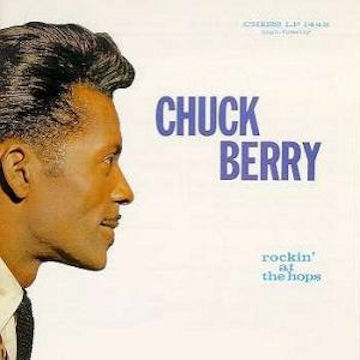
I hope you all enjoyed the first two discs, the next three are even more intruiging as Leonard Chess expands his roster and aspirations.  Individual players from Muddy Waters' band begin succesful recording careers of their own.  New and creative artists like Bo Diddley and Chuck Berry arrive, and by disc 5, Chess is a varied and multi faceted label.

Something that you should know, Leonard Chess also began recording jazz around this time as well.  Gene Ammons, Sonny Stitt and even the great Benny Goodman were some of the first artists to record jazz on the Chess imprint.  I think it would have been a great idea to include the Chess label jazz sides, just as a measure of Leonard Chess' great taste.  Another area which is omitted, would be comedy LPs.  Pigmeat Markham and Moms Mabley were frequent releases during these early years at Chess.  Most of the sides were recorded live, but the comedy album held much esteem back in the day.

For my personal tastes, these 3 discs are the strongest in terms of all around impact.  Musically, creatively and what would eventually be, historically too.  The next few discs are also incredibly strong, so buckle up...  Enjoy!!!


The Chess Story 1947 - 1975: Part 1 1947 - 1956 (Disc 1 & 2)

Chess Records was an American record label based in Chicago, Illinois. It specialized in blues, R&B, soul, gospel music, early rock and roll, and occasional jazz releases.
Run by brothers Leonard and Phil Chess, the company produced and released many important singles and albums, which are now regarded as central to the rock music canon. Musician and critic Cub Koda described Chess Records as "America's greatest blues label."  The Chess Records catalogue is now owned by Universal Music Group and managed by Geffen Records.

Chess Records was based at several different locations on the south side of Chicago, Illinois, initially at two different locations on South Cottage Grove Ave.  The most famous location was 2120 S. Michigan Avenue from around 1956 to 1965, immortalized by British rock group The Rolling Stones in "2120 South Michigan Avenue", an instrumental recorded at that address during their first U.S. tour in 1964; the Stones would record at Chess Studios on two more occasions. The building is now home to Willie Dixon's Blues Heaven Foundation. In the mid-60s Chess re-located to a much larger building at 320 East 21st Street, the label's final Chicago home.

Leonard bought a stake in a record company called Aristocrat Records in 1947; in 1950, Leonard brought his brother, Phil into the operation and they became sole owners of the company, renaming it Chess Records. The first release on Chess was the 78 RPM single "My Foolish Heart" b/w "Bless You" by Gene Ammons, which was released as Chess 1425 in June 1950, and became the label's biggest hit of the year.

In 1951, the Chess brothers began an association with Sam Phillips' Memphis Recording Service. One of the most important recordings that Phillips gave to Chess was "Rocket 88" by Jackie Brenston and his Delta Cats which topped Billboard magazine's R&B Records chart and was inducted into the Grammy Hall of Fame in 1998 because of its influence as a rock and roll single. One of the most important artists that came out of Memphis was Howlin' Wolf, who stayed with the label until his death in 1976.

In 1952, the brothers also started Checker Records as an alternative label for radio play (radio stations would only play a limited number of records for any one imprint). In December 1955, they launched a jazz and pop label called Marterry (a name created from the first names of Leonard and Phil's sons Marshall and Terry). This was quickly renamed Argo Records, but the name was changed again in 1965 to Cadet Records to end confusion with an older British classical music label.

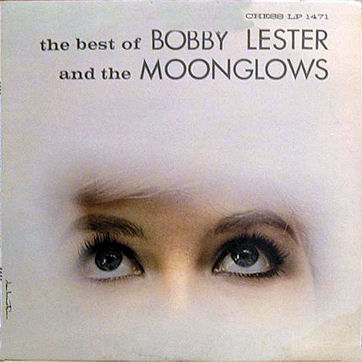
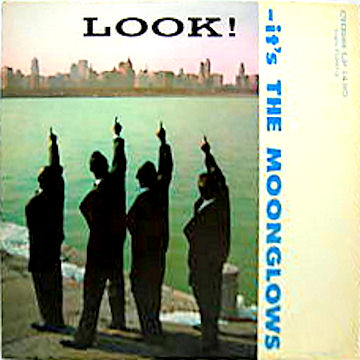
In 1953, Leonard Chess and Gene Goodman set up Arc Music BMI, a publishing company that would publish songs by many rhythm and blues artists. In the mid 1950s the Chess brothers received two doo-wop groups by Alan Freed, the Coronets and the Moonglows; the former group was not very popular but the latter achieved several crossover hits including "Sincerely", which was inducted into the Grammy Hall of Fame in 2002. Several of Chess's releases gave a writing credit to Alan Freed. During the 1950s, Leonard and Phil Chess handled most of the production. They brought in legendary producer, Ralph Bass in 1960 to handle the gospel output and some of the blues singers. Bassist and songwriter Willie Dixon was also heavily involved in organizing blues sessions for the label, and is now credited retroactively as a producer on some re-releases. During the 1960s, the company's A&R manager and chief producer for soul/R&B recordings was Roquel "Billy" Davis, who had previously worked with Motown founder Berry Gordy on songs for Jackie Wilson, Etta James, Marv Johnson and on early Motown releases.

Female fans at a Little Walter store appearance.
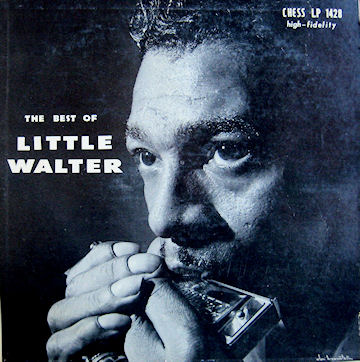
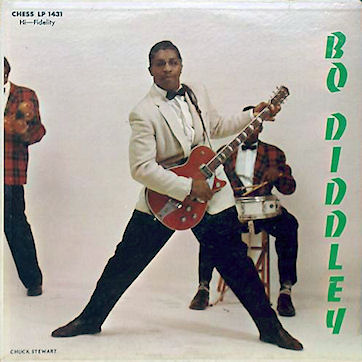
In 1958, Chess began producing their first LP records which included such albums as The Best of Muddy Waters, Best of Little Walter, and Bo Diddley. Chess Records was also known for its regular band of session musicians who played on most of the company's Chicago soul recordings, such as drummer Maurice White and bassist Louis Satterfield, both of whom would later shape the funk group Earth, Wind, & Fire; guitarists Pete Cosey, Gerald Sims and Phil Upchurch; pianist Leonard Caston, later a producer with Motown; and organist Sonny Thompson.

In 1969, Chess Records established a subsidiary label called Middle Earth Records in the U.K., which was distributed by Pye Records. The subsidiary specialized in Psychedelic rock and was a joint venture with the Middle Earth Club in London. The Middle Earth label released only 4 albums titles and about a dozen singles before it was closed in 1970. The company was briefly run by Marshall Chess, son of Leonard, in his position as vice-president between January and October 1969, and then as president, following its acquisition by GRT, before he went on to found Rolling Stones Records. In 1969, the Chess brothers sold the label to General Recorded Tape (GRT) for $6.5 million. In October 1969, Leonard Chess died and by 1972, the only part of Chess Records still operating in Chicago was the recording studio, Ter-Mar Studios.

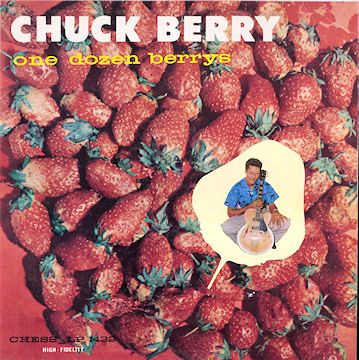
Although Chess had produced many R&B number ones and major pop hits over the years, it was in 1972 that the label finally reached the top of the Billboard Hot 100 with Chuck Berry's "My Ding-A-Ling", a live recording from a concert in Manchester, England. However, this became the company's 'swansong' release. GRT had moved the label to New York City, operating it as a division of Janus Records. Under GRT, Chess effectively vanished as an important force in the recording industry. In August 1975, GRT sold what remained of Chess Records to New Jersey-based All Platinum Records.

In the early 1980s, noticing that much of the Chess catalog was unavailable, Marshall Chess was able to convince Joe and Sylvia Robinson, who ran All Platinum, to re-issue the catalog themselves under his supervision (All Platinum had been licensing selected tracks out to other companies, which ultimately resulted in the disappearance of some original master tapes). The re-issued singles and LPs sold well, but by the mid-80s, All Platinum fell into financial difficulties and the Chess master recordings were acquired by MCA Records, which itself was later merged into Universal Music imprint, Geffen Records.

_______________________________________________

This post marks the beginning of a wonderful journey for all of us.  I'm really excited to share The Chess Story - a 3 part, 14 disc monster of a collection.  The incredible part of the "story" is also told in what it lacks, its jazz arm.  There are some jazz gems included but for the most part we are treated to everything else that Chess was involved in.

Unless you are willing to shell out some big bucks for a copy on the used market, this set has long been OOP.  For those who are fortunate enough to already own it, I encourage you to listen along with us and share your thoughts.

The set runs chronologically, in three parts.  We will kick it off from the formative years, the genesis of Chess.  Part 1 has some really wonderful music, much of which was performed by artists I have never heard of.  I will give you guys some time to listen and hopefully we can get a good chat goin. 

I worked quite hard at tagging this thing as each part has its own cover, title, etc.  I would suggest starting a folder for the entire set, and simply add the discs as you receive them.  Once they are all in your folder, the tagging will be complete and based on that.  Enjoy!!!


First the good news, which is really good: the sound on this 340-song set is about as good as one ever fantasized it could be, and that means it runs circles around any prior reissues; from the earliest Aristocrat sides by the Five Blazers and Jump Jackson & His Orchestra right up through Muddy Waters' "Going Down to Main Street," it doesn't get any better than this set. The clarity pays a lot of bonuses, beginning with the impression that it gives of various artists' instrumental prowess. In sharp contrast to the past efforts in this direction by MCA, however, the producers of this set have not emasculated the sound in the course of cleaning it up, as was the case with the Chuck Berry box, in particular. When the rock & roll era dawns at Chess as depicted on disc five, the sound is nice and dirty, just really sharp. The contents of the set are largely "limited" -- if that's the word for any 340-song collection -- to Chess' blues, R&B, rock & roll, and soul output, although Ramsey Lewis gets a nod, as does comedian Pigmeat Markham. What's more, the care lavished on the songs is virtually universal -- there was time spent getting all of it right. One wishes that the same could be said for one of the featured bonuses on this set, the CD-ROM that comprises the 15th disc (disc 14 is a pair of interviews with Phil Chess and Marshall Chess). First, there are the skimpy film clips, misspellings ("Arether Franklin") and incorrect dates. There also would have been enough room to put a complete Chess discography on the CD-ROM, rather than just the MCA reissues of Chess' material. The CDs themselves conveniently assembled in three fold-out volumes in a slipcase, but identifying individual tracks and artists means constantly referring back to the booklets glued into those volumes; additionally, it would've been nice to have had a sessionography on the songs, or at least the release dates, or even release years. This set is available only as a British import as of the spring of 2000; it is unbeatable for sound, and should be considered on that -- but only on that -- basis.  - Bruce Eder/AMG