Wednesday, January 2, 2013

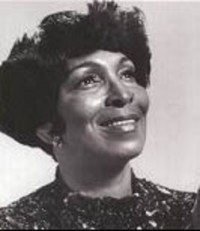
Fontella Bass - The Very Best Of

 (NY Times Obituary)

wiki "Fontella Bass (July 3, 1940 – December 26, 2012) was an American R&B soul singer best known for her 1965 hit, "Rescue Me".

Fontella Bass was born in St. Louis, Missouri, the daughter of gospel singer Martha Bass (a member of the Clara Ward Singers). At an early age, Fontella showed great musical talent – at five years old she was providing the piano accompaniment for her grandmother's singing at funeral services, she was singing in her church's choir at six years old and by the time she was nine she was accompanying her mother on tours throughout the American South and Southwest.

Fontella continued touring with her mother until the age of sixteen. As a teenager, Bass was attracted by more secular music. She began singing R&B songs at local contests and fairs while attending Soldan High School where she graduated from in 1958. At seventeen, she started her professional career working at the Showboat Club near Chain of Rocks, Missouri. In 1961, she auditioned on a dare for the Leon Claxton carnival show and was hired to play piano and sing in the chorus for two weeks, making $175 per week for the two weeks it was in town. She wanted to go on tour with Claxton but her mother refused and according to Bass "... she literally dragged me off the train". It was during this brief stint with Claxton that she was heard by vocalist Little Milton and his bandleader Oliver Sain who hired her to back Little Milton on piano for concerts and recording.
 

Bass originally only played piano with the band, but one night Milton didn't show up on time so Sain asked her to sing and she was soon given her own featured vocal spot in the show. Milton and Sain eventually split up and Bass went with Sain; he also recruited male singer Bobby McClure and the group became known as "The Oliver Sain Soul Revue featuring Fontella and Bobby McClure".

With the support of Bob Lyons, the manager of St. Louis station KATZ, Bass recorded several songs released through Bobbin Records and produced by Ike Turner. She saw no notable success outside her home town. It was also during this period she met and subsequently married the noted jazz trumpeter Lester Bowie.

Two years later she quit the band and moved to Chicago after a dispute with Oliver Sain. She auditioned for Chess Records, who immediately signed her as a recording artist. Her first works with the label were several duets with Bobby McClure, who had also been signed to the label. Released early in 1965, their recording "Don't Mess Up a Good Thing" (credited to Oliver Sain) found immediate success, reaching the top five at R&B radio and peaking at #33 at pop. In 1979 the song was covered by Ry Cooder with Chaka Khan on Cooder's album Bop 'Til You Drop.

Bass and McClure followed their early success with "You'll Miss Me (When I'm Gone)" that summer, a song that had mild success, reaching the Top 30 on the R&B chart, although it made no significant impression on the pop chart. After a brief tour, Bass returned to the studio. The result was an original composition with an aggressive rhythm section; backing musicians on the track included drummer Maurice White (later the leader of Earth, Wind, & Fire), bassist Louis Satterfield and tenor saxophonist Gene Barge, with the young Minnie Riperton among the background singers. The song, "Rescue Me", shot up the charts in the fall and winter of 1965. After a month-long run at the top of the R&B charts, the song reached #4 on the US pop charts and #11 in the UK, and gave Chess its first million-selling single since Chuck Berry a decade earlier. It sold over one million copies, and was awarded a gold disc.

Bass followed with "Recovery," which did moderately well, peaking at #13 (R&B) and #37 (pop) in early 1966. The same year brought two more R&B hits, "I Can't Rest" (backed with "I Surrender)" and "You'll Never Know." Her only album with Chess Records, The New Look, sold reasonably well, but Bass soon became disillusioned with Chess and decided to leave the label after only two years, in 1967. Bass claimed that, although the credited co-writers Carl Smith and Raynard Miner, and record producer Billy Davis, had assured her that her contribution to co-writing the lyrics of "Rescue Me" would be acknowledged, this was never done.

    "I had the first million seller for Chess since Chuck Berry about 10 years before. Things were riding high for them, but when it came time to collect my first royalty check, I looked at it, saw how little it was, tore it up and threw it back across the desk."

Bass demanded a better royalty rate and artistic control; she approached her then manager Billy Davis about securing her writing credit on the song but was told not to worry about it. When the record came out and her name was still not on it she was told it would be on the legal documents, but this never happened. She continued to agitate about the matter for a couple of years but later recalled: "It actually side-stepped me in the business because I got a reputation of being a trouble maker." It was many years and much litigation before Bass would be credited with her share of the songwriting and the royalties.

Tiring of the mainstream music scene, she and husband Lester Bowie left America and moved to Paris in 1969, where she recorded two albums with the Art Ensemble of Chicago – Art Ensemble of Chicago with Fontella Bass and Les Stances a Sophie (both 1970). The latter was the soundtrack from the French movie of the same title. Bass's vocals, backed by the powerful, pulsating push of the band has allowed the "Theme De YoYo" to remain an underground cult classic ever since.[citation needed] She also appeared on Bowie's The Great Pretender (1981) and All the Magic (1982).

The next few years found Bass at a number of different labels, but saw no notable successes. After her second album, Free, flopped in 1972, Bass retired from music and concentrated on raising a family (she has four children with Bowie). She returned occasionally, being featured as a background vocalist on several recordings, including those by Bowie. In 1990 she recorded a gospel album with her mother and brother David Peaston, called Promises: A Family Portrait of Faith and undertook a fall tour of the US West Coast, called "Juke Joints and Jubilee", which featured both traditional gospel and blues performers. During the 1990s she hosted a short-lived Chicago radio talk show, released several gospel records on independent labels; through old friend Hamiet Bluiett, she was invited to perform three tracks on the World Saxophone Quartet album Breath of Life.

The original version of "Rescue Me" was utilized in a TV advertising campaign by American Express: Fontella Bass has stated that she was at a low point in her life when on New Year's Day 1990 she was astonished to hear her own voice singing "Rescue Me" on the American Express television ad. The experience gave Bass the inspiration to set her life in order: it also motivated her to make queries over the commercial use of her recording of "Rescue Me" with the ultimate result a 1993 settlement with American Express and its advertising agency awarding Bass $50,000 plus punitive damages

Like many artists of her time, Bass experienced a revival of interest. She was featured on the PBS Special and accompanying DVD, Soul Celebration. Soul Spectacular recorded live at Heinz Hall in Pittsburgh, PA, November 2001. Her voice can be heard on two tracks on The Cinematic Orchestra's 2002 album Every Day, and another two tracks on their 2007 album Ma Fleur.

Bass received a star on the St. Louis Walk of Fame in the Loop in May 2000....Her health started fading after a series of strokes beginning in 2005. On December 26, 2012, she died at a St. Louis hospice from complications of a heart attack suffered earlier in the month of December 2012; she was 72."

Tuesday, January 1, 2013

Blues From Dolphin's of Hollywood


"The legendary John Dolphin, also known as Lovin’ John, was one of the first and most well respected, black business man who made his way in the music business of Los Angeles in the 1940s and 50s. An independent record label owner and R&B producer, his contributions to the formative years of Rock & Roll are often overlooked. A minimogul who had almost every facet of the record business covered, was taking storm of this segregated town and bringing people of all colors together through music.
Dolphin first entered the music business as a retailer where in 1948, when he opened Dolphin’s of Hollywood, a record store on Vernon Avenue that would stay open 24 hours a day to cater to the

late-shift workforce. The store featured deejays broadcasting on the local station of KRKD, in front of the huge, glass window Mr. Dolphin had installed on the face of the store so that people on the outside could see in. Some of the most popular deejays found a home for their art in front of this window, playing for late night crowds of Blacks, Whites, and Latinos alike, who would dance and party together well after dark, until the cops came in and shut the parties down.
Party time began with DJ Ray Robinson, followed by DJ Hunter Hancock, and Dick “Huggy Boy” Hugg. John would have the deejays play records from his own label, but more than that, he would introduce brilliant recordings also from other record labels and artists whom had not previously received proper publicity. By this technique, John made Billboard hits of many recordings that had been nearly shelved by everyone else. A few of these hits include “Earth Angel” by The Penguins and “Dream Girl” by Jessie Belvin.
Dolphin’s of Hollywood, located in the South Central/Watts area of Los Angeles, on East Vernon Ave, near the corner of Central Ave., was given this name because Mr. John Dolphin initially wanted to open his store in Hollywood. However, Blacks were not allowed to own and operate businesses in Hollywood in the 1940s. So, John Dolphin thought up the next best thing, he would call his South Central store Dolphin’s of Hollywood. This was how he brought Hollywood to the hood and this record shop would soon become the most famous record shop in America, but also, its radio show on KRKD became the most popular black radio show in America. In fact, recording artists from all over would

appear at the store and perform live-on-air interviews, while greeting and signing autographs for the customers. These well-known artists included Billie Holiday, Lionel Hampton, Sarah Vaughan, Little Richard, James Brown “the Godfather of Soul”, Sam Cooke, Marvin Gaye, Quincy Jones, B.B. King, Aretha Franklin, Etta James, Ike and Tina Turner, Fifth Dimension, Solomon Burke just to name a few. Open 24 hours a day, even on Sundays, customers could come at all hours of the day and capitalize on the “Buy One Get One Free” special, while hundreds would dance the Saturday nights away in front of the store, to the deejay’s tunes.
John Dolphin not only brought Hollywood to the hood, but he also brought fame to many underserved, talented, black artists whom had been hidden behind the facade of Crossover music. This Crossover Music concept was essentially taking music originally recorded by African Americans and having white artists re-record it, as during this time, most black music was considered taboo and hard to sell to the masses. So John, hiring one of the most famous white deejay of the time, DJ Dick “Huggy Boy” Hugg, drew white teenagers and young adults to Dolphin’s of Hollywood in ever increasing numbers. And these crowds would buy black music, learning the lyrics and tunes, and share them with their friends; bringing fame to musicians whose music had previously been stolen from them without regard.
In 1950, John Dolphin mounted his own label, Recorded In Hollywood, with the motto: “We’ll record you today and have you a hit tonight,” inaugurated by jazz pianist Erroll Garner’s “Lotus Blue.” The imprint scored its first major hit with its sophomore release by R&B singer Percy Mayfield. The song was called “Two Years of Torture” and was followed by the “Dream Girl” record of Jesse Belvin and the “Jacquet Blows the Blues” record of tenor saxophonist Illinois Jacquet. In mid-1951, Dolphin cut a licensing deal with King Records. This resulted in nearly two-dozen Recorded in Hollywood recordings earning national release on King’s Federal imprint. In 1953, John Dolphin introduced Little Caesar’s “The River”, a record later banned for fear its emotional intensity might have led listeners to contemplate suicide. So in 1954, Lovin’ John sold Recorded in Hollywood and its catalog to Decca, soon after founding a new label: Lucky Records. This new venture proved short-lived, releasing only nine singles, including efforts from the Hollywood Flames, Joe Houston, and Jimmy Wright.
Later on, a pair of additional labels, Money and Cash, soon took Lucky’s place. Money was the more successful of the two, notching local smashes including Ernie Freeman’s “Jivin’ Around,” Johnny Fuller’s “Mean Old World,” and Don Julian & the Meadowlarks’ “The Jerk”, which sold about 2 million records and topped the billboard Pop and R&B charts at #1 in the U.S. and also went on to become a #1 hit in Great Britain.
Now, the commercial impact of most of the records released under Mr. Dolphin’s labels had been nearly impossible to gauge, as he would bypass distributors, delivering boxes of records directly to the front doors of rival retailers. The philosophy he established with his artist was that they should never sell their publishing rights, for the one who owns an artist’s publishing rights owns the artist. When an artist gives up their publishing rights in exchange for a cash advance, the result is that the music publisher then has the ability to exploit an artist’s music however they chose, in exchange for money, which the artist will see little or none of. So this is why John was so adamant about his artists retaining their rights. He felt that black artists had been exploited long enough, so this was his attempt to stop the cycle in its tracks.
After an influential ten years in the music business, on February 2, 1958, Percy Ivy, a disgruntled songwriter whom had recorded with John, went to John Dolphin’s Hollywood office to demand money for his un-noteworthy recordings. John made these recordings as a favor to Ivy but had no intention of ever using any of them. His generosity should have been enough for Percy and no money should have been owed. However, Ivy thought otherwise. With a gun in his pocket and demands on his mind, Percy shot John Dolphin dead behind the desk of his office. Two young people, future session drummer Sandy Nelson and later-day Beach Boy, Bruce Johnston; both of whom traveled to South Central in the hopes of enticing John with their songs, witnessed the murder. This was a devastating day for all those who would come to know and later remember Lovin’ John. After the untimely death of Mr. Dolphin, Dolphin’s of Hollywood was run by Dolphin’s assistant, Rudy Ray Moore, also known as Dolemite, along with John’s widow, Ruth Dolphin. Ruth would later reactivate Money Records, which served as a springboard for the great soul chanteuse Bettye Swann and her 1967 smash hit single, “Make Me Yours” which became a #1 Billboard hit for Money Record."

Saturday, December 29, 2012

Percy Mayfield - Blues Laureate; The RCA Years

Part 4 of this series, there is some remaining material that I've yet to aquire, most of it Live with Pee Wee Crayton; anybody have it?

I think I am a little burned out on writing about Percy Mayfield so I've grabbed Thom Jurek's enthusiastic review. Once again I had the experience of being jarred by the even more modern sounding band the first time I heard this one but by half way through I was loving it!

"When Percy Mayfield's contract as composer and performer with Ray Charles -- a business association that lasted seven long years -- because of disagreements with Brother Ray's manager Joe Adams, Mayfield cut an album for Brunswick in 1968, and then signed with Andy Stroud -- husband and manager of Nina Simone -- at RCA. The albums Mayfield cut for the label in 1970 and 1971 (Percy Mayfield Sings, Percy Mayfield, Weakness Is a Thing Called Man, and Blues and Then Some) were excellent. Mayfield's writing and voice were in great shape, and he was surrounded by both crack and sympathetic studio talent on these sides -- Eric Gale, Chuck Rainey, Pretty Purdie, Snooky Young, and Richard Tee to name a few -- as well as full horn sections and female backing vocalists. While it would have been great to get these albums in their entirety on a double-disc, Australia's excellent Raven imprint has compiled 25 tracks from them for Blues Laureate: The RCA Years. The bottom line is that this material is fantastic. It may be of a particular period, but it's timeless. Whether it's one of the funky sides like "You Wear Your Hair Too Long," or the shuffling, funky soul-blues of "Live Today Like the Day Before," the Chicago blues ballad "The Highway Is Like a Woman," the deep, mournful soul of "Weakness Is a Thing Called Man," or the audacious street corner, trash-talking poetry of "The Devil Made Me Do It" (not a novelty song), the result is the same. These tunes reflect the changes the blues were going through, but were anchored by the solid, deeply focused vision of a singer and songwriter who understood the trends; unfortunately, not all the people at his record companies always did."

Percy Mayfield - Walking On A Tightrope

 Percy Mayfield ‎– Walking On A Tightrope 

Brunswick – BL 754145
Released: 1969, Rhythm & Blues

A1 Walking On A Tightrope        
A2 I Made It Just The Same        
A3 My Pain Is Here To Stay        
A4 Alma Lee        
A5 Please Send Me Someone To Love        
B1 P.M. Blues        
B2 My Mind Is Trying To Leave Me        
B3 Danger Zone        
B4 'Sho Gonna Leave You Alone        
B5 My Baby's Gone        
B6 To Me Your Name Is Love

This one is brought to you by Guitar Gus and it slots right in behind the Tangerine sides but before the RCA sides. It is, of course, absolutely killer, I would be a bit shocked if I were ever to hear ANY Percy that was anything less by this point. I have heard the late live recordings and they too are the bomb. I feel pretty safe in saying that he never made a clunker.

On the new songs here you get the definite impression that Percy has become obsessed with potential insanity and drinking as they now occupy equal space with women and heartbreak as song themes. I am not sure who all is playing with Mayfield but from the sound of things it was a top-notch ensemble.

For this re-post I am also including a link with some of the bit's and pieces from before and after the Specialty sides; a couple from Supreme, one from Chess and the others from Cash.

Percy Mayfield - His Tangerine and Atlantic Sides

I know that this one is the hardest of the bunch to find, we have Cliff to thank for this.

Billy Vera's liner notes from this set have cleared up some issues in the previous Mayfield post, confirming my suspicions about Percy's ongoing relationship with Specialty's Art Rupe (Percy called him Poppa in his letters) and clearing up some aspects of both their states of mind at the time Percy's contract expired in 1955. Rupe was losing interest in the record business, having financial issues of his own, and shifting focus to his other enterprises.  Right around the time he allows Percy to leave he also has a fit and fires Sam Cooke and Bumps Blackwell for, as it turns out, making Sam's first secular megahits. The notes also place the correspondence between them that I referenced as being early in 1959 (rather than 53 or 54) while Percy was living in Minden, thus proving my speculation incorrect. The one and two off sessions were, as I suspected, favors to the singer from Rupe to help him generate some cash and possibly attract a new label. Finally, they also help place the time that Mayfield moved back to Los Angeles as being in early 1961.

Not long after returning to L.A. Percy reconnected with old friend Ray Charles who had just left Atlantic and was basking in stardom and new privilege at ABC. Amongst the many concessions made to the star was his own record label, distributed by ABC, that he was quickly populating with old friends and neglected artists that he enjoyed. Daddy Ray was nobody's dummy and he had no problem seeing the value of a 'house writer' who was also still a fine performer, particularly one who came bearing a gift like "Hit The Road Jack". Ray signed Percy into the Tangerine fold, where he joined Jimmy Scott, Louis Jordan and Lula Reed, and Percy set about writing a whole new round of songs, many tailored just for Ray like "Hide Nor Hair", "The Danger Zone" and "My Baby Don't Dig Me Anymore".

Mayfield was not just the staff songwriter though, he also got to record while at Tangerine and made three strong albums included here with a pair of stray Atlantic tracks tacked on the end (don't see any story about those). I am fond of the arrangements and instrumentation on these songs, no strings or chorus' here but always a strong horn section and some killer rhythm sections too. Great new songs like "Ha Ha in the Daytime", "Never No More" and of course "Stranger In My Home Town" (which is covered by Elvis!) are mixed in with remakes of old Specialty hits, the sound is updated, a bit more modern but it still suits Percy to a tee. This music is pretty much everything a Percy fan could hope for.

Percy Mayfield - The Specialty Years

I am pretty much forced to move these forward when I refresh the links just to get enough action on them to make it worth the trouble.

 It has taken me quite awhile to assemble this piece as the information that is out there is sparse, often contradictory, and just as often outright wrong. The most common errors that I've found were elements of the story out of place on the actual discography timeline and thus conclusions are drawn that prove false when the actual sequence of events is considered. Even the liner notes to both of these releases had glaring errors. I have resolved the elements as much as I can against the timeline from the Blues Discography and articles sourced from Minden, LA, but I have been forced to speculate in several areas where more detailed information is needed. Personal memoirs from both Mayfield and Rupe would go a long way to making it possible to tell this story properly.

Percy Mayfield (August 12, 1920 – August 11, 1984) Mayfield was born in Minden, the seat of Webster Parish in northwestern Louisiana.

Mayfield grew up in the piney forest area of northwest Louisiana near Shreveport. He must have had exceptional gifts from the start because here was a young black man in the 1930's, in an area not known for it's progressive views on race, who is actually recognized as having genuine poetry writing talent and so is encouraged to become a professional songwriter.

Songwriting usually leads to singing as it is awfully hard to sell someone on a song until they hear it, so after high school Percy heads to Houston to start a music career whilst taking odd jobs to keep food in his stomach and a roof over his head. Like many a southern black man during the war years he finds his way to Los Angeles for work in 1942, continuing to take odd jobs while gigging with what ever band he could while also trying to shop his songs to whomever would listen.

During this era of balancing day jobs and music, Mayfield manages to get 4 sides cut up in Oakland at Gru-V-Tone in 1947 (publishing date is 48, likely recorded in 47) including the powerful "Two Years of Torture". It is likely that it is with that record in hand as a demo that he approaches Supreme Records about using the song as a vehicle for Jimmy Witherspoon. The deciders at Supreme like Percy's demo enough that they have him record the song instead, it is released in 1949. It is at that Supreme session that Mayfield begins a fruitful relationship with saxophone player and arranger Maxwell Davis, the architect of the West Coast Blues sound.

'Torture' sells consistently in southern markets for an extended period of time thus attracting the attention of Art Rupe of Specialty Records who signs Mayfield in 1950, reuniting him in the studio with Maxwell Davis. Rupe releases "Please Send Me Someone To Love" in the fall of 1950 to explosive success. The personal and social lament captures the conscious of Korean War America, reaching number 1 on the R&B charts. That same session produced "Strange Things Happening", "Life Is Suicide", and "Praying for Your Return". Two more sessions before the close of 1950 produce 5 more singles (out of 8 possible!) and in early 1951 "Two Years of Torture" is leased and re-released on both Swing Time and King, doing even better this time as it rides the coattails of the first Specialty releases. Percy is on his way at the relatively late age of 29.


Although his vocal style was certainly influenced by Charles Brown, Cecil Gant and the other L.A. Club Blues singers, Mayfield never pursued the white market, much like Bobby Bland he seemed content to be an R&B success. Percy remained true to his bleak fatalist songs and the keen intelligence and penetrating insight of his lyrics. His languid baritone was perfectly suited to his writing but he could perk it up and give some Nat Cole swing to a more up-beat song when it was needed.

Mayfield likely spent the rest of 1950 and the first half of 1951 touring the bars and theaters of the chitlin circuit in support of his opening salvo at Specialty. He quickly became a major female draw with his tortured, emotional songs and matinee idol good looks. Personal appearances were heavily attended by dewy-eyed young ladies but the working parents dug him too. Within the 'race market' Percy is the new, younger, deeper alternative to Wynonie Harris as a chick magnet.
The caption here is even in error as the song mentioned was recorded in 1954

In July of 1951 Rupe finally gets Mayfield and Davis back into the studio for a double session which produces 5 new singles: "Cry Baby", "Nappin' the Nickles (Hopeless)", "I Dare You Baby", the magnificent "Lost Mind" and "How Deep is the Well". One must assume that another torrid round of promotion and touring follows because Mayfield does not return to the studio until January of 1952, but then the magic continues  with "The Hunt is On", "The Big Question", "My Heart" and "The River's Invitation". A March 1952 session adds "Lonesome Highway", "Wasted Dream", and a subtle indicator that the pace may be getting to Percy with his wistful remembrance of home in "Louisiana".

Throughout 1952 Mayfield is riding high, each new single release adds to his success and popularity, every release is his own song so he is getting the big money too and now other artists are beginning to cover his songs, thus fulfilling his original dream of being a successful songwriter and providing an independent stream of income. The future is so bright he must need shades; he even has a successful European tour, he is relatively young, still pretty, and he is getting rich, and then....

In September of 1952 Percy is involved in a horrific auto accident while returning home to L.A. after a show in Las Vegas. Mayfield is critically injured, his face disfigured and his skull cracked and mashed out of shape. Miraculously he lives without brain injury or even much noticeable effect on his singing or diction. Most sources refer here to a long (he may have been unconscious as much as a month) period of recuperation which is certainly what one would expect after so horrible a trauma. (Reports that Mayfield returned to Minden, Louisiana during this period are incorrect.) The period of recuperation, however, is no where near what one would expect  and somehow Mayfield is back in the studio within 5 months of the accident; still penning phenomenal tunes and sounding essentially the same vocally as before the accident, perhaps a scosh deeper in tone.


One of the tracks laid down in that first session back clearly speaks to the trauma of his accident and recovery, his immortal "Memory Pain". A second session follows in April of 1953 with 3 more singles including 'Get Way Back', 'Kiss Tomorrow Goodbye', 'Advice (for Men Only)' and a second version of 'Memory Pain'.

Understandably Mayfield was reluctant to tour or do promotional appearances, the psychological damage of his disfigurement had to be every bit as devastating as the physical damage, particularly given the previous circumstances of his life, but I have yet to read a single author who even discusses it! It is generally stated that his subsequent touring was drastically curtailed after the accident, but we will see that even that is not entirely true either.


Somehow by September of 1953, one year after the accident, Percy found the courage to agree to a short tour in support of the records, culminating in a holiday show in Los Angeles. One can only guess what sort of toll it must have cost the once matinee idol handsome man, his face now mashed and twisted nearly Quasimodo like, to appear in public and sing each night. The strength and courage it must have taken is unimaginable.

In 1954 Mayfield enters the last 17 months of his Specialty contract, at least to some point at odds
Perrcy and the Maytones
with owner Art Rupe and his business model for how the industry works. Percy keeps what would seem to most of us a busy schedule of appearances from Texas to L.A. and up the West Coast but admittedly nothing near the schedule of before the accident. Rupe only sent him into the studio two more times and the last six months of the contract elapse without a session. Rupe is reportedly beginning to lose interest in the record industry around this time, and has some pressures of his own that are leading to some poor choices. (It was around the same time that he fired Sam Cooke and Bumps Blackwell abruptly and allowed them to leave with what turned out to be Sam's first secular hits) For his own part Percy is clearly depressed and drinking heavily, so his behavior may well have become erratic.

The March 1954 session is uncommonly sparse for Percy but it yields an incongruous duet with Joy Hamilton called "Sugar Mama, Peachy Papa" that is somewhat bizarre, and the eerie and magnificent "You Don't Exist No More". The final October session produces "You Were Lying To Me", "My Heart Is Crying", "Baby Your Rich" and his final Specialty triumph, "The Voice Within". Mayfield's contract expires in May of 1955 with no additional recordings.

Given the paucity of decent songwriting talent in relation to the swelling number of artists in the mid-50's it is hard to fathom how it did not occur to Rupe to retain Mayfield in some sort of in-house role. Perhaps the personal relationship had become too complicated by this time. The two maintain a correspondence, at least in part around the mailing of royalty checks and periodically Mayfield sends Rupe new songs that he allows the singer to record in hopes of generating some new money or landing a new contract. 1 and 2 track sessions show up later in the discography in 1956, 57 and 60.

Once he is contractually free in May of 1955, Mayfield shops himself around for a new label and makes a somewhat puzzling choice in Chess Records; puzzling both from his point of view and the label's since Chess had demonstrated no ability whatsoever to deal with anything other than their own style of Chicago Blues. Their only success in the Club Blues area was Lowell Fulson whose success was predicated on staying away from Leonard Chess and Willie Dixon and literally mailing in his finished sessions from Los Angeles. Percy likely only considered the financial aspects at the time. It isn't clear exactly how many sides he laid down for Chess, but only one 45 'Are You Out There/Double Dealing' gets released and the year-long contract expired with nothing more to show.


Through the remainder of the 50's Mayfield gradually slips further and further into obscurity, punctuated by the occasional unsuccessful singles coming out on various independents like Cash and Imperial. It is during this time (circa 1955) that he finally acts on the wistful longing for home expressed in  1952's 'Louisiana' and he builds himself a house repleat with home studio in Minden. Sadly the return to his roots doesn't go so well, old friends and family don't warm up to the long absent, returning native son and neither does the local constabulary. Mayfield is unhappy in Minden, he is busted on pot charges and otherwise harassed. Around this time (1959) that Percy pens a heartbreaking letter to Rupe begging both financial help and help with getting a recording session because he is "too ugly to tour". Rupe sends Percy some money and arranges a session even though he is nearly through with the business and is busy becoming an oil man. Mayfield eventually moves back to Los Angeles in early 1961 bearing at least two important souvenirs of his failed attempt to go home...'Stranger In My Home Town' and  'Hit The Road Jack', a song that would jump start his life and his career.


Wednesday, December 26, 2012

Vee-Jay Records - The Definitive Collection

 Vee-Jay Records was the most successful black-owned independent record label in the pre-Motown era (Berry Gordy actually used Vee-Jay as a template in many ways when he set up Motown), placing records in the charts in an amazing diversity of styles, from blues and urban R&B to doo wop, straight pop, jazz, and gospel. Formed in Gary, IN, in 1953 (the label moved its base to Chicago soon after) by the husband-and-wife team of Vivian Carter and James Bracken (the company name was an extension of the pair's first initials), and blessed with the assistance of Vivian's brother, Calvin Carter, a gifted and visionary A&R man, Vee-Jay had an aggressive recording, licensing, and marketing approach that saw them selling records to black and white audiences alike, and it worked so well that the label frequently had difficulty meeting the demands of its distributors, which meant that Vee-Jay was often facing cash-flow problems. Still, when the label finally closed its doors in 1966, it had outlasted most of the other black-owned record companies of the era, a list that included Exclusive, Excelsior, Duke-Peacock, and JVB. This four-disc, 85-track box set chronologically reveals the Vee-Jay story, and it is an astounding mix of genres and styles. One of the label's first big finds was the laconic blues songwriter Jimmy Reed, and several of his biggest hits are here, including "Ain't That Lovin' You Baby" from 1955, "Baby What You Want Me to Do" from 1959, "Big Boss Man" from 1960, and "Bright Lights, Big City" from 1961. Also here are tracks by the Staple Singers ("Uncloudy Day" from 1956 and "Will the Circle Be Unbroken" from 1960), Gene Chandler (the timeless "Duke of Earl" from 1961), John Lee Hooker ("Boom Boom," also from 1961), the Four Seasons ("Sherry" from 1962), and the Honeycombs' "Have I the Right," which was recorded and produced by the eccentric Joe Meek in his home studio in 1964. There's even an early cut from a young Billy Preston, the hard charging instrumental "Billy's Bag" from 1964. What isn't here, unfortunately, no doubt due to licensing restrictions, are the two Beatles singles, "Please, Please Me" and "From Me to You," that Vee-Jay released in 1963, thus introducing Beatlemania to the U.S. at a time when even Capitol Records, EMI's American arm and thus first in line for the Beatles, failed to recognize the group's potential. Vee-Jay took risks and chances with its catalog, and that fearlessness in the face of the music marketplace kept the company constantly overextended financially and contributed mightily to the label's eventual demise, but the music that resulted was wonderfully diverse and vital, a central part of the sound of pop music in the 1950s and early '60s. After all, this is a label that gave the world (at least the U.S. part of it) both Jimmy Reed and the Beatles (not to mention the immortal "Duke of Earl"), and paved the way for Motown Records. That's not a bad legacy. Not bad at all. And it's only the tip of the iceberg.


Tuesday, December 25, 2012

Inez Andrews - With the Caravans and Andrewettes

Inez Andrews passed away on December 19th, Rest In Peace. Here is Pres' tribute from November.

 Inez Andrews is one of my favorite singers, somebody whose art has penetrated so deeply into my soul that it would be hard to imagine life without her.    Inez Andrews made quite a few memorable recordings over the last half decade, but her first astonishing records made with the Caravans in the late 50s and early 60s are the Foundation, and set a standard that Inez herself has only seldom equaled at other times in her career.   I know of no CD or LP that has gathered these tracks together.   So I have done the job myself.  I present here 11 classic Caravans tracks from 1958-1962 with Inez Andrews leads or co-leads, and have added five more dynamite tracks that Inez recorded immediately after leaving the Caravans in 1963 and forming her own group, the Andrewettes. 

Inez Andrews was born in Birmingham, Alabama in 1929.  Her mother was a gospel singer and Inez began performing in choirs at a very early age.  She toured the South in some of them.   Inez had built a strong local reputation by the time that Rev. James Cleveland persuaded her to join the Caravans in 1956.  The Caravans are one of the true super groups of gospel.  Their roster has included the likes of Albertina Walker, James Cleveland, Bessie Griffin, Cassietta George, Shirley Ceasar, Dorothy Norwood, and Dolores Washington.   At far as I am concerned, they were never more powerful than with Inez Andrews at the helm.    After leaving the Caravans, Inez Andrews has mostly led her own groups, as well as headlining various Caravans reunion concerts.

Inez Andrews may have never recorded any blues, but I would cite her as one of the blusiest singers who ever lived.   It is often said that Archie Brownlee sang the bluesiest version of the Lord's prayer.  But you will hear some strong competition for that title on the collection presented here.  Performances like "Show Me the Way" or "Mary Don't You Weep" sound like something of an answer to the question asked in the blues classic popularized by BB King, "How Blue Can You Get?"  Inez Andrews also shares a rare attribute of a few male singers like Archie Brownlee and Wilson Pickett - the ability to scream and sing at the same time.   Like with Brownlee, Inez Andrews' scream can be terrifying and send shivers down your spine, while at the same time calming and soothing your soul. 

For those of you who might be hearing this music for the first time, brace youself.  I hope that it can bring you at least a fraction of the satisfaction that it has given me over the years.


Track list

A) With the Caravans

1) He Won't Deny Me
2) I'm Willing
3) I'm Not Tired Yet
4) Your Friend
5) Mary Don't You Weep
6) Show Me The Way
7) They Didn't Believe In Me
8) The Way The Lord Needs Me
9) Hear Ye The Word
10) Hold to God's Unchanging Hand
11) Make It In

B)  With the Andrewettes

12) It Was Jesus
13) Let the Church Roll On
14) Look Up And Live
15) Sing A Song
16) I'm Glad About It
17) To Be Used of God

Saturday, December 22, 2012

Take Six - HE IS Christmas!

Every year since I started my blogging journey, I have posted this at Christmas because it is simply my favorite Christmas Album that I have ever heard. This year it moves here in hopes that it will finally get some of the love that it deserves but has never received at The Crypt. 

"Take 6 is an American a cappella gospel music sextet formed in 1980 on the campus of Oakwood College in Huntsville, Alabama. The group sings in a contemporary style, integrating R&B and jazz influences into their devotional songs and has 10 Grammy wins, 10 Dove Awards, one Soul Train Award and two NAACP Image Award nominations. They won Grammy Awards in 1988, 1989, 1990, 1991, 1994, 1997, and 2002, and have collaborated with other artists such as Stevie Wonder, Whitney Houston, Don Henley, Ray Charles, Queen Latifah, Joe Sample, Quincy Jones, Marcus Miller, Brian McKnight, Gordon Goodwin, k.d. lang, Luis Miguel, Ben Tankard and CeCe Winans.

In 1980, Claude McKnight (older brother of R&B musician Brian McKnight) formed an a cappella quartet, The Gentlemen's Estates Quartet, at Oakwood College (now Oakwood University), a Seventh-day Adventist university in Huntsville, Alabama, where he was a freshman. He auditioned fellow students for the hobby group. The Gentlemen were rehearsing in a campus bathroom (later said to be in Moran Hall), getting ready for a performance, when Mark Kibble heard them singing. He joined the harmonizing, adding a fifth part, and ended up singing with them onstage that very night. Mark later invited Mervyn Warren to join the group. The group performed under the moniker Alliance.

The group performed in local churches and on campus over the next years, with members changing due to college's inevitable comings and goings. In 1985, the lower half of the group (bass, baritone, and second tenor) left upon graduating. At that time, Alvin Chea, Cedric Dent, and David Thomas joined.

The group was signed to Warner Brothers in 1987, and quickly changed its name to Take 6 after a name search revealed Alliance was in use. Their eponymous debut album, released in 1988, won them two Grammy Awards and resulted in top ten appearances on both the Billboard Contemporary Jazz and Contemporary Christian Charts. Their swinging, harmony-rich sound attracted much attention; the group went on to record or appear with a number of luminaries, including Quincy Jones, Ella Fitzgerald, and Stevie Wonder, to name a few. They recorded for the soundtracks of Dick Tracy, Spike Lee's Do the Right Thing, Boyz n the Hood, and the theme song to the TV series Martin. They earned performances on Saturday Night Live, the Oscars, and the Grammys, and have had the honor of performing for four U.S sitting Presidents, including the Democratic National Convention.

In 1991, after the release of their second album, So Much 2 Say, Mervyn Warren left the group to pursue a career as a producer. Joey Kibble, Mark's younger brother, was invited to round out the vocal lineup. The group added instrumentation to their purely a cappella sound beginning with the record, He Is Christmas. Join The Band and Brothers continued their Grammy streak. Take 6's 1998 release, So Cool, brought the group back to its a cappella origins.

In 2006 the group launched Take 6 Records; Feels Good the first album on their new label, was released the same year.

In 2007, they recorded a duet with Eros Ramazzotti in his cd E² ("Eros al quadrato") singing backing vocals to the song Un attimo di pace.

In 2008, Take 6 released The Standard, which was a first time voyage for the group into a more traditional Jazz repertoire. The Standard, a critically hailed success, garnered three more Grammy nominations providing them the distinct honor of being the most Grammy nominated vocal group in history.

The group's home-base is Nashville, Tennessee, with two members residing in Los Angeles. All original members grew up Seventh-day Adventist.

Mahalia Jackson - Silent Night

I thought it would be better to put some Christmas music up early enough for it to be a part of your holiday. This first one is a poppachubby request.

One of these days someone will finally compile all the Christmas related music Mahalia did in the 50's onto one magnificent disc at least twice as long as this one but it hasn't happened yet so here are the 10 tracks on my disc.

While these recordings certainly capture Mother Mahalia in fine voice, they are somewhat marred by the addition of a white orchestra and chorus. I really wish they had at least used a black choir for crying out loud! The recordings were done during the period that white folks had "discovered" and crowned Mahalia the Queen of Gospel (a title which caused her much embarrassment in the Gospel world) and so they assumed that the same sterile packaging used on Bing Crosby would "improve" Mother's appeal (wretch!). Thankfully the majesty of her voice is able to triumph over the dreck foisted upon her.

Friday, December 21, 2012

Latimore - Sexy Miami Soul

Now surely you are hip to Latimore....no? Oh Boy! Are you in for a treat! 

I was never too thrilled with the reception Latimore got first time around and the link was dead anyway, so I'm bringing him back with a major addition of a second 'best' of collection covering the same time-frame with only two overlaps.
 
Benjamin "Benny" Latimore (born 7 September 1939, Charleston, Tennessee), usually known professionally simply as Latimore, is an American R&B singer, songwriter and pianist.

He was born in Charleston, Tennessee, and was influenced by country music, his Baptist church choir, and the blues. His first professional experience came as a pianist for various Florida-based groups including Joe Henderson and Steve Alaimo. He first recorded around 1965 for Henry Stone's Dade record label in Miami, Florida. In the early 1970s he moved to the Glades label, and had his first major hit in 1973 with a jazzy reworking of T-Bone Walker's "Stormy Monday", which reached #27 on the R&B chart.

His first national hit was a cover of Gladys Knight's "If You Were My Woman" (#70 R&B). His biggest success came in 1974, with "Let's Straighten It Out", an R&B chart #1 which also reached #31 on the U.S Billboard Hot 100 charts. He followed it up with more hits including "Keep The Home Fire Burnin'" (#5 R & B, 1975) and "Somethin' 'Bout 'Cha" (#7 R &B, 1976). However, the hits dried up in the late 1970s.

Latimore moved to Malaco Records in 1982, resulting in seven albums worth of modern soul music. He briefly left the label in 1994 and released a song for the J-Town label ("Turning Up The Mood") before returning to Malaco in 2000 with "You're Welcome To Ride". Next he recorded one album with Mel Waiters' label Brittney Records called "Latt is Back".

After several years he collaborated on a new record label with Henry Stone called LatStone, which issued his first new album in six years called "Back 'Atcha".

He has also continued to work as a session pianist. He appeared most recently on Joss Stone's albums, The Soul Sessions (2003) and Mind, Body & Soul (2004), along with fellow Miami music veterans Betty Wright, Timmy Thomas and Willie Hale.

I'm going to share something with you my brothers, if Latimore don't get her in the mood then she just ain't into you and it is time to move on!

The Modern Downhome Blues Sessions, Vol. 5; Back in the Alley

Cleaning out the cue this morning, here is the final volume before the links get too old.

 The Downhome Blues Sessions Vol. 5: Back in the Alley 1949-1954 focuses on sides cut between 1949 and 1954 in the San Francisco Bay Area. Most of the sides found their way to releases on the Modern family of labels, though some of them appear here for the first time. The common denominator is record label owner/manager/songwriter Bob Geddins, who was involved in the careers of all of the artists who recorded these 26 tracks. The featured artists include Jimmy McCracklin, James Reed, Johnny Fuller, Roy Hawkins, Lowell Fulson and Walter Robertson.

" While the first four volumes of this series focused on just-post-World War II blues recorded at various locations in the south, this fifth installment turns its focus to somewhat more citified blues cut between 1949 and 1954 in the San Francisco Bay Area. Most of the sides found their way to releases on the Modern family of labels, though some of them appear here for the first time. But the main common denominator is record label owner/manager/songwriter Bob Geddins, who was involved in the careers of all of the artists who recorded these 26 tracks. Two of the performers, Lowell Fulson and Jimmy McCracklin, had pretty successful careers; one, Roy Hawkins, had some success and notoriety (primarily for doing the original version of "The Thrill Is Gone"); and the others (Johnny Fuller, Walter Robertson, and James Reed) aren't even known to most blues collectors. A collection of such rare cuts -- even the ones by Fulson, McCracklin, and Hawkins will be unfamiliar to most of their fans -- has pretty specialized appeal, as the songs are average to the verge of being clichéd. But it's an acceptable reflection of earthier California blues styles of the era, if hardly the best introduction to the subgenre. A few of the McCracklin tracks (most of which are previously unissued) count among the liveliest items, especially "Josephine" and "I'll Get a Break Someday," which are rawer than the subsequent recordings with which he'd attract most notice. The 1949 Fulson single on the CD is barely urbanized rural blues, and while much of the rest of the disc is more in line with the more refined, more jazzy ballad-tinged form of West Coast blues, it often has a gloomier aura than most such music." AMG


The Modern Downhome Blues Sessions, Vol. 4; Southern Country Blues Guitarists

 I think that this is the volume where the names and song titles are, in some cases,  made up, either earlier by Bihari or later when Kent compiled the first issuance of this material on LP. I did copy all the booklet notes for each of these volumes so you can read the whole story when you have downloaded.

Modern Downhome Blues Sessions Vol. 4: The Southern Country blues Guitarists 1948-1952 features recordings mostly recorded in Atlanta and Dallas between 1948 and 1952. This is essentially an expanded version of the original Kent LP Blues From The Deep South. In around 1950 a group of artists sent in a batch of unlabeled acetates that were discovered at Modern in 1970. These recordings have remained a focal point for intense discussion ever since. When these sides were first issued on the Blues From The Deep South LP, so Arkansas Johnny Todd and Leroy Simpson were invented for two sides released. It turns out that Todd is actually Lane Hardin who cut the classic "Hard Time Blues b/w California Desert Blues" in 1935. He also backs Leroy Simpson who still remains a mystery. Other featured artists include Alex Moore, Charlie Bradix, Pine Top Slim, Jesse Thomas, Big Bill Dotson, Little Son Jackson and Smokey Hogg.


The Modern Downhome Blues Sessions, Vol. 3; Memphis On Down

 
 The Modern Downhome Blues Sessions Vol. 3: Memphis On Down focuses on recordings done in the early 1950's in Memphis that Sam Phillips shopped to Modern/RPM in 1950/51, Helena, Arkansas and five cuts by the Dixie Blues Boys which were done in Los Angeles in 1955. The featured artists include Willie Nix, Howlin' Wolf, Walter Horton, Joe Hill Louis, Bobby Bland, Alfred "Blues King" Harris, James "Peck" Curtis, Robert "Dudlow" Taylor and Jim Lockhart.

 "This third volume of raw, Southern (or Southern-style) blues, largely of the early electric sort, concentrates on recordings done in the early '50s in Memphis and Arkansas, though the five Dixie Blues Boys tracks were done in Los Angeles in 1955. Make no mistake about it: despite the presence of a few big names, this is one for the collector. If you want a better listening experience of material from Modern's recordings in the area, you'd be better off with single-artist anthologies of sides cut at the time for the label by Howlin' Wolf, Elmore James, Walter Horton, Joe Hill Louis, and others. If you've gone through that layer and want a whole lot more, however, this is what you want, digging into some rare and previously unissued tracks, often by artists unknown even to many blues experts. Generally, it documents a time when Southern blues was just making its transition from the rural acoustic form to the citi-fied electric one, albeit in a raw, at times even tentatively clumsy manner. The most satisfying numbers are, unsurprisingly, by the most famous performers, capturing some major performers in their early formative days, including Howlin' Wolf (represented by two 1951 sides); Bobby "Blue" Bland (whose "Drifting From Town to Town," recorded with Little Junior Parker, didn't first see light until 1969); and Walter Horton (heard on his 1951 single "You Tell Me Baby"). Even the tracks by obscure names often include major players as sidemen, such as Howlin' Wolf guitarist Blind Willie Johnson, Matt Murphy (who plays on the Bland cut), and Sonny Boy Williamson. The remaining material isn't up to lost classic status, and in fact it's sometimes forgettable. But there are still some good outings to be heard by Willie Nix (whose "Try Me One More Time," from 1951, comes close to a rockabilly beat) and the more rudimentary Joe Hill Louis (particularly a previously unissued fast version of "Joe Hill Boogie"). Seven of the 26 tracks were previously unreleased..." AMG